Elecciones Municipales en Vélez-Málaga 2023.png
Andalucía · Passion & Soul

Vélez-Málaga

The Thursday-morning barter at Vélez-Málaga’s street market starts before the sun has cleared the last ridge of the Sierra de Tejeda. By nine o’clo...

86,048 inhabitants · INE 2025
60m Altitude
Coast Mediterráneo

Why Visit

Coast & beaches Alcazaba Visit the Alcazaba

Best Time to Visit

summer

Royal Fair of San Miguel (September) septiembre

Things to See & Do
in Vélez-Málaga

Heritage

  • Alcazaba
  • Hermitage of Los Remedios
  • Beniel Palace

Activities

  • Visit the Alcazaba
  • Easter Week
  • Torre del Mar beaches

Festivals
& & Traditions

Fecha septiembre

Real Feria de San Miguel (septiembre), Semana Santa (marzo/abril)

Las fiestas locales son el momento perfecto para vivir la autenticidad de Vélez-Málaga.

Full Article
about Vélez-Málaga

Capital of the Axarquía, rich in historical heritage and with a long coastline that includes Torre del Mar.

Ocultar artículo Leer artículo completo

The Thursday-morning barter at Vélez-Málaga’s street market starts before the sun has cleared the last ridge of the Sierra de Tejeda. By nine o’clock, Avenida del Rey Juan Carlos is a kilometre of tarpaulin tunnels: pyramids of loquats from nearby orchards, buckets of just-caught boquerones still twitching, and leather handbags that look suspiciously like the ones lined up in Marbella for six times the price. Coach parties from the coast arrive at eleven; if you’re earlier you’ll share the aisles mainly with local grandmothers who still count the small change into the vendor’s palm.

A city with two postcodes

Most visitors who think they know Vélez-Málaga have actually spent the week in Torre del Mar, the modern beach annexe four kilometres downhill. The arrangement is practical: the old city keeps the hospitals, courts and 15th-century churches; Torre del Mar gets the dark-sand shoreline, the chiringuito bars and the nightly smell of sardines speared on cane stakes over olive-wood fires. A ten-minute local bus (€1.35, pay the driver) shuttles between the two worlds, or you can cycle the flat seafront path that starts beside the sugar factory and ends at the lighthouse. In July and August the coast is busy; in January you can walk the full 2 km promenade and meet more dog-walkers than sunbathers.

Up in the proper city the altitude is still only 60 m, low enough for palm trees yet high enough for the evening air to drop six degrees cooler than the beach. That matters in summer when Andalucían nights can feel like sitting inside a hair-dryer. Pack a cotton jumper even in August; by midnight the terrace tables have moved indoors and the murmur from the plazas drifts up through shuttered windows.

Layers you can trip over

History here is less a museum piece than a slightly uneven pavement. The main shopping street, Carrera del Carmen, follows the line of the medieval Islamic souk; look up and you’ll see 19th-century iron balconies bolted onto 16th-century stone, themselves recycled from the fortress after the Christian reconquest. The Fortaleza itself sits above the jumble of roofs like a watchman who refuses to retire. Climb the cobbled ramp from Plaza de la Constitución: if the ticket office is shuttered you can usually wander in gratis, though you’ll need a head for heights and shoes with grip—the parapet drops straight onto avocado groves without so much as a rope.

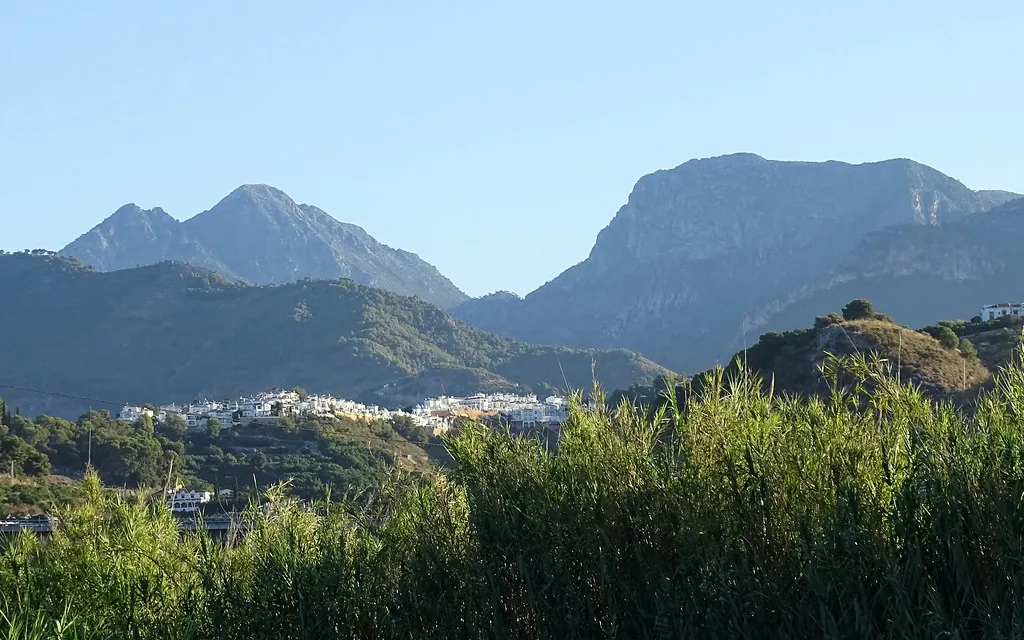
Inside the walls a small display shows how the Nasrid dynasty once stretched from here to Granada. The view east takes in the whole Axarquía valley, a patchwork of plastic greenhouse sheeting that glints like silver scales against the ochre hills. On a clear winter morning you can pick out the Rif mountains of Morocco, 180 km away across the water. Bring binoculars, not for drama but for the satisfying moment when the African coastline stops being a smudge and turns into cliffs you could name.

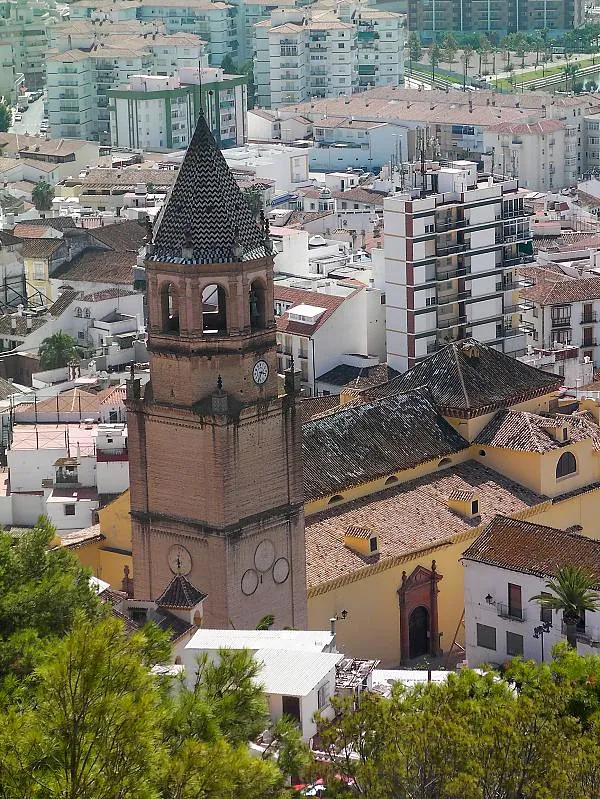
Down again in the centre, the Iglesia de San Juan Bautista squats on the foundations of the old mosque; inside, a Mudejar ceiling is painted the colour of ox-blood and gold. The building is usually open, dimly lit and scented with candle wax. Twenty metres away, the tourist office occupies a 16th-century mansion where the staff will apologise—in rapid Spanish—for having run out of English leaflets. Persist and they’ll produce a hand-drawn map that marks the only remaining stretch of Moorish wall, now propping up someone’s garage.

What to eat when you’re tired of chips

British palates find instant allies in the fried baby squid called puntillitas: they arrive heaped like crispy tangles of wire, with lemon wedges and a glass of cold beer for under €6. Move on to ajoblanco, the almond-garlic soup that tastes like liquid marzipan sharpened with vinegar; it’s served with green grapes bobbing like ice cubes. If the day has turned chilly, ropa vieja—literally “old clothes”—is a thick stew of beef, chickpeas and saffron that could pass for a Spanish Lancashire hot-pot.

Market-day tip: follow the grandmothers to Bar Carmen at the top of the market strip. Order what they order—usually a plate of grilled chocos (cuttlefish) and a quarter-litre of house white poured from an unlabelled jug. Lunch for two costs €18 if you don’t linger over the excellent olive-oil pastries that taste disconcertingly like Dorset shortbread.

When the city parties, sleep elsewhere

Holy Week processions squeeze through lanes barely wider than the floats themselves. Fifty men in purple robes heave a 17th-century virgin past doorways so close her silver crown grazes the stonework. The brass band marches directly beneath your hotel window; ear-plugs are futile. Book accommodation in Torre del Mar during Easter, then ride up for the spectacle—trains run until 01:30.

May brings the Feria de San Isidro: agricultural machinery parked beside the fairground, teenagers flinging pastel-coloured confetti, and a marquee serving mountain cheese so strong it makes the eyes water. August shifts the noise to the seafront for Torre del Mar’s own feria, with late-night fireworks that rattle the yacht masts in the marina. If you value sleep, choose the third week of September instead. The Noche en Blanco turns the old centre into an open-air gallery—flamenco in the convent courtyard, jazz echoing off the fortress walls, museums open until two in the morning and not a firecracker in earshot.

Walking it off

Serious hiking starts 20 km inland in the Axarquía proper, but you can stretch your legs without leaving the municipality. A signed 6 km loop leaves from the river park behind the bus station, climbs through avocado terraces and drops back along the old railway cuttings. The gradient is gentle, the path shaded by eucalyptus, and you’ll share it with farmers on mopeds rather than booted Germans with poles.

Cyclists can follow the seafront cycle-lane westwards to the fishing village of Algarrobo-Costa; coffee stops every kilometre mean you never need carry more than a bottle of water. Mountain bikers head uphill on the concrete track that services the solar farm—hot, shadeless, but the descent gives panoramic sea views usually reserved for the A-7 toll road.

Getting there, getting stuck, getting out

Málaga airport to Vélez-Málaga is 40 minutes by hire car on the A-7; ignore the sat-nav’s temptation to take the inland mountain road unless you enjoy single-lane hairpins. The ALSA bus line 120 departs from the airport basement every hour, costs €4.52 and terminates beside the river park. From the bus station it’s a 12-minute uphill schlep to the historic core—taxis wait and will run the meter to €6 if your suitcase has wheels the size of tangerines.

Parking: the underground planta beneath Plaza de las Carmelitas charges €1.35 for the first hour then 80 cents thereafter; on Thursdays the barrier stays up after 14:00, a small victory for market shoppers. Street blue zones are free but full by 10 a.m.; ignore the locals who simply double-park with hazards flashing—they know the policeman’s cousin.

Weather: summers are ten degrees cooler than the inland villages, but July still hits 34 °C. Winters are T-shirt days and cardigan nights; rain arrives suddenly in March and turns the cobbles into slides. The best months are April, late September and October, when the light softens and the sea stays warm enough for a quick plunge after lunch.

The honest verdict

Vélez-Málaga is not pretty in the postcard sense: the river is concrete-channelled, the outskirts a sprawl of apartment blocks. Yet the city works. Market traders shout the price of persimmons in four languages they don’t speak, the 14th-century chapel hosts Wi-Fi, and the evening paseo still belongs to residents rather than selfie sticks. Come for the layers, stay for the Thursday squid, leave before the brass band starts—unless you’ve booked in Torre del Mar, in which case you can always close the balcony door and let the fireworks fade into the sea.

Key Facts

Region
Andalucía
District
Axarquía
INE Code
29094
Coast
Yes
Mountain
No
Season
summer

Livability & Services

Key data for living or remote work

2024
ConnectivityFiber + 5G
HealthcareHealth center
EducationHigh school & elementary
Housing~8€/m² rent
CoastBeach nearby
Sources: INE, CNMC, Ministry of Health, AEMET

Official Data

Institutional records and open data (when available).

  • Casa de Cervantes
    bic Edificio Civil ~0.1 km
  • Fuente de Fernando VI
    bic Monumento ~0.3 km
  • Zonas del cinturón exterior de Las Murallas
    bic Fortificación ~0.2 km
  • Puerta Real
    bic Monumento ~0.3 km
  • Torre de la Boca del Río Vélez
    bic Fortificación ~5.7 km
  • Antiguo Convento de San José de la Soledad
    bic Monumento ~0.3 km
Ver más (9)
  • Convento de Jesús, María y José
    bic Monumento
  • Real Monasterio de Nuestra Señora de Gracia
    bic Monumento
  • Real Convento de Santiago
    bic Monumento
  • Capilla de Nuestra Señora de la Piedad
    bic Monumento
  • Toro Osborne XIV
    bic Monumento
  • Castillo de Torre del Mar
    bic Castillo/Fortaleza
  • Necrópolis fenicia de Jardín
    bic Yacimiento Arqueológico
  • Tejar
    bic Monumento
  • Edificio del Club Náutico
    bic Monumento

Planning Your Visit?

Discover more villages in the Axarquía.

View full region →

More villages in Axarquía

Traveler Reviews