Full Article
about Las Cabezas de San Juan
Historic spot where Riego proclaimed the 1812 Constitution, set on a hill above the marshland.
Hide article Read full article
A town shaped by a turning point
Any account of Las Cabezas de San Juan begins with a specific date. On 1 January 1820, Colonel Rafael del Riego led an uprising here with troops stationed in the area and proclaimed the Constitution of 1812. That act set in motion the period known as the Trienio Liberal. In this town, the episode is not treated as a distant historical footnote. It forms part of how the place understands itself.
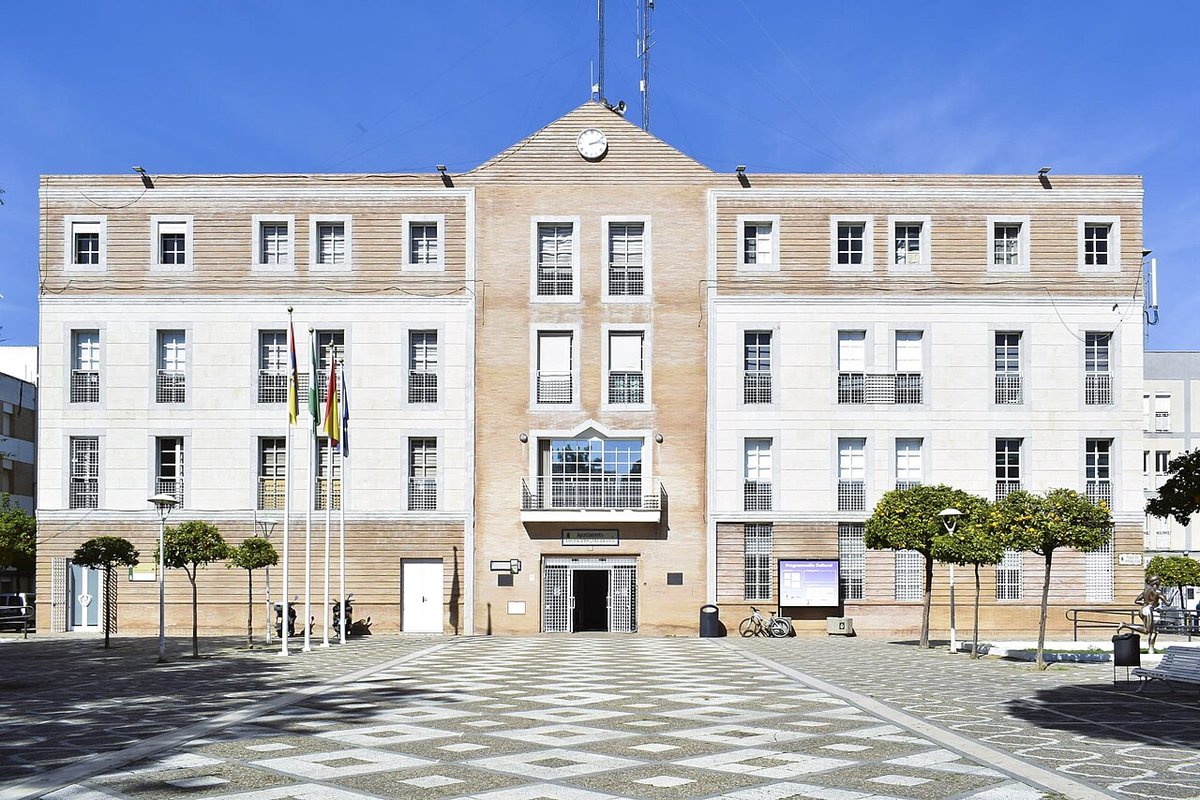
The memory of that pronunciamiento appears in several spots around the centre. In the plaza del Ayuntamiento, the moment is usually recreated each year with period uniforms and a public reading of the constitutional decree. There is also a monument dedicated to Riego, built in the early twentieth century. More recently, the town has been included in the Andalusian inventory of sites linked to democratic memory, reinforcing how closely this event remains tied to local identity.
Streets, layers and devotion
The old quarter keeps an irregular layout that still hints at its medieval origins, even if many of the current houses date from the eighteenth and nineteenth centuries. Walking through these streets reveals a town that has grown in stages rather than following a rigid plan.
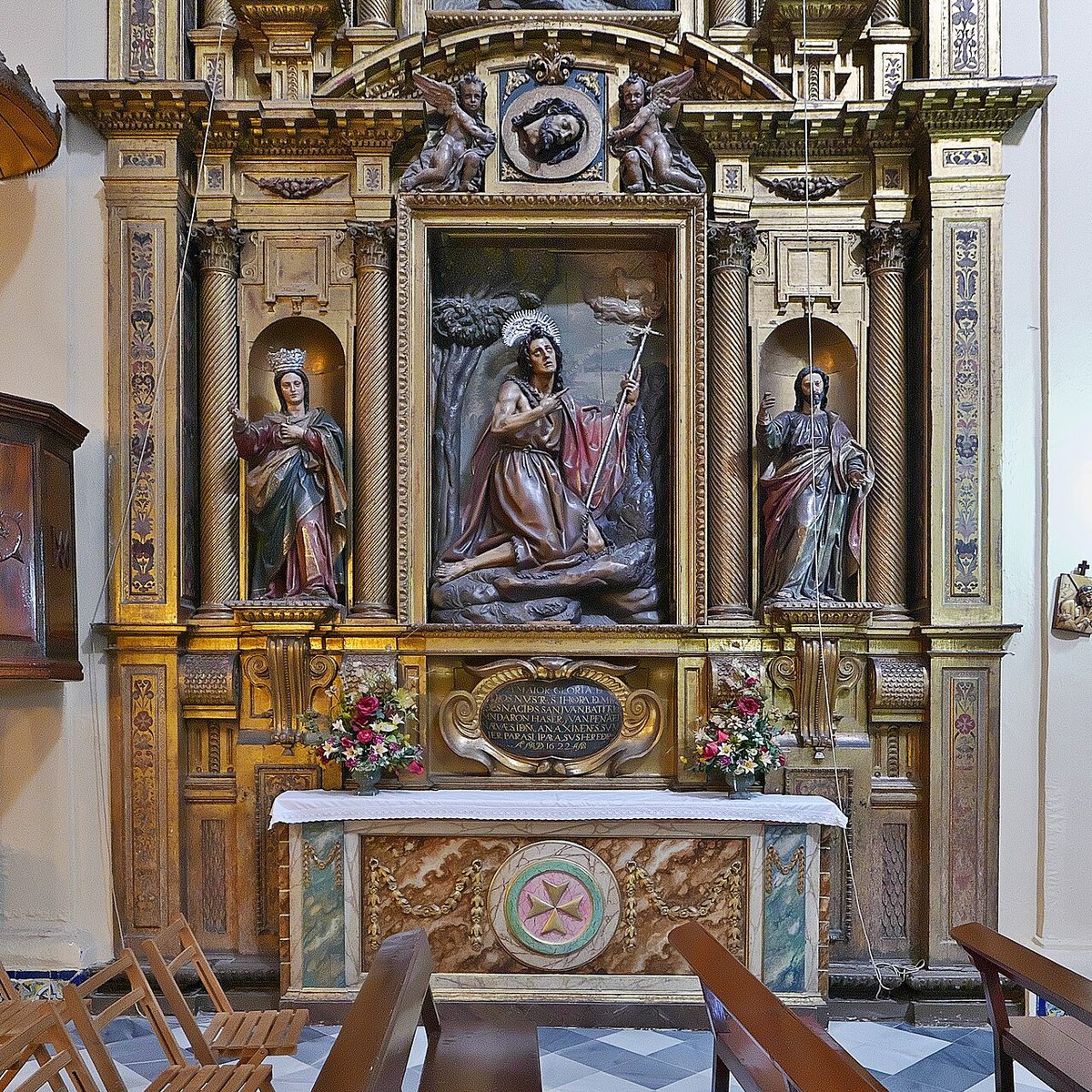
The iglesia de San Juan Bautista stands on the site of a former mosque. Its tower preserves remains from the Almohad period, later modified with Baroque additions. This layering is typical of many Andalusian towns, where successive cultures and eras leave visible marks on the same structure.
Inside the church is the capilla del Cautivo, linked to the local sculptor Juan Bernabé Britto, who was active in the twentieth century. Several of his works are kept here. These are devotional images with a strong emotional charge, reflecting the expressive style associated with Andalusian religious sculpture, especially the kind carried in processions.
Between marshes and seasonal lagoons
Beyond the town centre, the landscape opens out towards the marshes of the Bajo Guadalquivir. Close to Las Cabezas lies the Lebrija–Las Cabezas endorheic complex, a system of lagoons that depend almost entirely on rainfall. Their appearance shifts with the seasons. In wet winters they fill with water and attract aquatic birds. During dry summers they become wide, pale depressions marked by salt.
Laguna del Tarelo is often the easiest to explore. A path runs along part of its edge, passing through halophytic vegetation and areas with tamarisk trees. When water is present, it is common to see flamingos, stilts or ducks moving across the surface.
The surrounding terrain changes very little once outside the urban area. Low-lying land stretches out with cultivated fields and old livestock routes. One of these traditional paths has been adapted into a vía verde, crossing olive groves and boundaries where small huts or simple constructions linked to past herding activity can still be found.
Food rooted in the seasons
Local cooking follows the rhythm of the countryside. Towards the end of winter, tagarninas appear. This wild thistle is usually prepared with chickpeas and a little ham. In spring, espárragos trigueros are gathered and commonly cooked scrambled or lightly sautéed in many households.
During Semana Santa, pestiños are a familiar presence. These are fried pastries coated in honey. Chicharrones here differ from versions found elsewhere in Andalucía. In Las Cabezas de San Juan they are more like flat cakes made with lard, eaten warm and sometimes finished with a few drops of lemon.
After the grape harvest, some families still make mostillo, a sweet reduction of cooked grape juice with spices. These are not dishes shaped by restaurant menus. They belong to domestic tradition, passed down more by habit than by written recipe.
Festive dates and shared routines
Spring tends to be the liveliest period of the year. After Semana Santa, the Festival de la Hierbabuena takes place, dedicated to flamenco. It brings together enthusiasts and performers from the surrounding area in the town theatre.
June brings the feria de San Juan. Much of it is organised by local groups and families, which gives it a distinctly neighbourhood feel. Many of the casetas are private, and dancing continues late into the night.
The romería de la Virgen de los Remedios is held towards the beginning of autumn. Carts and horses accompany the image along paths near the lagoons, linking the celebration to the surrounding landscape.
Then there is 1 January. Each year, the events of 1820 are remembered once again in the main square, usually in the morning, as the town slowly wakes from New Year’s Eve. The historical episode returns to the present in a simple but persistent way.
Getting around and staying a while
Las Cabezas de San Juan sits along the A-4 corridor between Sevilla and Jerez. The centre is easy to explore on foot. The distance from the Ayuntamiento to the church is only a few minutes, and most of the historical points lie within that compact area.
Reaching the lagoons or the marshland paths is easier by car or bicycle. In summer, the heat can be intense and there is little shade in the open countryside, so carrying water is advisable for longer walks.
This is not a destination defined by large accommodation options. Many visitors arrive from Sevilla or other towns in the Bajo Guadalquivir and return the same day. Those who stay tend to choose small houses or family-run lodgings scattered around the urban area. Nights are quiet here, and conversations outside front doors often stretch on longer than any set plan.