Full Article
about Los Palacios y Villafranca
Famed for its quality tomatoes and marshland cuisine near the capital
Hide article Read full article
Early in the morning, once the lorries have set off towards Mercasevilla, the air often carries the scent of freshly cut tomatoes and damp soil. Tourism in Los Palacios y Villafranca begins there, with the understanding that the countryside is not a backdrop. It sets the pace of the town.
The urban centre is encircled by a wide stretch of greenhouses and market gardens which, seen from the A‑376, form an almost unbroken white expanse. A large share of the tomatoes sold in Seville and across its metropolitan area start out in these plots. They also underpin much of the local cooking, which tends to be straightforward and rooted in what is harvested nearby.
A Town Shaped by a Medieval Frontier
Los Palacios emerged in a frontier setting. In the 14th century this area lay close to the boundary between Castilian territory and the Nasrid kingdom of Granada, which still held sway to the south. During the reign of Henry II, settlement privileges were granted to attract colonists to these low-lying lands along the Guadalquivir, then closer to marshland than to the intensively farmed landscape seen today.
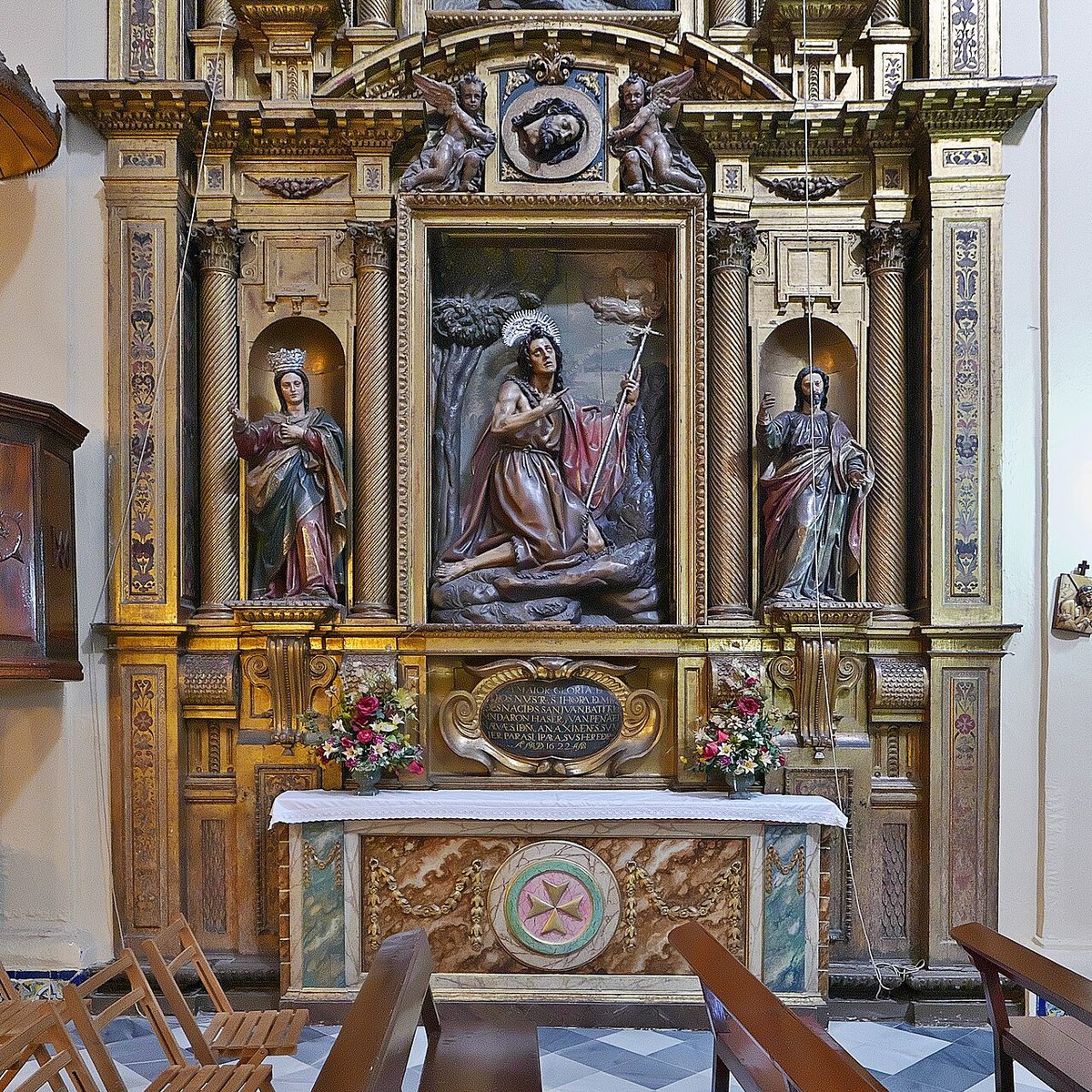
The settlement became linked to the House of Ponce de León, which exercised control over much of the surrounding territory. From that period dates the consolidation of the parish church of Santa María la Blanca. The building has undergone several alterations over the centuries. Its main nave follows relatively sober Renaissance models, while the façade reflects later interventions. After the Lisbon earthquake in the 18th century, reinforcement works were carried out, as happened in many churches throughout the Guadalquivir valley.
The church still occupies the centre of local life. It is not a monumental structure, yet it helps explain how these agricultural towns developed: clustered around the parish, the market and the streets leading out towards the working fields.
Between Marshland and Farmland
The landscape around the municipality is best understood on foot. There are no dramatic mountain ranges or steep gradients, but there is a clear transition between the marshes of the Guadalquivir and the cultivated countryside.
One of the regular walks heads up to the cerro de la Atalayuela. Archaeological remains linked to the town’s early origins have been identified there. Only a few scattered ashlar stones survive, yet the hilltop offers a useful vantage point. From here it is possible to see how the territory is organised: the cultivated plots, the agricultural tracks and, to the west, the band of marshland.
Other paths cross olive groves, small farms and areas where steppe birds can still be spotted at certain times of year. In winter it is not unusual to see cranes or flocks of migratory birds using the nearby marshes as a resting place.
It is also possible to walk between Los Palacios and Villafranca along the old route that once connected the two settlements before their administrative union in the 19th century. For a long period they functioned as separate populations, each with its own interests and disputes, until they eventually formed the present-day municipality.
Cooking from the Market Garden
Local cooking revolves around what comes straight from the field. Tomatoes appear in many forms, though one of the most recognisable is fritada. This is tomato slowly reduced in a pan, sometimes served with egg. It is a domestic preparation that depends more on careful cooking than on elaborate ingredients.
In winter, tagarninas take centre stage. This wild plant, common in the Andalusian countryside, is stewed with chickpeas and a little cured meat, producing a hearty dish closely tied to the season.
Another familiar item is bollo de chicharrones, a sweet dough made with pork lard. At first glance it resembles a sponge cake, though the texture is denser and closer to traditional lard-based pastries.
To drink, some households still prepare mistela. It is made from grape must to which aguardiente is added in order to stop fermentation, resulting in a sweet fortified drink. It is not always easy to find beyond the domestic sphere.
Festivities and the Agricultural Calendar
The festive calendar retains strong links to the countryside. The romería of San Isidro, usually held in spring, brings together neighbours and families in the green areas near the town. Carts, horses and shared food mark the day, reflecting San Isidro’s role as a patron associated with farming communities.
Towards the end of summer, the local feria takes place. It is known for the farolillos that light up the fairground at night. This is a celebration closely tied to local peñas, social clubs, and agricultural cooperatives, with casetas run by associations from within the municipality itself.
Devotion to the Virgen de las Nieves also forms part of local identity. At certain times of year the image is transferred between the hermitage and the urban centre, following paths that cross the surrounding countryside. These movements reinforce the connection between town and fields that defines Los Palacios y Villafranca.
Getting Around
From Seville, Los Palacios y Villafranca can be reached by car in a short time via the A‑376. There is also a bus connection with the Andalusian capital.
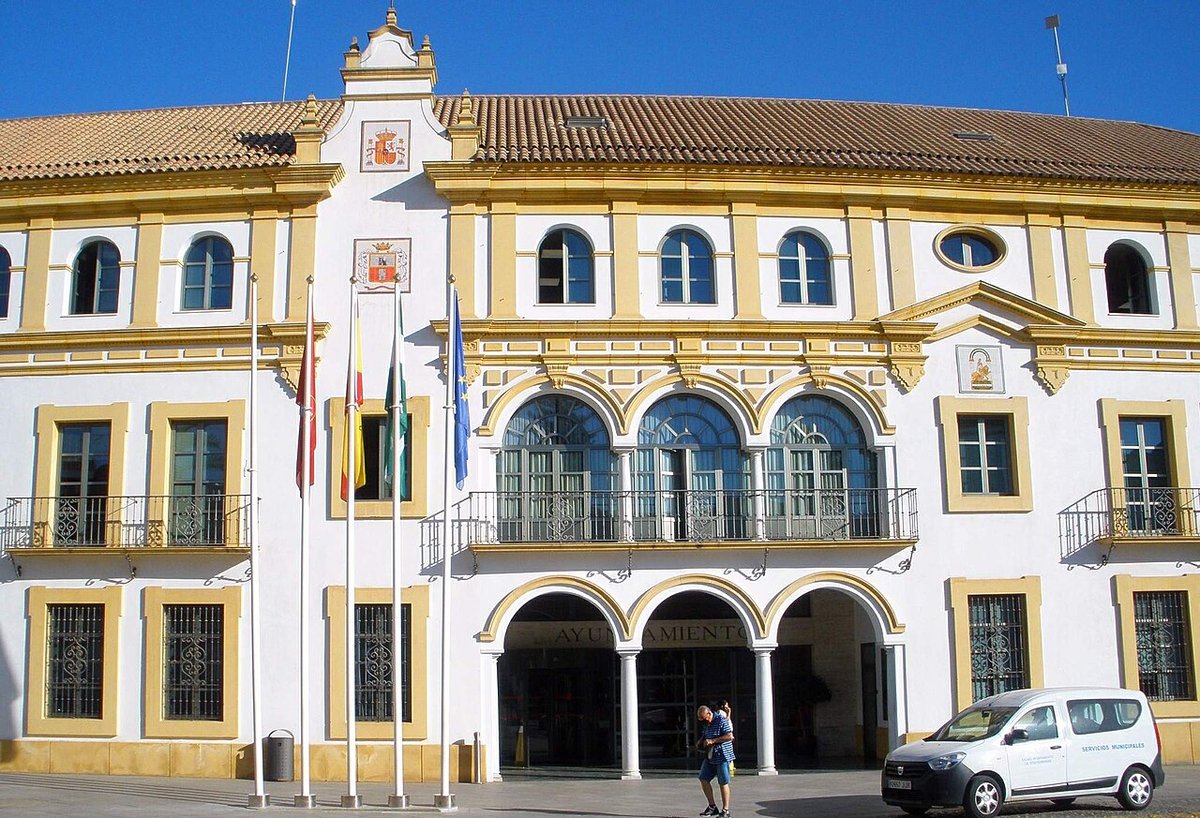
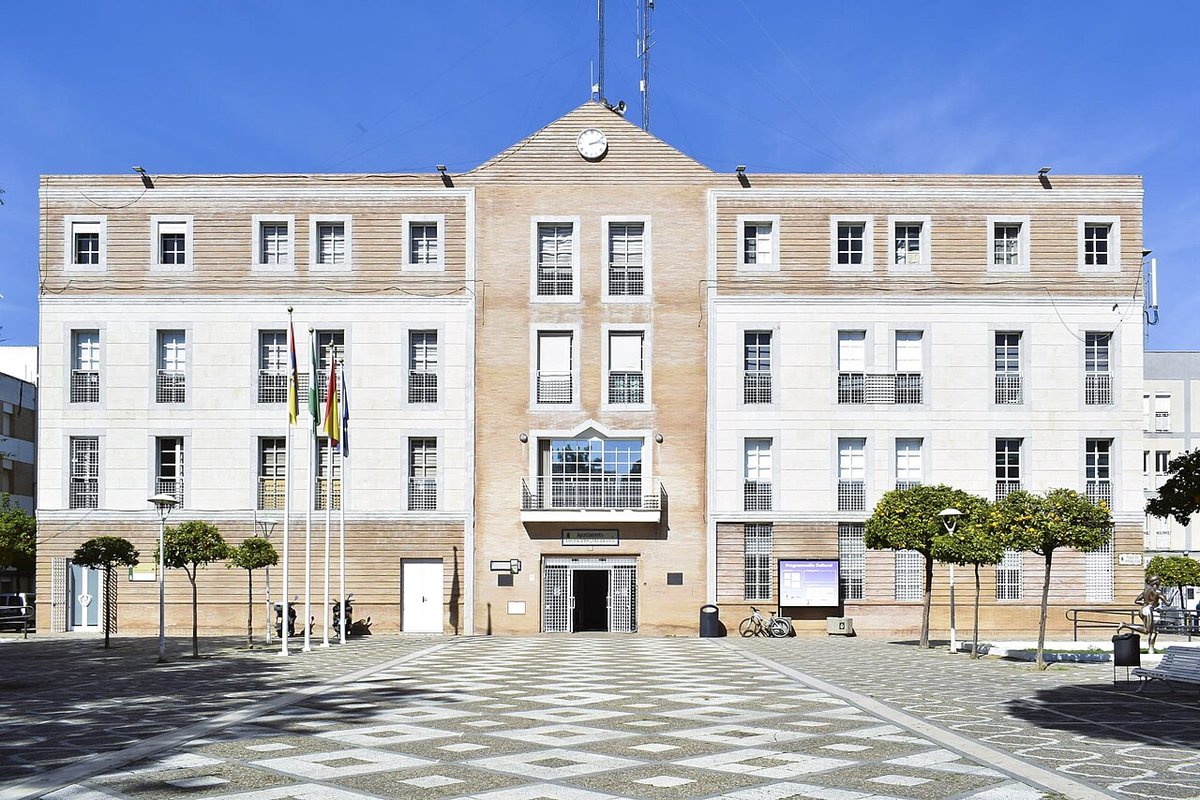
The centre is easy to explore on foot. The town hall square, the parish church of Santa María la Blanca, the food market and the commercial streets concentrate much of the daily activity. Beyond them, the agricultural belt begins almost immediately, a reminder that here the boundary between town and countryside is thin.
Los Palacios y Villafranca does not revolve around monumental landmarks or dramatic scenery. Its character lies in the steady rhythm of cultivation, in the memory of a medieval frontier and in the ongoing dialogue between marshland and market garden. For visitors, understanding that rhythm is the key to understanding the place.