Full Article
about Zújar
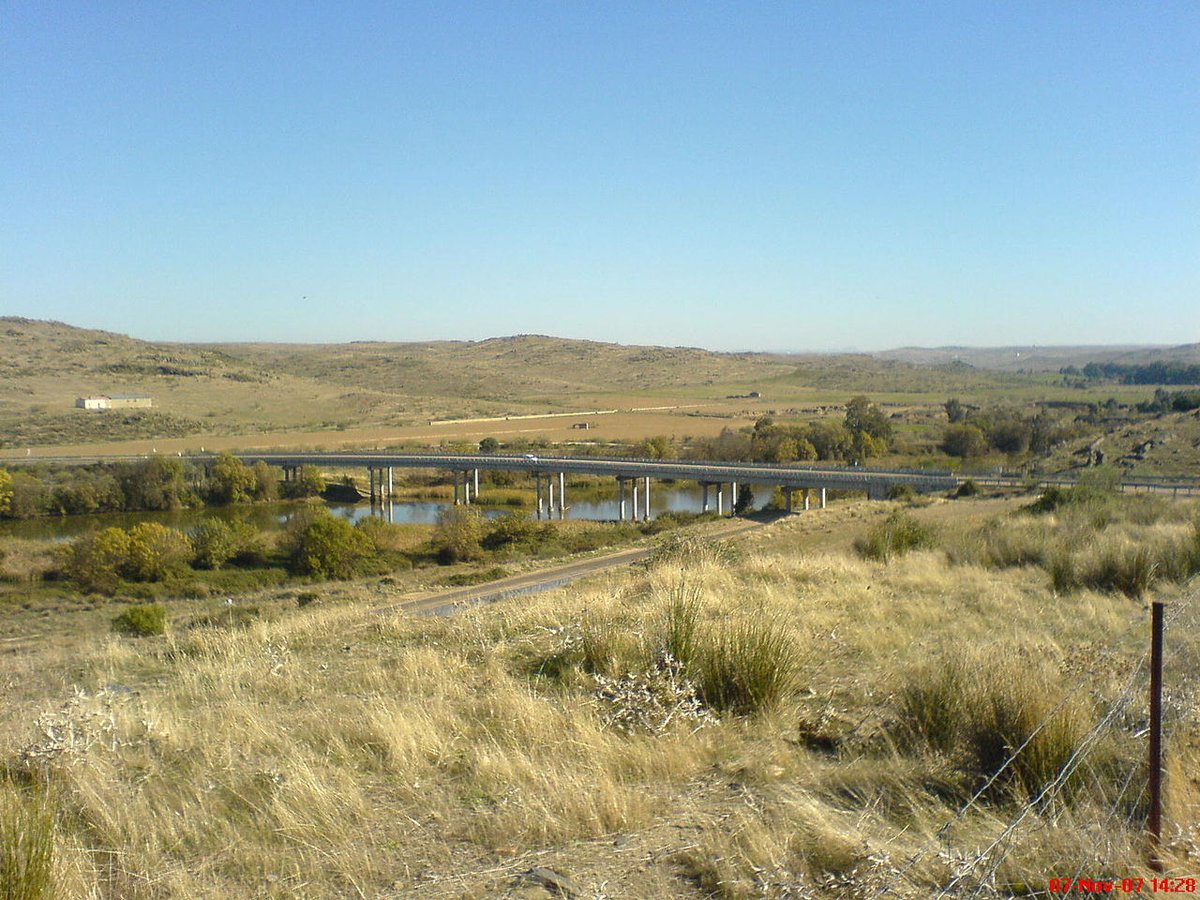
At the foot of Cerro Jabalcón, known for its hot springs and views over the Negratín reservoir.
Hide article Read full article
Some villages seem designed for visitors to arrive, glance around and declare how pretty everything looks over a beer. Tourism in Zújar works differently. Order a skimmed milk coffee and you may get a puzzled look. Sat nav can hesitate at more than one junction. To top it off, the village has thermal waters at a considerable altitude, as if someone had set up a small spa on the terrace of a tenth-floor flat.
Zújar does not present itself as a polished postcard. What it offers is more practical and more lived in. People come for specific reasons and often stay longer than planned.
A Village Under Jabalcón
The first thing that catches the eye on arrival is Cerro Jabalcón. It rises to around 1,500 metres. The height is not extreme, yet its presence is unmistakable. The mountain sits directly in front of the village, solid and immovable. Zújar settled against its slopes and stayed there.
For centuries that position had clear strategic value. In the Nasrid period, when the last Muslim kingdom in the Iberian Peninsula ruled from Granada, Jabalcón functioned as a kind of advanced post looking north across what is now the province of Granada. From here, the view stretches towards the sierras of Cazorla and surrounding areas. It was a practical place to keep watch.
The village itself is a tangle of steep streets. Cars climb them with effort, engines sometimes protesting on the way up. There is also a cave quarter that is neither decorative nor created for photographs. These are homes dug directly into the earth. Local tradition often links some of them to the period after the expulsion of the Moriscos in the 16th century, when part of the population is said to have returned in secret. Across this part of Granada province, soft ground and a climate of hot summers and cold winters make living beneath a hillside a logical solution rather than a curiosity.
Thermal Waters Above the Plains
For many visitors, the thermal springs are the main reason to come. It is often said that the waters were already known in Roman times. What stands here today is simple. There are a series of pools beside the road where the water emerges naturally, usually at temperatures in the mid-thirties Celsius.
There are no grand spa buildings and no dramatic signage. Visitors park nearby, walk down, take off their shoes and step in. The water carries the familiar sulphur scent, similar to boiled eggs. The smell is noticeable at first and then fades into the background after a few minutes.
During the week the atmosphere is generally calm. At weekends, more people arrive from elsewhere in the province of Granada. The mood shifts. There are more cars, more towels spread out, the occasional cool box set down on the ground. Anyone planning to bathe should bring old flip-flops. Loose stones cover the bottom of the pools and walking barefoot is not especially comfortable.
The appeal lies in the contrast. Warm water rises from the ground while dry hills stretch out around it. There is little ceremony to the experience. You arrive, you soak, you leave when you have had enough.
Climbing Cerro Jabalcón
The route up Cerro Jabalcón looks straightforward on a map. In practice, it demands more effort than expected. The distance is not particularly long, but the ascent gains height quickly and the path heads fairly directly upwards.
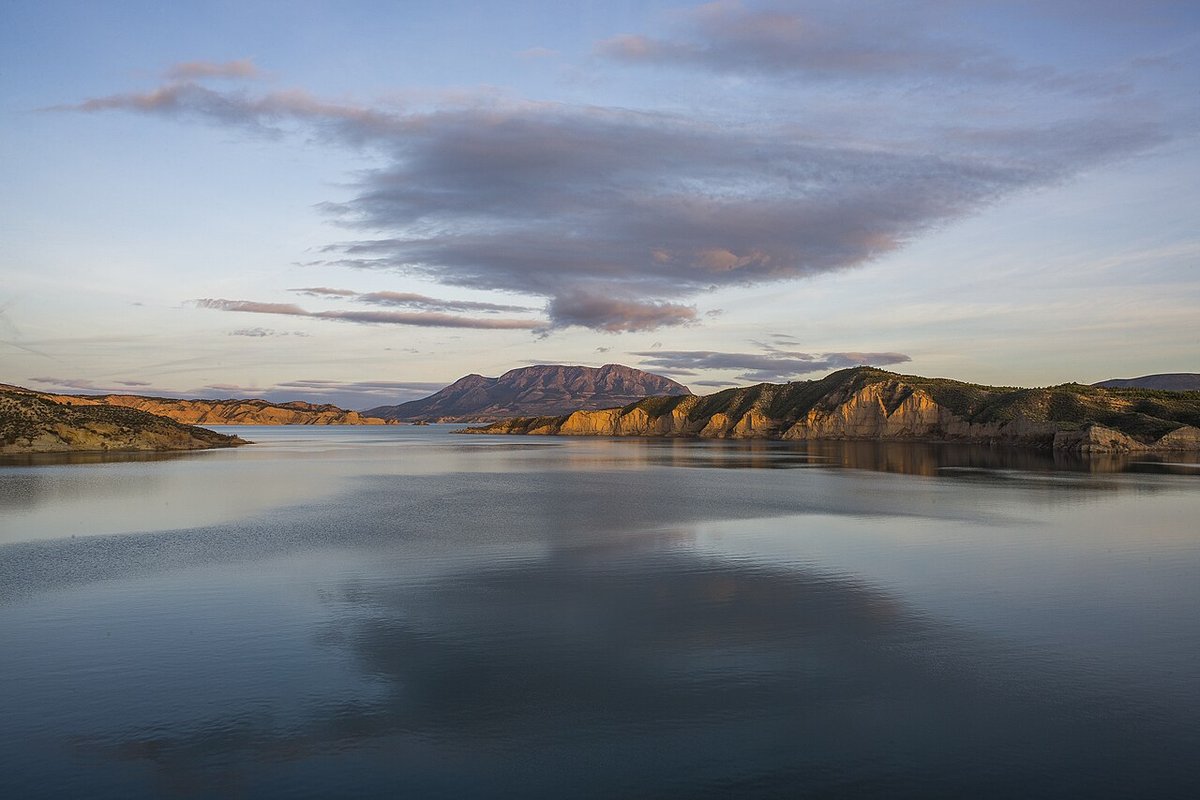
At the summit stands a geodetic vertex, the concrete marker used in Spain for mapping and surveying. The view from this point explains the mountain’s dominance over the landscape. Below lies the Embalse del Negratín, a reservoir that appears as an intense blue patch against dry slopes. The first sight of it can feel surprising, almost like spotting a lake in the middle of terrain that seems close to lunar in its dryness.
Shade is scarce at the top. The sun is strong here in summer and there is little shelter. Anyone making the climb should carry water and treat the heat seriously. Conditions can be harsher than they appear from the village below.
The Vega and Rural Rhythms
Between Zújar and the reservoir stretches a fertile plain irrigated by acequias, traditional channels that bring water down from the sierra. Olive groves dominate the scenery. Dirt tracks cross the fields and make it clear that agriculture still shapes the calendar here.
These tracks suit mountain bikes and unplanned walks. At times, the only sounds are wind moving through the trees and a tractor passing slowly in the distance. The pace feels steady rather than staged for visitors.
Autumn changes the atmosphere. The scent of freshly harvested olives mixes with turned soil. Kitchens turn to substantial dishes. Migas, a traditional preparation based on breadcrumbs or flour, do not arrive in modest portions. A large frying pan is placed at the centre of the table and everyone helps themselves. Food here matches the demands of field work and cooler days.
Is It Worth the Detour?
Zújar does not win people over with perfectly aligned white houses or streets arranged for quick photographs. It lacks the carefully composed look associated with some Andalusian villages.
What it does have is everyday life. Young people remain here. Neighbours stop to talk in the square. Cars pass through loaded with olives when the harvest is under way. The village feels active rather than preserved.
Many travellers come with a clear purpose: a soak in the thermal waters, a walk up Jabalcón, a stroll near the Embalse del Negratín. Once here, it is easy to slow down. With a swimsuit, a pair of flip-flops and no great rush, the plan tends to organise itself. In Zújar, that unforced rhythm is part of the appeal.