Full Article
about Bornos
A noble town on the shores of a reservoir with a striking Renaissance heritage, known for its historic gardens and palaces.
Hide article Read full article
First Impressions Above the Square
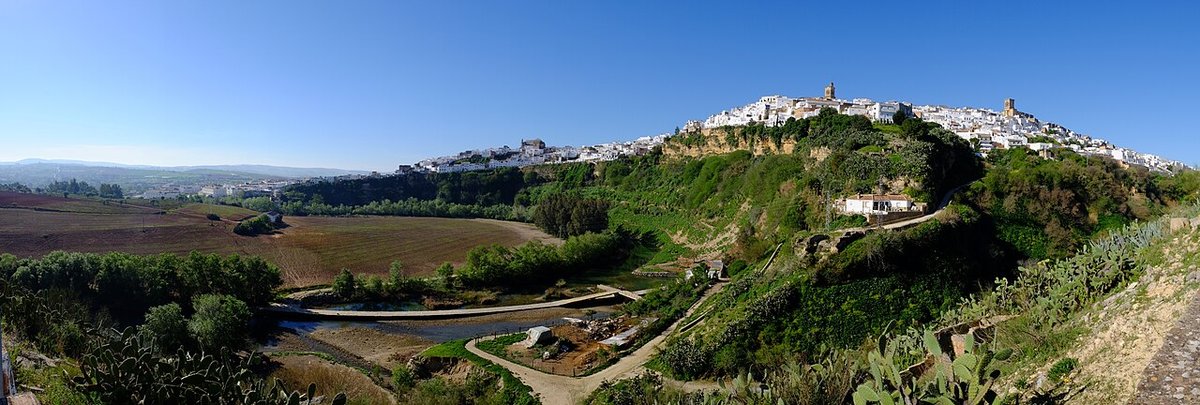
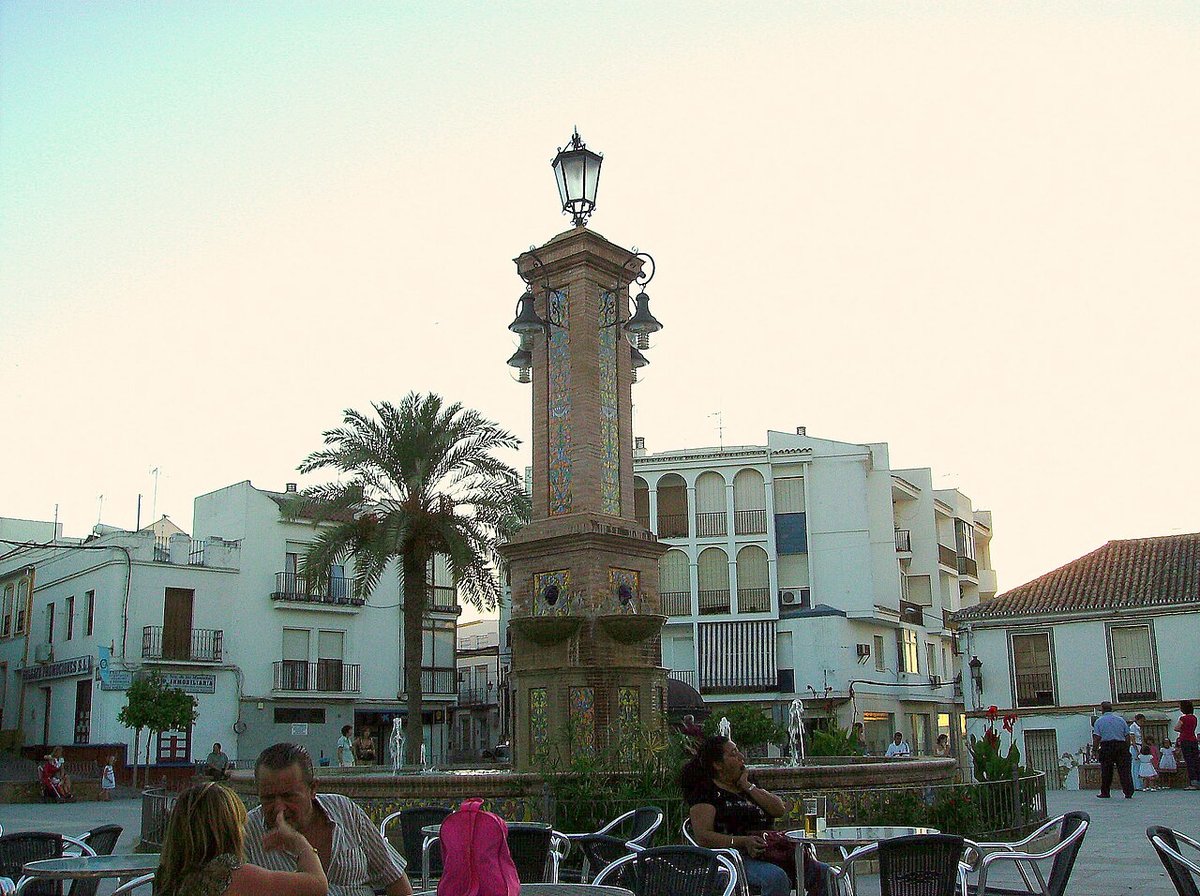
In Bornos, it makes sense to leave the car down near the main square and continue on foot. The old quarter is a tight weave of narrow streets and awkward turns where you will spend more time manoeuvring than moving. From the square, it is only a short walk uphill.
At the top stands the Castillo de los Ribera and, to be clear, this is what makes Bornos worth the stop.
The building dominates the upper part of town. White walls, pale stone and a solid, self-assured presence announce it before you even reach the entrance. Bornos itself is pleasant enough for a wander, but the palace above it is the real reason to climb.
The Palace That Inspired Seville
Despite its name, the Castillo de los Ribera is not a castle in the defensive sense. It is a Renaissance palace. There is a columned courtyard, light-coloured stone and an atmosphere that feels closer to Seville than to a small town in the hills.
Don Fadrique Enríquez de Ribera returned from Jerusalem at the beginning of the 16th century and built his residence here. From that same journey came another legacy: the first Via Crucis in Spain. The route climbed up through the sierra, echoing the Stations of the Cross in Jerusalem. Some of the original crosses can still be seen at points along the hillside, although many are now worn by time.
The palace can be walked around freely from the outside. Opening hours for the interior are limited and not always guaranteed. If you find it closed, it is not a major loss. The most striking elements are on the exterior and in the Logia pompeyana.
The Logia pompeyana is an open gallery of columns without a roof, looking out over the Bornos reservoir. The structure frames the landscape in a series of stone arches. When the water level is high, the olive groves seem almost to reach the shore. The view shifts with the seasons, depending on how much of the reservoir is visible.
Twenty-One Arches, When the Water Allows
Below the town stretches the Puente de los Veintiún Ojos, the Bridge of Twenty-One Eyes. It is about 170 metres long and, in theory, has twenty-one arches. In practice, the reservoir of Bornos often covers a good number of them.
When the water level drops, all the arches reappear in full. In wetter years, only a handful are visible above the surface. The bridge changes character depending on the season, sometimes a complete architectural line across the valley, sometimes a partial rhythm of stone rising from the water.
This is where most visitors come to take photographs. In summer, it is also where local teenagers jump into the reservoir, even though it is prohibited. Each season tends to bring at least one mishap, usually involving someone misjudging the height or the depth.
From the bridge, you can connect with the route around the Cerro de la Plaza de Armas. It is roughly seven kilometres, circling part of the reservoir. The terrain is straightforward and can be done in a couple of hours at an easy pace. On clear days, the outline of the Sierra de Grazalema is visible in the distance. There are no fountains along the way, so it is wise to carry water.
The walk is less about dramatic landmarks and more about open views, changing light on the water and the quiet presence of the surrounding hills.
Coto de Bornos: A Town That Grew Apart
About five kilometres away lies Coto de Bornos. It began as an agricultural colony, created when there was not enough land to distribute among families in the original town. Over time, it developed into something close to an independent settlement.
Coto de Bornos has its own mayordomos, the local figures who help organise religious and festive events, its own way of arranging celebrations and its own Semana Santa processions during Holy Week. The sense of identity is distinct.
For years there was a curious situation regarding the new cemetery in Coto de Bornos. Many residents still preferred to be buried in Bornos itself. Eventually the new cemetery came into regular use, but the transition was slow.
At weekends, the atmosphere in Coto de Bornos tends to be lively. Many people from Bornos head down in the evening to have dinner or a drink, while residents of Coto go up to Bornos when they need to deal with errands and paperwork. Each place has its role. The two centres are close, connected by routine and habit, yet each maintains its own rhythm.
When to Visit, and When to Think Twice
Semana Santa brings significant movement to Bornos. Several processions pass through the centre, and streets are closed as religious brotherhoods carry their images through town. For visitors who prefer easy parking and open streets, those days may be less convenient.
The romería del Rosario usually takes place towards the end of May. A romería is a countryside pilgrimage, part religious, part social gathering. In Bornos, people head up to the hill in tractors, spend the day outdoors and mosto, a young, lightly fermented wine, circulates freely. The atmosphere is rural and relaxed rather than formal.
August brings serious heat and the local feria. Accommodation in the area often fills up during that period. If there is flexibility, spring works better. The reservoir is usually high, the surrounding countryside is green and there is noticeable bird activity around the water.
Each season reshapes the setting. High water transforms the bridge and the views from the palace. Dry periods expose more of the arches and the banks of the reservoir.
What’s on the Plate
In many places around Bornos, tagarninas con jamón appear on the menu. Tagarninas are a type of wild thistle that grows among the olive trees. Cooked with ham, they are a typical local dish, earthy and tied to the agricultural landscape.
Guiso de jabalí, wild boar stew, depends on the hunting season and is not always available. Its presence on the menu varies from year to year.
Pestiños, small fried pastries coated in honey or sugar, are most common around Semana Santa. It is unusual to find them in summer. Tocino de cielo, a dense dessert made from egg yolk and sugar, is widely appreciated, though it remains essentially what it sounds like: sweet and rich.
In Coto de Bornos, mosto becomes particularly popular when the season arrives. In Bornos itself there is one large supermarket and little else in terms of shopping. On Sundays and public holidays, it is better to arrive with what you need already bought.
A Practical Half Day
A simple plan works best. Arrive in the morning, walk up to the palace, then head down towards the bridge. If time allows, continue on to Coto de Bornos to see how the two centres relate to each other.
With half a day, you will have seen the essentials. Bornos is agreeable and easy to navigate, but it does not stretch far beyond its main sights. The Renaissance palace, the shifting arches of the bridge and the quiet presence of the reservoir are what define the stop.