Full Article
about Lopera
Calatrava town with a castle in the center and historic wineries
Hide article Read full article
A Castle Above an Ocean of Olives
Mention tourism in Lopera and the conversation almost always circles back to the same place: the castle. It has the sort of fortress outline that looks as if it were assembled from childhood Lego bricks, five smaller turrets set around the sides and two more solid towers rising in the centre, as though the architect developed a particular enthusiasm for towers and no one thought to rein him in.
From the top, the view is straightforward and expansive. The Campiña de Jaén stretches out in every direction, a vast sea of olive trees that seems to roll on without end. To the north, the Guadalquivir passes quietly by, present but not demanding attention. It is a landscape that explains, without much need for commentary, why olive oil shapes life here so completely.
The Castillo de Lopera may be modest when compared with some of Andalucía’s larger fortresses, yet it holds its ground. Its scale makes it easier to take in the details, the towers, the walls and the relationship between the stronghold and the farmland that surrounds it. This is not a castle lost in mountains or perched on a dramatic cliff. It sits within working countryside, part of the rhythm of the Campiña.
The Day Cervantes Came Looking for Wheat
In 1592, Lopera received an unexpected visitor: Miguel de Cervantes, the author of Don Quixote. He was not travelling in search of inspiration or dramatic scenery. At the time he was working as a tax collector for the Crown, gathering wheat to supply the fleet.
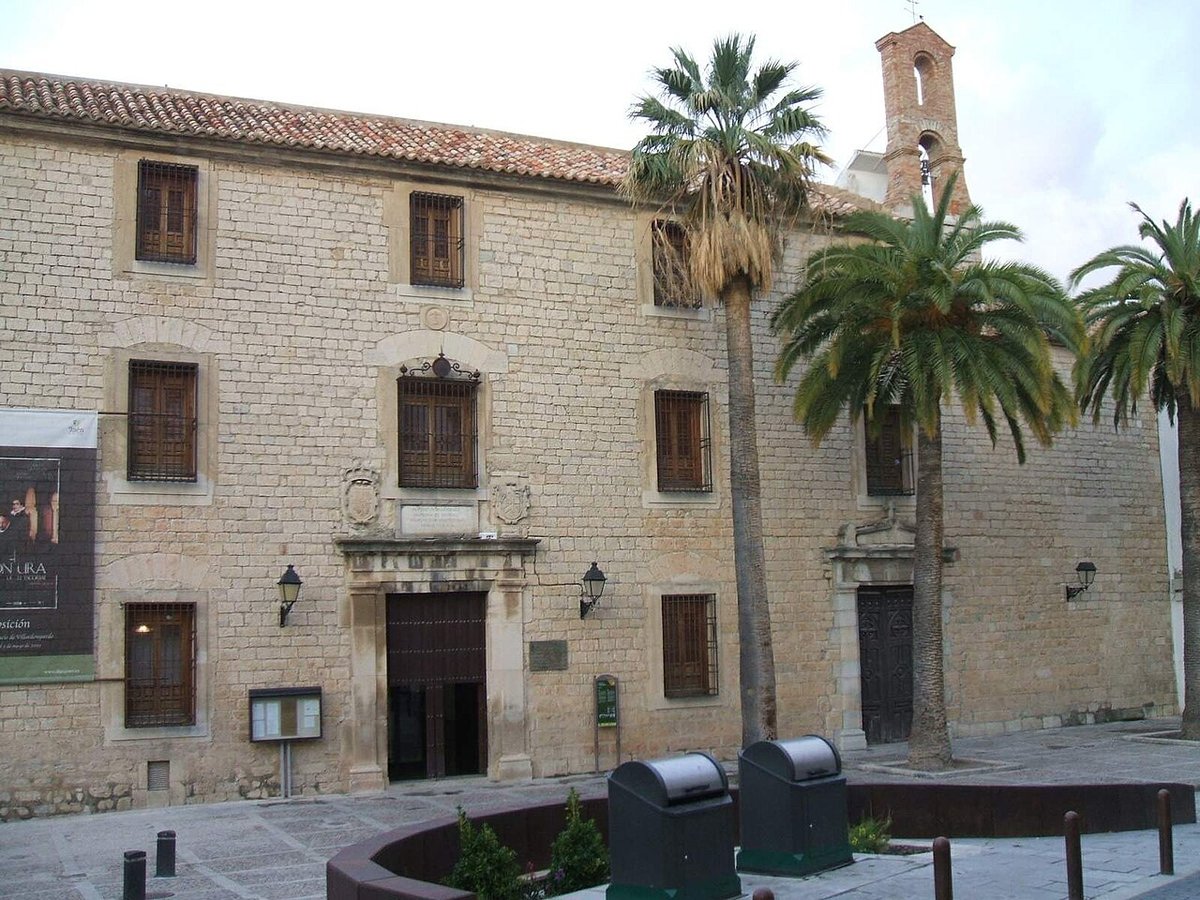
He stayed for several days in the Casa de la Tercia, the building where tithes were stored. These tithes were a form of tax paid in kind, often in grain, and the Casa de la Tercia functioned as a serious, practical space rather than a grand residence. It still stands today, carrying the sober air of a building that has witnessed more than it needs to boast about.
It is easy to picture the scene: Cervantes checking accounts, negotiating with local residents over sacks of wheat, focused on figures and obligations. No one in Lopera could have guessed that this official, busy with grain supplies, would go on to write one of the most famous novels in world literature. The episode adds an unexpected literary footnote to the town’s history, rooted in paperwork and provisions rather than romance.
When Lopera Became a Front Line
Lopera’s name appeared on military maps in December 1936, during the Spanish Civil War. For several days the area was the setting for intense fighting between rebel troops and Republican units, including members of the International Brigades. This episode is commonly known as the Batalla de Lopera.
The surrounding countryside, especially the fields beyond the town, still bears traces of that period. Remains of trenches and defensive positions can be found among the olive groves. There is no large museum complex or elaborate interpretation centre marking the spot. What exists are the marks in the reddish earth, subtle but unmistakable once pointed out.
Walking through these groves carries a different weight when you know what happened here. The landscape appears calm, ordered in rows of olive trees, yet less than a century ago it was a contested front. The contrast between present-day agricultural routine and the memory of conflict is striking, even without monuments or signage to frame it.
Bulls, Towers and a Manuscript
Back at the castle, another story circulates. In the Torre del Homenaje, the main keep of the Castillo de Lopera, it is said that one of Spain’s earliest treatises on tauromaquia, the art and rules of bullfighting, was written in the sixteenth century.
The idea has a certain theatrical quality. Someone seated inside a fortified tower, setting down instructions on how to confront a bull, while beyond the battlements the Campiña unfolded in every direction. Bullfighting, for readers unfamiliar with it, has long been a traditional spectacle in parts of Spain, governed by ritual and codified techniques. That one of its early texts should be linked to this small castle gives Lopera an unexpected place in that cultural history.
The original manuscript eventually ended up in a university library far from here. Even so, the association remains. Any conversation about the castle tends to circle back to that detail, part legend, part documented fact, woven into the identity of the place.
A Kitchen of Surprising Combinations
Lopera’s cooking shares the home-style character found in many towns across the Campiña de Jaén, yet it includes combinations that can raise an eyebrow at first glance. Albóndigas de jamón y gallina, meatballs made with ham and hen, appear frequently in local homes. The mixture brings together the saltiness of cured ham and the softer flavour of poultry in a single dish.
Then there is potaje con ciruelas y orejones. On paper it sounds unlikely: chickpeas cooked with sweet fruit, including plums and dried apricots. The contrast between savoury pulses and sweet ingredients reflects an older style of cooking, shaped by what was available in the pantry and by a taste for balancing flavours rather than separating them neatly. It may seem unusual until it is tasted, at which point the logic becomes clearer.
Olive oil from the area ties everything together. Here, the olive tree is not a backdrop for photographs but the foundation of daily life. Its oil finds its way into almost every dish, reinforcing the connection between the surrounding fields and the food on the table.
A Short, Unhurried Stop in the Campiña
Lopera is not a place that demands several days of sightseeing. It works better as a calm pause in the middle of the Campiña de Jaén. The essential experience is simple: climb up to the castle, walk through the centre, look out over the olive groves and take in the scale of the landscape.
Arriving in the morning makes sense, before the sun grows too strong. The castle is the natural starting point, offering both history and perspective. Afterwards, a stroll towards the main square provides a chance to sit for a while and watch the steady rhythm of local life. In a couple of hours, a clear sense of the town emerges.
That may be precisely what appeals during a journey through this part of Andalucía. A brief stop, a view across endless olive trees, a reminder that even small places can hold episodes of literature, war and culinary tradition. Then the road calls again, and the Campiña continues to unfold.