Full Article
about Santiago de Calatrava
Small municipality on the border with Córdoba; land of cereals and olive trees
Hide article Read full article
First Light Over the Campiña
Early in the morning, before the sun bears down on the open countryside, tourism in Santiago de Calatrava begins with a simple image: rows of olive trees still damp with dew and the dry rattle of a tractor already making its way along a dirt track. The village sits slightly higher up, white and compact, shutters half closed and the scent of the fields drifting through every street.
Around 45 kilometres from Jaén, after several uninterrupted stretches of road cutting through olive groves, the town appears almost all at once. Low, whitewashed houses rarely rise above two storeys. Wooden doors sometimes retain old iron studs, and dark metal grilles cover the windows. The centre is small enough to cross in minutes. A short walk takes you past the main square, around a corner, and back to a view of open countryside at the end of the street.
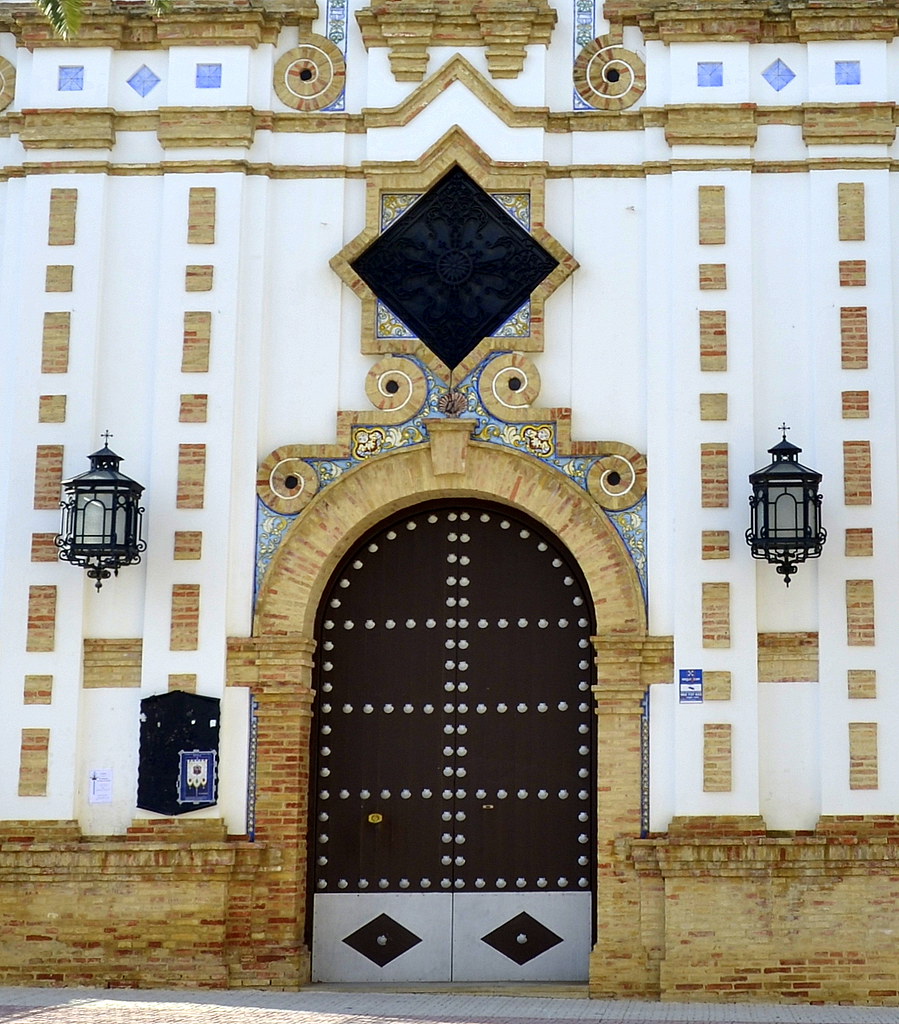
One of the most visible buildings is the parish church dedicated to Santiago Apóstol. Its origins are generally placed in the 16th century, although the structure has been altered and repaired over time. Inside, the atmosphere is restrained: devotional images, small altarpieces and the cool scent of stone that lingers even in the height of summer.
Everyday Life in Quiet Streets
Santiago de Calatrava does not present grand monuments or an imposing historic quarter. Instead, it offers short streets where the most constant sounds are likely to be a conversation drifting out from an open doorway or a television murmuring behind a window.
A few squares have built-in benches and a simple fountain. At certain times of day, especially towards evening, neighbours gather to talk as the heat begins to ease. In a village of around six hundred inhabitants, everything happens close to home and without hurry.
At midday, the whitewashed façades reflect the light intensely. In summer it is wise to wear a hat or seek out patches of shade when walking, as there are few trees in the streets and the sun falls directly overhead. The rhythm of the day adapts to this climate. Activity tends to slow during the hottest hours and pick up again when the air cools.
The scale of the place shapes the experience. There is no sense of spectacle or performance for visitors. What you see is daily life unfolding at its usual pace, in streets where people recognise one another and where distances are short enough to walk everywhere.
A Sea of Olive Trees
The landscape around Santiago de Calatrava is that of the Campiña de Jaén: gentle hills covered in olive groves as far as the eye can see. From any edge of the village, agricultural tracks wind between plots of land. Some can be followed on foot or by bicycle without too much incline, though the terrain is very open and the heat is strong for much of the year.
On clear days there is barely any shade. Anyone heading out along these paths should carry water and plan the timing carefully. The expanses of olive trees create a wide horizon, with the village gradually shrinking behind you until only the white cluster of houses remains visible in the distance.
The atmosphere shifts in autumn and at the beginning of winter. During the olive harvest, it is common to come across trailers loaded with fruit and teams working among the trees. This is not an organised display for outsiders but simply the village following its agricultural calendar. The olive grove defines both the scenery and the local economy, and its cycles set the tone of the year.
Walking here means accepting the openness of the land. There are no dramatic landmarks interrupting the view, just the repetition of silvery leaves and the earthy scent that rises from the soil. It is a landscape that rewards slow observation rather than a checklist approach.
Olive Oil and Traditional Cooking
In this part of Jaén, extra virgin olive oil shapes the kitchen. Many traditional recipes developed from what was readily available in local homes: day-old bread, flour, dried peppers and some cured meat.
Dishes such as migas, made from breadcrumbs cooked and seasoned, appear frequently when the weather turns cold. Thick gazpachos prepared with bread, quite different from the chilled tomato soup often associated with the name, are also common, as are hot gachas. Simple meat stews and meals linked to the olive season complete the picture. The cooking is rooted in necessity and seasonality rather than elaborate presentation.
In the surrounding area there are olive estates and almazaras, the mills where olives are pressed into oil. At certain times of year it is possible to see how the fruit is processed. Anyone particularly interested in this world is best advised to ask at the town hall or speak with local residents, who can usually provide clearer guidance than any brochure.
Food here is closely tied to the land. The arrival of the new oil each season is part of the annual rhythm, and it finds its way quickly into everyday dishes. There is little separation between agricultural work and what appears on the table.
July Festivities and Holy Week
The liveliest period of the year usually arrives at the end of July, when festivities dedicated to Santiago Apóstol take place. For a few days the pace changes. Music fills the square, a procession moves through the main streets and gatherings continue late into the night, when the air finally begins to cool.
Semana Santa, or Holy Week, is also observed, though in a modest way. The routes are short and the processions pass very close to the houses. The sound of cornets echoes against the white walls, creating an atmosphere that feels intimate rather than grand. As in many Andalusian towns, these religious celebrations form part of the shared calendar, bringing neighbours together in public space.
Outside these moments, the year returns to its usual calm. The contrast makes the festivities more noticeable, marking time in a place where change tends to be gradual.
Getting There and Choosing the Moment
The most practical way to reach Santiago de Calatrava is by car from Jaén or from nearby towns in the Campiña. Public transport does exist, but connections are not frequent and it is advisable to check timetables in advance.
Spring and early autumn are generally the most pleasant times to walk in the surrounding countryside. In summer the heat intensifies from mid-morning onwards, and daily activity typically concentrates at dawn or towards evening. At those times the fields regain their scent of earth and olive leaves, and the village settles into the slower rhythm that defines it.
Santiago de Calatrava offers no grand attractions to tick off. Its appeal lies in its scale, its olive-covered hills and the steady pattern of rural life in the Campiña de Jaén. For travellers prepared to adapt to the climate and the pace, it provides a clear view of a community shaped by the land that surrounds it.