Full Article
about Moriles
Synonymous with fine, full-bodied wine, this village, ringed by vineyards, offers an authentic wine experience in its old presses and family bodegas.
Hide article Read full article
A landscape shaped by wine
The must is still warm when it reaches the glass. In a local venta, it arrives in a simple tumbler, unlabelled, drawn straight from the cask where it has rested since the harvest. It is not quite wine yet. This is the stage just before, when the Pedro Ximénez grape still holds much of the sweetness gained from drying in the sun. In Moriles, in the Campiña Sur of Córdoba, time follows a different measure, counted in ageing systems known as criaderas and soleras, and in harvests remembered for decades.
The town stands on a gentle rise surrounded by vineyards. The soil is pale and chalky, the albariza typical of this area, which reflects sunlight and retains moisture from the night. That balance explains why fine wines are produced here without the maritime influence found in other Andalusian regions.
The setting feels continuous. Soft hills covered in vines stretch out in all directions, broken only by farm tracks and scattered wine presses. There are no major rivers or dramatic landforms to interrupt the rhythm. For centuries, the vineyard has defined both the landscape and the way of life.
From Zapateros to Moriles
Until the early twentieth century, Moriles was not an independent municipality. It formed part of Aguilar de la Frontera and was known as Zapateros. Its separation came by royal decree during the reign of Alfonso XIII, at a time when vineyard expansion had already given the settlement a distinct economic presence.
The municipal area remains small, and that sense of scale shapes how the place is experienced. The land rolls gently rather than dramatically. Agriculture dominates, with vines taking centre stage. The continuity of the terrain mirrors the continuity of its main activity, which has long been tied to wine production.
This historical shift from dependent village to its own municipality reflects how closely Moriles has been linked to its vineyards. Growth did not come from industry or trade routes, but from the steady expansion of viticulture and the reputation it built over time.
San Jerónimo at the centre
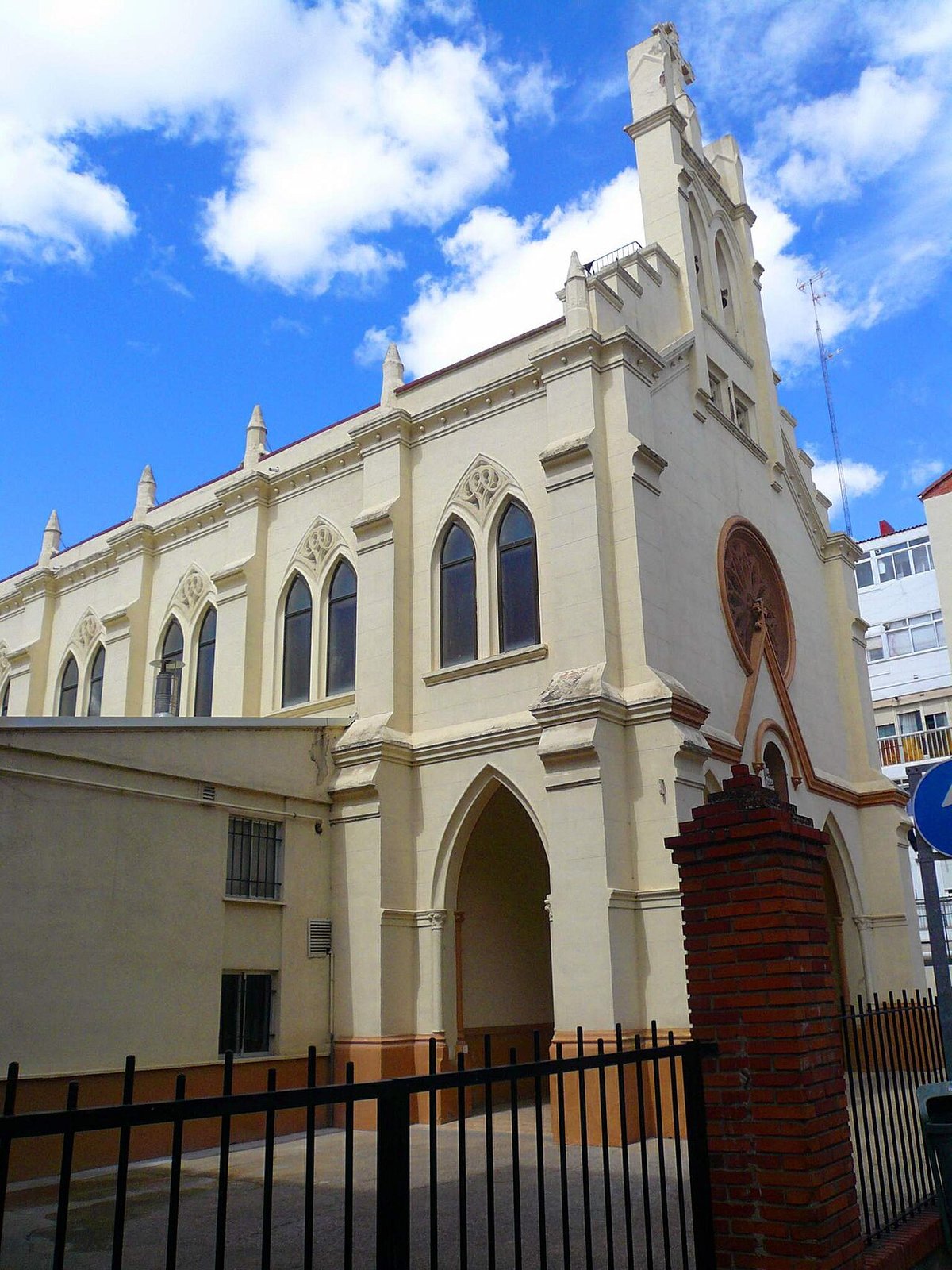
At the heart of the town stands the parish church of San Jerónimo. Construction of the current building began in the nineteenth century and continued over a long period, which helps explain its somewhat uneven proportions. The architecture is restrained, with brick as the dominant material, reinforced with stone. A tower rises clearly above the surrounding houses, making it a visual reference point from different parts of the town.
Inside, there is a Baroque altarpiece that predates the present church. It was moved here from the earlier building that served the community when Moriles was still a village. The transfer says a lot about local priorities. When the new church was completed, elements with devotional or artistic importance were preserved and carried over rather than replaced.
The church is not monumental in scale, but it anchors the town’s layout and reflects its gradual development. Like much in Moriles, it is shaped by continuity rather than sudden change.
Moriles Alto and the working vineyard
Moriles forms part of the Montilla‑Moriles designation of origin, a recognised wine-producing area in southern Spain. Within it, Moriles Alto stands out for the quality of its soils. These are especially white and rich in limestone, conditions that have supported vine cultivation for centuries.
Across the surrounding countryside, old lagares appear from time to time. Some date back to the eighteenth or nineteenth centuries. Originally, these buildings were used to press grapes and store wine. Many have taken on new roles over the years, yet they still mark the landscape and hint at earlier ways of working.
A network of agricultural tracks runs through these hills. They can be followed on foot or by bicycle, passing historic presses and small vineyard plots. The routes do not aim to impress with dramatic scenery. Instead, they offer a close view of a landscape shaped by routine and repetition.
At the end of summer, during the harvest period, activity increases. Grapes are often laid out under the sun to dry, a step that concentrates their sugars before being used to produce the sweet Pedro Ximénez wine. This process, visible in the open air, connects directly to what later appears in the glass.
Trains, trade and a quieter track
On the outskirts of Moriles lies the former railway halt of Moriles‑Horcajo. It belonged to the line that once linked Córdoba with Málaga and was built in the late nineteenth century. At the time, it played a role in transporting local wine to wider markets.
Rail traffic ceased decades ago, but the main building and some auxiliary structures remain. The site has not disappeared into neglect. Instead, part of the old track has been adapted into a vía verde, a greenway that follows the former railway route.
This path runs through olive groves and vineyards on its way towards Lucena. It offers another way to experience the surrounding countryside, tracing a line that once carried barrels and now carries walkers and cyclists. The shift from industrial use to leisure reflects broader changes, yet the connection to the land remains constant.
When the harvest returns
Life in Moriles still follows the wine calendar. At the end of summer, events linked to the new harvest are usually held, including tastings organised by local wine producers. These moments bring attention back to the cycle that underpins everything else.
There is also a summer fair and Easter celebrations with a distinctly local character. Participation is widespread, and the scale of the town means that familiarity shapes the atmosphere. These are not large events designed for crowds, but occasions rooted in community.
Moriles itself is small and easy to walk around. The interest lies just beyond the centre, along the vineyard paths and among the scattered lagares. The experience is less about ticking off sights and more about understanding how the landscape and its main product are intertwined.
For those interested in the wines of the area, many wineries sell directly to visitors. Wine is often served in bulk, without labels or ceremony, much as it has been for generations. It is a straightforward way to grasp what this continuous vineyard landscape represents, and how deeply it defines Moriles.