Full Article
about Bonares
White village surrounded by vineyards and natural areas like the Arboreto del Villar; known for its twelve May crosses, a Fiesta de Interés Turístico.
Ocultar artículo Leer artículo completo
The church bell in Bonares strikes four, and every café terrace on Calle Ancha fills at once. Office workers in high-vis vests, grandmothers with wheeled shopping bags, a teenage couple sharing earbuds—each claims a plastic chair, orders a caña, and begins the daily debrief that passes for evening entertainment here. Nobody checks a phone; nobody speaks English. This is the Condado de Huelva doing exactly what it has always done, only 25 minutes from the nearest Costa traffic jam.
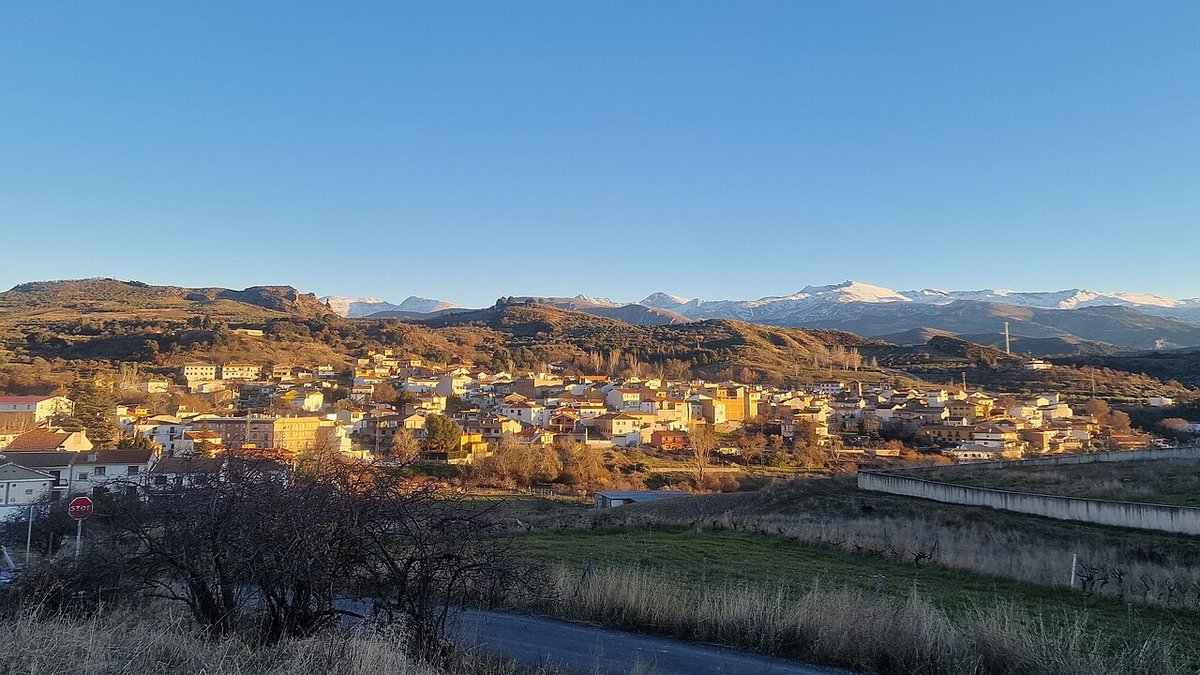
A Town That Forgot to Pose for Postcards
British visitors expecting whitewashed labyrinthine streets will be disappointed. Bonares is a working town of tidy pavements, single-storey bungalows and a single set of traffic lights that blink amber most of the year. The 1950s church tower of San Bartolomé rises above tiled roofs like a lighthouse over lettuce fields; inside, the air smells of candle wax and the floor slopes gently towards the altar, the result of centuries of river silt settling beneath the foundations. There is no gift shop, no multilingual leaflet, just a laminated A4 sheet taped to a side pillar that lists mass times in Spanish only.
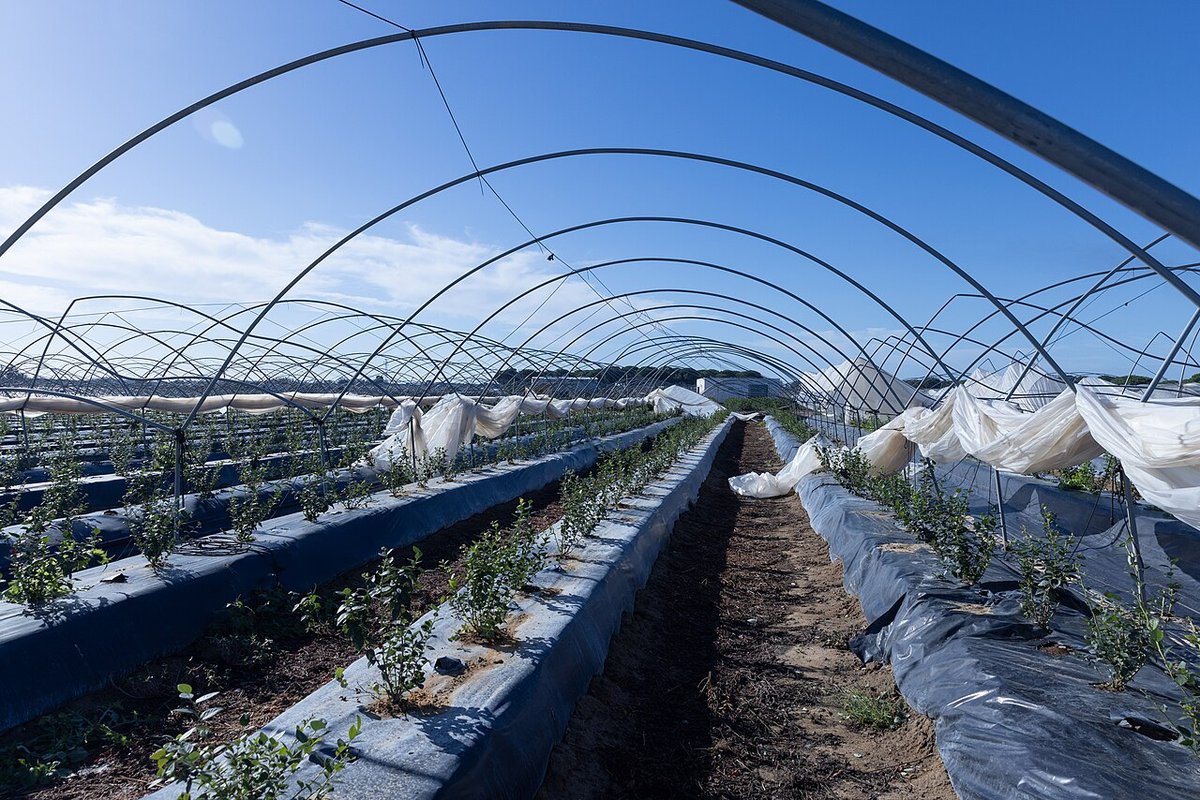
What the town lacks in medieval romance it repays in immediacy. Walk one block south of the church and you are among greenhouse plastic, the low throbbing pumps that keep strawberries irrigated and the faint chemical whiff of fertiliser. Walk two blocks north and the tarmac stops. A sandy lane continues between rows of zalema vines, the white grapes that give Condado wines their sharp, almost saline edge. Swallows skim the ditches; a farmer in a Seat Toledo salutes with one finger lifted from the steering wheel. The transition from street to field takes thirty seconds, and no one has thought to charge admission.
The Taste of an Inland Coast
Ask for a menu in English and the barman will shrug with genuine bewilderment, then produce a hand-written carta that changes price according to the biro colour. Starters revolve around what the land produces when the sun behaves: artichoke hearts braised with jamón, scrambled eggs threaded with thistle, or a thick soup of lentils and morcilla that tastes like a Spanish Cumberland sausage. Main courses are casseroles designed for vineyard labourers—lamb shoulder stewed with bay, rabbit in tomato, or a simple plate of albondigas that arrive so hot they continue to bubble for a full minute. Expect to pay €9–€12 for three courses, bread and a quarter-litre of local white that arrives chilled in a plain bottle with no label. The wine is light enough to drink like water, which locals more or less do.
Strawberry season runs March to June; roadside stalls along the A-472 sell punnets for two euros, still warm from the polytunnel. If self-catering, buy them early: by 11 a.m. the best fruit has been snapped up by restaurant owners from Huelva city who drive out specifically for Bonares berries, reputedly the sweetest in the province because the night air drifting off the Odiel estuary retains just enough humidity to plump the flesh.
What Passes for Action
There is no flamenco tablao, no horse-and-carriage, no Thursday market selling knock-off sunglasses. Instead, the town offers a lesson in Spanish scheduling. Mornings belong to tractors; siesta shutters drop at two; at five the square refills for the paseo. Elderly men walk clockwise, women counter-clockwise, teenagers occupy the bandstand steps and perform elaborate negotiation rituals around who shares which cigarette. Joining the circuit is easier than it looks: nod once, keep left, and refrain from overtaking—this is not exercise, it is moving conversation.
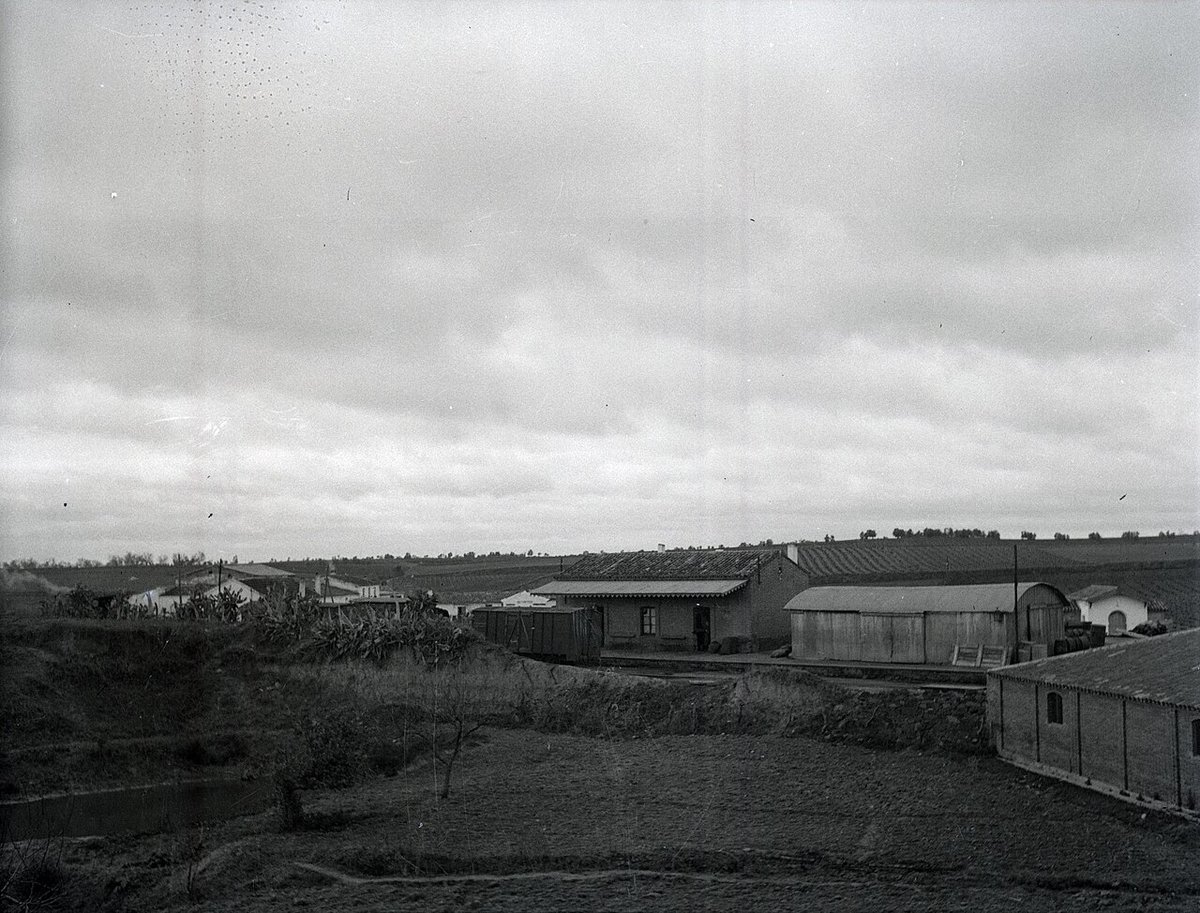
The only formal attraction is the tiny ethnological museum inside the old railway station (open Saturday 11–13:30, entry free). One room displays cork-cutting tools, another holds a 1920s pharmacy cabinet with glass bottles still containing traces of mercury and quinine. The volunteer attendant will insist on explaining every label in rapid Andalusian Spanish; smile, nod, and you will be offered a shot of anisette from the hip flask that materialises at the end of the tour.
Outside town, paths follow the drainage canals that once connected the Rio Tinto docks to the vineyards. The GR-48 long-distance footpath skirts the western edge: follow it south for 40 minutes and you reach the abandoned halt of La Palma, where blackberries grow over the platform and the station clock stopped at 17:42 sometime in 1984. Carry on another hour and the path drops into the Marismas del Odiel, the coastal wetlands that feel like the Severn levels only louder—avocets, redshank and the distant clang of shipyard work from the Huelva wharves.
Getting There, Staying Awake
Bonares has no hotel. The nearest beds are in Niebla, six kilometres north, where the parador occupies a Moorish fortress and charges €130 for a room with tapestry curtains and a view of the Tinto gorge. More sensible is to rent one of the casas rurales scattered among the vines: expect three bedrooms, tiled floors, a bottle of Condado white left in the fridge and absolute silence after ten o’clock. Rates hover around €90 per night mid-week, rising to €140 at weekends when Seville families drive out for lunch.
Public transport exists but behaves like a shy animal. There is one weekday bus from Huelva at 07:15, returning at 14:00; Saturday adds an evening run, Sunday nothing at all. Driving is straightforward: leave the A-49 at junction 60, follow signs for Niebla, then turn right at the roundabout with the giant metal strawberry. Parking is wherever you can squeeze a wheel without blocking a farm gate. Petrol stations close at 20:00; after that, you wait until morning.
When to Cut Your Losses
August is punishing. Temperatures touch 42 °C by early afternoon; even the swallows pant. The fiesta week around 24 August brings fairground rides and a procession that lasts until dawn, but also traffic jams back to the motorway and amateur fireworks that terrify dogs and anyone with nerves. Come then only if you crave brass-band versions of reggaeton until four in the morning.
January can be surprisingly wet. The flat fields flood, turning vineyards into reflecting pools that photographers love and farmers endure. Bring wellies and a raincoat that actually works; Spanish brollies are designed for show, not Atlantic fronts.
The sweet months are late April and late September. In spring the strawberry plants flower and the air smells of honey; in autumn the grape harvest is pressed in the cooperative at nearby La Palma, and the scent of fermenting juice drifts over the town like yeasty bread. Light is soft, paths are dry, cafés still keep their doors open to the street.
Leave before you understand the joke the old men make every evening about the British and their sunscreen. Bonares does not do revelations; it simply continues, and that is the point. Drive away at dusk and the church bell rings again, not to say goodbye, just to mark the hour. Somewhere between the vines and the plastic greenhouse roofs, the town resets itself for tomorrow, unchanged, unbothered and, for the moment, still unaware it needs explaining.