Full Article
about Escacena del Campo
A countryside town with a major Tartessian archaeological site; it blends cereal and chickpea farming with ancient history.
Hide article Read full article
Some places seem built to be driven past without a second thought. Escacena del Campo is one of them. You spot it from the road through El Condado, read the sign, and assume it is just another village. That is often the first impression.
It does not try to impress straight away. But give it a little time and things begin to shift: an old ruin here, a church with a long story there, a conversation with someone from the village. Gradually, it reveals itself in small, quiet ways.
Tejada la Vieja: ruins off the radar
Ask about Roman remains and sooner or later someone will point you towards Tejada la Vieja. It sits a few kilometres outside the village, surrounded by fields and tracks that feel like they lead nowhere in particular.
Then, suddenly, it is there.
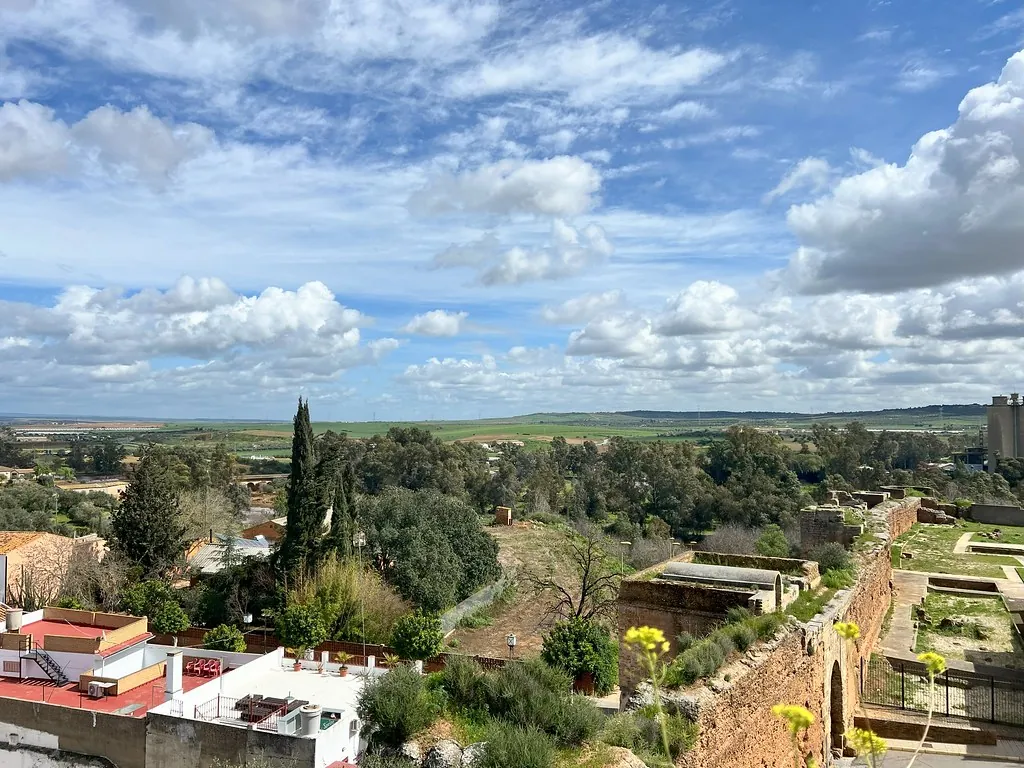
What survives belongs to the ancient settlement of Ituci, a site with very early origins that later passed through a Roman phase. This is not a polished archaeological park filled with information boards and walkways. It is closer to the kind of place where you wander among stones, low walls and traces of streets, piecing together in your mind what once stood there.
There is talk that a water channel once started here and ran all the way towards the area of Itálica, far from Escacena. Whether or not you know the details, the scale of the site makes one thing clear: this was no small settlement.
What stands out most is how little visited it feels. No queues, no shops nearby, often just open land with olive trees and the sound of the wind moving through the grass. It is the sort of visit that works best without rushing.
A station that still sets the pace
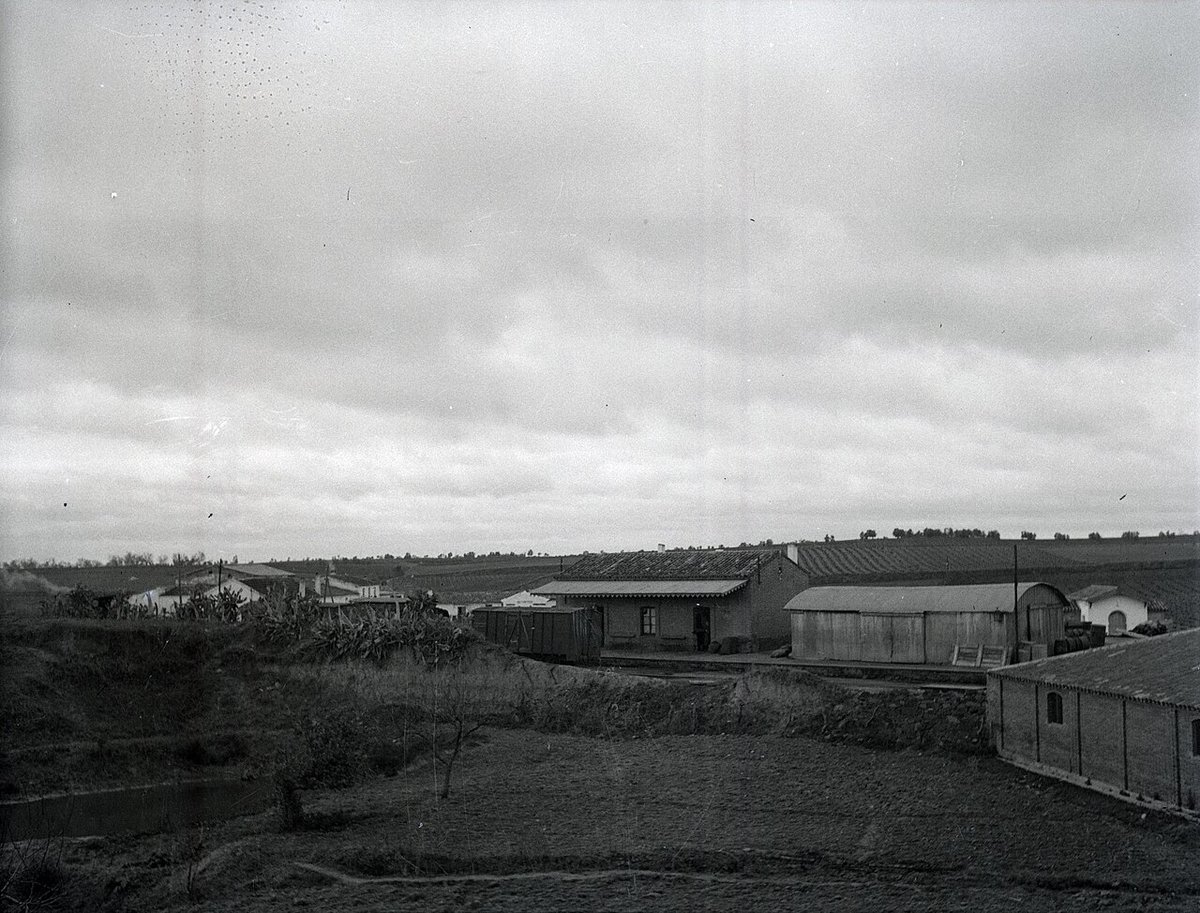
Escacena still has a railway station, something many villages of a similar size have lost. It lies on the line between Seville and Huelva, and passengers still pass through.
The building has the look of older rural stations: compact, brick-built, with a faint nineteenth-century character that feels unusual today. It is neither large nor striking, yet it carries the sense of a place that has stood for over a century, watching trains come and go along with generations of local life.
From the station area, one of the nearby high points comes into view: the Alto del Cejo. There are no elaborate viewpoints or heavily signposted trails. Finding your way often comes down to asking someone and following the path they suggest.
That approach tends to suit the place.
The Iglesia del Divino Salvador
In the centre of the village stands the Iglesia del Divino Salvador, a reminder of how far back the history of many towns in El Condado stretches.
Its origins are usually placed in the medieval period, and its style combines Gothic and Mudejar elements, a common blend in this part of Andalusia. From the outside, the tower and the use of brick catch the eye. Inside, there is a wooden ceiling and a calm, subdued atmosphere typical of small-town churches, where it often feels quieter than the street outside.
The church houses the Virgen de Luna, closely tied to local history. According to local accounts, the image stopped being carried in procession decades ago after it was damaged in an incident. It is one of those stories that circulates through the village, with each person adding their own version.
Local food and winter traditions
Food here leans heavily on what has long been available in the countryside: pulses, vegetables, pork products and plenty of olive oil.
One of the most frequently mentioned dishes is guiso de garbanzos, a chickpea stew that is hearty and slow-cooked. There is nothing complicated about it: chickpeas, cured meats, vegetables and time. It is the kind of meal that leaves little room for anything later in the day.
In winter, the village is known for the Los Tostones celebration. The idea is simple: toasted bread with garlic and olive oil, served with grilled sardines. It may sound modest, but on a cold day, eaten outdoors among locals, it comes together in a way that feels just right.
Then there are the orejitas de habas, a traditional sweet that stands out for both its name and its ingredients. These are recipes more often kept in family kitchens than written down in cookbooks.
Taking it as it comes
Escacena del Campo is not the sort of destination that fits neatly into a checklist. There are no long lists of must-see sights to tick off. Instead, a visit tends to take shape through small moments: a walk through the centre, a pause in the square, a trip out to Tejada la Vieja, a look across the surrounding landscape of El Condado.
Arrive expecting a packed itinerary and it may feel sparse. Approach it at a slower pace, more like spending time in a friend’s village, and it begins to make sense within this corner of Huelva.
At that point, it stops being just another place passed on the road.