Full Article
about Hinojos
A municipality set in the Doñana landscape, with vast pine woods, marsh traditions and rich wetland biodiversity.
Ocultar artículo Leer artículo completo
The baker in Hinojos sells out of crusty loaves by 10 a.m. sharp. If you arrive at quarter past, you’ll find the metal shutter half-closed and the owner sweeping flour into the gutter, already thinking about tomorrow’s dough. That small act of closing shop sums up the village’s sense of time: tasks get done when they need doing, not when tourists expect them.
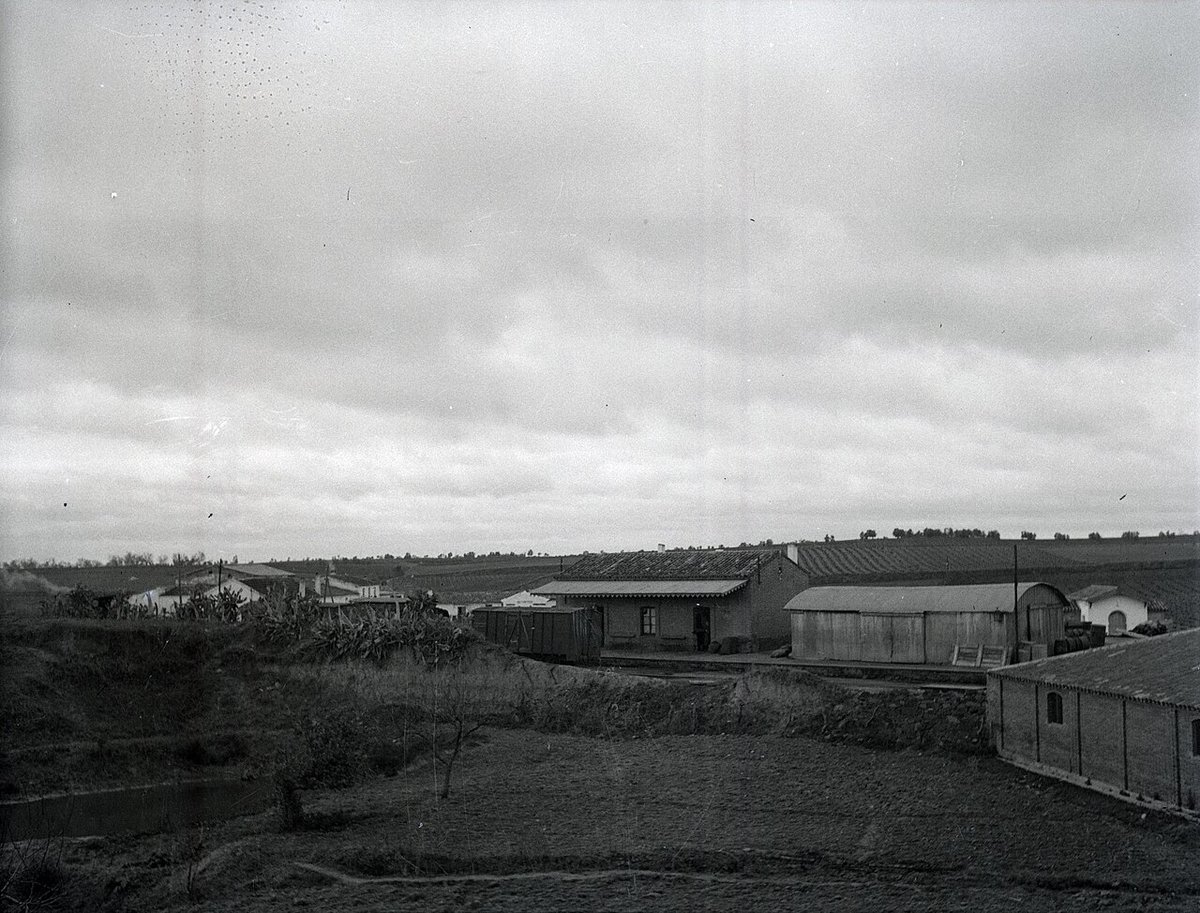
Set at a gentle 90 m above sea level, 45 minutes’ drive north-east of Huelva, Hinojos sits in the triangle of pine woods, vineyards and scrubby pasture that forms the northern edge of the Doñana hinterland. The Atlantic is only 45 km away, yet the ocean breeze rarely pushes this far inland; instead, summer heat pools over the flat land and pushes afternoon temperatures past 38 °C for weeks on end. Locals respond by closing the wooden shutters, lowering voices and re-emerging after seven, when the plaza fills with children on bikes and grandparents on metal chairs dragged outside from the kitchen.
A Grid of Whitewash and Wrought Iron
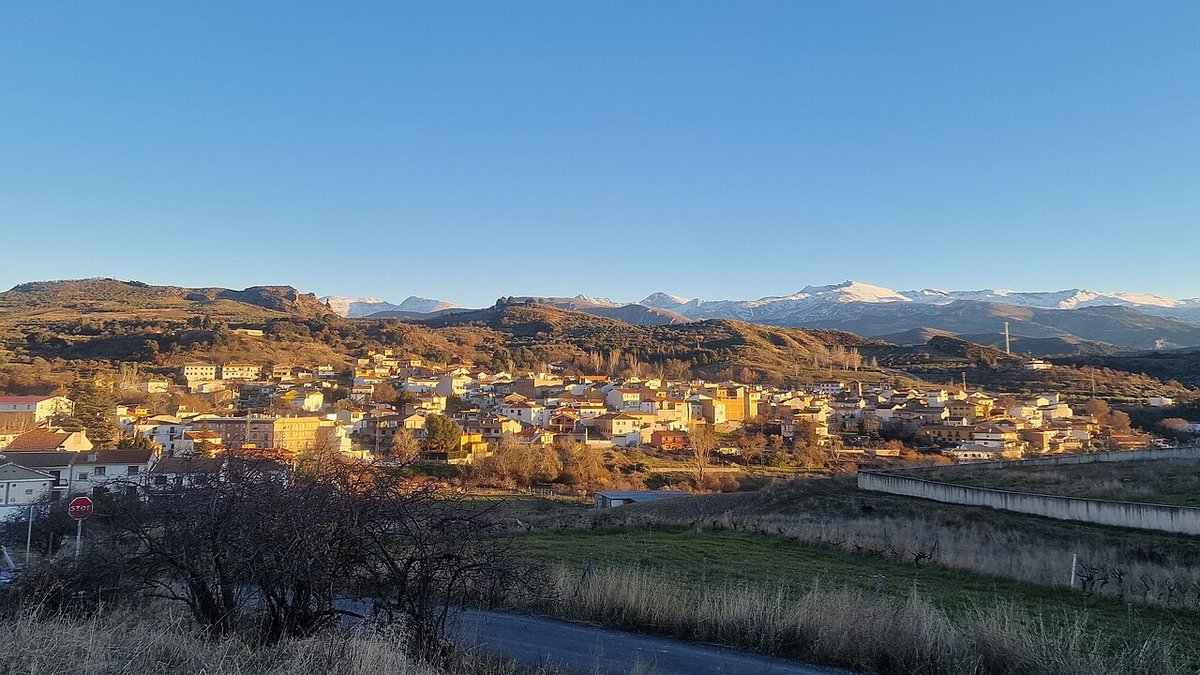
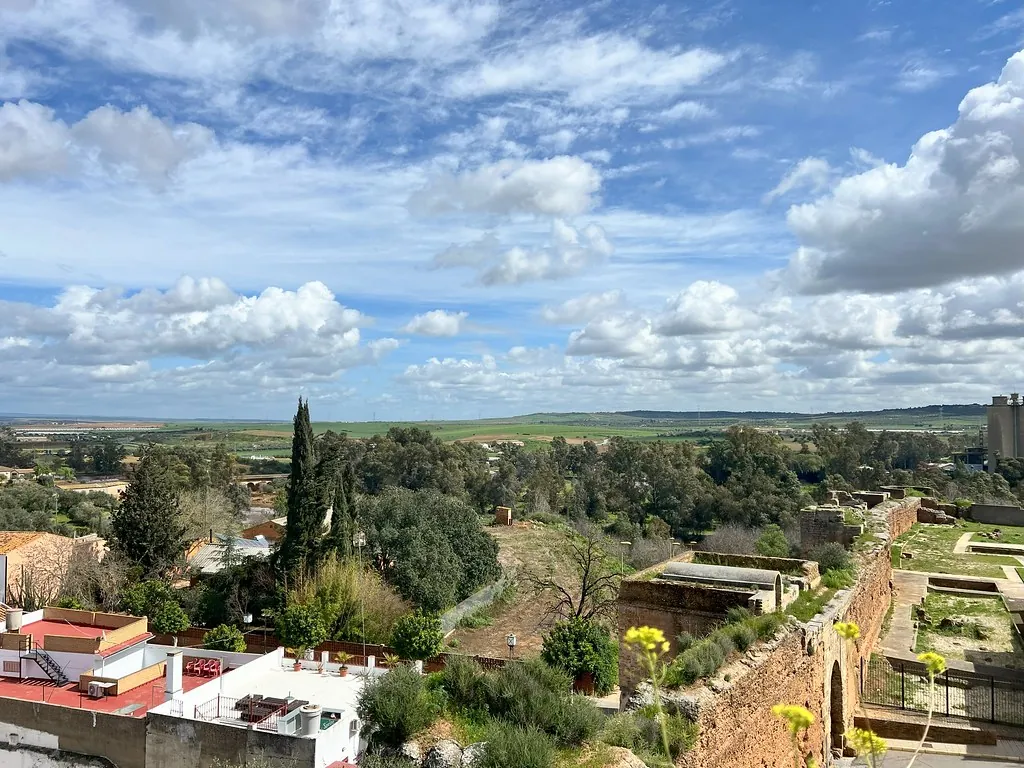
You can cross the historic core in eight minutes, but it is worth walking slower. Houses are painted the colour of fresh yoghurt, their window grilles curling into ivy-shaped flourishes or, in one case, a bull’s head. Bougainvillea drops purple bracts onto the single-lane streets; if a car comes, the driver taps the horn once and pedestrians step into a doorway until it passes. The only real monument is the parish church of San Mamés, rebuilt piecemeal since the sixteenth century. Inside, a gilded altarpiece shows the patron saint wedged between two lions—an oddity that children rehearsing First Communion ask about every year. Entrance is free; silence is expected.
Outside, Plaza de la Constitución functions as open-air living room. On Wednesdays the mobile fruit van parks here, scales dangling from the awning, while the owner shouts prices in an accent thick with countryside vowels. A cup of coffee from the kiosk costs €1.20 if you stand, €1.50 if you nab one of the plastic tables. Nobody rushes you, but conversation stops if you mention property prices; like many inland villages, Hinojos has watched neighbours sell country homes to northern Europeans, then struggle to afford their own children’s first flats.
Vines, Pigs and the Smell of Fermentation
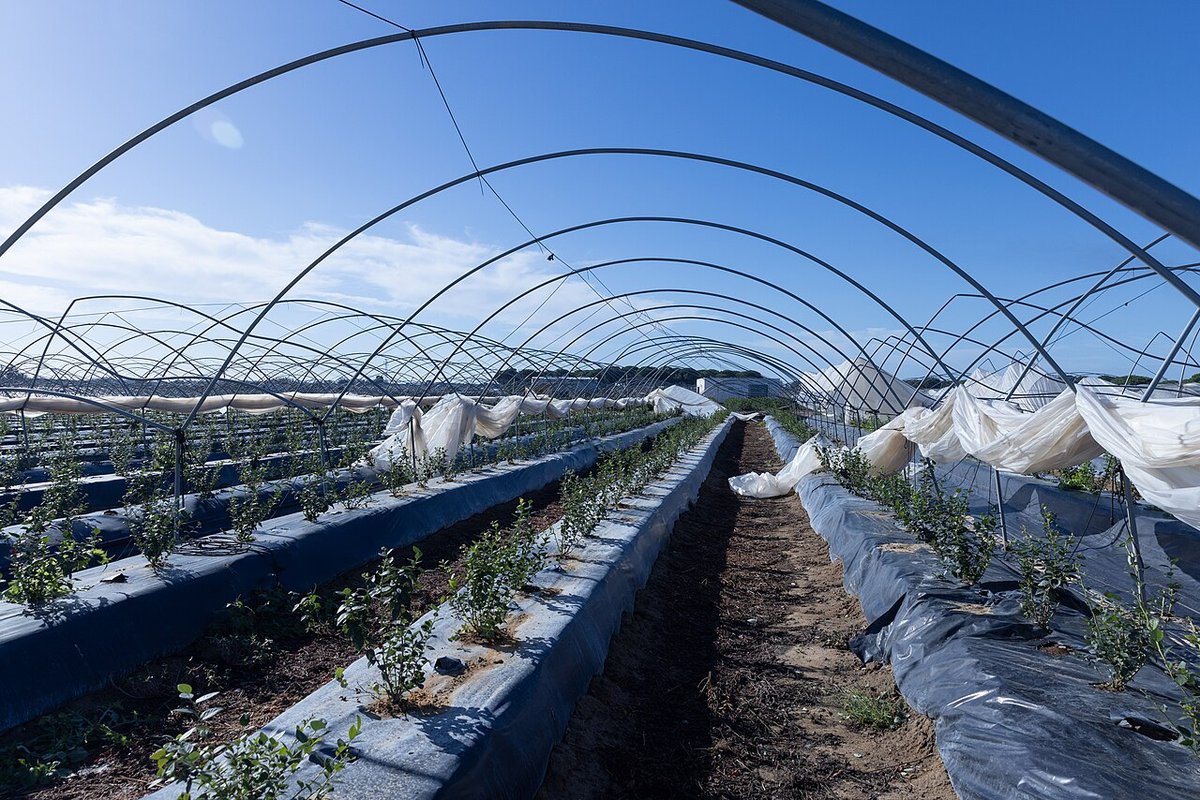
Agriculture surrounds the village on three sides. Vineyards appear in scattered blocks rather than the rolling oceans of La Rioja; the local cooperative, Bodegas Andrés y López, produces young white wines sold under the Condado de Huelva label. Tastings are possible on weekday mornings—ring the bell, wait for someone to finish hosing down the press and you’ll be poured three glasses for €3, money left in an honesty box. The wines are sharp, almost saline, designed to cut through the salt pork that dominates winter menus. That pork arrives courtesy of small black-footed pigs reared in the nearby dehesa; their hind legs become jamón that cures for twenty-four months in a brick warehouse on the road to El Rocío. You can smell it before you see it: sweet, faintly fungal, like butter left too long in a warm kitchen.
Visitors sometimes expect an organised “wine route” with hop-on buses. There isn’t one. Instead, you drive yourself, following hand-painted signs to whichever bodega answered the phone that morning. It is haphazard, occasionally frustrating, but it keeps prices low and encounters genuine.
Flat Trails and the Ghost of a Wetland
The land looks level, yet subtle ridges hide old meanders of the Guadalquivir. A web of farm tracks links Hinojos to the villages of Almonte and Pilas; cyclists appreciate the near-zero gradient and the fact that drivers wave rather than hoot. A pleasant half-day loop heads south for 12 km through stone-pine plantations until the track ends at a chain-link fence: the northern buffer zone of Doñana National Park. Beyond lies marsh, seasonal lagoons and, if you arrive at dusk, the mechanical croak of thousands of greylag geese flying in to roost. You cannot enter here—permits are issued only at El Acebuche visitor centre 35 km away—but the spectacle is free.
Walkers should carry water; there are no cafés, and phone coverage flickers. In spring the path edges turn yellow with Bermuda buttercups and the air smells of resin; by July the same ground is powdery dust, best tackled at first light before the sun climbs above the pines. Stout shoes suffice—boots are overkill—and a stick for the occasional loose dog is advisable.
Fiestas, Heat and the Wild-Mare Round-Up
The calendar revolves around three events. In May, the Cruces de Mayo sees neighbours compete to decorate the most flamboyant floral cross; judging happens after Mass, winners announced to applause that echoes off the whitewash. Late August brings the patron-saint fiestas: inflatable castles on the football pitch, a makeshift bar selling plastic cups of beer for €1, and a Saturday-night fair that rattles until 4 a.m. Book accommodation early; the only hotel (twelve rooms above a restaurant on Calle Real) fills quickly with returning emigrants from Barcelona and Madrid who greet each other in broad Andalusian then switch to Catalan once the wine flows.
The Recogida de las Yeguas on the first Saturday of August is the loudest date. Wild mares are driven down from the Doñana dunes, their manes braided with coloured ribbons, to be branded in improvised corrals beside the pine woods. Spectators arrive from Seville; traffic backs up along the A-481, and dust hangs in the air like brown fog. Animal-rights debate simmers, yet the tradition holds. If you attend, bring a hat and leave the dog at home—temperatures nudge 40 °C and shade is scarce.
Getting Here, Staying Fed and Paying the Bill
Public transport exists on paper: one bus a day from Huelva at 14:15, returning at 06:30 next morning. Miss it and a taxi costs €70. Car hire from Seville airport (75 km) is usually cheaper, and it lets you stock up in a supermarket before arrival; the village mini-market stocks only basics and closes for siesta 14:00-17:30.
Meals are straightforward. Mesón La Vega serves plate-wide entrecôte grilled over vine cuttings for €14, or a bowl of pochas (fresh white beans with chorizo) for €8. Vegetarians get tortilla, salad and little else; vegans should self-cater. Bread is sold from a tray on the bar—ask, and they’ll slice it for you. Most places prefer cash; contactless works in the hotel bar, but the card machine often “se rompe” when the bill tops €50.
Accommodation is limited. Besides the hotel, three houses offer legal tourist lets; expect €70 a night for two bedrooms, patio and a roof terrace overlooking the church. Air-conditioning is recent and not universal—check before you commit if travelling in July. Winter nights can drop to 3 °C; most rentals have plug-in heaters rather than central heating, so pack layers.
The Bottom Line
Hinojos will not dazzle with monuments or sweep you off your feet with scenery. What it offers is a functioning Spanish village where life is lived at field pace: bread before ten, wine with lunch, conversation in the plaza after dark. If you need nightlife beyond a second beer, stay in Seville. If you are happy to rise early, walk flat trails between pines and vineyards, then eat simply well, Hinojos rewards with an authenticity that no heritage brochure can fake. Just remember to set your watch by the church bell, not by Google’s estimated journey time—here, both are equally approximate.