Full Article
about Lucena del Puerto
Agricultural municipality with a major historic monastery; combines berry production with proximity to the Doñana natural area.
Hide article Read full article
First impressions in the Condado
If you are heading to Lucena del Puerto, drive straight into the main square and park there. There is usually space and it is free. The village is small and easy to cover on foot.
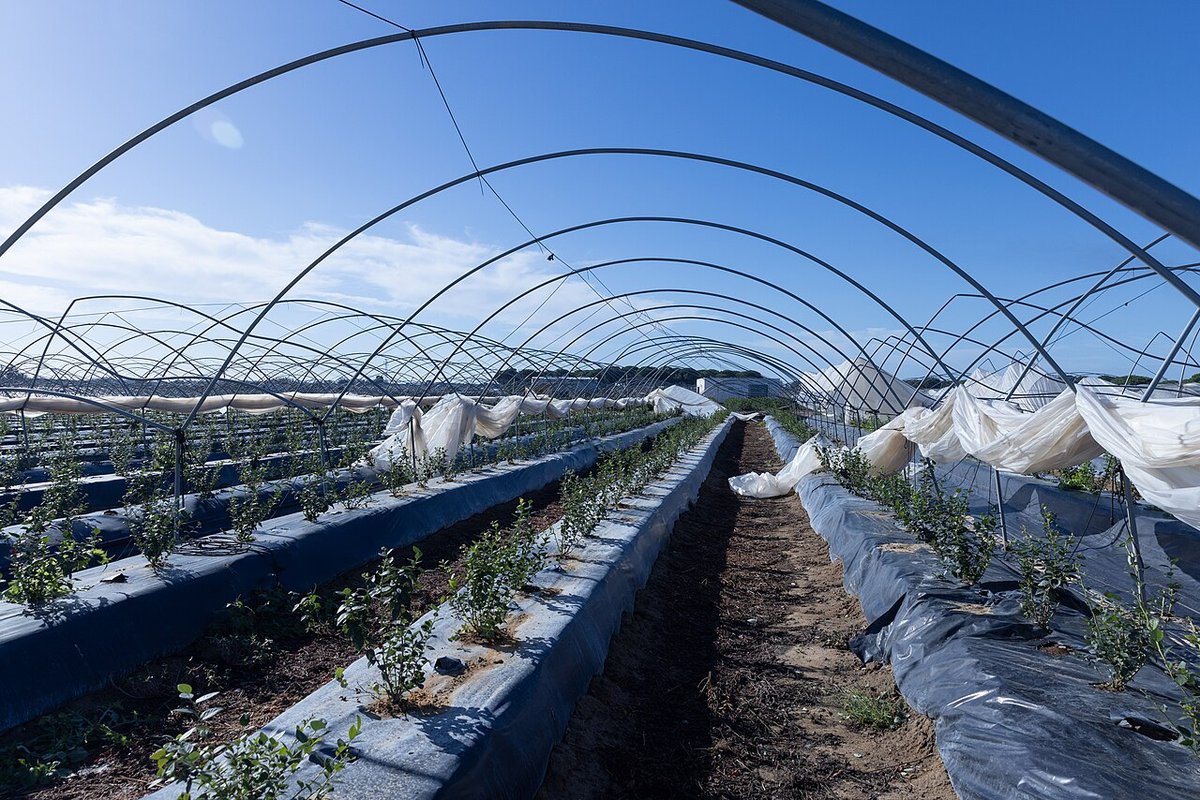
The approach tells you a lot about where you are. For kilometres, greenhouses stretch out on either side of the road, white plastic catching the light. Then the built-up area appears: around 3,390 people living in the middle of the Condado de Huelva, surrounded by vineyards, orange groves and berry crops.
Lucena del Puerto does not stage itself for visitors. It functions as it is, an agricultural town whose rhythms depend on what is being planted, picked or packed.
The square, the church and everyday cooking
The plaza mayor is usually quiet, even at midday. A few neighbours sit on benches, and that is about it. From here you can see the Iglesia de San José. It is large for a place of this size, although the interior is fairly restrained.
The bars around the centre serve straightforward daily dishes. Revuelto de cordero con tomate, a scrambled mixture of lamb and tomato. Caballas asadas con tostón, grilled mackerel with toasted bread. Simple stews that suit people who work long hours in the fields rather than those looking for a curated dining experience.
Festivals bring a different atmosphere. During the Cruces de Mayo, crosses decorated with flowers appear around the village and residents gather outside with a glass of fino, the dry sherry typical of this part of Andalusia. The romería of El Romerito, usually held in September, follows a similar pattern: a trip out into the countryside, food shared outdoors, then a return to the village. It is a local celebration rather than a spectacle, rooted in custom and community.
A working village, without decoration
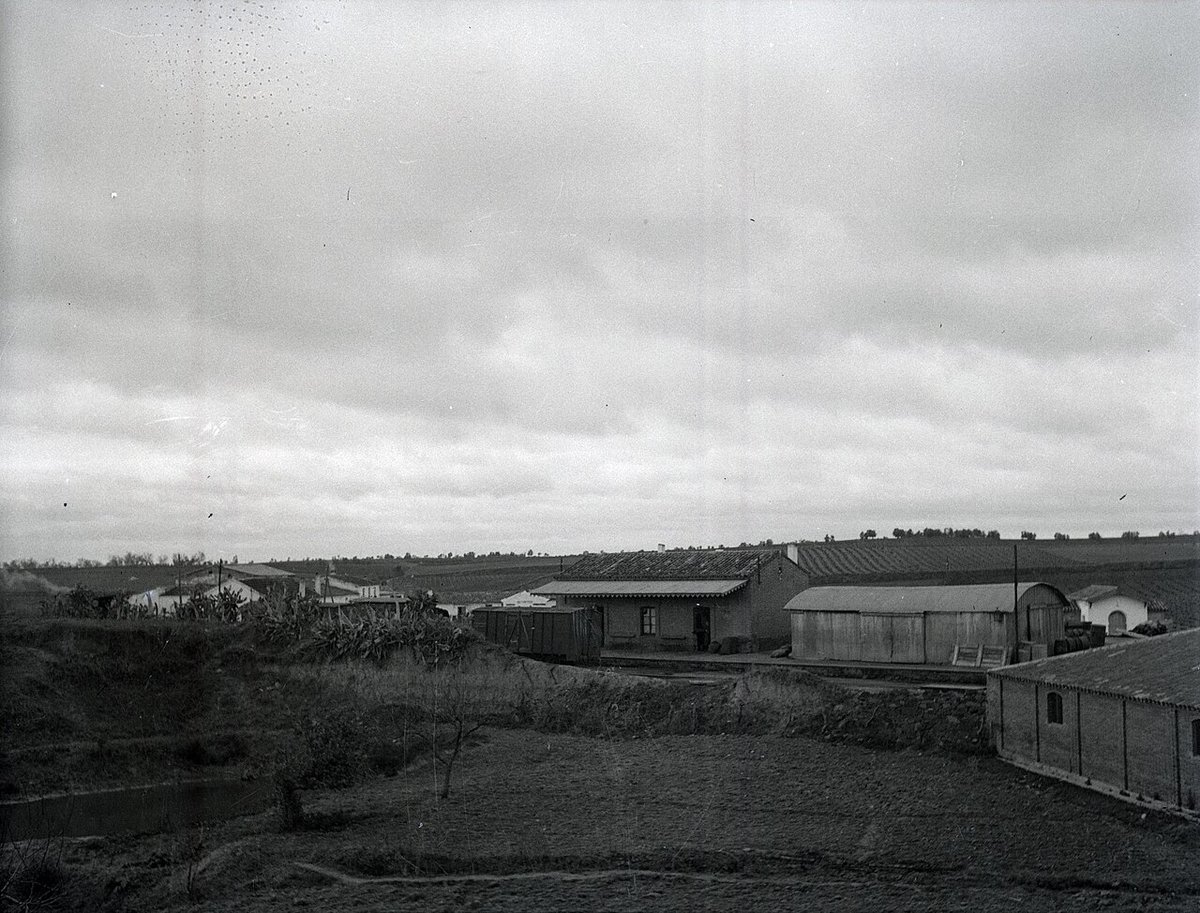
Lucena del Puerto makes no attempt to appear more polished than it is. Low houses, straight streets and a generally quiet pace define the centre. Much of the local economy revolves around strawberries and raspberries. In season, lorries move in and out at all hours.
Many younger residents work elsewhere and return at weekends. There is also a significant foreign workforce during the agricultural campaigns. This, too, forms part of daily life here, visible in the fields and on the streets.
On the outskirts stand the remains of the former Monasterio de la Luz. Today it is private property and barely visible from outside. There is also a site known as La Dehesa, where Roman remains have been found. It is fenced off and not usually open to visitors. These traces of the past exist, though they are not presented or interpreted in any formal way.
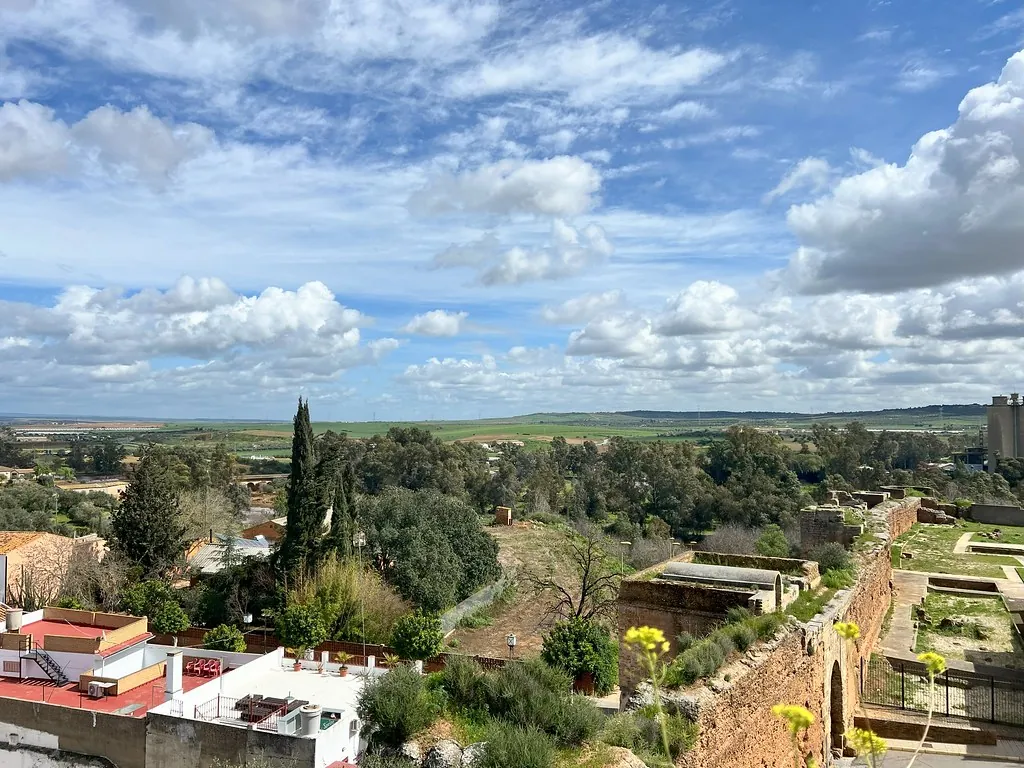
What defines Lucena del Puerto is not a single monument but its setting within the Condado. Vineyards signal the local wine tradition, orange trees scent the air in season, and berry cultivation shapes both landscape and labour.
The walk through the pines
From the village, the Camino de los Pinos de la Cruz leads towards the area known as El Alamillo. It is roughly four kilometres along a dirt track lined with pines.
There are no dramatic viewpoints along the way. This is the sort of route residents take on a Sunday or in the early evening. There is some shade, the smell of resin, and in the background the distant hum of the motorway.
In spring, when the nearby orange trees blossom, the air changes noticeably. The walk takes a little over an hour at a steady pace. It is a simple outing, more about routine than revelation.
Seasonal dishes and homemade sweets
Food here follows the calendar. In winter, caldereta de liebre sometimes appears. It depends on the hunting season. This stew combines hare with tomato, wine from the Condado and vegetables. It is not always listed, so it is worth asking.
At Easter, homemade sweets circulate through the village. Amarguillos de almendra, small almond biscuits with an intense flavour, and tortas de manteca with cinnamon and sugar are still made in several local households using traditional methods. They tend to pass from kitchen to kitchen rather than appearing in shop windows.
As with much in Lucena del Puerto, these dishes are not packaged for display. They belong to family routines and seasonal habits.
When to come
Spring and autumn work best. In spring, the strawberry fields are in full production and the level of activity is visible across the village. In autumn, the grape harvest begins in the Condado area, bringing its own shift in pace.
Summer heat can be intense, and at midday the streets are often empty. In winter, rain is possible and the tracks around the village can become muddy.
Arriving by car makes things simpler. Public transport does not offer much flexibility here. From Huelva, the drive takes just over twenty minutes via the A‑49. From Seville, it is around an hour.
Lucena del Puerto is not a place that demands a long itinerary. Stop, walk around the square, and have something to eat if you are there at the right time. That is usually enough to understand where you are: a small agricultural community in the Condado de Huelva, shaped by strawberries, vines and the steady routines of village life.