Full Article
about Paterna del Campo
A farming and livestock town known for staging one of Andalucía’s toughest mountain-bike races; set amid rolling farmland and hills.
Hide article Read full article
A landscape that sets the tone
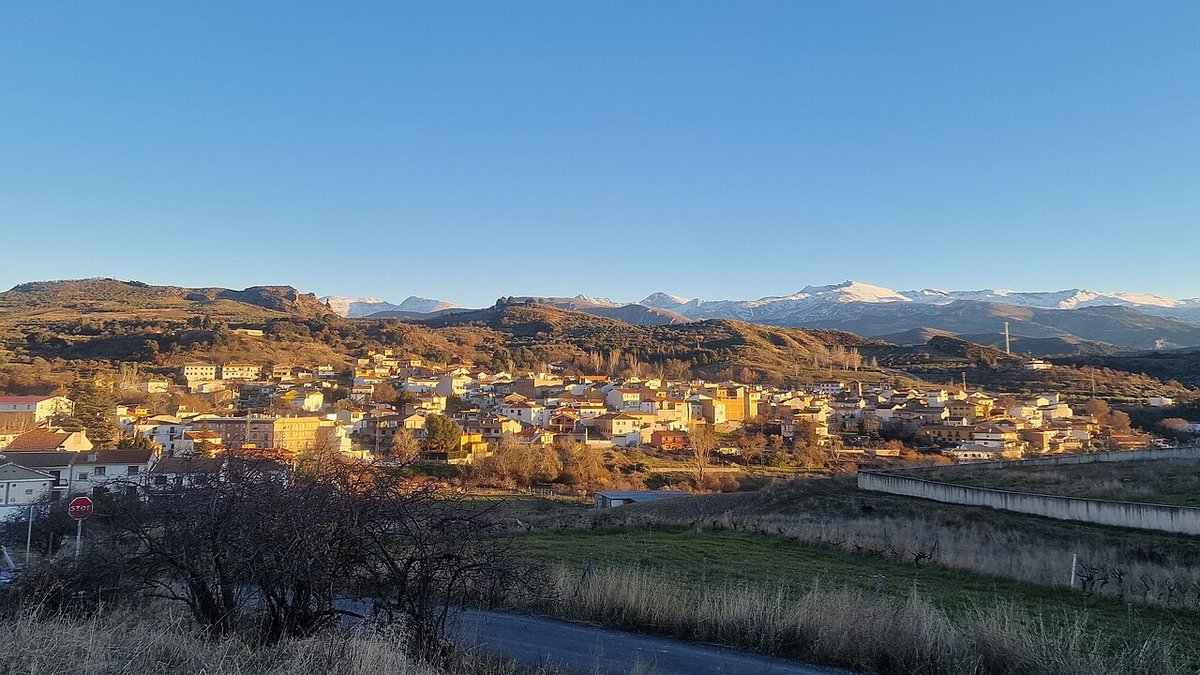
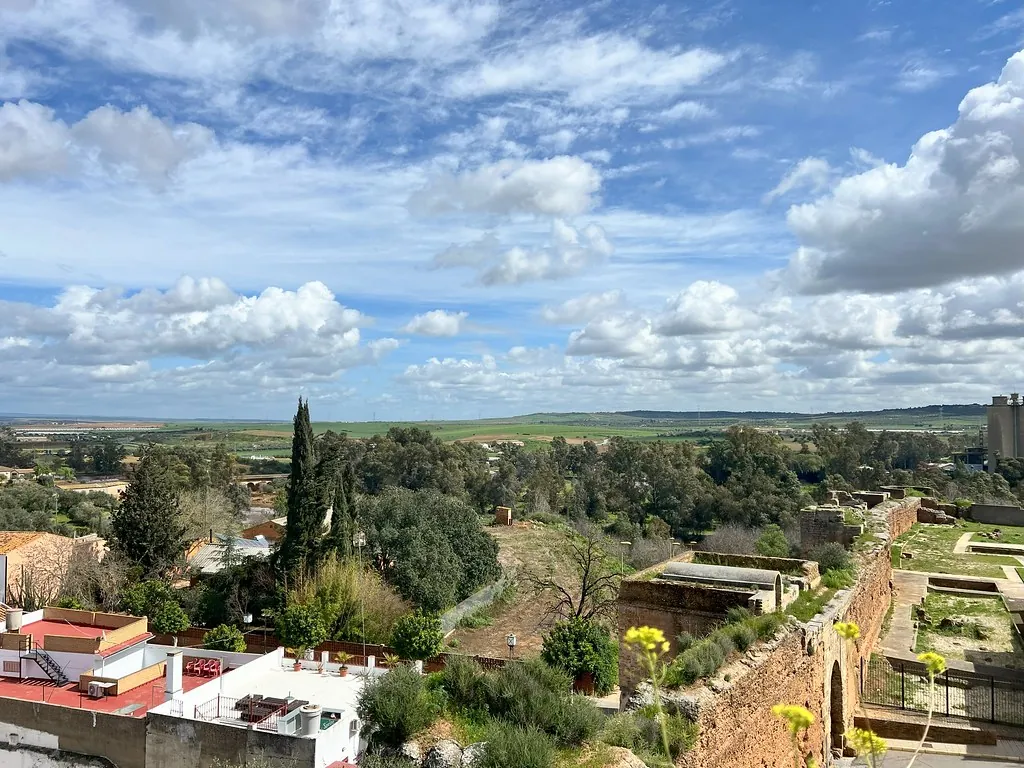
Paterna del Campo sits on the plain of the Condado de Huelva, an open agricultural stretch between the Sevillian countryside and the first inland hills. The view from any nearby rise shows its context: wide fields, gentle undulations, and a web of tracks that for centuries linked the interior with the coast and the Guadalquivir valley.
The town developed at this junction of rural routes. It was shaped more by the land and its cycles than by major commercial corridors. You understand the place by its position within a working landscape, one that has long connected different parts of western Andalusia.
The hill of Alpízar and a watchful past
To the north-east of town, the hill known as Alpízar holds fragmentary traces of a fortification. Local tradition places its origins in the Almohad period, when this area was part of a defensive line guarding access to the Guadalquivir.
What remains are scattered stones and the strategic logic of the place. From the top, you see a large portion of the Condado plain. It was never a large stronghold, but it functioned as a lookout in open territory. Now, it serves more as a natural viewpoint. The sense of watchfulness comes from the geography itself, not from any impressive ruin.
San Bartolomé: a building shaped by change
The parish church of San Bartolomé gathers much of the town’s history into one structure. Built after the Castilian conquest on the site of a former mosque, its Mudéjar origins are still visible in the masonry walls and a certain irregularity in the layout.
The building has been remade several times. The Lisbon earthquake of 1755, which affected much of Huelva, caused damage here and led to substantial rebuilding in the eighteenth century. Later additions and repairs followed. The result is an architecture of phases, not a single moment.
Inside, the image of the patron saint, San Bartolomé, is attributed to Jerónimo Hernández, a sculptor active in sixteenth-century Seville. It is usually dated to around 1569. The church’s value lies in this continuity—each alteration left a trace, even if the overall impression is one of unadorned simplicity.
Older traces across the plain
The occupation of this plain is older than the current town. The archaeological site of Tejada la Vieja, located to the south-east, corresponds to an ancient settlement linked to mining and trade routes in the Tartessian and Roman periods.
In the surrounding countryside, you can also find remnants of old water systems—stretches of channel or small bridges. Some studies connect them to Roman infrastructure. They appear as isolated fragments, not a visitable complex. Their significance is in what they suggest about the long history of organising this land.
Food and the rhythm of the year
The local cooking reflects a cereal-growing and livestock-raising region. In colder months, you find hearty dishes like chickpea stew with cod or migas. A lamb stew is often prepared for family gatherings.
The baking tradition relies on straightforward ingredients: flour, eggs, honey. During Carnival, it’s typical for families to prepare fried sweets at home, a custom tied to the calendar rather than commerce.
In May, the romería of San Isidro moves much of the town towards the surroundings of Alpízar hill. Carts, horses, and families gather for a day that blends festivity with the rural setting, reflecting the area’s agricultural identity.
Walking the town and its surroundings
You can walk Paterna del Campo at an unhurried pace in a couple of hours. The centre revolves around the main square and the church. Streets are generally straight, lined with one or two-storey whitewashed houses. Look for the simple entrances that lead to interior patios, often hidden from view.
Beyond the last houses, agricultural paths lead into the Condado countryside. They are flat, suitable for walking or cycling, and pass through olive groves, cereal fields, and areas of low scrub.
A visit here works best as a slow walk. The interest lies in seeing how the landscape and rural life have shaped the town. Paterna doesn’t offer grand monuments, but a tangible continuity between its streets, its fields, and the routes that have connected them for generations.