Full Article
about Rociana del Condado
Wine-growing municipality whose historic center is listed as a Cultural Heritage Site; land of berries and aged wines.
Hide article Read full article
The smell of fermenting must mixes with freshly turned earth from tractor wheels. It is a Tuesday morning in April, and lorries move in and out of the cooperatives on the road to Bollullos del Condado. Rociana del Condado operates on this daily rhythm: working mornings, a town that revolves around the vineyard far more than appearances suggest.
Wine here is straightforward. It appears as fresh white served in small glasses at a bar counter, as fortified wine after a meal, as bulk wine passed from neighbour to neighbour. There is no ceremony around it, just habit.
Vineyards that start at the town's edge
The wine route of the Condado passes through several towns, but in Rociana the vines begin almost where the pavement ends. A short drive out reaches low rows planted in reddish, sandy soil. Come the harvest, from late August into September, everything intensifies. Tractors move fully loaded, the smell of crushed grapes hangs thick in the air, and local roads carry steady agricultural traffic. You share the road.
Must in a plastic container
Wine does not wait for mealtimes here. At a cooperative’s loading area, a man in green rubber boots fills a five-litre container straight from a tank in his van. It is mosto, still cloudy, sweet with a sharp note that tingles on the gums. “For home,” he says. He will drink it young and fresh.
Scenes like this explain the proximity. Wine is present early in the day, part of work as much as leisure.
When rosemary fills the streets
At the start of May, the scent of rosemary comes from the crosses built in every neighbourhood. Balconies are dressed with shawls and embroidered bedspreads for the Cruces de Mayo. As night falls, sevillanas music and handclaps carry into the late hours.
The Plaza de España becomes a constant flow of people. Temporary bars appear, where glasses of wine with lemon sit alongside soft drinks and plates of fried fish. The smell of hot oil clings to your clothes long after you've left.
In the days before the festival, panetes appear on counters. These are sweet buns flavoured with anise, tied to this time of year. Trays come out of the town’s ovens, and queues form early. Many people buy more than they need, just in case family come to visit. When they harden after a few days, they are dunked into morning coffee.
Dust on the camino
As the pilgrimage nears, the hermitage of El Valle fills with decorated carts covered in paper flowers. This marks the departure of Rociana’s route to El Rocío. The journey is made on foot or by cart, crossing farmland and areas of low scrub before the marshlands.
Clothing follows tradition. Women wear light flamenco dresses, men opt for hats and long-sleeved shirts. By mid-morning, dust rises from the path, and the smell of horses mixes with rockrose and pine.
Stopping points become temporary camps where people cook and rest before continuing. Older residents recall longer routes with less organisation. Much has changed, but one idea returns each year: to cover as much ground as possible on sand tracks before El Rocío.
A landscape of plastic and mist
At dawn, the vega of the Rocín often lies under a low mist that takes time to lift. The light is pale and flat.
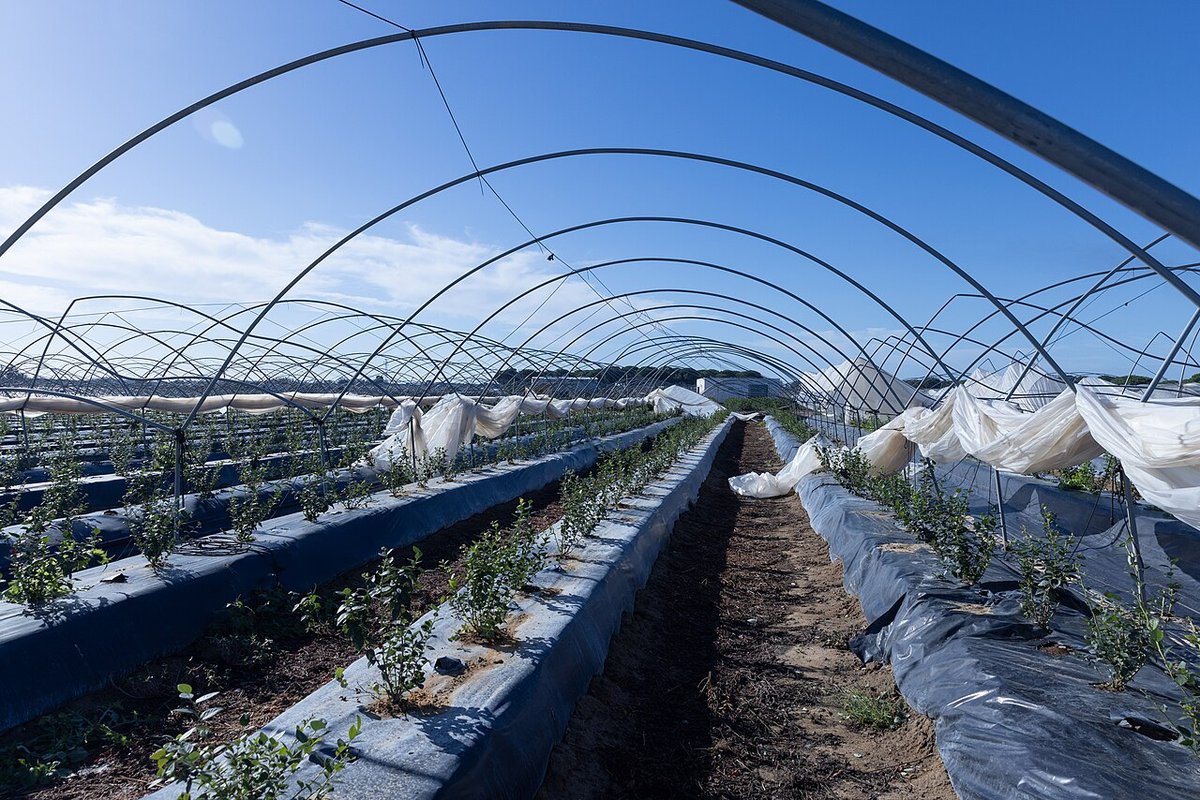
Here the landscape shifts. Vineyards give way to plots of intensive agriculture—strawberries, raspberries—that employ many in winter. Long rows of white plastic greenhouses stretch across the land like a bleached sea. During the season you see workers bent at the waist and lorries waiting to be loaded.
Agricultural tracks run through the area and can be explored on foot or by bike. This is not a landscape designed for display. It shows how part of the local economy works: early starts, packed lunches in backpacks, hands stained red by day’s end.
The light at different hours
May is when Rociana feels most alive. The Cruces bring movement to the streets, the countryside stays green from spring rains, and evenings are long enough for walking without summer’s heat.
August feels very different. Midday heat becomes intense enough that many shutters stay closed until late afternoon. Much of the town either leaves or shifts to very early working hours. If you visit on a weekend, arrive before ten; parking in the centre tightens once the Plaza de España fills.
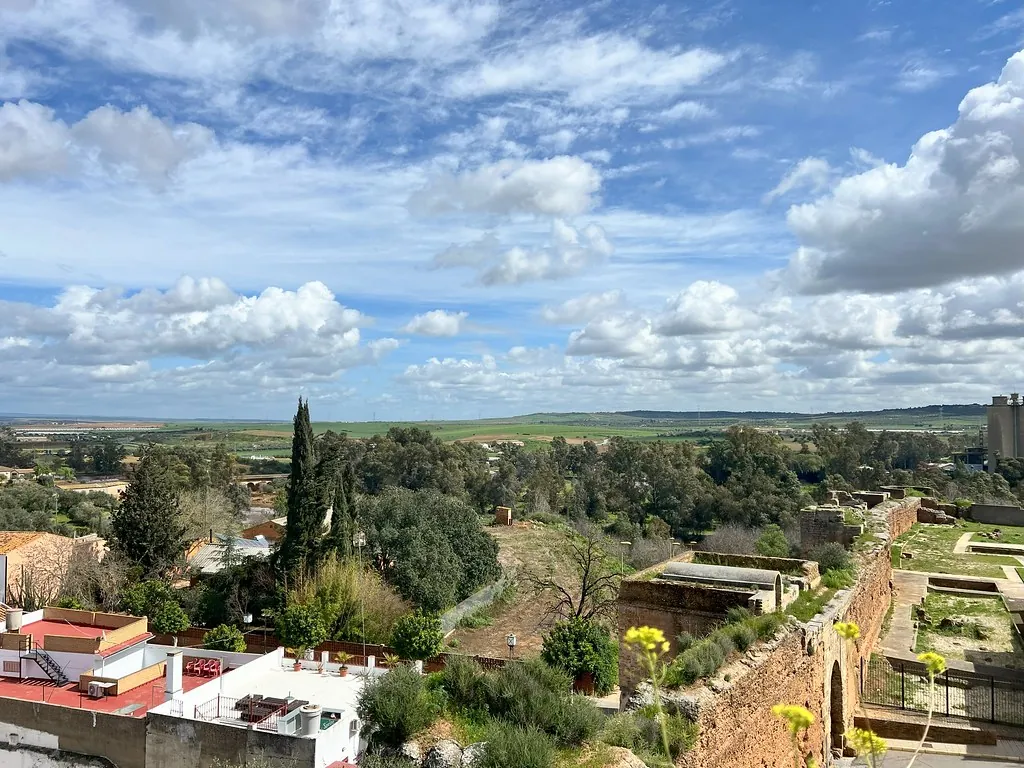
The church of San Bartolomé defines the town’s outline, its tower covered in white and blue tiles. It serves as a quiet reference point in a place where daily life is measured by the vineyard, the seasons, and the work tied to both.