Full Article
about Villarrasa
A farming municipality crossed by the Tinto River, dotted with unique spots; noted for its small chapels and devotion to the Virgen de los Remedios.
Hide article Read full article
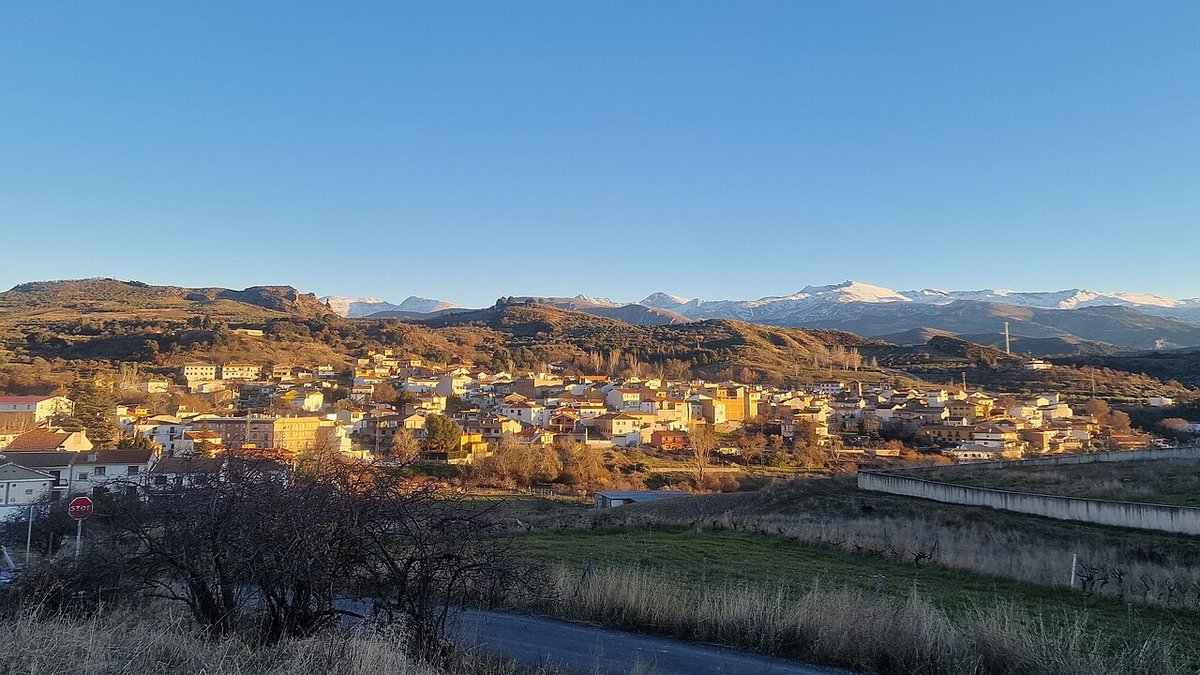
Villarrasa does not announce itself with dramatic scenery or a grand entrance. The road runs straight, fields stretching out on either side, and there is a moment when it feels as though you may have missed it. Then come the white houses, the quiet streets and the unhurried rhythm of everyday life. This small town in the Condado de Huelva has around two thousand inhabitants and moves at a pace that is usually slower than the traffic passing nearby.
Spend time in the main square and the essentials become clear without anyone spelling them out. Agriculture shapes everything. Vineyards surround the town, and most people seem to have known each other for years. Villarrasa functions like many Andalusian rural communities: practical, close‑knit and closely tied to the land.
The Hermitage on the Hill
The story of the Virgen de los Remedios, the town’s patron saint, begins in an unexpected place. According to tradition, the image appeared at the start of the 16th century in a tannery, a workshop where hides were treated. It is not the most solemn setting one might imagine, yet village legends often begin in ordinary places.
Workers are said to have found the image among the remains of an older structure, probably dating back to the Islamic period. The discovery eventually led to the construction of a hermitage on the hill overlooking the town.
The walk up has its reward. From the top, Villarrasa lies clearly below, straight streets and reddish roofs laid out against the surrounding countryside. In the distance, the Río Tinto curves through the fields. Its dark colour often surprises visitors, though it is simply the result of the minerals the river carries.
Inside the hermitage stands the image that has been venerated here for centuries. Local people speak of the Virgen de los Remedios with a blend of devotion and familiarity that feels particular to small towns, where religious figures are woven into daily life rather than set apart from it.
Puente Gadea and the Río Tinto
On the outskirts of Villarrasa stands Puente Gadea, built in the first half of the 20th century. It belongs to a practical tradition of engineering: stone arches, iron structure and no interest in decoration. The intention was durability, and it has fulfilled that role.
During the Spanish Civil War there was talk, according to local accounts, of blowing it up as happened to other bridges. In the end this did not occur, and the bridge remained, continuing to link roads and farmland in the area.
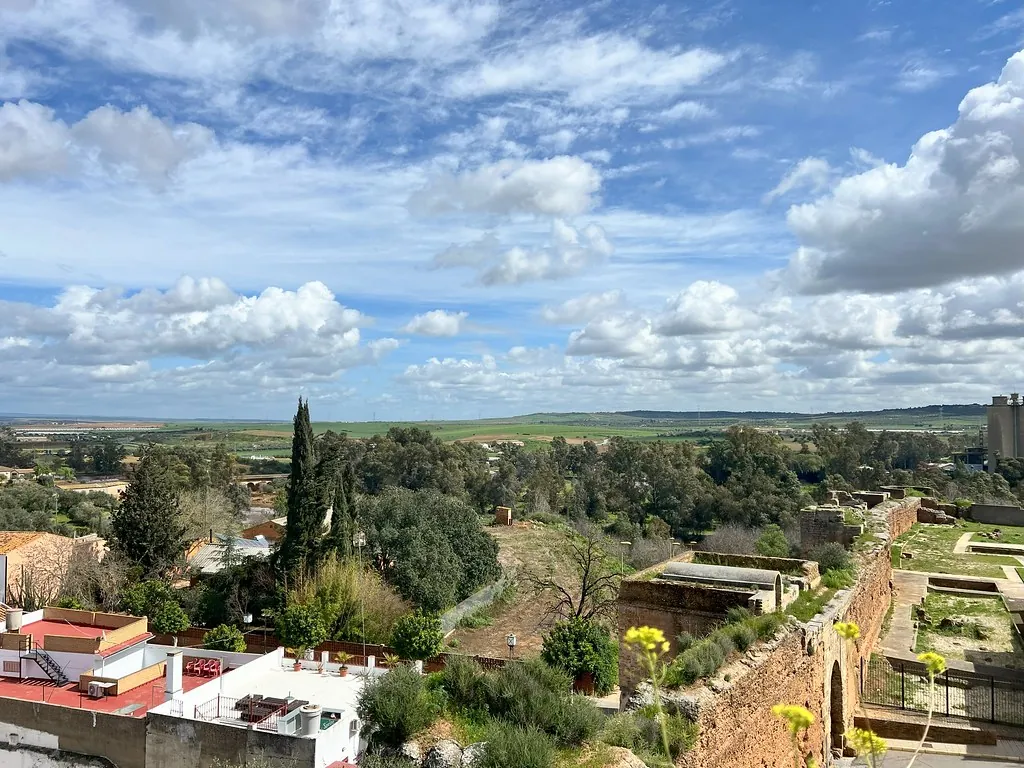
Beneath it flows the Río Tinto once again. It is not a large river in this stretch, yet it defines the landscape. Roman remains have been discovered nearby, suggesting that this fertile land has been used and reused for centuries. Today’s farmers still work the same ground, drawing from a long continuity rather than a dramatic past.
When the Town Fills the Streets
For much of the year Villarrasa is calm, but certain dates transform its atmosphere. The fiestas of San Roque, usually held in mid‑August, bring a visible change. Streets fill up, families return for the occasion and the programme combines religious events with what truly animates the town: music, food and long hours outdoors.
There are encierros with vaquillas, a traditional running of young bulls through the streets. It is far removed from the scale of larger cities and feels more like a shared local ritual than a spectacle designed for outsiders.
Spring brings another key moment, the romería to the area known as Dehesa Nueva. A romería is a pilgrimage that mixes devotion with celebration, and here the route leads through pine woodland. Carts and tractors head out together, groups of friends cook under the trees and the day stretches on at an easy pace. For anyone unfamiliar with this Andalusian tradition, it quickly becomes clear why people look forward to it all year.
Cooking from the Fields
The cuisine of Villarrasa reflects its surroundings. Dishes are substantial and closely linked to what is produced locally.
Cabrito guisado con vino, goat stewed with wine, appears frequently at family gatherings or over long weekends. Its preparation is straightforward in principle: good ingredients and time. As one local saying puts it, if a stew is rushed, it goes wrong. The emphasis is on patience rather than complexity.
During the grape harvest it is common to see migas served with fresh or dried grapes. Migas, made from stale bread fried with olive oil and garlic, began as a way of using up leftovers. In Villarrasa it remains part of the seasonal rhythm, adapting to what is available.
Homemade sweets also have their place, particularly roscos flavoured with wine or honey. They tend to appear during fiestas and family gatherings, and in many cases are still baked in domestic ovens rather than bought from elsewhere.
Paths Through the Condado Countryside
Beyond the town centre, several tracks are used both for agricultural work and for walking. One often mentioned by locals is the Camino de la Alquería. It leaves Villarrasa and crosses cultivated land before reaching an area where prehistoric remains have been identified.
This is not a signposted hiking trail of the kind found in a natural park. It is an agricultural route, used by those tending the fields as well as by people out for a walk or a cycle. The interest lies in the landscape itself: open fields, sunflowers in summer and vineyards across many plots.
Dehesa Nueva, the destination of the spring romería, is also well suited to walking. Pine trees grow on sandy soil and the sense of quiet is striking. In spring the scent of rosemary and thyme carries through the air, and it is common to encounter residents taking a long circuit through the area.
A Town That Keeps Its Rhythm
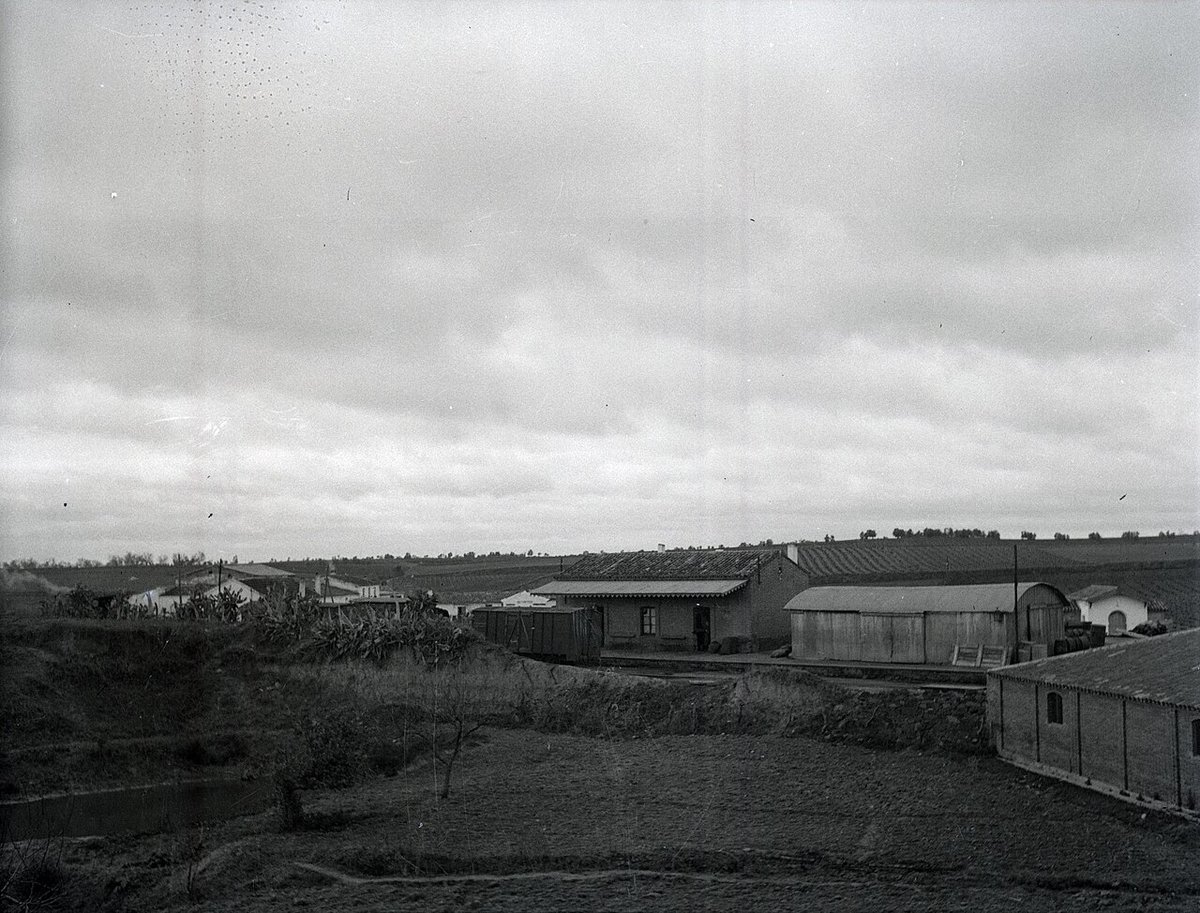
Villarrasa once had a railway station, dating from a time when the line between Huelva and Seville included more stops than it does today. Changes to the route and the passing of years meant that trains eventually ceased to stop here, and the station building was put to other uses.
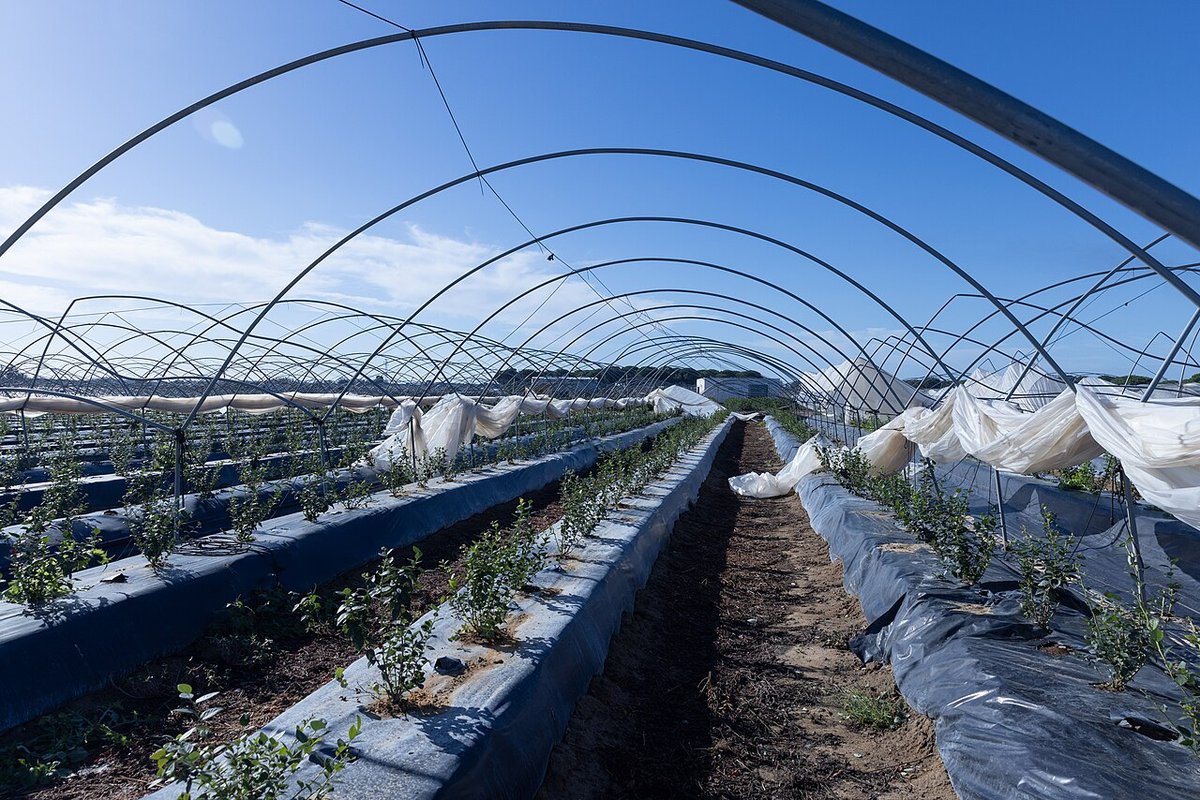
Today the town’s economy rests largely on the countryside around it: vineyards, olive groves and cereal crops. There is little sense of reinvention or reinvention narratives. Villarrasa continues much as it has for decades, adjusting where necessary but keeping its core intact.
For visitors, that steady rhythm is part of the appeal. There are no grand claims, no oversized monuments. Instead there is a hermitage on a hill, a bridge that endured, a river that stains the water dark and fields that dictate the calendar. Villarrasa is best understood not through a checklist of sights, but by observing how daily life unfolds at its own measured pace in the Condado de Huelva.