Full Article
about Benahavís
Mountain village near the coast, known as the dining room of the Costa del Sol for its high concentration of restaurants.
Hide article Read full article
Morning light between rock walls
At ten in the morning, the sun has not fully reached the ravine. From terraces that look out over the drop, the Guadalmina River traces a green line between two stone walls. The air carries the scent of damp rosemary and freshly baked bread. Down in the square, parked cars show number plates from across Europe. Benahavís wakes with foreign accents and the smell of stews already on the go.
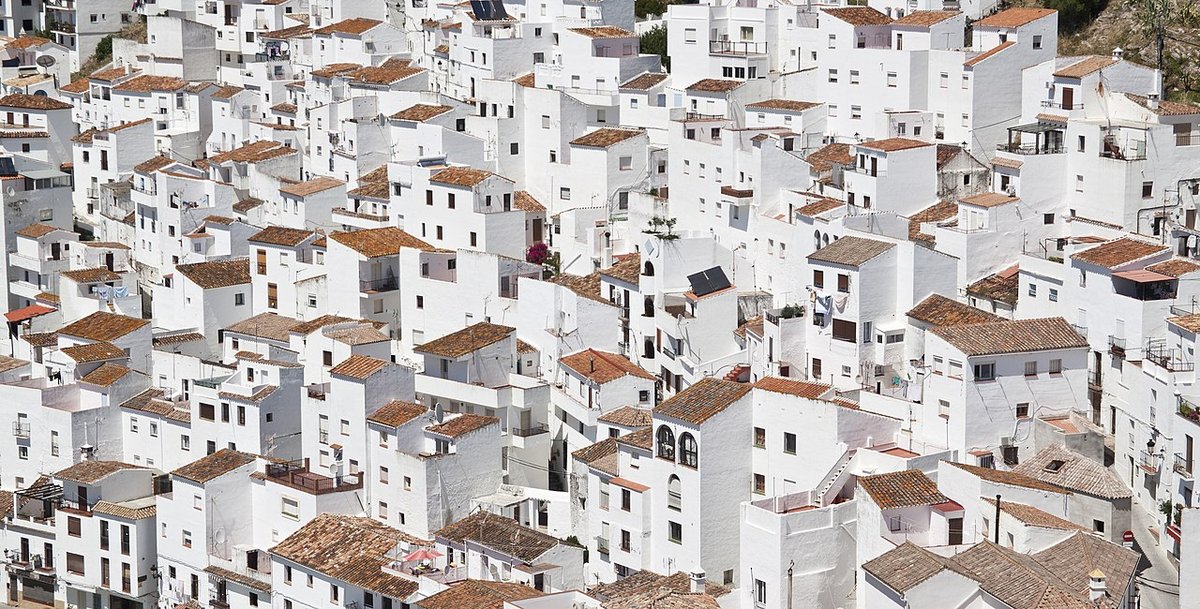
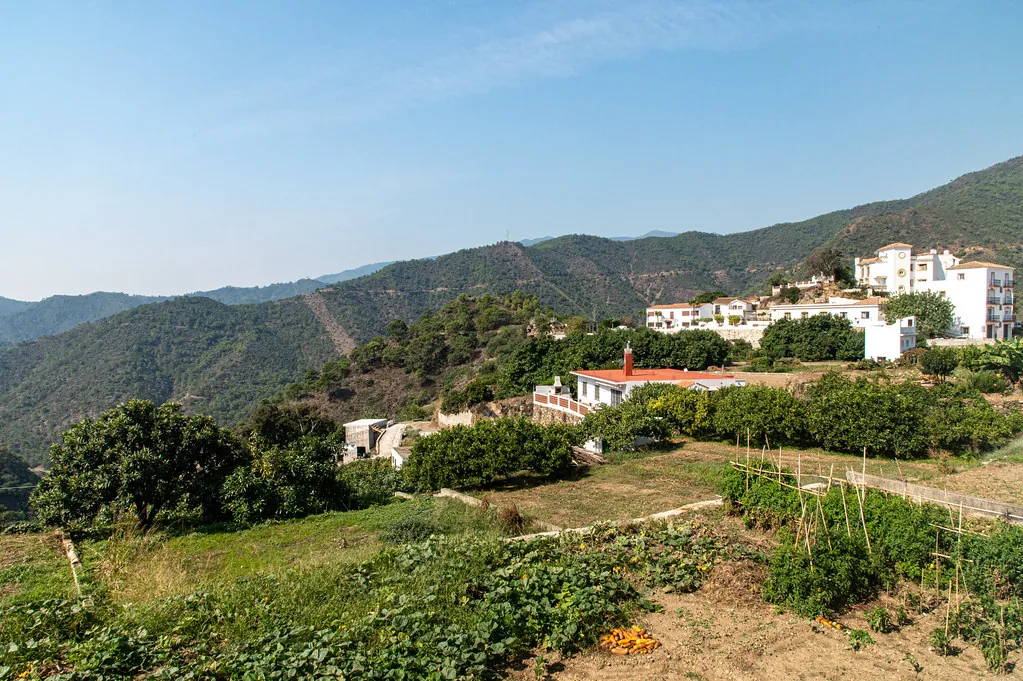
The setting explains the pace. The village sits tucked among hills, with a single main road linking it to the coast. That sense of enclosure shapes the day from early on, when the light arrives late in the narrow cut of the valley.
A place that eats every day of the week
Some say the food here outdoes Ronda. What stands out is how busy tables can be even on a quiet Tuesday in January, a typically calm month on the Costa del Sol. For a place of this size, the number of restaurants is striking, and many wood ovens stay lit through winter.
Cochinillo often arrives with crisp skin and very tender meat, the kind of dish that encourages a long, unhurried meal. When game appears on the menu, such as partridge or rabbit, it is worth choosing. These are recipes that have remained in the same kitchens for decades, with a spiced note common in the mountains.
A small detail still holds: at some bars, especially mid-morning, conversation tends to circle around house prices or traffic towards the coast more than golf. It says something about how the village balances its reputation with everyday concerns.
The climb to where the coast was watched
Castillo de Montemayor lies about three kilometres uphill, though the ascent feels longer. The path begins near the sports centre, first on asphalt and concrete, then on loose stone and reddish earth. It is a steady climb that opens up in stages.
At the top, there is almost always wind. To the north, the sierra spreads out; to the south, the Mediterranean appears between two hills. Little remains of the fortress beyond sections of wall and a cistern, yet the position explains everything. From here, routes rising from the coast and movements along the valley could be controlled.
In the evening, Sierra Bermeja turns a deep red for a few minutes as the light fades. It is brief, but very clear.
Going down after dark without a torch is not a good idea. Parts of the path are slippery, and the lower section passes close to private estates.
A canyon heard before it is seen
A short walk from the car park, the sound of water slips between the houses like a constant echo. This is the Cañón de las Angosturas, where the Guadalmina narrows between rock walls and runs confined.
In summer, groups in wetsuits are often seen making their way down the river. In winter, the scene shifts. The water runs darker, with branches and foam after rainfall.
The entrance to the narrowest stretch is usually marked by a metal chain. After heavy rain, it is best to stay out. Water levels can rise quickly and access for rescues is difficult. Footwear that can get wet makes a difference. The rocks in the riverbed are smooth and slippery even on dry days.
A quiet village with a different economy nearby
Benahavís feels compact because of that single access road from the coast. Just a few minutes from the centre, very large residential developments begin, with golf courses and private security at their entrances. Some of the people who live there come down to the village to eat or to walk in the afternoon.
The contrast is visible. Very expensive cars park alongside neighbours who have lived here all their lives. Even so, the rhythm remains that of a small place. Children walk to school, the municipal band rehearses in the square on some days, and at night, when traffic drops, the river can be heard again.
When to go, and when it gets busy
On weekdays, outside July and August, Benahavís moves slowly. By mid-morning the air smells of toasted bread and damp hills, and the streets can be walked with barely any noise.
In high summer and during the village festivities, usually around mid-August, the atmosphere changes noticeably. Many people arrive from the coast, some streets are closed, and parking near the centre becomes difficult.
For walking, the best time to head up to the castle is early, before the sun falls directly on the slope. The stone still holds the cool of the night and the sierra smells of thyme. From above, the sea appears bright between the mountains, as if a piece of mirror had been set on the horizon.