Full Article
about Estepona
Estepona’s old town, filled with flowers and murals, and its long beaches, make it the Garden of the Costa del Sol.
Hide article Read full article
Between sea and mountains
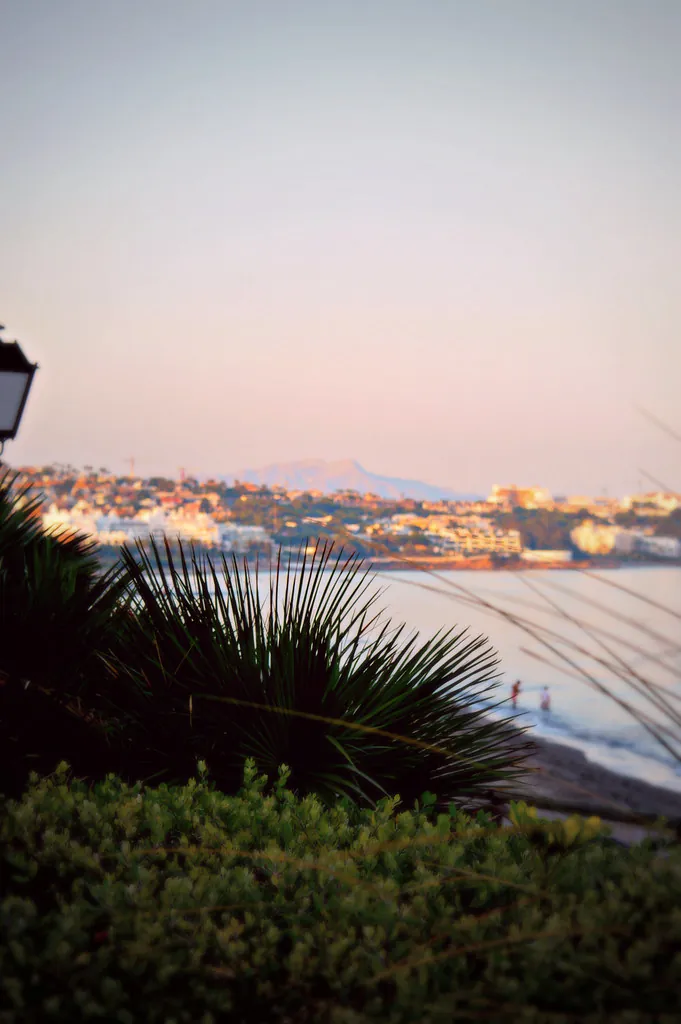
Estepona stretches along an open section of coast between Marbella and the border with Cádiz, on the western side of the Costa del Sol. For centuries it was a small fishing port, backed by the Sierra Bermeja and facing a band of wide beaches to the south. Life here revolved around the sea for a long time, with fishing, fish curing and modest landing points shaping the local economy. That rhythm shifted in the second half of the twentieth century, when tourism began to take hold.
Even now, it is easy to hear stories that recall a very different shoreline. From a terrace facing the beach, people still talk about when the coast was almost empty land and visitors arrived from Málaga by train or on ageing buses. Sardines roasting beside the sand are not a recent revival but part of a long-standing coastal routine. Much earlier still, the hills near Alcorrín were home to Phoenician settlements linked to maritime trade and fish preservation.
A town that painted itself
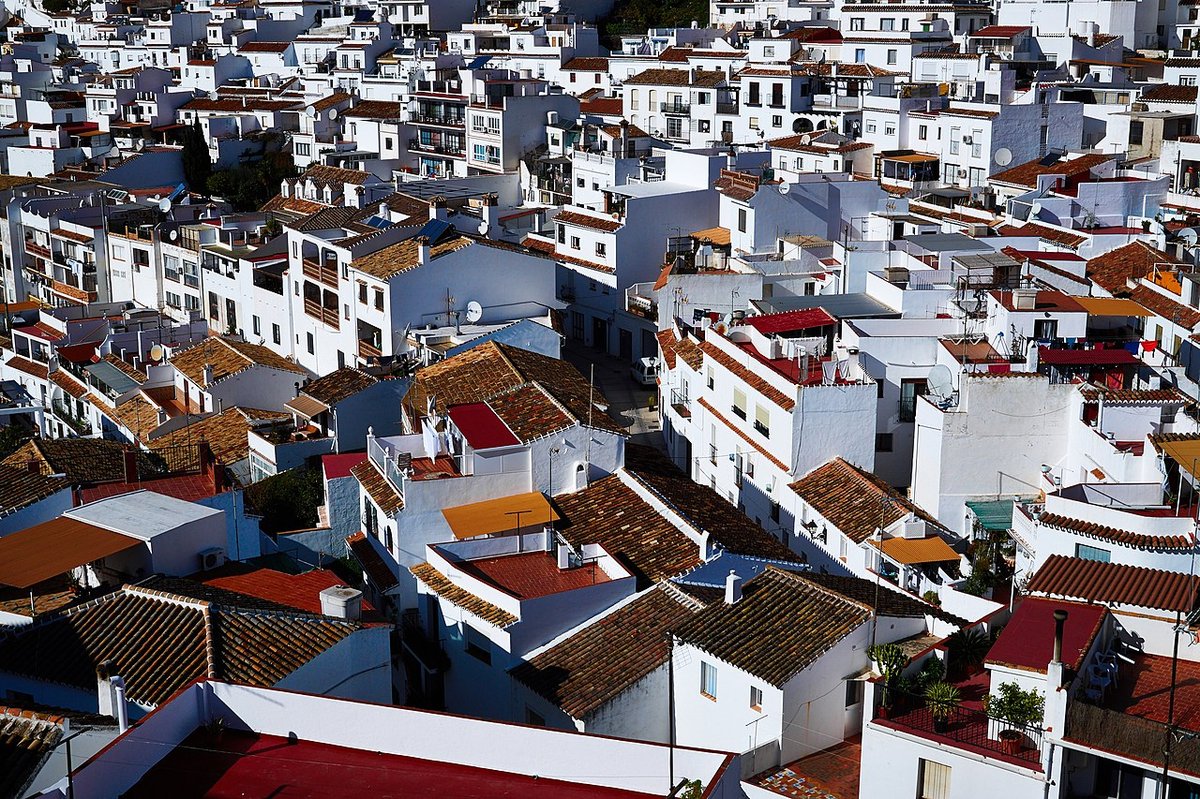
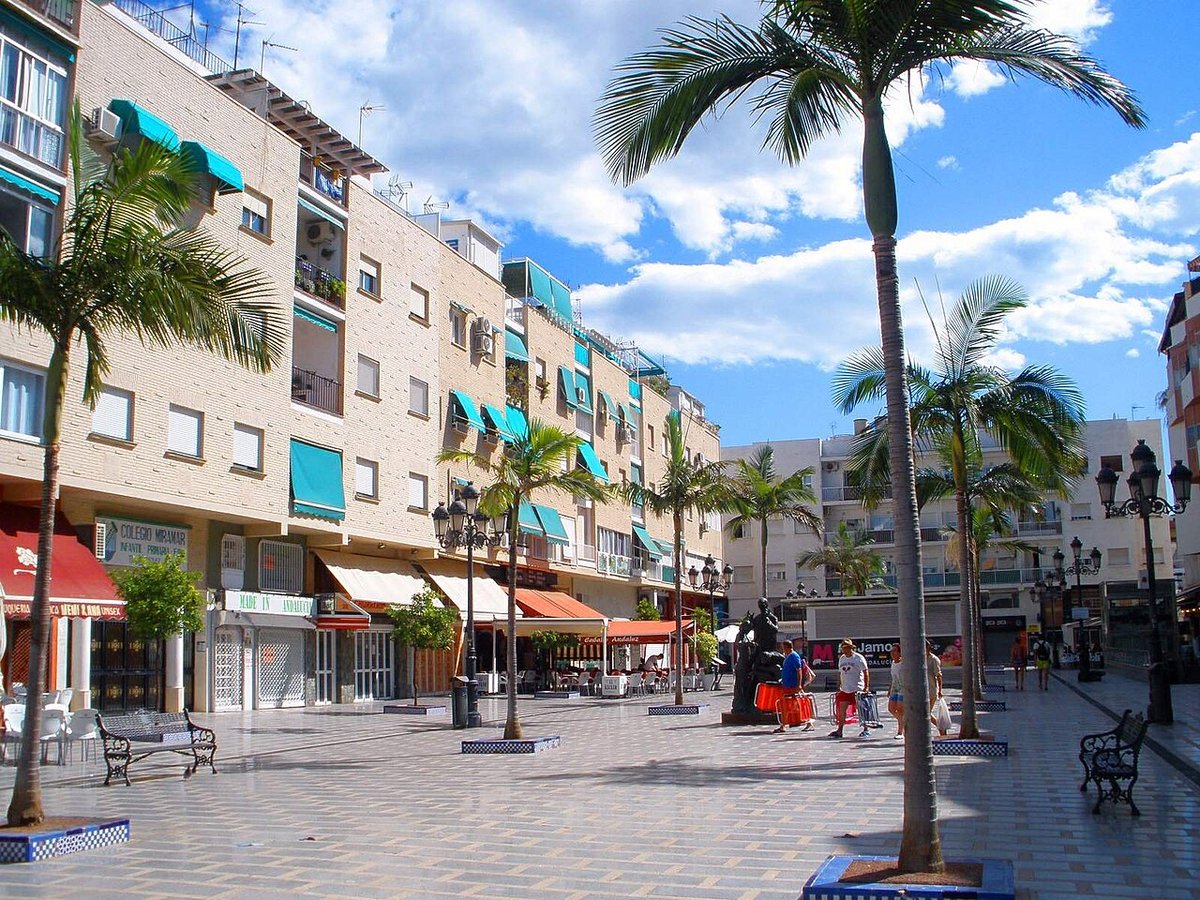
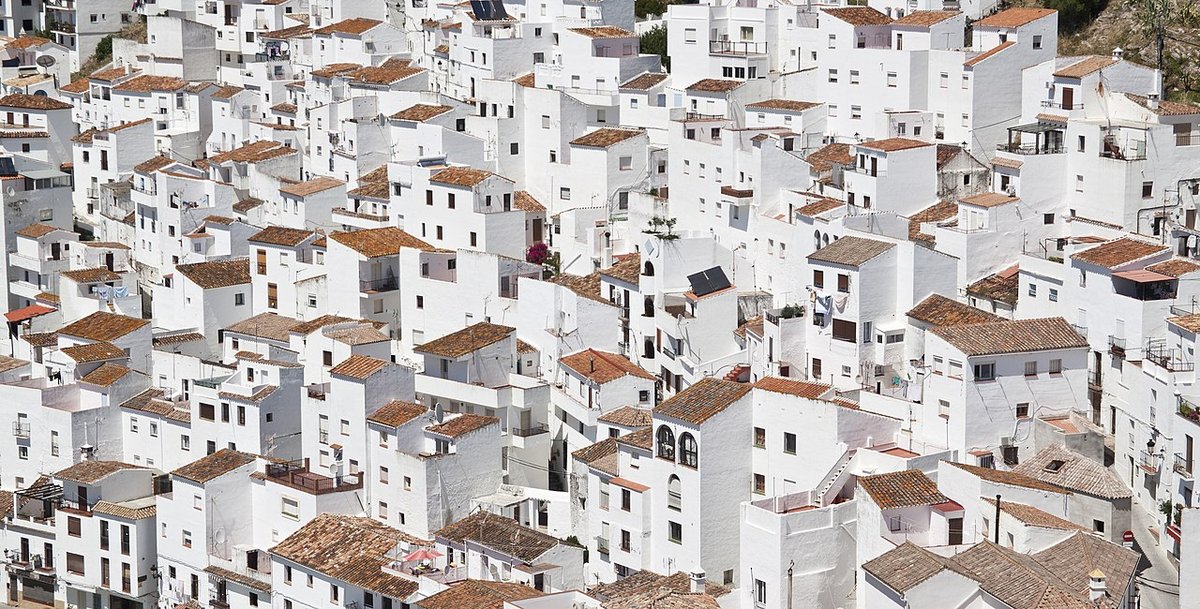
Estepona’s old town is compact, with an irregular layout that reflects its medieval origins. Narrow streets weave between low, whitewashed houses, opening suddenly onto small squares tucked within dense blocks. Towards the end of the twentieth century, the town council set in motion a visible programme of urban renewal. Facades were restored, many streets were lined with plant pots, and large-scale murals began to appear across different neighbourhoods.
These murals, painted on party walls and entire buildings, create something close to an open-air gallery. Some can be seen from a distance, while others only reveal themselves when turning a corner. They are not grouped in a single area, so finding them involves walking through different parts of town and moving beyond the historic centre.
Among the older buildings, the church of Nuestra Señora de los Remedios stands out. It was built in the eighteenth century on the site of a former Franciscan convent. Its tower, now known as the Torre del Reloj, has become a visual reference point within the old town. A short walk away lies Plaza de las Flores, where orange trees and stone benches create a meeting place that fills with locals at certain times of day more than with visitors.
Older layers along the coast
Human presence along this stretch of coastline long predates the current town. Archaeological remains in the surrounding area point to protohistoric settlements, as well as structures linked to Roman fish-salting production, an activity once widespread along the Málaga coast.
The area around Alcorrín contains evidence of a significant Phoenician enclave connected to maritime trade across the western Mediterranean. Further inland, the Corominas necropolis preserves prehistoric tombs carved into rock, dating back thousands of years.
During the Islamic period, a coastal fortification stood here, intended to monitor the shoreline. Only fragmentary remains survive today on hills near Los Pedregales. After the Castilian conquest in the fifteenth century, the settlement became part of a wider defensive system along the coast, marked by a chain of watchtowers built to warn of incursions from the sea.
Glass domes and green spaces
One of the most visible projects in more recent Estepona is the Orquidario, a complex of glass domes that functions as a covered botanical garden. Inside, hundreds of species of orchids and other tropical plants are cultivated across several مستويات, connected by paths and small waterfalls.
The building stands out for its glass structure and for the contrast it creates with the surrounding low-rise houses. Around it, small squares and green areas have been developed, linking with other urban improvements in the centre.
Alongside this, a series of sculptures has been installed throughout the town. They are not part of a single enclosed museum. Instead, they appear in roundabouts, parks and along avenues, often encountered by chance while walking.
Coastal cooking
Local cooking is rooted in what the sea and nearby farmland traditionally provided. Sopa campera, made with stale bread, tomato, pepper, onion and olive oil, reflects a way of making use of whatever was available at home.
On the beaches, espetos de sardinas are still cooked over open coals right by the shore. Fried fish is also common, especially small varieties such as boquerones, calamares or puntillitas, typically dusted with flour before frying.
These dishes are straightforward and closely tied to the coastal climate. For much of the year, meals tend to be light, and when temperatures rise, many recipes are served warm or even cold.
Getting around
Estepona lies just over eighty kilometres from Málaga along the Autovía del Mediterráneo. Access is mainly by road, as the railway does not reach the town.
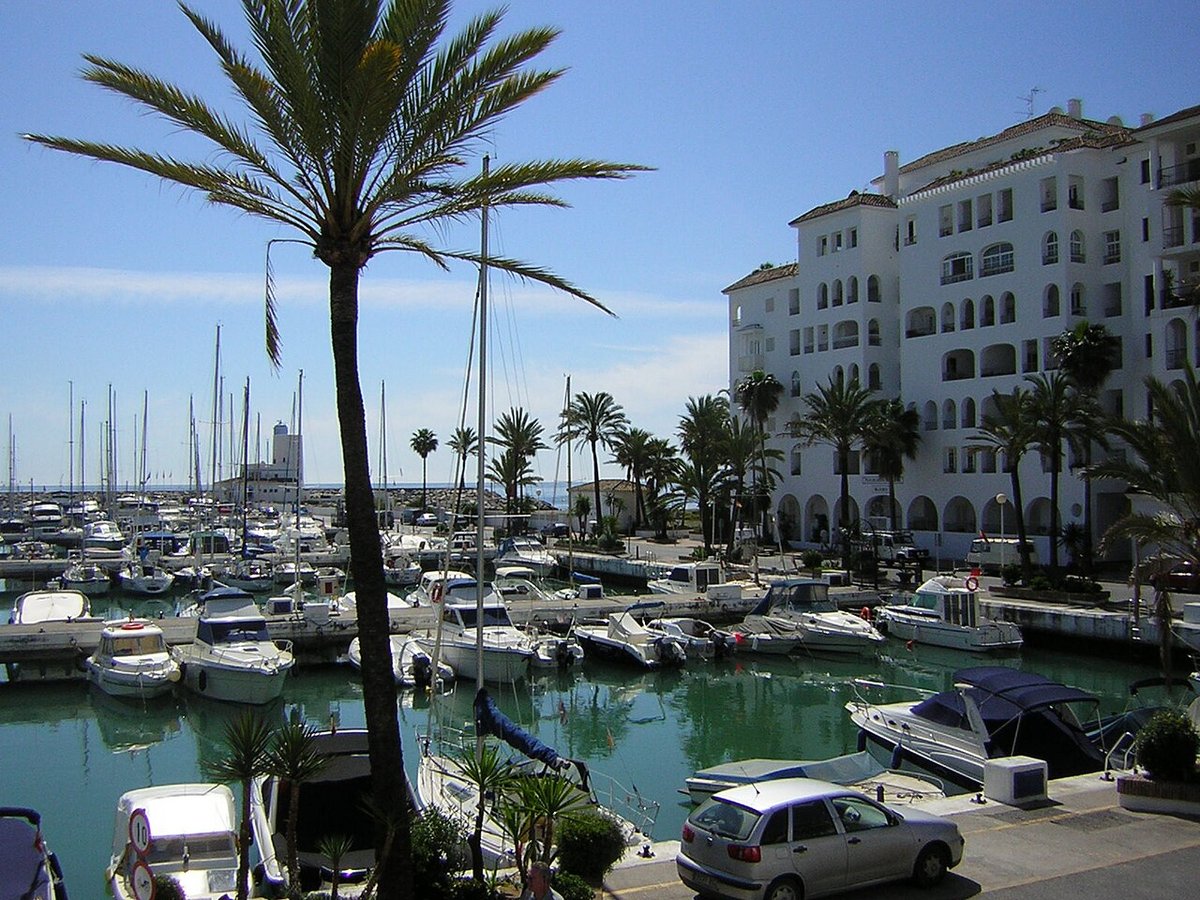
The old town is easy to explore on foot. From the centre to the marina, a long and largely continuous promenade runs along several urban beaches.
In recent years, the Senda has also been extended, continuing the effort to connect different parts of the coastline.