Full Article
about Fuengirola
A top family resort with a long seafront promenade and Sohail castle as its cultural-events hub.
Hide article Read full article
A seaside regular that knows its role
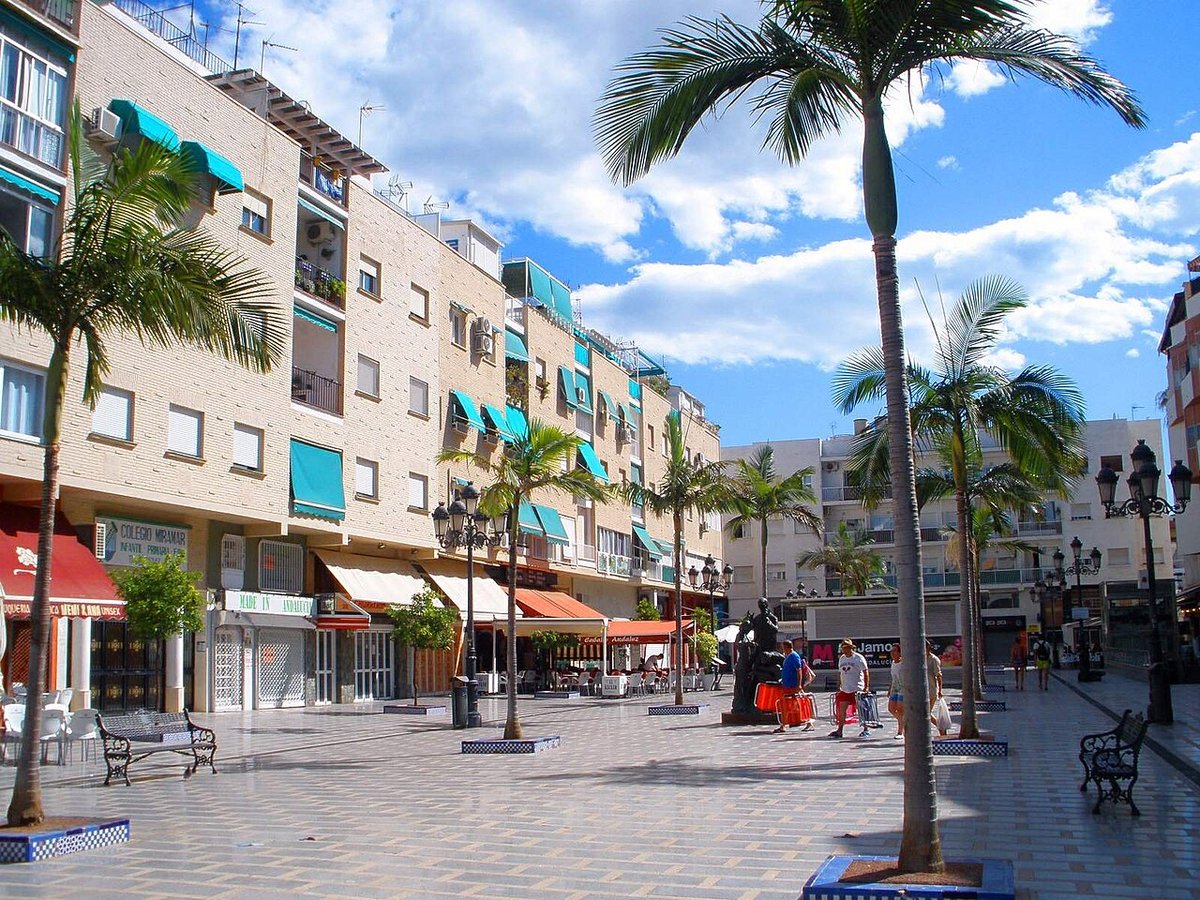
Fuengirola has the air of someone who never tries to be the most impressive in the room, yet somehow ends up being the most popular. For decades it has welcomed those looking for straightforward sun and nightlife, without too much planning or ceremony. It continues to do exactly that, with a long stretch of seafront and a hilltop castle that seems to keep an eye on everything below while people sip their drinks and let the day drift into night.
Arriving via the N-340, it can initially feel like a dense line of buildings pressed up against the sea. Then the outline of something older appears above it all, shifting the perspective slightly.
The castle that has seen it all
Castillo de Sohail sits above Fuengirola with a kind of quiet persistence. Built by the Arabs around the 10th century, it has witnessed a long sequence of lives passing through the area. Before and after its construction, there were Romans producing salted fish nearby, followed later by Christian forces who reinforced its walls. Soldiers came and went through conflicts that are now largely forgotten, and much later the coastline filled with visitors from northern Europe drawn by affordable sunshine.
These days, the castle serves a very different purpose. During summer it often becomes a venue for open-air concerts and events. There is something slightly surreal about it: a structure designed to guard the coast now hosting stages, lighting rigs, loudspeakers, and rows of people facing a performance. Its original builders would probably struggle to recognise the scene.
Even so, the setting works. The stone walls remain, the hill is unchanged, and below it the town continues its steady rhythm.
A promenade that keeps going
The Paseo Marítimo in Fuengirola is long enough to test your sense of distance. What starts as a quick stroll easily stretches into something much longer, with more path always appearing ahead. It runs almost the full length of the town, from Los Boliches to the area around the castle, with the sea constantly alongside.
It functions a bit like an open-air treadmill. Runners pass by at pace, families push prams, older residents move at their own steady speed, and groups of young people drift along, some of them clearly on their way back from a night out even if they try to look otherwise.
The atmosphere shifts depending on the hour. Early in the day, the air carries the smell of fresh bread mixed with salt from the sea. Much later, the scents change to something heavier: fried food, takeaway staples, and that familiar end-of-night feeling that needs no explanation.
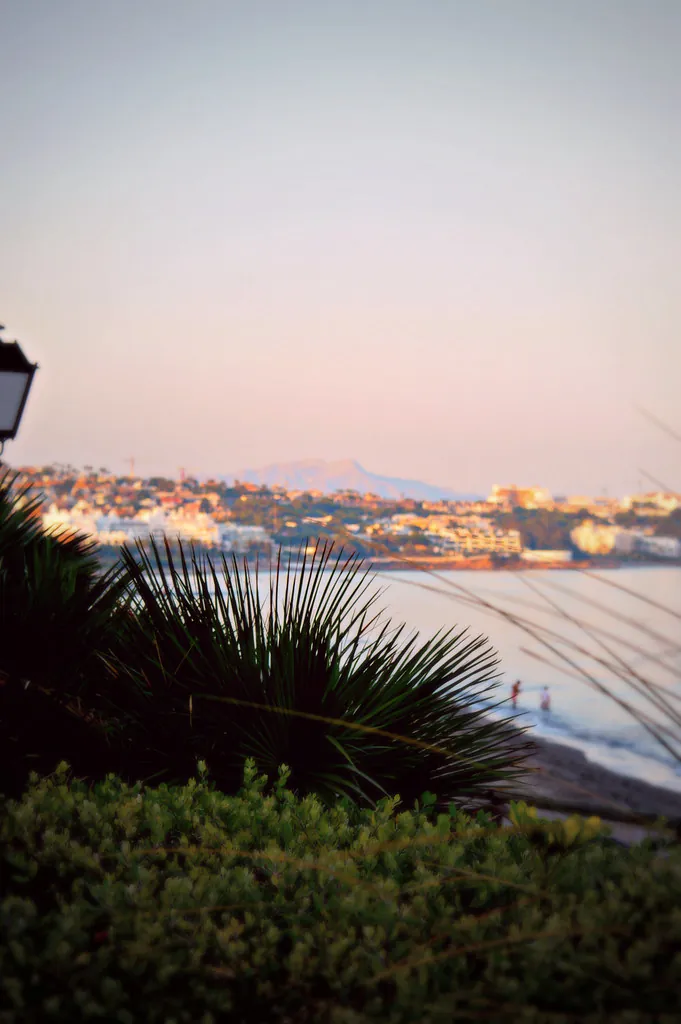
The beaches here are not the white-sand image often associated with tropical destinations. The sand is darker and, in the height of August, it can become very hot underfoot. Even so, the water is usually clean and the coastline is well maintained.
There is also an informal sense of territory along the shore. Long-time residents often head towards Los Boliches. Many visitors settle closer to the castle, while Carvajal tends to feel a little calmer by comparison.
Sardines, garum and a long memory of the sea
In Fuengirola, fish is not just part of the menu. It sits at the centre of local food culture. The clearest example is the espeto de sardinas. The scene is simple and widely recognisable: a small boat resting on the sand, embers glowing, sardines threaded onto a long skewer, and smoke rising into the sea breeze. There is nothing elaborate about it, but it does exactly what it needs to do.
This connection to the sea goes back much further than modern beach life. In the area known as Finca del Secretario, remains of a Roman factory have been found. This was once a site for producing garum, a fermented fish sauce that the Romans used in a wide range of dishes. It functioned as a kind of all-purpose seasoning, something like their version of ketchup.
From the same area came the so-called Venus of Fuengirola, a Roman sculpture now kept in the municipal museum. It rests there quietly, gazing upward with an expression that seems to suggest it has witnessed more than enough over the past two thousand years.
When the town lets loose
Fuengirola brings together a striking mix of nationalities, something especially noticeable during the Feria Internacional de los Pueblos, usually held in spring. For several days, the fairground fills with stands representing different countries.
The experience moves quickly from one place to another. You might begin with something distinctly Andalusian, then shift towards Latin American food, continue with central European dishes, and end up with a beer from somewhere much farther away. It is not a polished version of the world, but the atmosphere tends to be lively and easy to enjoy.
Later in the year, the town celebrates its patron saint festivals in October, dedicated to the Virgen del Rosario. Streets fill with people, music carries through the centre, and traditional sweets appear in abundance.
At the start of summer, the Noche de San Juan takes over the beaches. Bonfires are lit along the sand, and at midnight people head towards the water, some jumping over waves as part of the ritual. A few write wishes on paper and throw them into the fire, while others simply step into the sea and carry on with the night.
Finding your way without trying too hard
Fuengirola does not demand careful planning. A day can unfold in a straightforward way: time near the castle, a stretch on the beach, then a walk along the promenade as evening arrives. There is no need to overthink it.
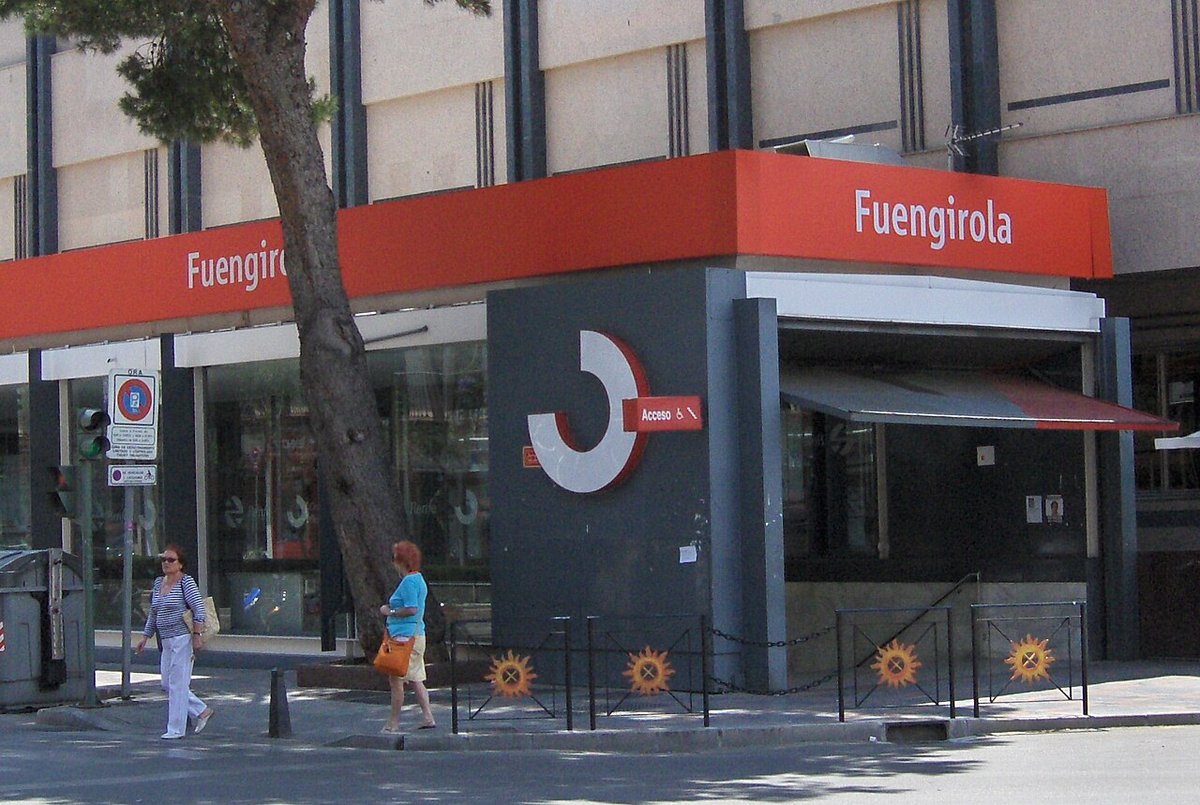
For those who want a change of scene, the local train connects the town with Málaga frequently, reaching the city centre in a short time. There are also walking routes along the coast and into the nearby hills, used by those who feel like stepping away from the more urban setting for a while.
This is not a place that tries to match a postcard ideal. Fuengirola operates differently. It fills a gap with ease, the sort of place that always has a plan ready when nothing else comes to mind.