Full Article
about Rota
Seaside town that shares space with a U.S. naval base; it has quality urban beaches and a well-kept walled old quarter.
Ocultar artículo Leer artículo completo
Morning smells of diesel and dough
At 7 a.m. the fishing boats idle against the harbour wall, engines rumbling like distant thunder while diesel exhaust drifts over the early crowd. Fishermen in navy overalls heave crates of sardines onto the quay, auctioneers rattle off prices in rapid Andalusian, and the first coffee of the day steams from the bar inside the lonja. Walk fifty metres up Calle Ancha and the same breeze carries a different scent—sweet fritter batter from the bakery that has supplied the naval base since the 1950s. Both smells cling to the air until sunrise burns them off, by which time most visitors are still rubbing sleep from their eyes.
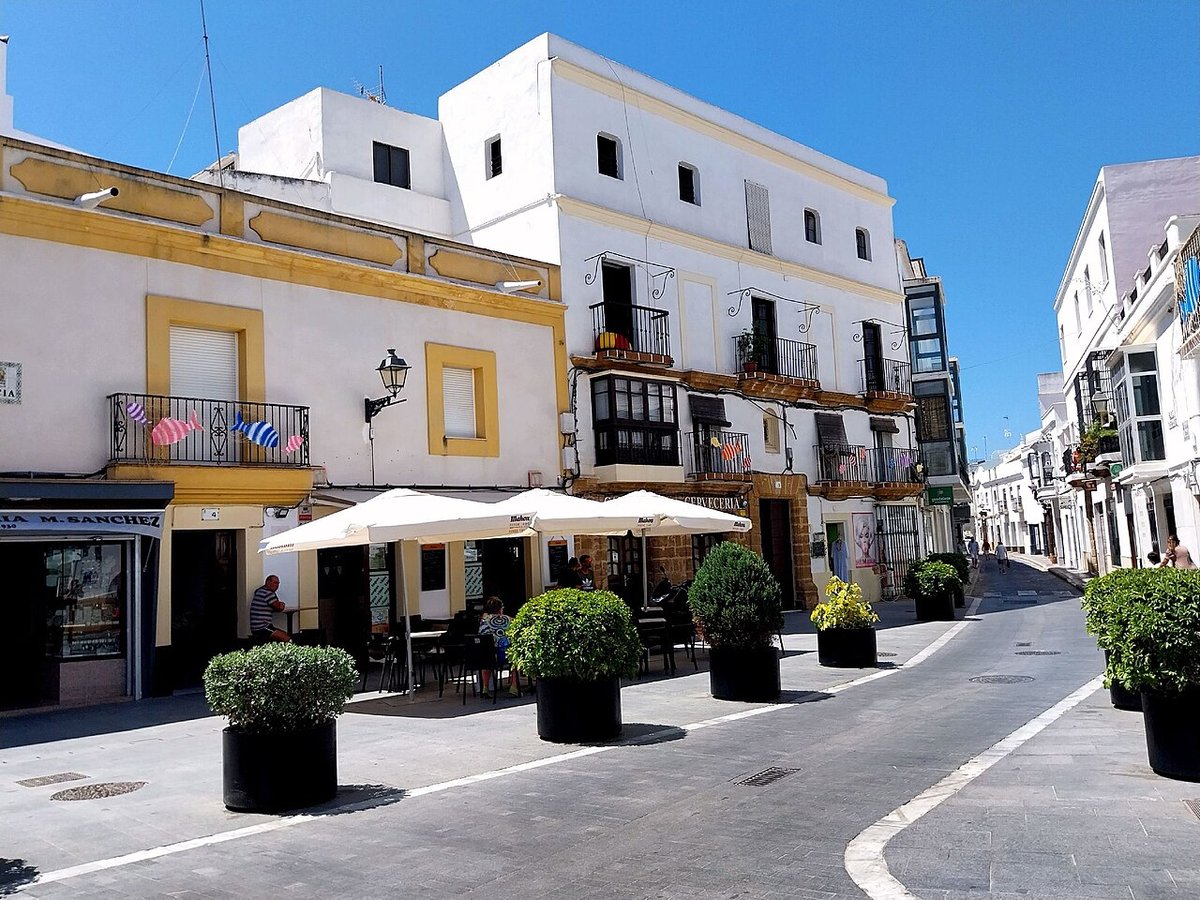
Rota sits only nine metres above sea level, so the Atlantic feels less like a view and more like a neighbour. The town stretches 16 kilometres along the coast, yet the historic kernel is so compact that you can cross it diagonally in eight minutes. That smallness is part of the appeal: nothing is staged for passing trade, and the rhythm of the day is set by people who live here year-round.
A castle that isn't fairy-tale
The Castillo de la Luna looks more like a chunky frontier blockhouse than a film set. Built by the Almohads in the thirteenth century and patched up by later Christian rulers, its sandstone walls are three metres thick and its towers barely taller than the palm trees lining the adjacent plaza. Inside, a modest museum explains how the fort once guarded the tuna migration route; outside, local teenagers use the ramparts as a backdrop for Friday-night selfies. Admission is free on Wednesday afternoons, otherwise €2, and you will need no more than twenty minutes to see the small courtyard and the exhibition of medieval anchors. The real reason to climb the short stair is the seaward parapet: from here you can watch the ferries gliding into Cádiz and, on clear days, pick out the white houses of El Puerto de Santa María across the bay.
The beach that refuses to shrink
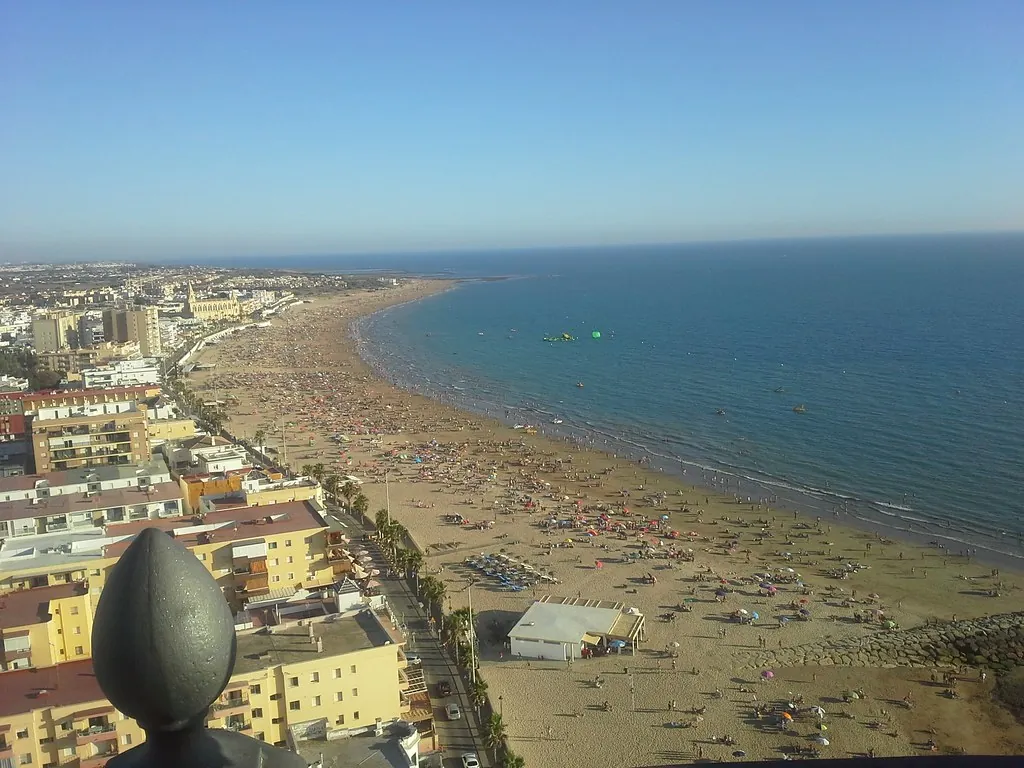
Playa de la Costilla begins where the pavement ends. Even in August, when Spanish schools are closed and car boots overflow with lilos, you can still find space by walking east for five minutes past the last chiringuito. The sand is the colour of wet demerara sugar and firm enough for a gentle cycle; the slope into the water is so gradual that toddlers can paddle twenty metres without disappearing. Lifeguards raise the green flag most days, but the Atlantic swirls in quickly when the Levante wind pipes up—then the same guards switch to amber and whistle everyone back to knee-depth.
Behind the beach, a double row of stone pines gives shade to the paseo marítimo. Elderly residents in pressed linen shirts shuffle along with newspapers tucked beneath their arms, exchanging "buenos días" while the first beer taps hiss inside the beach bars. A plate of fried squid and a caña still costs €6.50 at Bar Nuevo, slightly more if you sit on the terrace facing the water. Try to order before 1 p.m.; by two o'clock the queue snakes onto the sand and the fryers struggle to keep up.
Tuna older than the town
Rota's economy once revolved around the almadraba, the annual trapping of bluefin tuna as they sprint towards the Mediterranean. The bloody harvest has mostly moved south to Barbate, yet the fish still appears on every menu in town. The dish to look for is urta a la roteña, a local sea bream baked in a clay dish with thin potato slices, onion, green pepper and a splash of dry white wine. It arrives at the table bubbling like a British fish pie, but the flavour is lighter, the sauce sharpened by sea salt. Order it at Casa Juanita on Plaza de la Juventud; they will happily split one portion onto two plates if you are lunching modestly.
For something you can eat while walking, buy a tortilla de camarones from the kiosk outside the market. These lacy shrimp fritters cost €2 a wedge, are gluten-free, and taste like a cross between a prawn cracker and the thinnest pancake. Eat them immediately—after ten minutes the oil congeals and the magic disappears.
When the navy drops anchor
Most British visitors never notice the American naval station tucked behind the southern dunes, yet its presence shapes the town. In the supermarkets you will find Reese's Peanut Butter Cups alongside the olives, and the charity shop on Calle Caridad stocks English paperbacks left behind by departing families. Base employees organise car-boot sales on the first Saturday of each month; locals turn up early hoping to snag Levi's at half the Spanish price. The influx of dollars keeps several bars in business during winter, but it also skews accommodation prices inside the old quarter—rental flats aimed at U.S. personnel are often 20% dearer than identical ones three streets away.
Out of season rewards
Come in late September and you will still swim in 22-degree water without tripping over someone else's windbreak. The free beach train stops running after the fifteenth of the month, but without it the promenade feels longer and quieter; fishermen replace their summer shorts with woolly jumpers and cast from the breakwater at dusk. Hotel rates fall by a third, and the owners of Apartamentos Marina leave a bottle of local manzanilla in your fridge as a thank-you for filling a bed they thought would stay empty.
Winter is mild—daytime 16°C—but the Atlantic behaves badly. Storm systems roll in every fortnight, whipping the normally placid waves into brown foam that rattles the seafront railings. On those days the sensible head for the covered market on Avenida de San Fernando. Stall-holders shout prices over the drumming rain: €3 for a kilo of plum tomatoes, €12 for red tuna belly that was swimming the night before. If you rent a flat, buy the tuna, sear it for thirty seconds each side, and eat it with nothing more than olive oil and a squeeze of lemon. It will taste better than anything you remember from summer holidays further east along the Costa del Sol.
Getting there, getting out
Jerez airport is twenty-five minutes away by taxi (fixed fare €45) or half an hour on the M-050 bus that meets most flights (€2.50, exact change only). Car hire desks close for siesta between 2 p.m. and 4 p.m.—book with an on-airport company if you land mid-afternoon. Once in Rota you can manage without a car; local buses run to Cádiz every thirty minutes, and the ferry from the neighbouring port of El Puerto de Santa María reaches the capital in forty minutes. If you do drive, note that the underground car park beneath Plaza Alfonso X charges €1.30 per hour, cheaper than feeding the curb-side meters that tolerate a maximum of two hours.
Leave time for the minor exit ritual: a final coffee at Bar la Marina while watching the fishing boats queue for the harbour mouth. The espresso is strong enough to make your spoon stand up, and the bill comes on a scrap of paper torn from an exercise book. Pay, stretch, walk the fifty metres to the car. The Atlantic glints behind you, unchanged since the Almohads built their castle, and likely to outlast every chiringuito umbrella now planted in its sand.