Full Article
about Ayamonte
Border town at the mouth of the Guadiana facing Portugal; known for its Isla Canela beaches and a historic center full of light and art.
Hide article Read full article
Before sunrise on the Guadiana
The white prawns of Ayamonte are hauled in while the sky is still black. Around five in the morning, in the port of Punta del Moral, boats come in with their lights on and the water of the Guadiana smells of diesel and salt. Metal cabins rattle against cables as crates full of seafood move from boat to quay and from quay to vans. There is little conversation. This is the hour when money moves quietly.
That is often how tourism in Ayamonte begins, even if most visitors only see it hours later, when the sun is high over the river and the terraces along the promenade begin to fill.
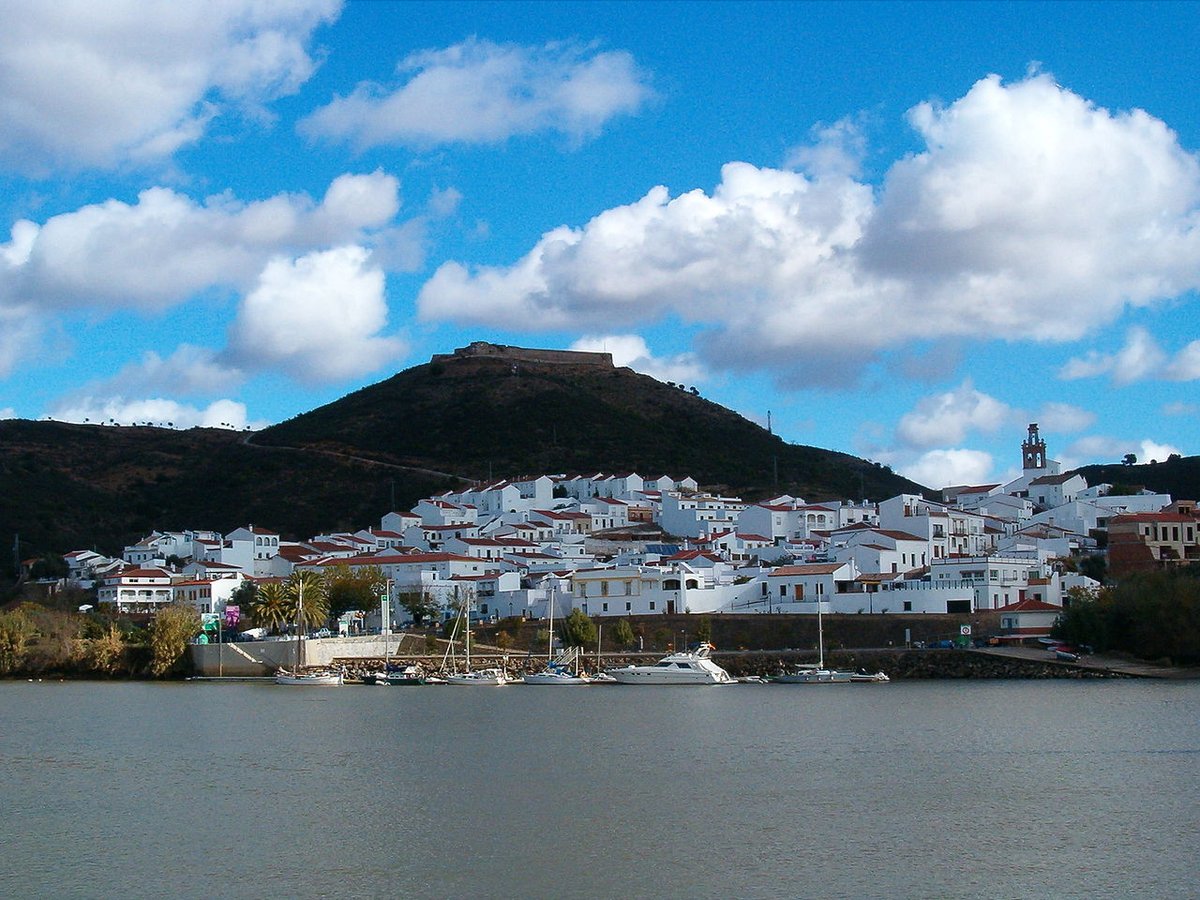
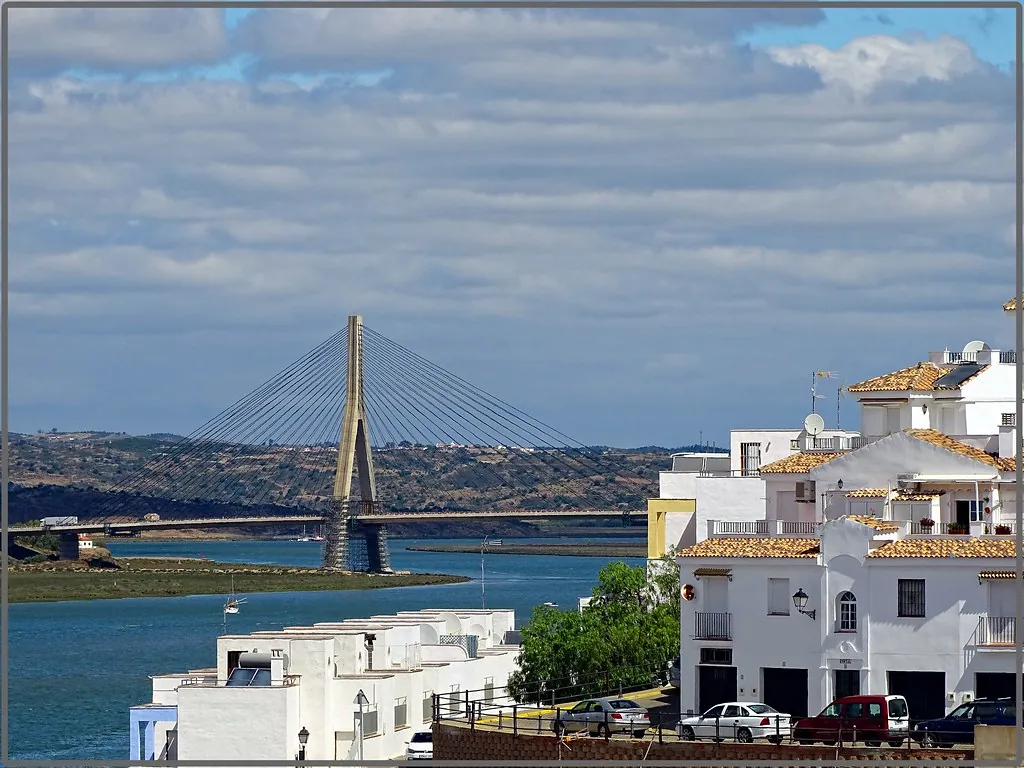
From the viewpoint by the castle, or what remains of it, a few stones set into the slope next to the Parador, the town’s position becomes clear. The Guadiana opens out towards the Atlantic and the morning light, very white in summer, turns the water into a sheet of silver. On the opposite bank is Portugal: Vila Real de Santo António, with its reddish roofs lined up along the river.
A ferry crosses several times a day between the two shores. The journey is short and calm, just a few minutes with the low engine sound and the steady slap of water against the hull. In this stretch of the Guadiana, the border feels less like a dividing line and more like part of everyday life.
Paprika in the air at midday
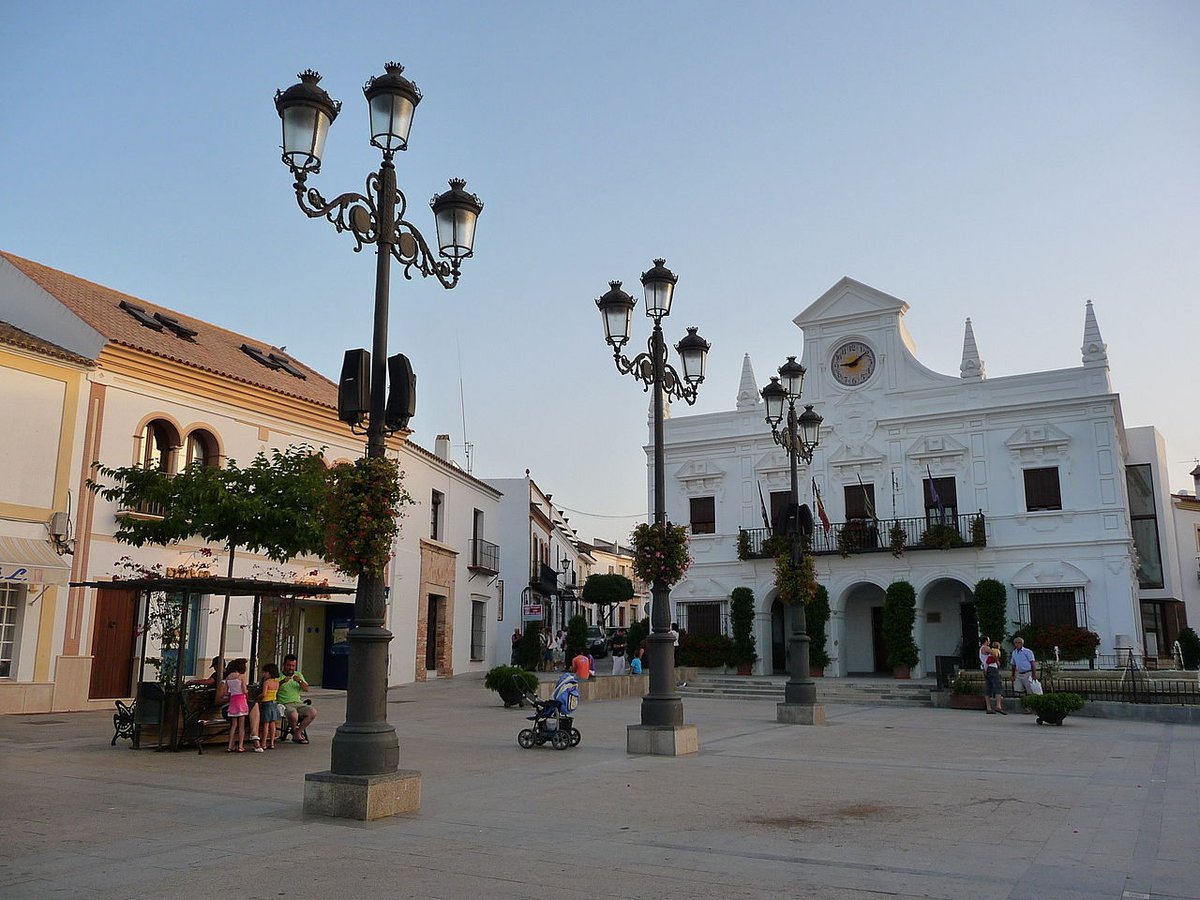
By midday, when the sun drops almost vertically over Plaza de la Constitución, many kitchens are preparing sopa de tomate ayamontina. It arrives in dark clay bowls, the broth red from paprika with a poached egg in the centre. It is simple food, the kind made to get through a long working day.
At that hour, some shops pull down their shutters and the pace in the centre slows. In long-standing bars and cafés, marble tables feel cool to the touch and a television murmurs at low volume.
The old town clings to the hill with streets that rise and fall without much logic. Low houses, iron balconies painted green and worn by time, plant pots jutting over the pavement. In Callejón de San Francisco, conversations still echo between narrow walls. Sometimes washing is strung between two windows and someone sings while shaking out sheets.
The Iglesia del Salvador has raised its brick tower here since the 16th century. Inside, there is usually a mix of scents: wax, wood and damp stone. When light filters through the coloured glass, the floor fills with blue and yellow patches that shift slowly through the afternoon.
When the tide takes the shore
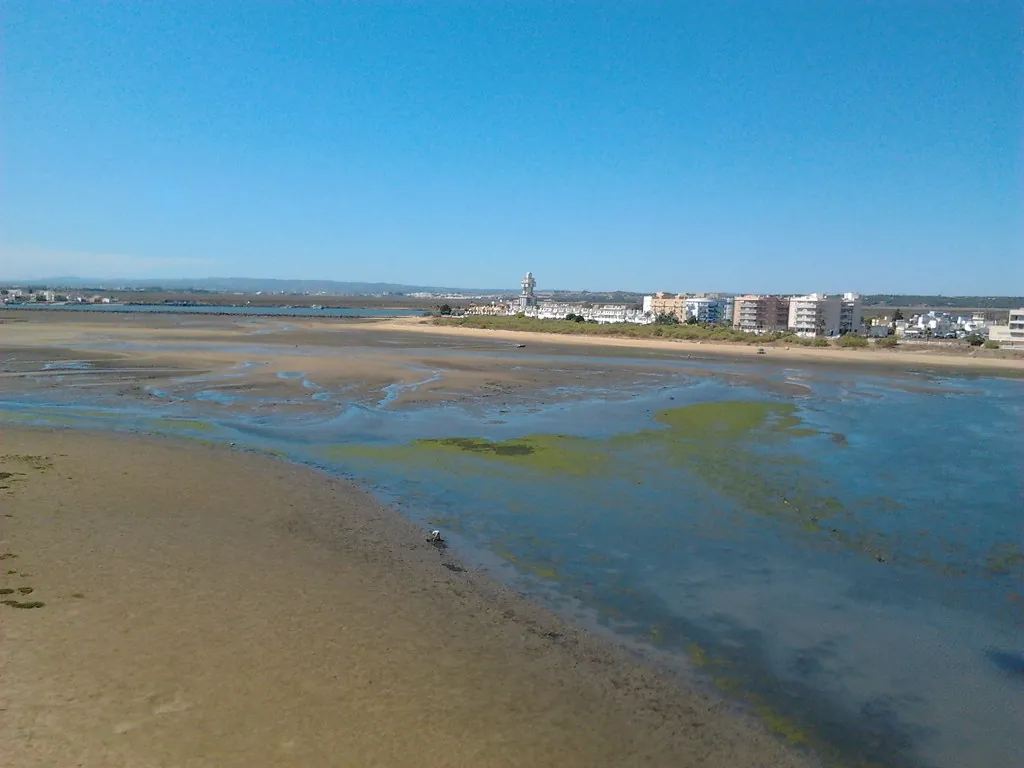
Isla Canela is a long stretch of pale sand that changes with the seasons. In winter, the sea gains ground and some parts of the beach are almost covered at high tide. The dunes appear like small islands, their grass bent by the wind.
Places that work at full pace in summer close or reduce activity, and the promenade grows much quieter. The wind pushes salt inland and the palm trees along the Paseo de la Ribera sway with a dry creaking sound.
In Punta del Moral, the mouth of the Guadiana forms a wide marsh. It smells of mud, still water and salt-tolerant plants. Very early, before people arrive with boards or bicycles, it is possible to walk along the wooden walkway that cuts through the reeds. At times, flamingos appear in the shallow water, motionless, one leg tucked beneath the body.
October and the Feria de la Hispanidad
When October arrives, Ayamonte shifts its rhythm. The Feria de la Hispanidad fills the fairground for much of the month, and many locals talk about it as if it were a full season rather than just a few days.
The casetas, temporary marquees, often have compacted earth floors and walls covered with paper and lanterns. In some, dishes typical of the area are prepared, such as choco con habas, which leaves the kitchens on trays passed from hand to hand.
In the afternoon, as the sun begins to drop, sevillanas play through speakers that have seen many fairs. Polka-dot dresses move slowly between tables and children fall asleep on chairs or in prams while the adults continue talking.
In the centre, the streets also fill up. Small displays with fire and fireworks sometimes appear, and the sweet smell of fried pastries mixes with smoke in the mild autumn air.
Getting there and timing it right
The nearest airport is in Faro, in Portugal, less than an hour away by car. Seville is further but usually offers more connections. From both, the route is mostly along main roads.
In August, traffic towards the beaches becomes noticeable and parking near the centre can take time. Many people choose to leave the car in areas close to the port and get around on foot.
For a quieter atmosphere, September tends to work well. The sea is still warm and the intensity of summer has begun to ease, leaving the town to settle into a slower, more even pace.