Full Article
about Lepe
A dynamic farming and tourist town known for its strawberries and La Antilla beach; a coastal shopping hub with an entrepreneurial, festive spirit.
Hide article Read full article
First impressions on arrival
Parking in Lepe is rarely a problem. Avenida de Andalucía usually has space and it is free, and from there the centre is only a short walk. In August the sun is intense, and the glare from the plastic covering the greenhouses can be uncomfortable. Sunglasses and water make a difference.
Lepe has around 29,000 residents and much of its economy revolves around strawberries. That shows up quickly. At roundabouts you will see refrigerated lorries and signs looking for seasonal workers in several languages. The town itself sits inland, while the beach belongs to La Antilla, about six kilometres away. In the streets, the dominant smells shift between damp greenhouse soil and fried fish.
Choco on the menu
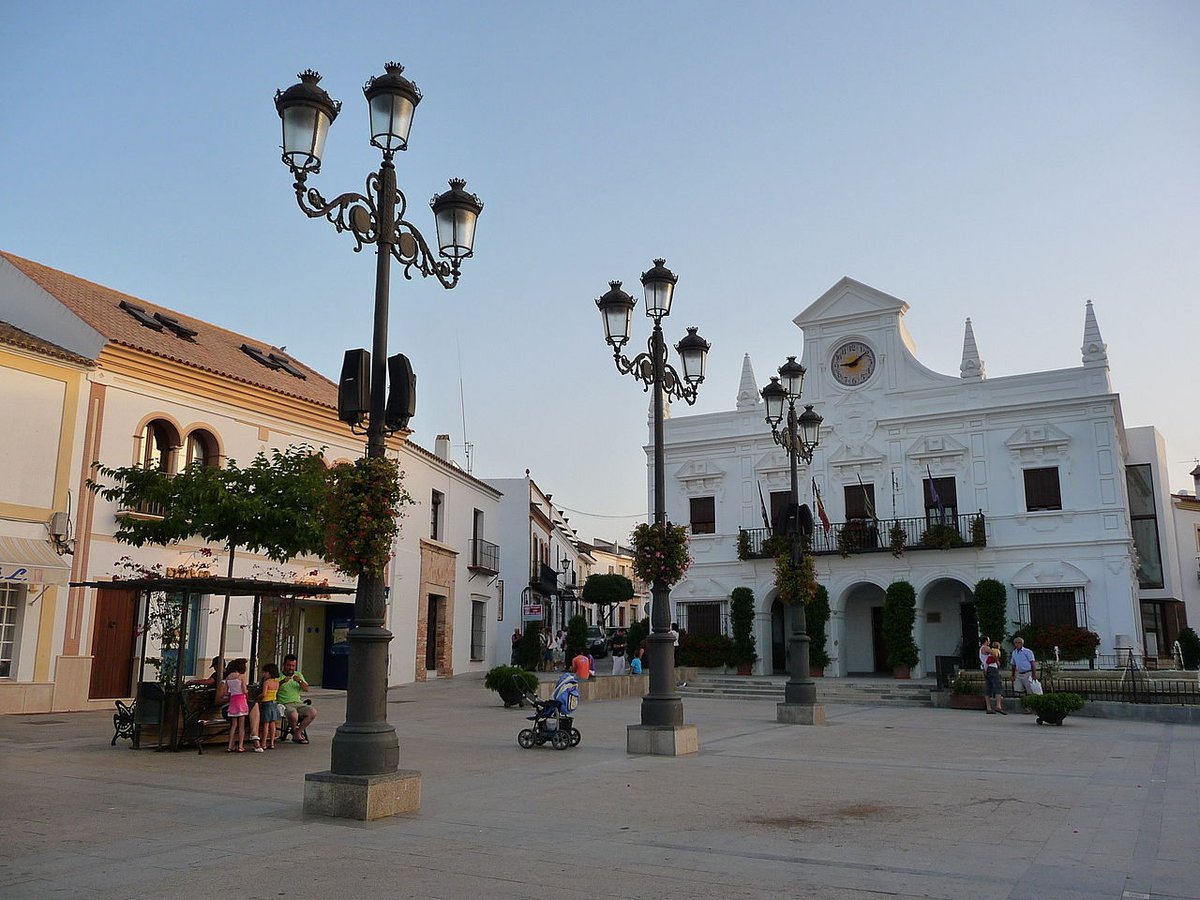
Around the main square and nearby streets, choco appears on almost every menu. In this part of Spain, choco usually refers to cuttlefish. The local version, choco lepero, tends to be served in strips with broad beans. It is a straightforward dish, filling and familiar.
Huevos a la lepera come as scrambled eggs with mushrooms when the season allows. Outside that window, ordinary button mushrooms are more common. Pestiños, small fried pastries coated in syrup or honey, are most visible during Semana Santa, the Easter period. At other times of year, what you find is usually mass-produced.
Wines from the Condado de Huelva are also part of daily life here. Sometimes they are labelled as “vino de Lepe”. The name has a long history, even appearing in a tale by Chaucer. Today it still circulates through local bars in the same uncomplicated way.
A tower, a river and the greenhouse landscape
Several kilometres from the centre, on the road towards La Antilla, stands the Torre del Catalán. This 16th-century coastal watchtower is a plain stone structure, built for surveillance rather than decoration. Access is via a dirt track, and when the tide rises, some areas can become waterlogged.
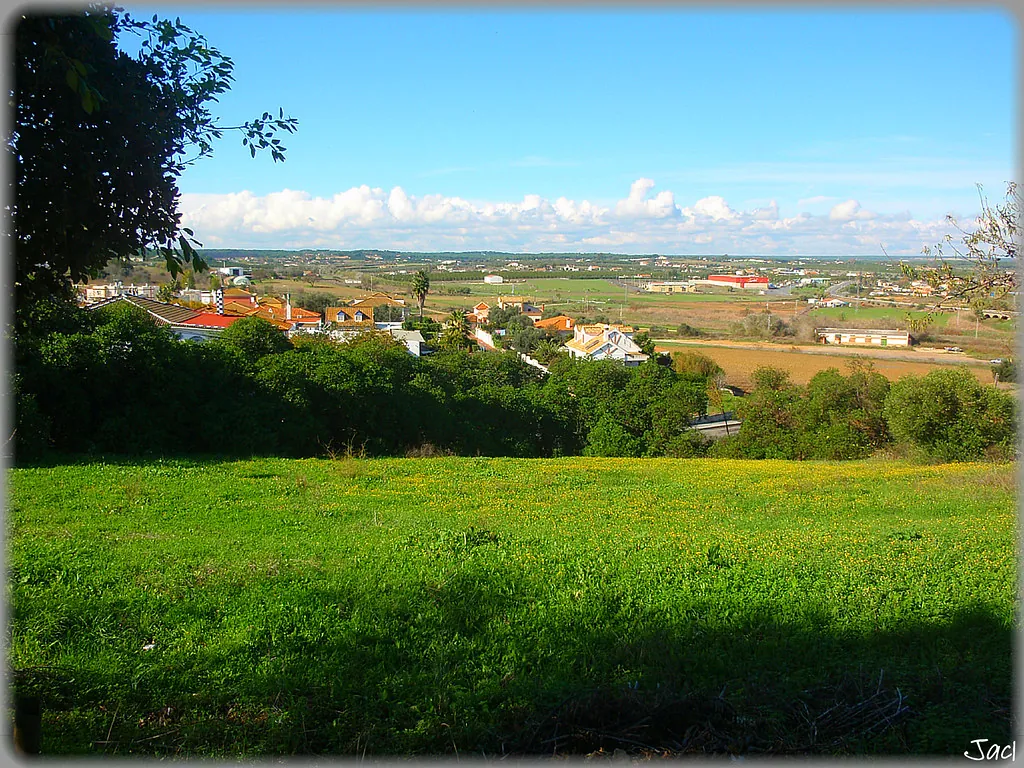
From the top, the view stretches across the sea, pine forests and the wide expanses of plastic-covered farmland. The contrast is striking. In the surrounding area, it is not unusual to come across remnants of agricultural materials such as pipes or discarded plastic. It is part of the reality of this landscape.
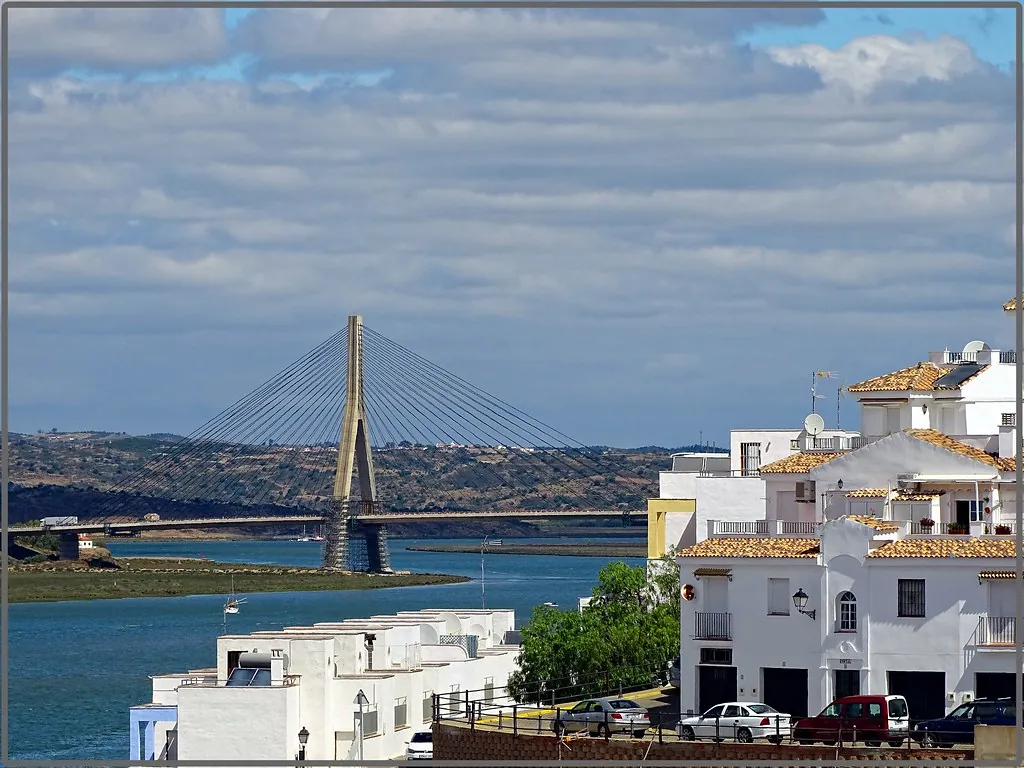
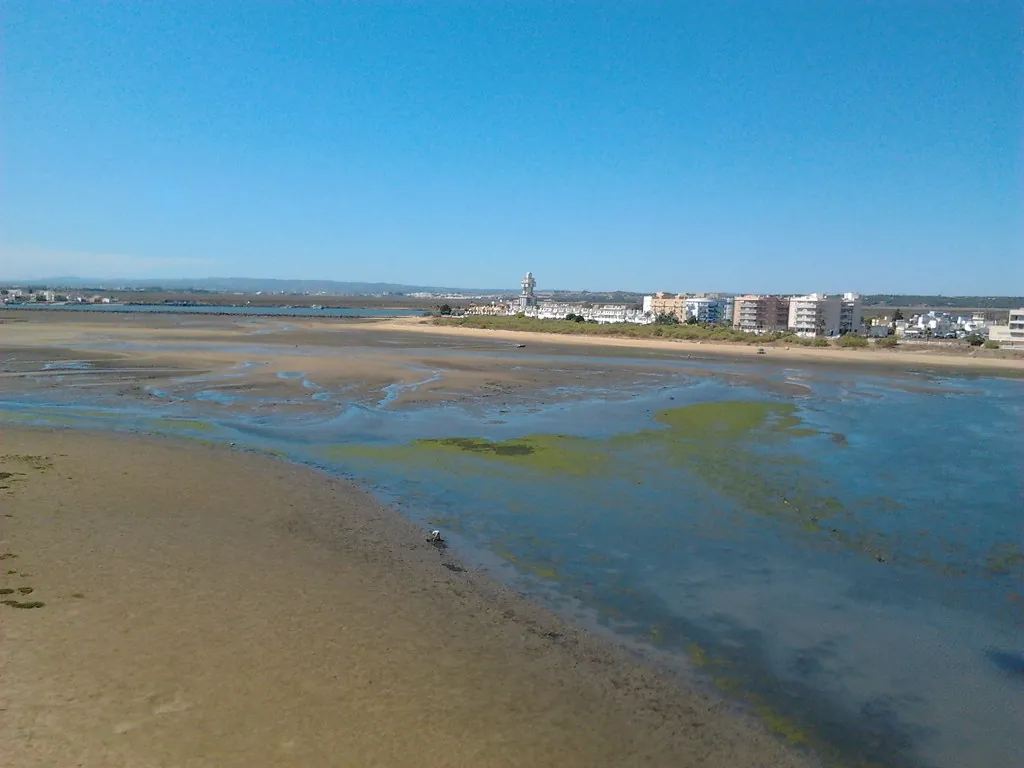
A more relaxed walk can be found along the Río Piedras. The trail begins near the bridge on the H‑4111 road. The route is flat and follows the estuary towards the Flecha del Rompido, a long sandy spit shaped by currents and tides. The walk runs for several kilometres, passing through pine woods and marshland. There are no water fountains along the way.
Festivities and local character
Lepe’s annual fair takes place in September in honour of San Diego. Expect marquees, loud music and heat that often lingers if summer stretches on. The atmosphere feels that of a large town gathering rather than a small village event.
The Romería de la Bella is usually held around Pentecost. A romería is a traditional pilgrimage, and here it involves carts and horses making their way to a rural shrine set among pine trees. People spend the day there, bringing their own food and drink and settling in with family and friends.
During Semana Santa there is also a quieter moment. In the early hours of Good Friday, the Procesión del Silencio moves through the streets. There is no music, only footsteps and low murmurs.
Lepe is also widely known across Spain for its jokes. These “chistes de Lepe” have circulated for decades, often portraying the town in a comic light. Locals have long since learned to live with them, and these days tend to take it with a fair amount of irony.
Getting there and how long to stay
Lepe is reached via the A‑49, taking the exit towards the town. There are also bus connections from Huelva and other nearby cities. The closest train station is in the provincial capital.
A morning is enough to see the centre. If you plan to visit the Torre del Catalán or walk along the Río Piedras, allow more time. For the beach, continue on to La Antilla, where the sea begins. Lepe itself is something different: a large agricultural town that has grown quickly and is still finding its rhythm.