Full Article
about Villablanca
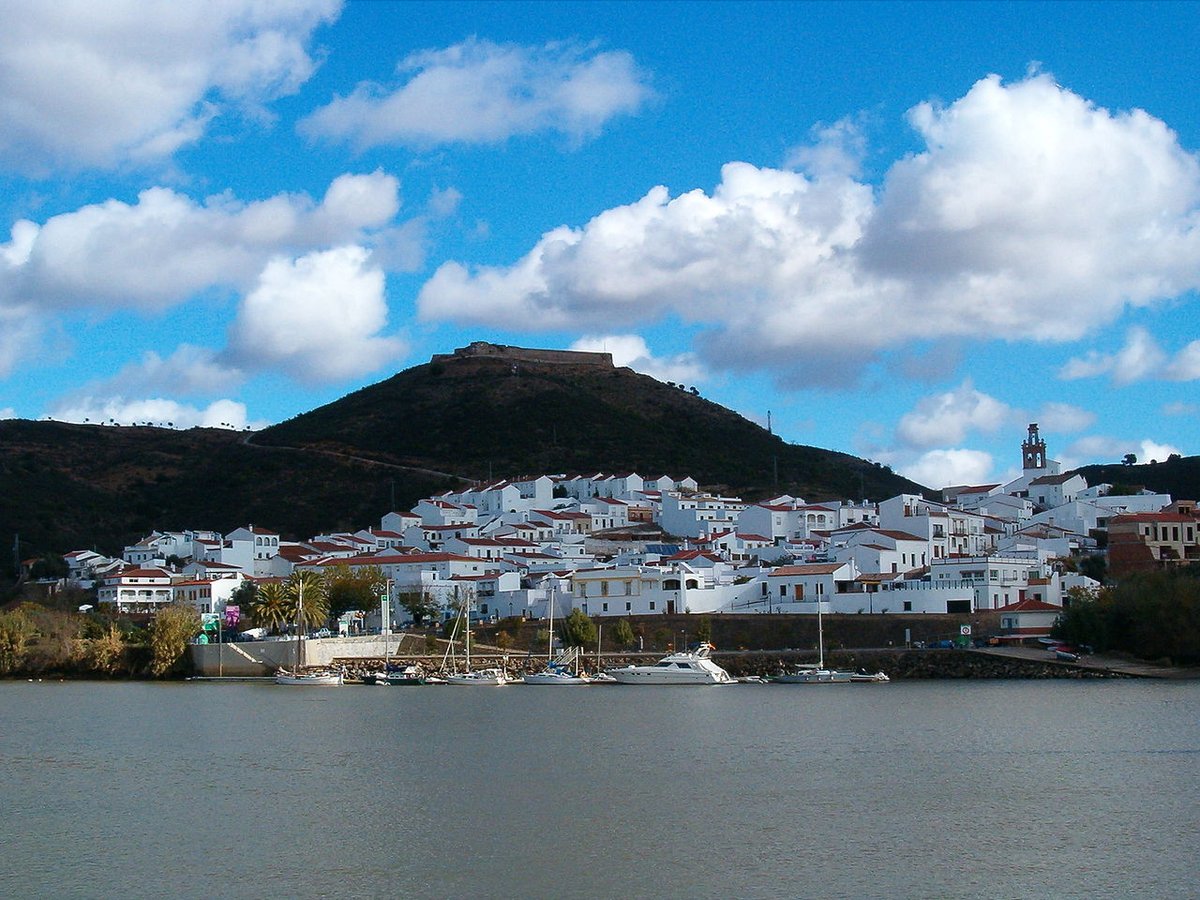
White village near the Portuguese border known for its Festival Internacional de Danzas; surrounded by farmland and close to the beaches.
Hide article Read full article
A Settlement Looking Towards Portugal
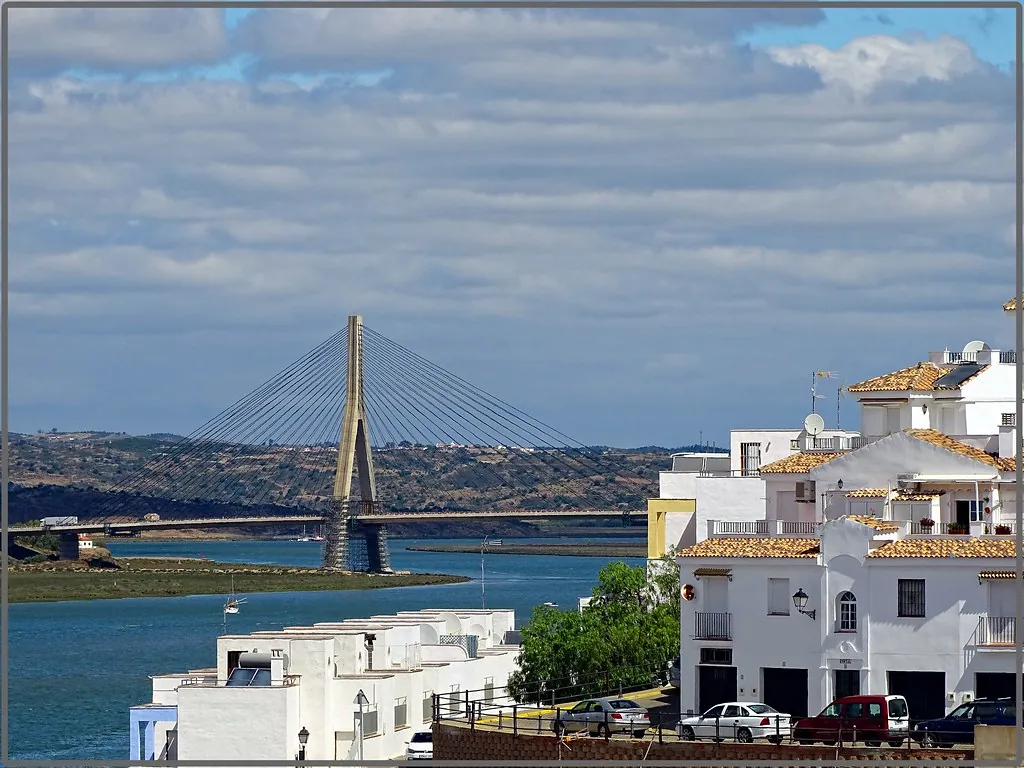
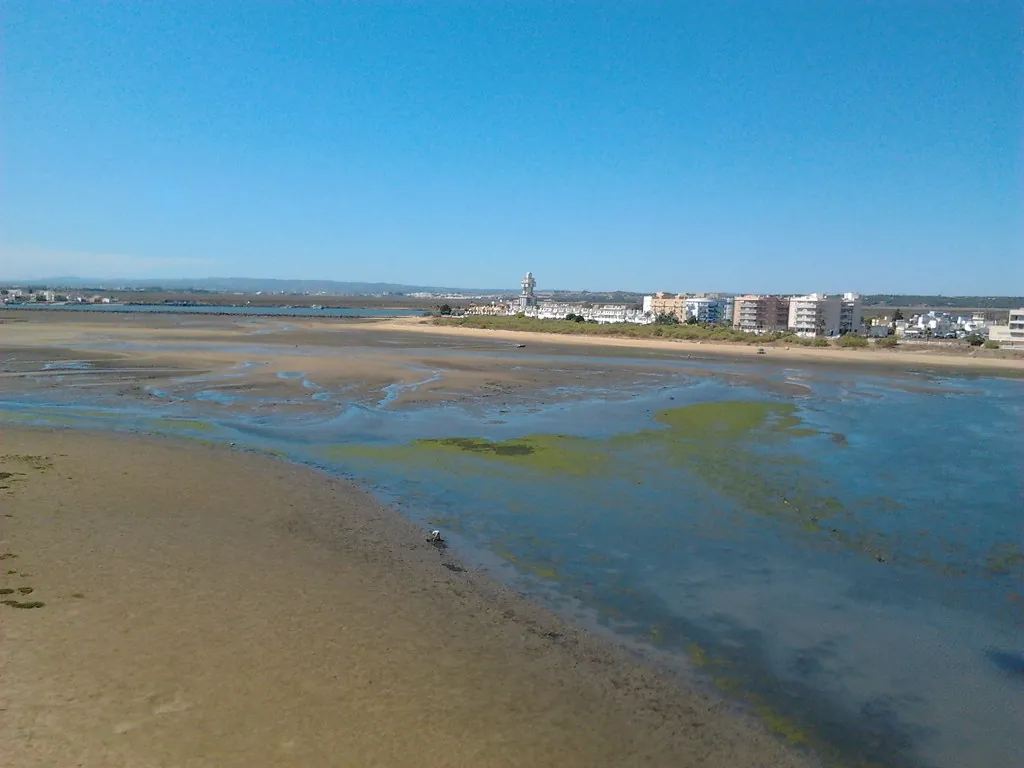
Villablanca lies on the western coast of the province of Huelva, set within a stretch of open countryside that faces the marshes of the Guadiana River and, beyond them, Portugal. It is a landscape of gentle horizons, where the sense of frontier has long shaped daily life.
The documented origins of the village are usually traced back to 1531. In that year, a small group of settlers received a Carta Puebla from the marquises of Ayamonte, a formal charter granting them the right to establish a permanent settlement on this hill. Yet the site was not empty. There was already a hermitage dedicated to Santa María de la Blanca, probably built in the late medieval period. Over time, that earlier place of worship gave its name to the growing community.
Villablanca does not revolve around a single grand monument, nor is it on the coastline, which lies some distance away. Instead, it functions as a point of transition between the inland countryside and the Atlantic shore. Pausing here offers a clearer understanding of how this corner of south-western Huelva is organised, where the Portuguese border has always been close, even when it cannot be seen.
Before the Village
Long before Villablanca took shape, people were living in this territory. Around five kilometres from the centre stands the Dolmen de la Tenencia, a megalithic construction several thousand years old. It forms part of a small group of burial mounds and funerary structures scattered across the area, one of the megalithic landscapes that appear with some frequency in the south-west of the Iberian Peninsula.
Today, the site can be reached on foot via a circular walking route of roughly eight kilometres. The path crosses low dehesa pastureland, dotted with holm oaks and scrub. In winter the ground can become muddy, which is worth bearing in mind. The structures themselves are not monumental in scale, yet the worked stone still clearly outlines the ancient burial chambers.
The sense of continuity is quiet rather than dramatic. These remains sit within farmland and open country, part of the everyday terrain rather than isolated behind barriers. Their presence underlines how long this landscape has been inhabited, even if the current village is comparatively recent.
The Church on the Skyline
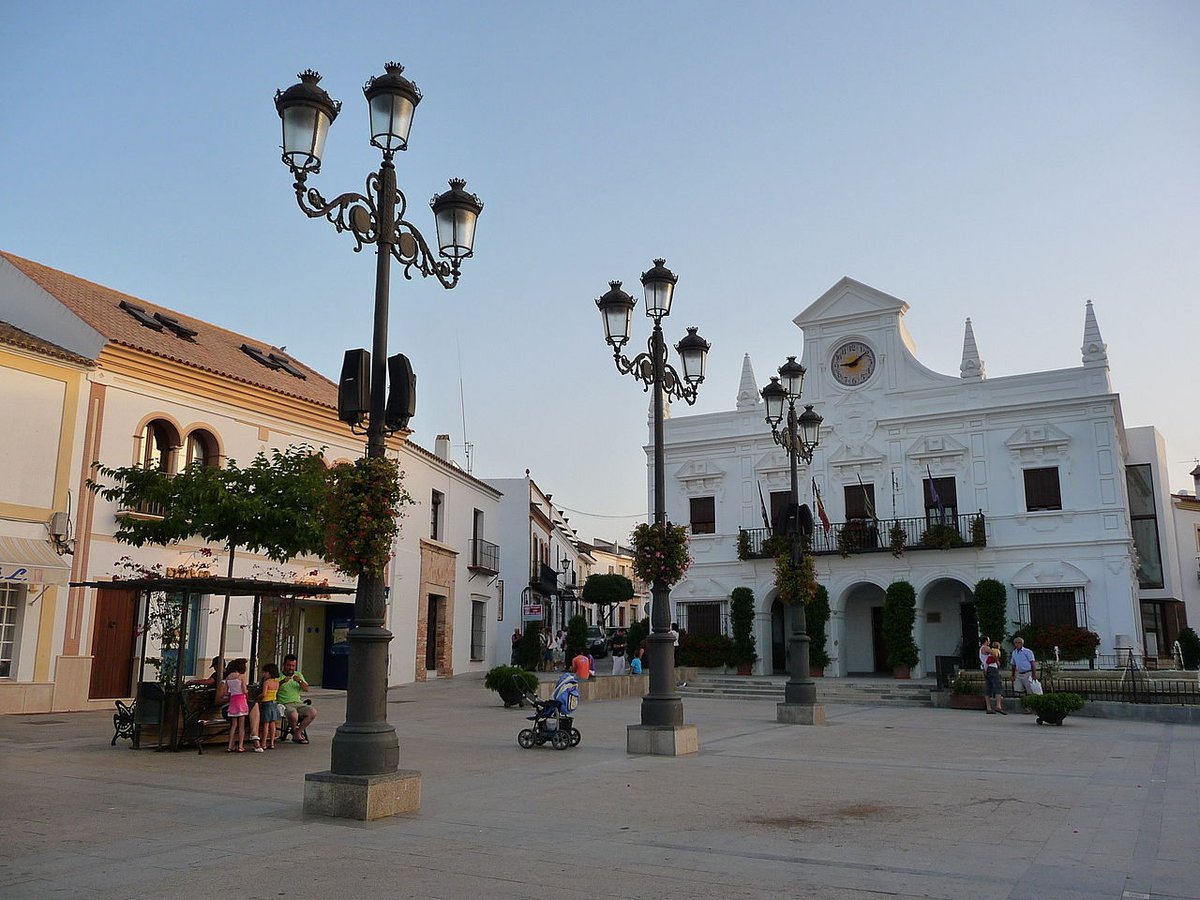
The parish church of San Sebastián dominates the main square. Its brick tower, built in a Mudéjar tradition that blends Islamic and Christian influences typical of southern Spain, is visible from much of the surrounding plain. The present building dates from the 17th century and was constructed on the site of a smaller earlier church.
Inside, it has a single nave and a main altarpiece of modest design. The wooden roof structure reflects carpentry models that spread through the province of Seville during that period, and it remains one of the building’s most distinctive features.
Local tradition assigns the church a more practical role during the 17th-century border conflicts. According to stories still told in the village, during Portuguese incursions residents stored grain in parish rooms and used the tower to draw water from a nearby well. On some of the walls, anchor points can still be seen that may correspond to wooden structures used at the time, although dating them precisely is not always straightforward.
The church stands at the heart of daily life. From Plaza de España it is only a short walk to its doors, and from there Calle Ancha leads downhill. Along this street, several façades retain coats of arms and architectural features from older houses, small details that hint at earlier chapters in the village’s history. The Ermita de la Blanca, associated with the village’s origins, sits somewhat apart from the centre.
From the Dehesa to the Table
Local cooking in Villablanca follows the rhythm of the countryside. In spring, tagarninas appear. These wild thistles are typically prepared with chickpeas or added to simple stews, reflecting a cuisine shaped by what the land provides at different times of year.
Another regular presence is choco, a local term for cuttlefish from the nearby coast, usually cooked with potatoes and paprika. Although the sea is not immediately beside the village, its influence is still felt on the plate.
Fried sweets are also part of the calendar. Pestiños, pieces of dough fried and coated with honey, are especially common around Semana Santa, Holy Week. They are part of a broader culinary tradition across western Andalusia. In homes and bars, jamón from the Andévalo area often appears. The dehesa landscape begins just a few kilometres to the north, providing the oak pastures linked to Iberian ham production.
These dishes are not presented as elaborate specialities but as everyday food, closely tied to the agricultural cycle and to nearby territories.
A Night for the Moon
In recent years, Villablanca has introduced a late-summer event known as the Fiesta de la Luna. For a few hours, public lighting is reduced to allow observation of the night sky. Thanks to the relatively low levels of artificial light in the surrounding rural area, the darkness here remains notable.
Residents and local associations bring telescopes into the square or to the outskirts of the village. It is not a large-scale festival but rather a shared excuse to look up calmly. In this part of the province, the Milky Way can still be seen clearly on cloudless nights, something that is no longer common in more urban settings.
The event reflects the pace of the village itself: understated, community-based and closely connected to its environment.
Getting There and When to Go
Villablanca is about 45 minutes by car from Huelva via the A‑49, followed by a local road inland. There is no railway station. Road-based public transport connects the village with the provincial capital, although services are limited.
Spring is usually the most pleasant time to explore the area, with mild temperatures and green fields. In early May, the Romería de la Virgen de la Blanca takes place. During this pilgrimage, residents travel by cart and on foot to the hermitage located on the outskirts of the village. In January, the fiestas of San Sebastián include bonfires of fennel and rosemary in various streets.
The centre can be explored at an unhurried pace in under an hour. From Plaza de España, the church is just moments away. Calle Ancha offers a gentle descent past older façades, while the Ermita de la Blanca requires a slightly longer walk beyond the core of the village.
For those who prefer walking in open country, a path begins near the cemetery and climbs towards the nearby hills, reaching the Cerro de San Cristóbal. The ascent is not long, though the terrain is dry and carrying water is advisable. From the top, on clear days, there are wide views over the countryside and the marshes that precede the Guadiana.
Villablanca rewards time spent observing rather than ticking off landmarks. It sits between inland pasture and coastal influence, between Spain and Portugal, between prehistory and early modern settlement. In that in-between space, the shape of this part of Andalusia becomes easier to understand.