Full Article
about Otívar
Mountain village in the tropical Río Verde valley; known for the Junta de los Ríos and its tropical fruit.
Hide article Read full article
A hillside village that wakes quietly
Early morning in Otívar arrives with very little noise. A rooster here and there, the wind moving through the terraced fields, and on clear days the distant murmur of the Río Verde valley. From many terraces in the village, the view drops towards that narrow, green stretch. Further down, roughly twenty kilometres in a straight line, lies the sea, although it often disappears behind the morning haze.
Otívar has around a thousand inhabitants and clings to the hillside in the way many villages of the Costa Tropical do, facing inland towards the sierra. Its layout still holds traces of its older past, often linked to the Nasrid period, with streets that twist unexpectedly and alleyways where cars barely pass. Whitewashed houses, black metal window grilles, and pots of geraniums or carnations are part of daily life rather than something arranged for show.
Steep streets, unhurried pace
Walking through the centre means slowing down. Not because of a long list of sights, but because of the incline. Some streets are so steep that steps appear in the middle of the road, helping residents make their way home with shopping bags or bundles of firewood.
Small corners reveal everyday routines: tools resting against a wall, sacks of animal feed by a doorway, piles of wood left to dry in the sun. By mid-morning, the smell of home cooking drifts out of open windows.
The parish church of San José, built around the 18th century, sits among the houses in the centre. Its façade is simple, without elaborate decoration, and the bell tower still marks the passing hours for the village.
Looking out over the Río Verde valley
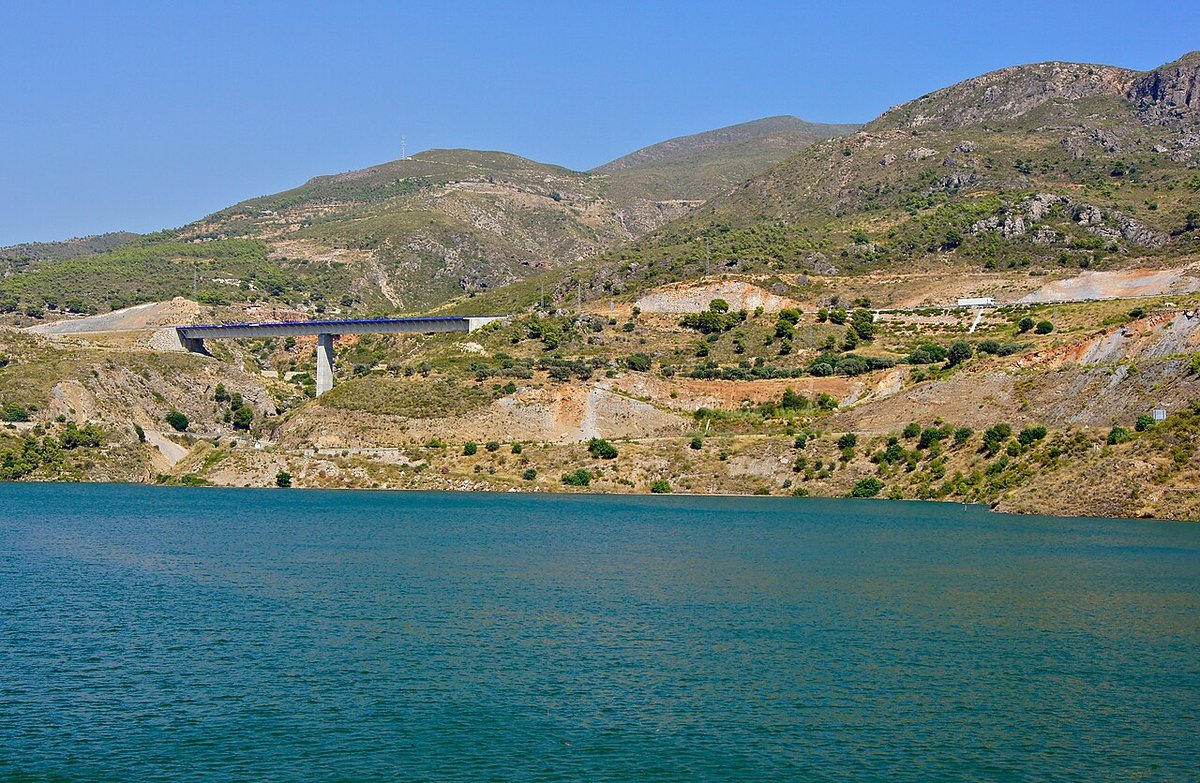
What defines Otívar most clearly is its position between mountains and valley. A short climb to any higher street or one of the informal viewpoints along the village edge is enough to see it: stepped terraces, slopes covered in pine trees, and, when the air is clear, a strip of Mediterranean blue in the distance.
At sunrise and towards the end of the day, the light falls at an angle, picking out the agricultural terraces and tracing pale lines between almond trees, olive groves and small cultivated plots. In winter and early spring, the almond trees bloom and the valley fills with white and pink patches.
For those arriving by car, it makes sense to leave it in the lower parts of the village and continue on foot. Narrow streets and steep gradients make driving through the centre less practical than it might seem.
Paths leading into the sierra
The surroundings of Otívar connect with the Sierra de Almijara and a network of paths used for generations to move between farmhouses and terraces. Some sections link with the GR‑249, known as the Sendero Costa del Sol, a long-distance route that crosses much of Málaga province and passes close to this area.
One of the more common walks nearby climbs towards Cerro del Fuerte. It is not a technical hike, but the sun is strong for much of the year and there is limited shade along certain stretches. Water, a hat and sturdy footwear make a noticeable difference.
There are also caves and small grottoes in the nearby sierra. It is worth checking conditions before entering any of them. Some require experience or knowledge of the terrain, while others have restrictions in place to protect the environment.
Terraces, irrigation channels and valley crops
Around the village, terraces built with dry stone walls are still visible, and many remain in use. In winter and early spring, almond trees stand out, while closer to the river there are small market gardens and subtropical crops that have expanded in recent decades.
The acequias, traditional irrigation channels introduced centuries ago, continue to function in several parts of the valley. These narrow waterways, sometimes almost hidden by vegetation, run down from the sierra and feed the stepped plots below.
Local festivals through the year
Festivities in Otívar remain closely tied to the traditional calendar. Around March, celebrations dedicated to San José bring together religious events and activities that draw back many residents who live elsewhere for the rest of the year.
In summer, several days of popular festivities fill the village, and the streets stay busy until late.
During Semana Santa, or Holy Week, processions move through the steep streets of the centre in a simple and understated way. In February, the Candelas bonfires are still kept alive, with branches burned and homemade sweets prepared around the fire. By May, decorated crosses adorned with flowers appear in different corners of the village.
When to visit Otívar
Spring is often one of the most pleasant times to explore both the village and the nearby walking routes. The countryside is still green, and temperatures are suitable for walking without too much heat.
In summer, setting out early is the better option for time in the sierra, as the sun becomes intense from midday onwards.
Winter is quieter, but it brings occasional very clear days when cold air sharpens the view and the Río Verde valley stretches out in crisp detail.