Full Article
about Rubite
Balcony over the Mediterranean from La Contraviesa; a municipality that reaches the sea at Casarones, with a wine-growing tradition.
Hide article Read full article
Where the mountains begin to meet the sea
Rubite sits on the southern slopes of the Sierra de Lújar, in that shifting strip where the Costa Tropical begins to rise into mountain terrain. The village has around four hundred residents and stands at roughly 800 metres above sea level. This height creates one of its most distinctive features: from certain points, the Mediterranean is visible, even though the surroundings feel unmistakably mountainous.
That in-between position has shaped daily life here for centuries. Rather than looking towards the coastal tourism economy, Rubite has traditionally been tied to dryland farming and the network of paths that run through the sierra. The rhythms of agriculture, rather than the seaside, have long defined the place.
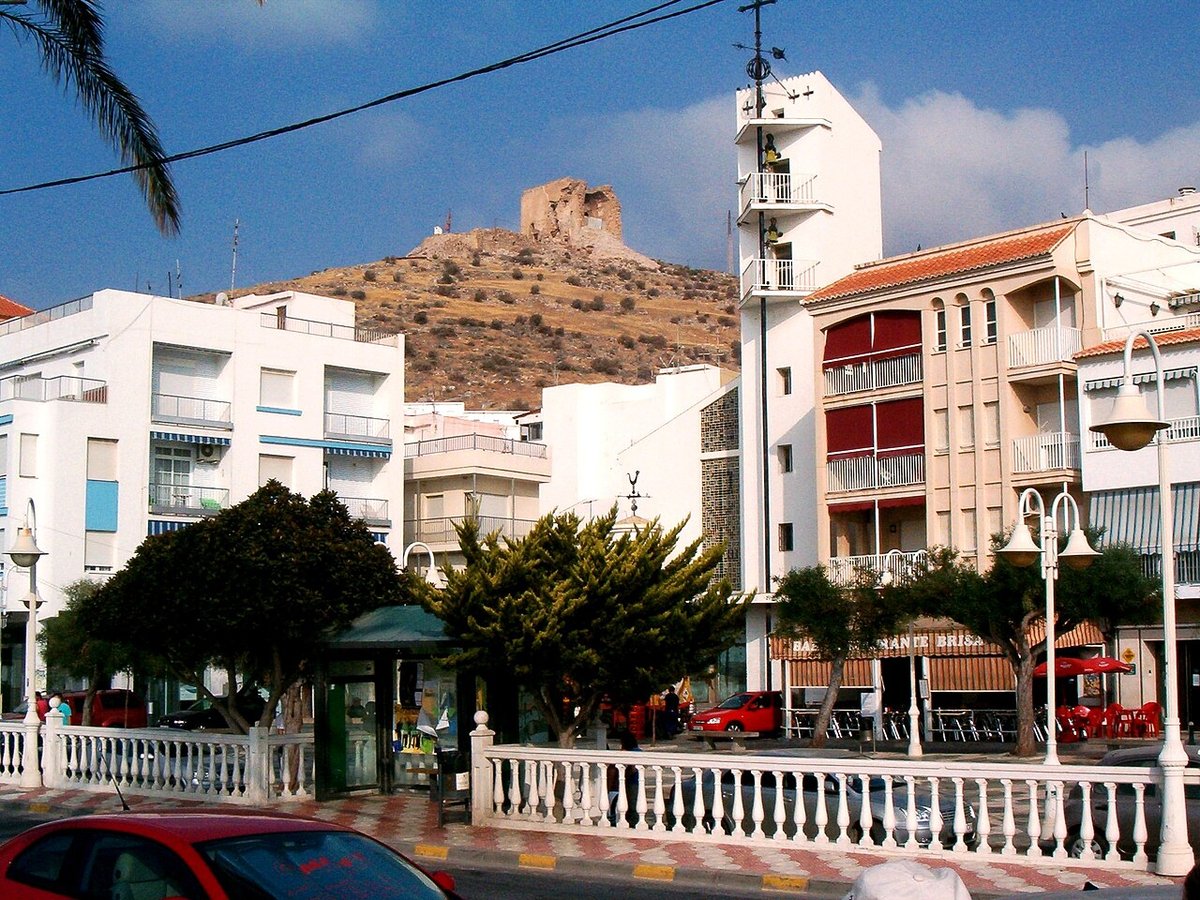
The layout of the village follows the slope with little attempt to soften it. Whitewashed houses climb upwards in tiers, and the streets rise steeply, sometimes narrowing to the point where barely a single car can pass. It does not feel planned in any formal sense. Instead, it reflects gradual construction shaped by the terrain itself, a pattern common in many villages across this part of Granada.
Around the edges of the settlement, the landscape still shows the imprint of older agricultural practices. Dry-stone terraces step down the hillsides, once used to support almond, olive and fig cultivation. Some are still maintained, while others have fallen out of use, a shift seen widely in recent decades as populations age and farming economies change. Even so, the layered structure of the land remains clearly visible.
The church and the centre of village life
At the heart of Rubite stands the parish church of the Inmaculada Concepción. The current building is generally dated to the 16th century, although it has undergone later alterations. Architecturally, it is restrained and typical of smaller गाँव in the province: whitewashed walls, simple volumes and minimal decoration.
Its importance lies less in artistic features and more in its role within the community. The church and the surrounding square form the social centre of the village, where everyday life unfolds. The area becomes especially significant during the celebrations linked to the Inmaculada in December, one of the key moments in the local calendar. These festivities bring the community together and anchor the annual rhythm of the village.
Nearby streets carry the same sense of continuity. They are not arranged for display, but for living, shaped over time by practical needs and the constraints of the hillside.
Climbing streets and coastal views
Walking through Rubite means accepting the climb. As the streets rise, the village gradually opens out towards the south. From higher points, wide views stretch across the slopes that descend towards the sea. On clear days, the line of the Mediterranean becomes visible, while inland the mountain ranges that separate this area from La Alpujarra come into view.
The upper parts of the village still preserve elements of traditional architecture. Some roofs feature conical chimneys, and many houses include interior courtyards. Thick walls are common, designed to keep out the cold during winter in the sierra and to retain coolness in the heat of summer. These details reflect practical responses to climate rather than stylistic choices.
There are no formal viewpoints as such, but the streets themselves offer changing perspectives. A turn in the road or a small open space can suddenly frame the coast in the distance, reinforcing the unusual combination of mountain setting and maritime horizon.
Paths into the Sierra de Lújar
Several traditional paths begin around Rubite and lead into the Sierra de Lújar. For years, these routes were used to reach cultivated land or to connect scattered cortijos, the rural dwellings typical of the area. Today, some of these paths are followed on foot or by bicycle, although not all are signposted, so it is sensible to seek information before setting out.
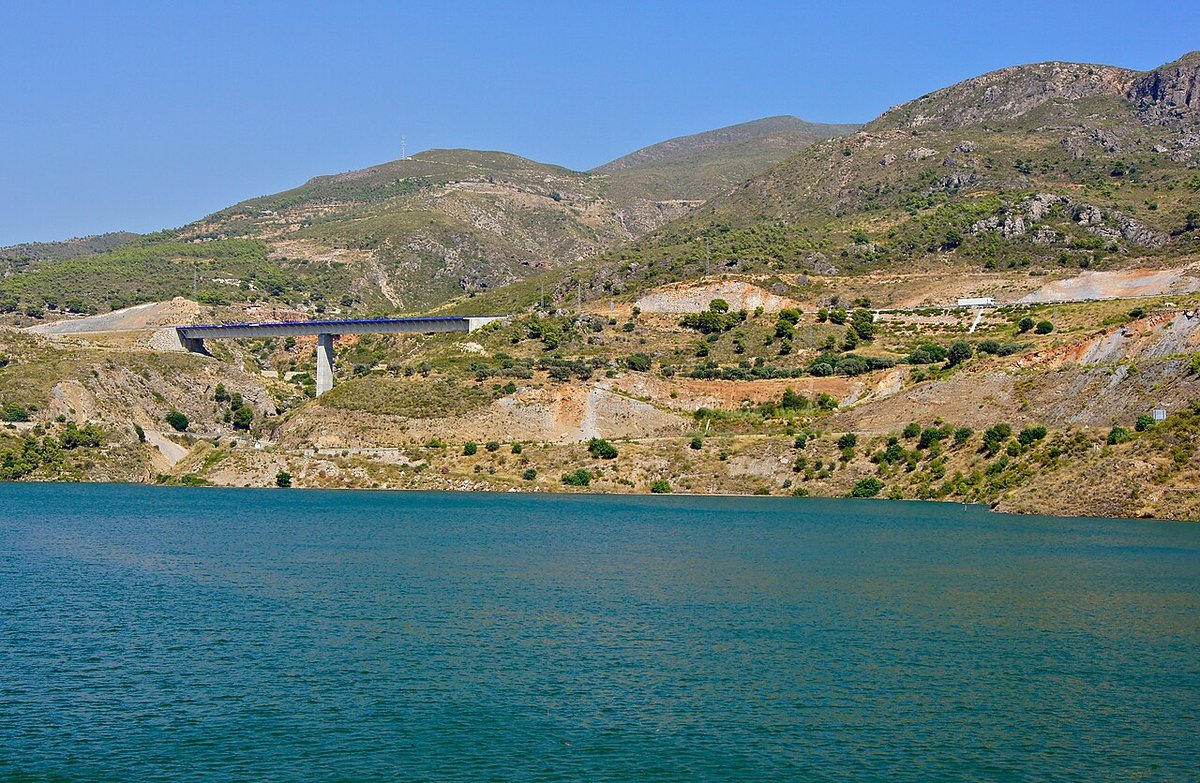
The landscape here is characteristic of Mediterranean scrub. Rosemary, thyme and esparto grass appear frequently, along with scattered holm oaks in the higher areas. The vegetation is low and adapted to dry conditions, allowing for broad, open views.
From certain points along these paths, the perspective widens considerably. The coastline of Granada can be seen from above, while inland the terrain becomes more rugged as it approaches the mountain systems that lead towards La Alpujarra. The sense of elevation is constant, even when the sea is visible in the distance.
Agriculture and everyday traditions
Dryland farming continues to shape both the landscape and, to a lesser extent, the local economy. Olive groves and almond trees cover much of the surrounding hillsides. During the flowering season, particularly for almond trees, the appearance of the area changes noticeably for a short period, adding a lighter tone to the otherwise earthy palette of the terrain.
Food traditions reflect this rural background. Home cooking tends towards substantial dishes in winter, suited to the cooler temperatures of the sierra. Almonds and honey are frequently used in sweets, especially those prepared for festivals or family gatherings. These recipes are part of a domestic tradition rather than something designed for visitors.
Daily life remains closely tied to seasonal cycles and local customs. While changes in agriculture and demographics have altered some aspects of village life, the underlying structure remains recognisable.
A small village between two worlds
Rubite does not function as a conventional tourist destination. Its interest lies in observing how a small settlement in the coastal mountains of Granada is organised and how it has adapted over time. The old terraces, steep streets and the continued presence of agricultural activity all contribute to this sense of continuity.
The village can be explored at an unhurried pace in a short time. What stands out is not a single landmark, but the overall relationship between place and landscape. From the higher streets, looking south, the Mediterranean appears closer than the mountainous surroundings might suggest.
That contrast defines Rubite. It is a place where the sea is within sight, yet daily life has long been shaped by the demands and rhythms of the sierra.