Full Article
about Salobreña
Jewel of the Costa Tropical with an Arab castle crowning the white village; long beaches and a charming old quarter
Hide article Read full article
Morning light on the rock
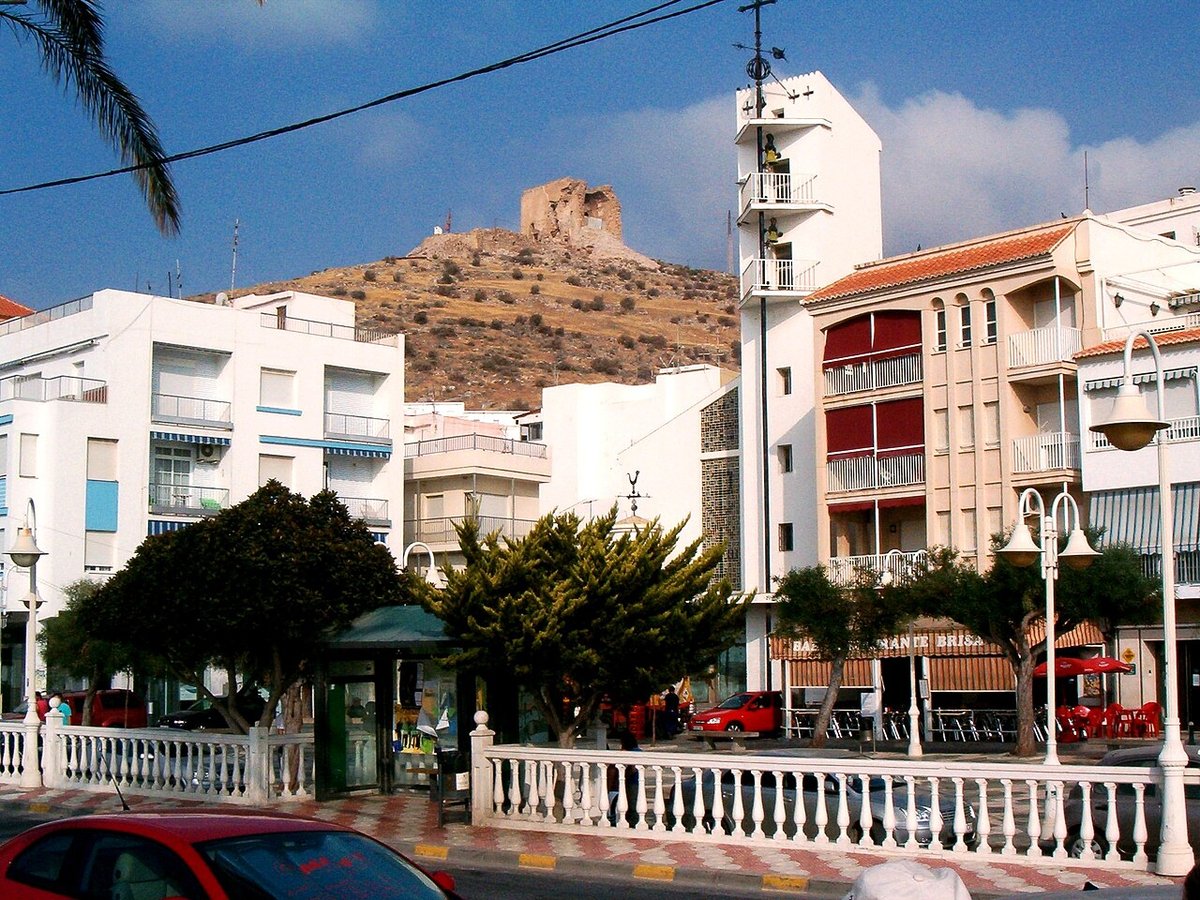
By eight in the morning, the sun is already warm in Salobreña. From the viewpoint on Paseo de las Flores, the light is so bright that the tiled surface of the castle almost looks luminous against the sea. Below, in the neighbourhood of La Loma, someone beats a red rug over a wrought-iron balcony. The steady thud against the stone carries like a distant drum.
The castle has always been there, long before summer visitors and the apartment blocks that now ring the fertile plain known as the vega. Much earlier still, this rocky outcrop was an island, cut off from the mainland by marshes and salt water, reached only by boat. Over time, sediment from the Guadalfeo River gradually closed that stretch of sea, turning it into the promontory that now rises above the town.
The walk up from Plaza de la Iglesia takes around ten minutes at an easy pace, following the bends of cobbled streets. In summer, the air here often smells of jasmine and, at times, of freshly baked bread drifting out from an open kitchen.
Sugar and the shape of the vega
During the nineteenth century and well into the twentieth, the vega of Salobreña was covered in sugar cane. The remains of that period are still visible in the old sugar factory, a reddish brick structure left behind when the crop stopped being profitable. It is often half hidden among banana plants and greenhouses.
At midday, the dominant sound in this flat landscape is the constant hum of irrigation systems and the rustle of plastic sheeting moving in the wind. That mechanical buzz sits in sharp contrast with the dry silence of the abandoned factory.
Sugar cane no longer defines the area, yet agriculture still does. The vega now produces tropical fruits such as mango, chirimoya and avocado. Towards the end of summer, they ripen with a sweet, distinctive smell that hangs in the air. In many homes, chirimoya is simply cut open and eaten with a spoon, without any ceremony.
Stone beaches and long evenings
The beaches in Salobreña are not sandy. The ground is made up of dark pebbles, and the seabed drops away quickly just a few metres from the shore. La Charca is the closest beach to the town centre and tends to attract those who walk down from the old streets. Further south, in La Guardia, the atmosphere shifts slightly. In the afternoons, it is still common to see boats pulled up on the shore and people mending fishing nets nearby.
The Mediterranean here shows almost no visible tides. When the easterly wind, known locally as levante, begins to blow, the sea can swallow part of the beach, leaving only a narrow strip for towels.
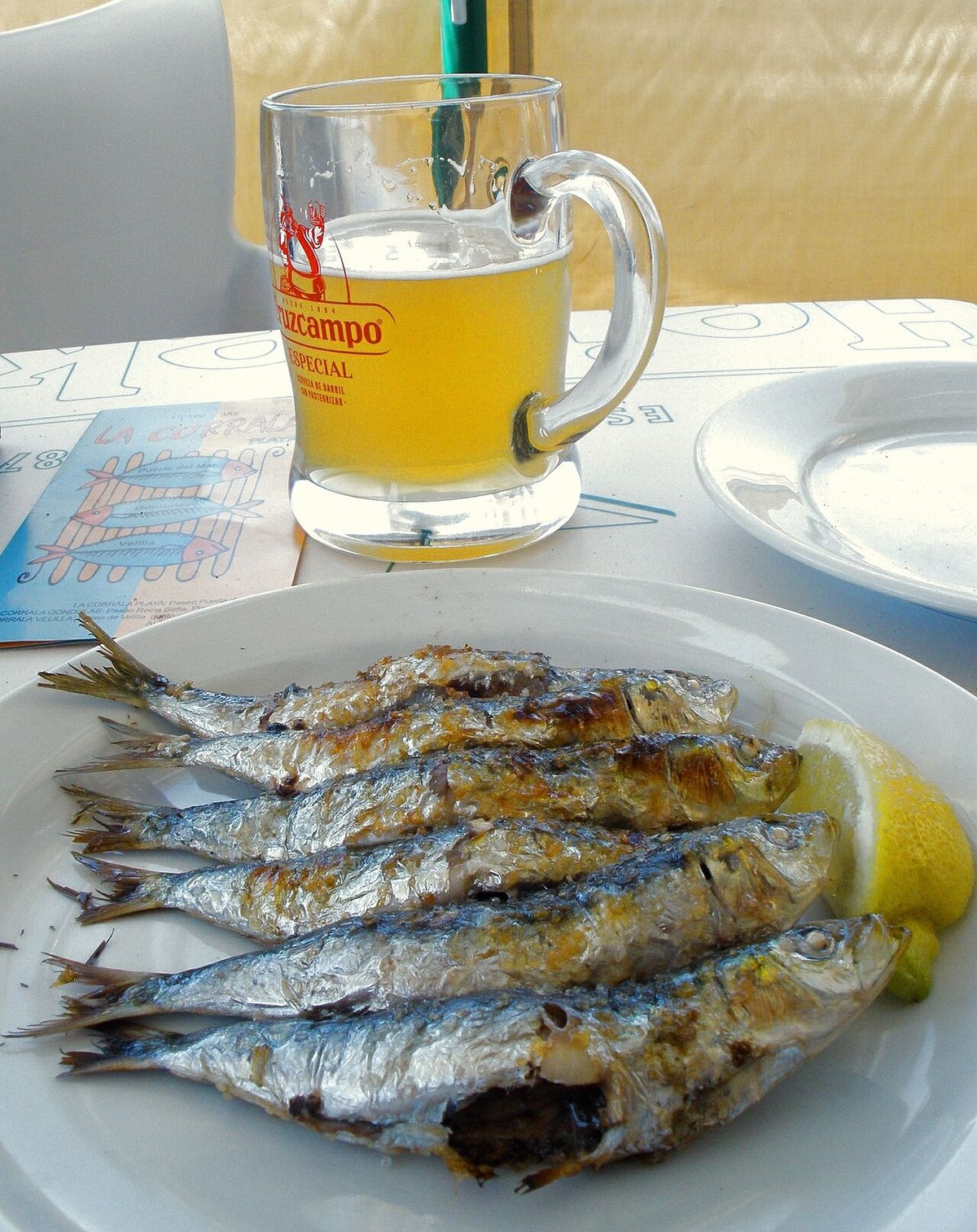
At the end of June, on the night of San Juan, the shoreline fills with small bonfires. The air smells of rosemary, sardines cooking over open flames and damp smoke. There is no large organised event. Instead, groups of neighbours arrive with folding chairs and cool boxes. At midnight, someone always heads into the water, even in the dark, even when the seabed cannot be seen.
Inside the castle walls
Within the castle, traces of different periods remain. One of the most striking spaces is a small bath of Andalusi tradition, fitted with a hypocaust system, an ancient method that allowed hot air to circulate beneath the floor. The entrance is low, so visitors have to duck slightly to get through.
Display cases hold fragments of glazed ceramics and objects uncovered during excavations within the enclosure. These are everyday remains, pieces that offer a sense of how life once worked here when the fortress formed part of the Nasrid coastal defensive system.
The story of Princess Zorahaida is often mentioned in visits and older pamphlets. According to the tale, she died of heartbreak after being confined in the castle for falling in love with the wrong person. That version, however, seems to come more from nineteenth-century storytelling than from historical records. What is documented is that the fortress was used for a time as a guarded residence for members of the Nasrid court during periods of political tension.
When the pace slows
In winter, once the busiest summer months have passed, Salobreña changes noticeably. Many apartment shutters remain closed, and the seafront becomes quiet in the afternoons.
At the municipal market, fish appears that was brought in from the nearby coast that same morning. In some houses in the upper part of town, octopus can still be seen drying in the sun, strung up on rooftop lines, a practice that is becoming less common.
Clear spring days are often the best time to walk through the old town. Before Semana Santa, temperatures are mild and the vega begins to carry the scent of chirimoya blossom. It is a sweet smell, almost like vanilla, most noticeable towards evening.
August brings a complete shift. There is more traffic, more noise, and finding somewhere to park near the beach can take patience. Arriving early or leaving the car in the lower part of town and walking up makes things easier.
From the castle walls, the whole stretch of coastline comes into view. To the west, the Guadalfeo opens out into the green vega between cultivated fields. To the east, on clear days, Almuñécar appears as a white patch clinging to another rocky rise. Below, the old town forms a compact maze of streets.