Full Article
about Torrenueva Costa
Independent coastal municipality from Motril; known for its family-friendly beach.
Hide article Read full article
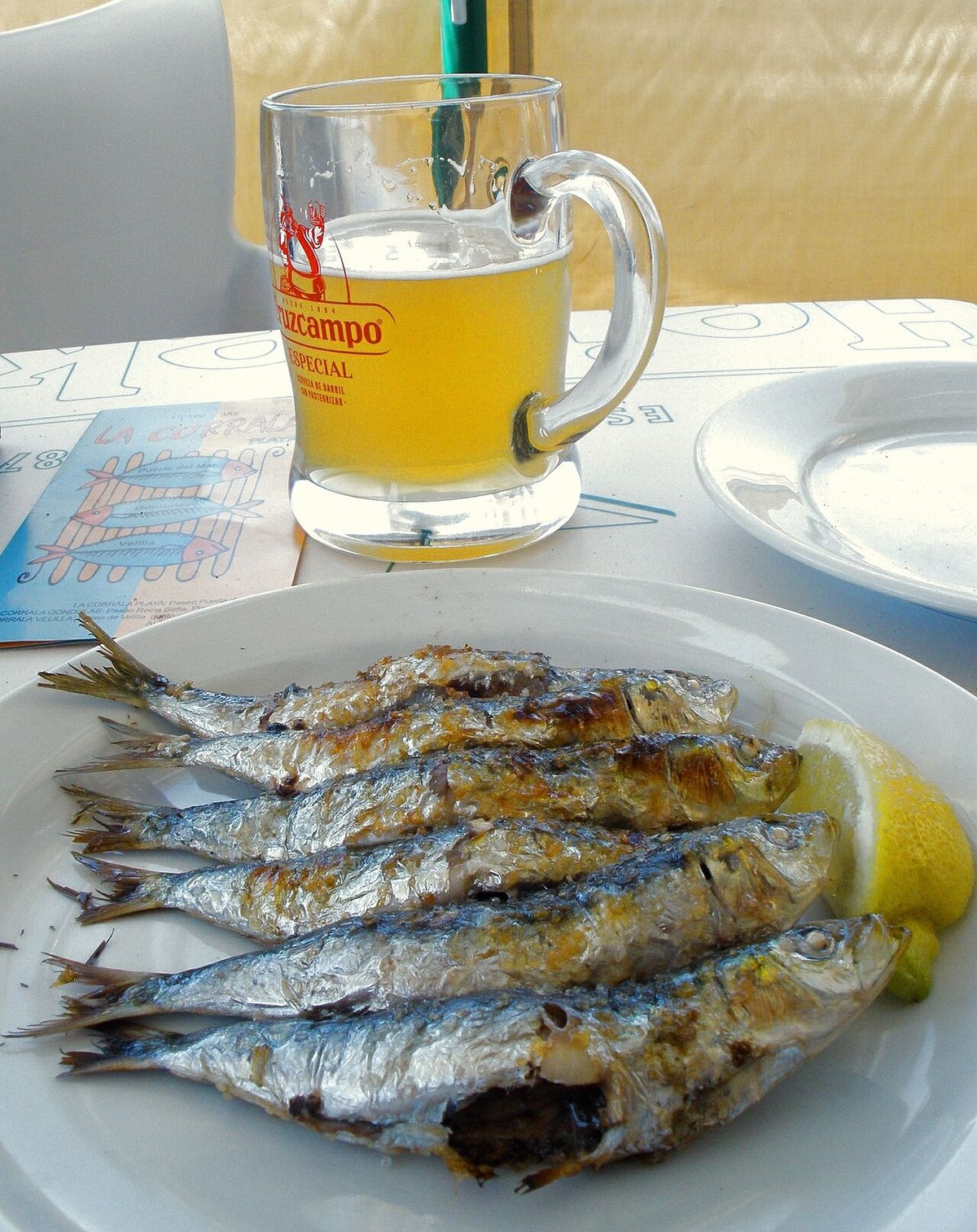
Sardines start to release their juices as the tide drops. It is six in the evening, the sun still pressing down on the dark sand, and the smoke from the espetos rises almost straight when the poniente wind settles. In Torrenueva Costa there is no hurry. Some fishermen plant their rods in the shore, sit back on wooden rocking chairs and wait. The smell of grilled sardines blends with the sea and that mineral edge so typical of the Costa Tropical, the kind that clings to clothes long after you leave.
From the Jolúcar suspension bridge the whole town comes into view, tucked between ravines and the sea. The iron walkway and its cables cross the Barranco de los Burros high above the white houses. When you walk across, the boards creak lightly underfoot and the air rising from the cliffs often comes with enough force to lift caps and hats. On one side, the urban beach curves into a half-moon; on the other, the darker outline of Cabo Sacratif stretches out into the water.
The tower that watched the coast
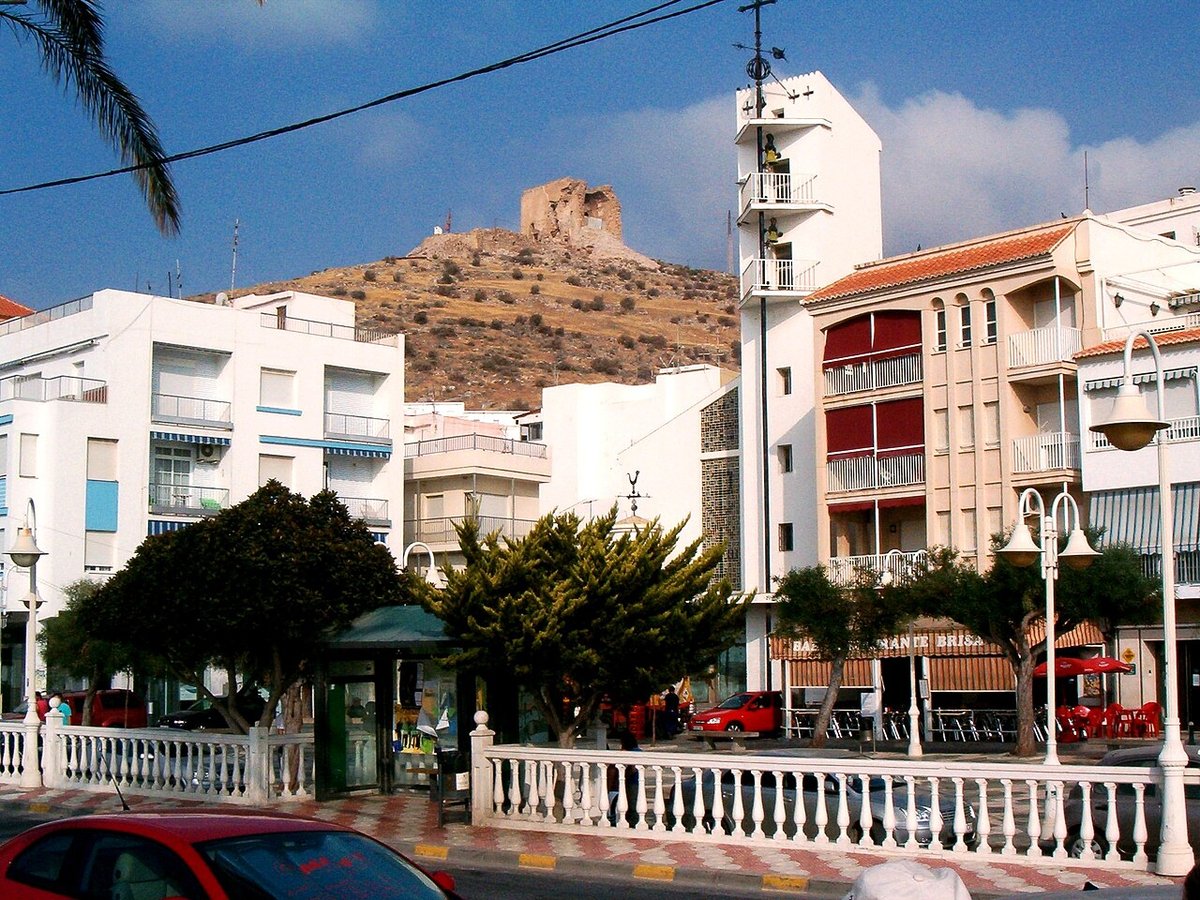
A few minutes from the bridge stands the Torre Vigía, set among pines and low-rise developments. It forms part of the chain of defensive towers that watched this coastline for centuries against incursions from the sea. Its thick walls still hold the warmth of the late afternoon sun, and from above, when access around it is clear, the view reaches as far as the Sacratif lighthouse and a good stretch of coastline.
Behind the tower begins a path that follows the cliffs towards the lighthouse. It is not long, though there are sections that rise and fall, and water is a sensible companion on hot days. The route passes close to the Peñón de Jolúcar and the archaeological area of El Maraute, where remains of Roman salting factories have been found. Low structures can still be made out against the pale ground, a reminder that fish was preserved and sent far from here long before any seafront promenade existed.
Dark sand and crops by the sea
Torrenueva’s beach does not fit the familiar image of pale sand. Here it is darker and slightly coarser, clinging to the skin and often finding its way into trainers when you step out of the water. In return, the surroundings combine sea with subtropical agriculture: chirimoyas, avocados and other fruit trees spread across the nearby slopes.
In late winter and early spring, much of the plain appears covered in agricultural plastic that protects the crops. On mild days, the air carries a soft scent of ripe fruit mixed with salt. It is a landscape where cultivation and coastline sit side by side without much separation.
For a quieter feel, June tends to work well. The water begins to warm, and the promenade still moves at a village pace. In high summer the atmosphere shifts noticeably, and finding a place to park near the beach becomes more difficult by mid-morning.
When the town turns towards the sea
In mid-July, the seafaring procession of the Virgen del Carmen takes place. The image is carried through several streets before heading out onto the water, accompanied by local boats and small vessels. On that day, the sound of horns and sirens carries up to the cliffs.
Winter brings a different rhythm. During the fiestas of San Antón, it is common to see bonfires on the beach or in nearby open ground. Neighbours grill sausages, share improvised dishes and linger in conversation by the fire, while the sea lies dark just a few metres away.
Eating by the water
At mealtimes, terraces by the beach begin to fill gradually. Espetos are usually prepared in full view, with skewers planted in the sand facing the embers. The sardines often arrive early in the morning from the Motril fish market.
Other dishes reflect the local habits: migas served with fried fish, salads featuring avocados from the area, or leche rizada, a chilled dessert made from milk flavoured with cinnamon and lemon, typically served in glass tumblers misted by the contrast with the afternoon heat.
Getting there and choosing your moment
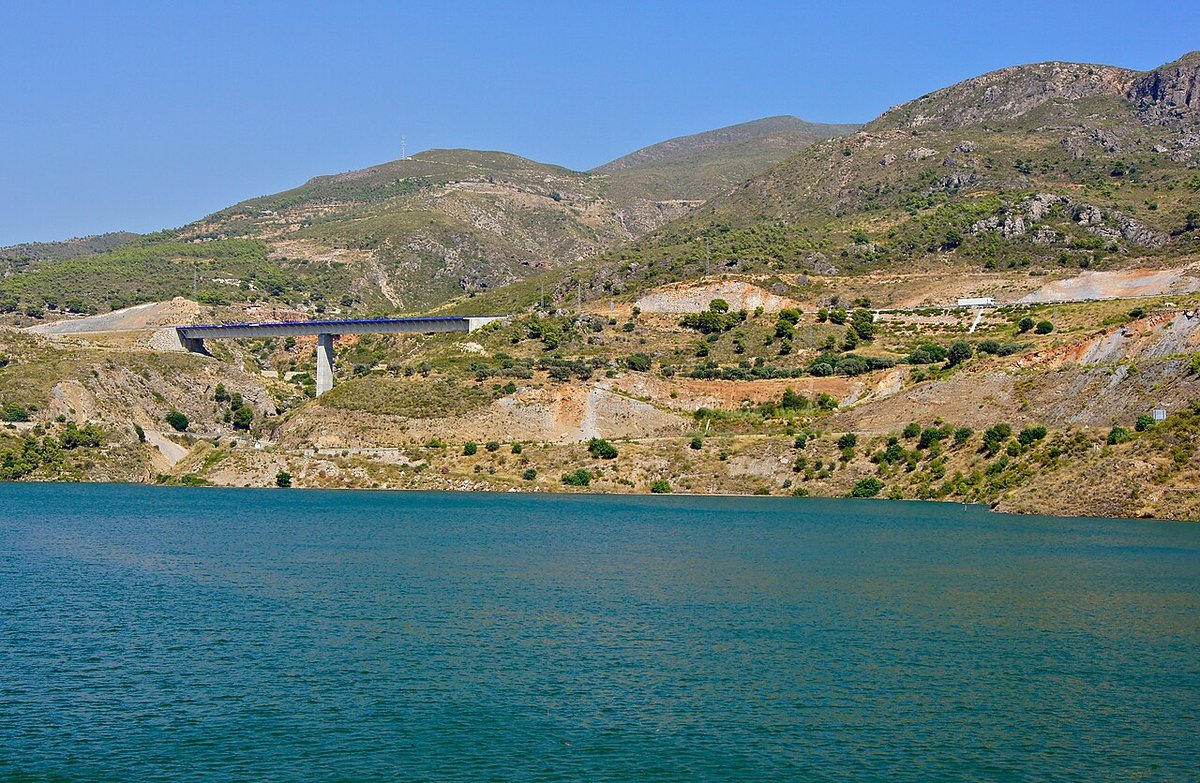
Torrenueva Costa lies just over an hour from Granada via the A‑44 and only a few minutes from Motril. The final stretch descends in curves towards the sea, so a steady approach helps if the road is unfamiliar.
In August, especially at weekends, the entrance to the town can become congested and the beach takes on a very different pace. For more space and quieter surroundings, June or September are often better options. The sea usually holds onto the summer warmth, and evenings settle back into a slower rhythm, with the smoke of espetos drifting gently above the sand as the day comes to an end.