Full Article
about Arquillos
A colonization settlement founded by Carlos III; gateway to the Condado with a rationalist urban layout.
Hide article Read full article
A small stop in the north of Jaén
Tourism in Arquillos is straightforward. You arrive, park near the centre and walk around it in a short while. There is no large historic quarter and no long checklist of sights. The visit is simple by design.
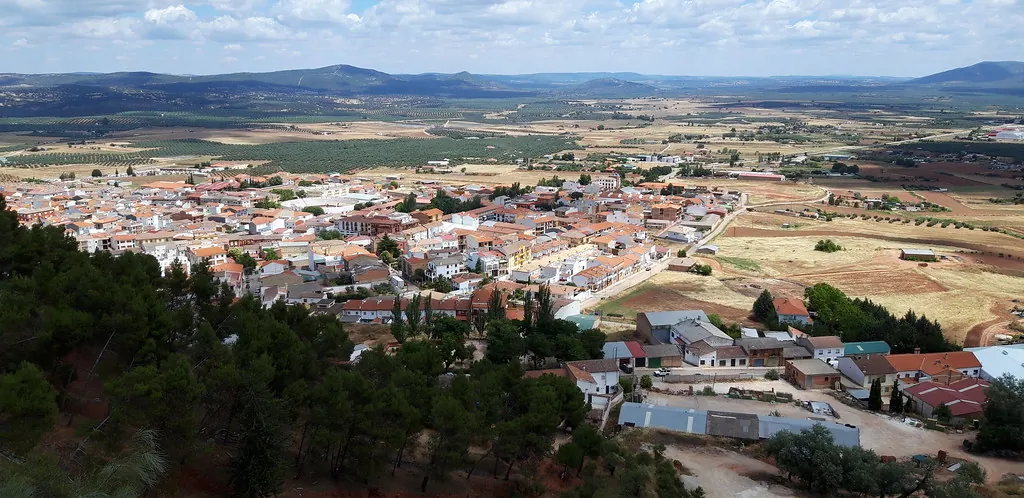
Arquillos sits in the comarca of El Condado, in the north of the province of Jaén, Andalusia. Around 1,600 people live here. The countryside sets the pace. Everything revolves around olive groves and the rhythm of agricultural campaigns, which shape daily routines and the local economy.
If you come in summer, it is better to start early. By mid-morning the heat becomes intense and the village grows noticeably quieter. Streets empty, shutters close and activity slows down until later in the day. At other times of year the atmosphere is calm, without dramatic changes.
This is not a place built around major attractions. It is a working agricultural village, and that is precisely what defines the experience.
Parking and getting around
Parking is usually straightforward. Most visitors leave the car near the main square or in nearby streets close to the centre. It is not a complicated place to navigate. Early in the day there is generally space available. Later it can fill up a little, particularly during festivals or at weekends, though it never becomes overwhelming.
From there, everything can be done on foot. Distances are short and the streets rise and fall only gently. There are no long climbs or complex routes to plan. A relaxed stroll is enough to cover the centre without rushing.
The scale of Arquillos makes orientation easy. Within a few minutes you understand how the village fits together and where the main reference points are.
The urban centre
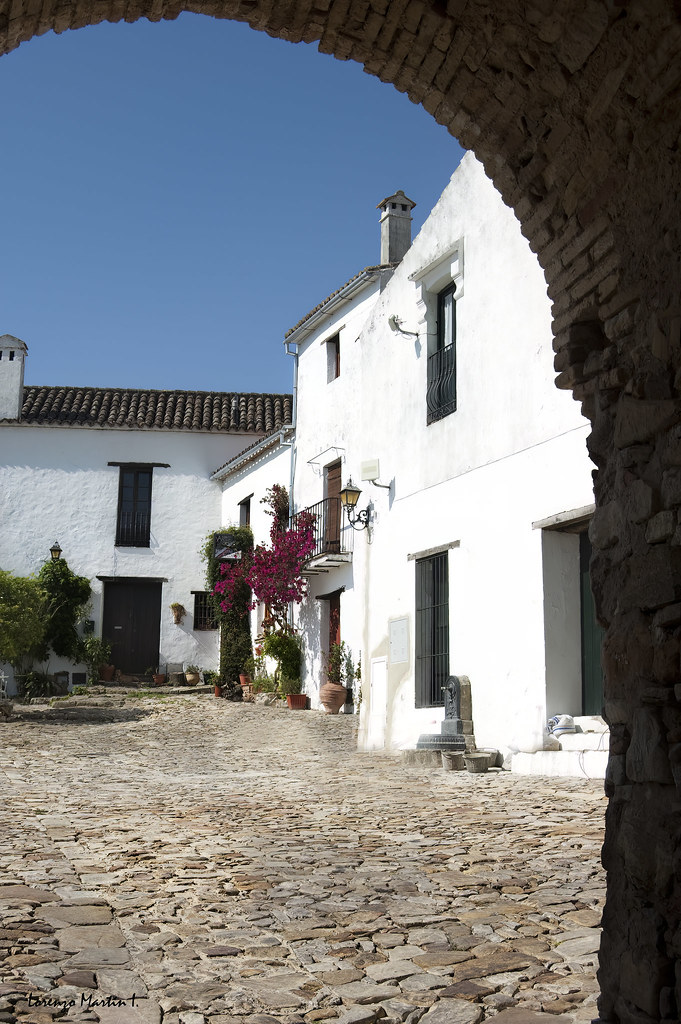
There are no grand monuments. The layout follows the pattern common to many agricultural villages in this part of Jaén: narrow streets, whitewashed houses, iron window grilles and flowerpots fixed to façades. It is a familiar Andalusian scene, practical rather than decorative, shaped by climate and routine.
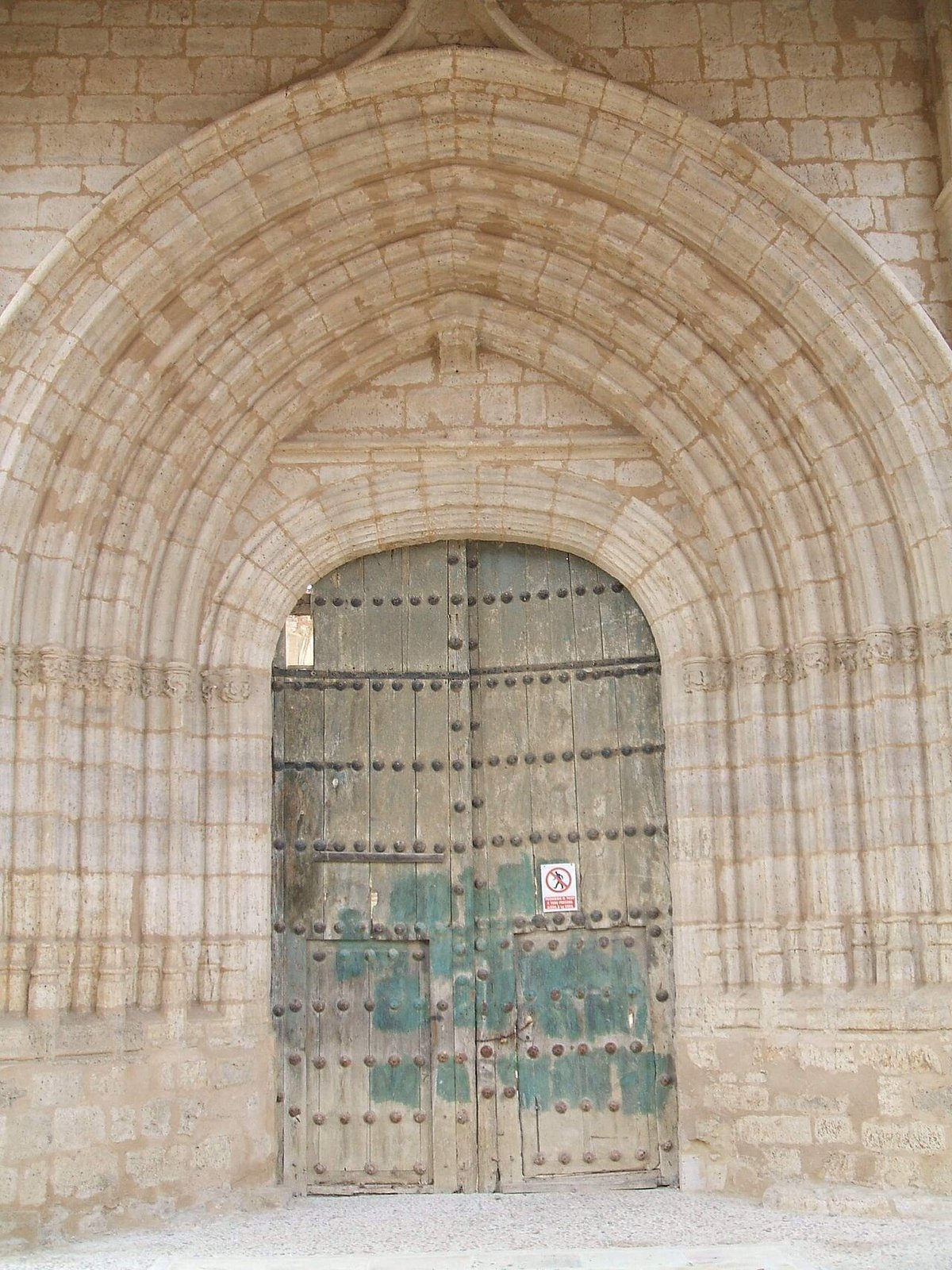
The clearest landmark is the church of Santa María Magdalena. The building has undergone alterations over time, so what stands today reflects different phases of change. Even so, it remains the place where the village gathers for celebrations and religious events. It acts as a focal point in both physical and social terms.
A walk through the centre does not take long. In about half an hour, without hurrying, you will have seen it all. That brief circuit is enough to grasp the character of the place: modest streets, everyday life unfolding at a steady pace, neighbours greeting one another from doorways.
Arquillos does not attempt to impress with scale. Its interest lies in its normality. The absence of headline sights means attention shifts to small details such as the arrangement of houses or the way streets connect back to the square.
Olive groves in every direction
Step beyond the built-up area and the landscape changes immediately. Olive groves begin as soon as the last houses thin out. Rows of trees stretch as far as the eye can see. This is the typical scenery of El Condado.
Agricultural tracks run between the groves. Many are used for farm work and can be walked. They offer a closer look at the setting that sustains the village. Care is needed not to enter private access routes to farms unless it is clear that they are public paths.
The olive tree dominates everything here. It defines the horizon and sets the seasonal rhythm. During campaign periods there is more movement in the fields. At other times the groves appear still, ordered in long lines across the undulating land.
From some higher points, on clear days, the outline of Sierra Morena can be made out to the north. It is not a dramatic mountain view, more a distant line that frames the landscape. That sense of open space is part of what characterises this corner of Jaén.
A short walk along one of these tracks is enough to understand how closely Arquillos is tied to its surroundings. The transition from village street to cultivated land happens within minutes.
Festivals and everyday rhythm
The main festivities revolve around Santa María Magdalena, usually in summer. These are the days when there is more activity in the streets. People gather, events take place and the atmosphere shifts from routine to celebration.
Holy Week, known in Spain as Semana Santa, also maintains its processions through the centre. Religious images are carried along the streets, following traditional routes around the church and nearby areas. Even in a small village, these dates hold significance and bring residents together.
Outside those periods the mood is calm. It is ordinary village life. People come and go from the fields. Conversations take place at front doors as evening falls. There is little other noise.
That quiet is part of the identity of Arquillos. It does not aim to entertain constantly. Most days unfold at a measured pace, shaped by work in the olive groves and familiar routines.
A simple way to see Arquillos
There is no need to overthink a visit. Park near the centre, take a walk through the streets around Santa María Magdalena and then head out along one of the paths among the olive trees. That is enough to form a clear impression of what Arquillos is like.
It is a village in El Condado where agriculture sets the tone, where the urban area is compact and easy to cover on foot, and where the surrounding groves define the horizon. The experience is brief and unpretentious.
Arquillos offers a snapshot of rural life in the north of Jaén. Arrive early if the weather is hot, walk without hurry and let the setting speak for itself. With that, you will have seen what there is to see.