Full Article
about Vilches
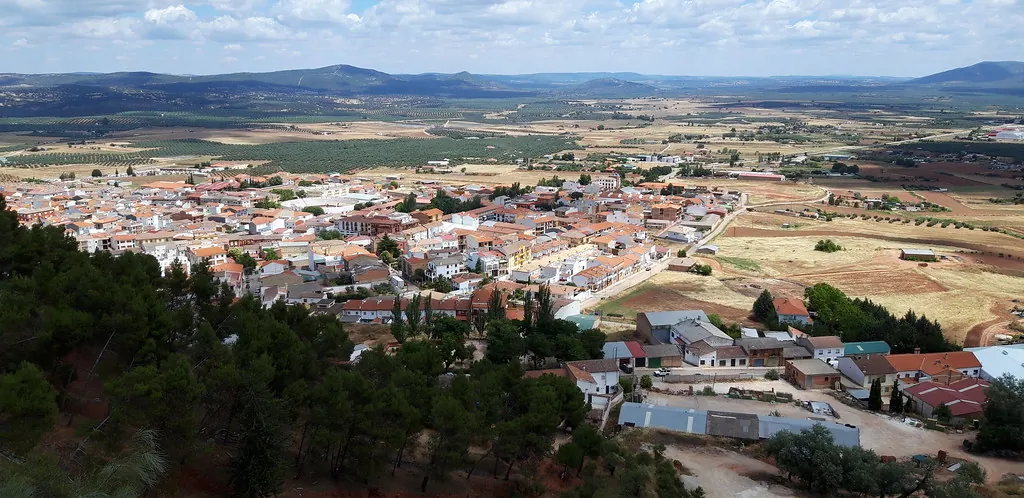
Town ringed by reservoirs with a castle on the hilltop; sweeping views.
Hide article Read full article
A small town by the A‑4
Vilches has around 4,000 inhabitants and sits roughly 65 kilometres from Jaén. The A‑4 motorway runs close by, cutting through an expanse of olive groves that stretches for kilometres in every direction. The setting feels practical rather than showy, a place shaped by work in the fields and the steady movement of traffic beyond the town.
Arriving by car makes things simple. Most visitors leave it somewhere near the centre and continue on foot. The historic core is compact, and a slow walk over the course of an afternoon covers it comfortably. There is no sense of rushing from one landmark to another. The scale encourages a relaxed pace, with time to notice small details or simply sit for a while.
Giribaile, a castle in name
About 7 kilometres from Vilches stands the so‑called Castillo de Giribaile. The approach is via a dirt track, and there is no formal car park waiting at the end. People usually leave their vehicles wherever they can near the hill.
The site has a long past. It began as an Iberian oppidum, later became an Islamic fortress, and eventually passed into Christian hands during the reign of Fernando III. What remains today is fragmentary. There are stretches of wall and scattered ruins, with no reconstructions or elaborate displays to guide the visit. It is a place where imagination fills the gaps.
The walk up is brief. Five minutes on foot is enough if the car is left at the bottom. At the top, the view opens out over the surrounding landscape. Olive groves dominate the scene, spreading out towards the horizon, while the valley of the Guarrizas appears below. The visit works best as a short excursion, a chance to stretch your legs and spend a little time outdoors rather than a deep historical tour.
Everyday life in Vilches
Vilches does not revolve around tourism. Daily life centres on the agricultural cycle, the cooperative, and the familiar rhythm of local bars. Visitors step into a town that continues its routines regardless of who passes through.
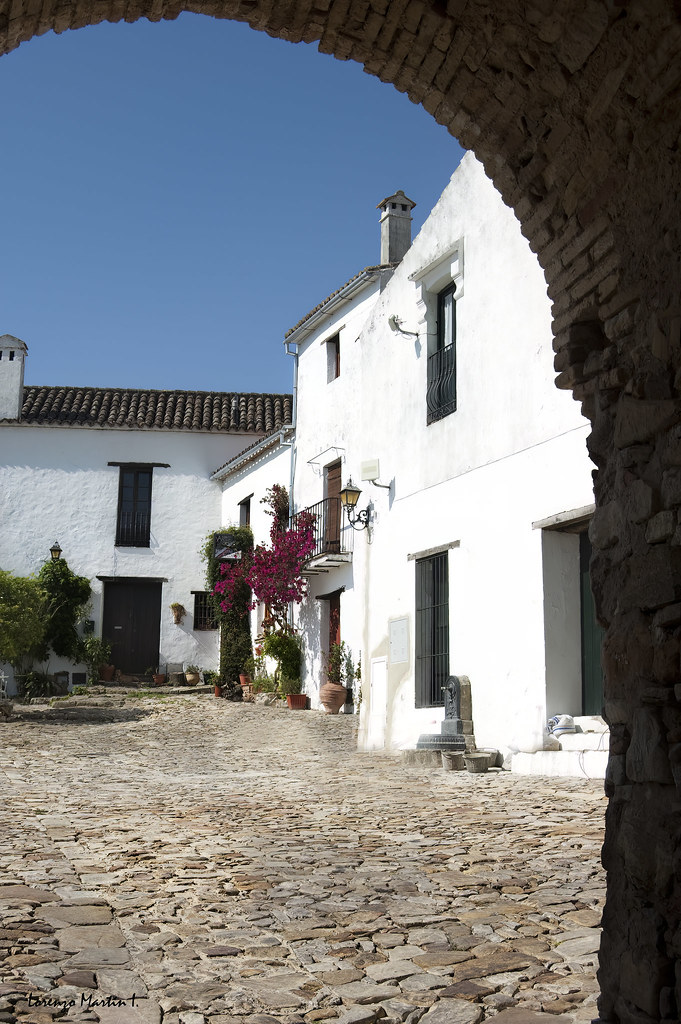
The houses follow the regional style. White façades reflect the light, and roofs are covered with traditional curved tiles. Some streets slope gently, others a bit more steeply, but none feel overwhelming. The layout invites wandering without a fixed plan.
Calle Corredera holds a small detail that may catch your eye. At number 38 there is an eighteenth‑century coat of arms set into the stone. It is the kind of feature that some people stop to examine, while others walk past without a second glance. Either approach fits the mood of the place.
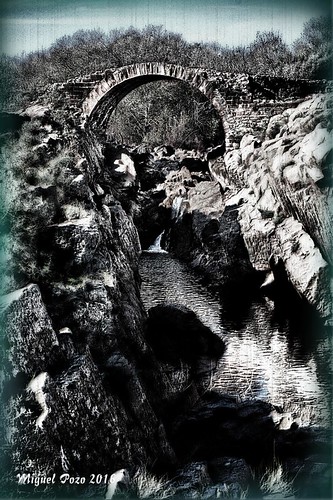
Elsewhere, the railway station dates from the nineteenth century and still receives some regional trains. The bridge over the river Guarrizas is often dated to the fifteenth century, and cars continue to cross it today. That bridge tends to stand out more clearly than other elements in town, perhaps because it connects past and present in such a direct way.
Food shaped by the province
Vilches does not present a long catalogue of named local dishes. The food follows the broader traditions of the province of Jaén. You will come across jamón, secreto ibérico, salmorejo, and pipirrana, all familiar across this part of Andalusia.
Choosing where to eat is straightforward. Go where local people are already sitting. A busy spot usually says more than any sign or recommendation. If there is freshly made tortilla, it is worth ordering. Otherwise, it makes sense to follow whatever is being prepared that day.
Olive oil plays the central role. Production in this area is extensive, and the quality is often high. Many people buy it directly from the cooperative, taking away a large container rather than a small souvenir bottle. The connection between the surrounding groves and what appears on the table is immediate and clear.
When the pace changes
Spring tends to be the most comfortable time to visit. Temperatures are mild, and the olive groves still hold their green tones. The landscape feels softer, and walking around the town or up to Giribaile is easier.
Summer brings harsher conditions. Temperatures climb well into the thirties, and shade is limited outside the built‑up area. Anyone arriving during this season will find it more manageable to move around early in the day or later in the evening.
Autumn marks the start of the olive harvest. Activity increases along rural tracks and around the cooperative, with a noticeable shift in energy. Winter, by contrast, slows everything down again. The town becomes quieter, and its small size becomes even more apparent.
A short stop, nothing more
Vilches is quick to see. The town itself fits easily into a single visit, and the hill of Giribaile adds a little more time without turning the trip into a full day of sightseeing. There is no need to plan extensively or search for hidden corners.
For those travelling from further away, it often makes sense to combine Vilches with a stop in Baeza or Úbeda. Both are nearby and offer more to explore, creating a broader day out without long detours.
One practical note applies to Giribaile. An early start helps avoid the strongest sun, and carrying water is essential. There is no shade at the top and no fountains to rely on. The exposure is direct, and the conditions speak for themselves once you arrive.