Full Article
about Alcudia de Monteagud
Small village in the Sierra de los Filabres; known for its quiet and its slate-roofed vernacular architecture.
Hide article Read full article
At a thousand metres, the light has a different weight. In Alcudia de Monteagud, in the early afternoon, it falls almost head-on onto the hillside, and the whitewash of the houses reflects a glare so sharp it makes you narrow your eyes. There is very little noise. A door opens somewhere, dry wind slips down from the sierra, and now and then a car crosses the village before disappearing downhill.
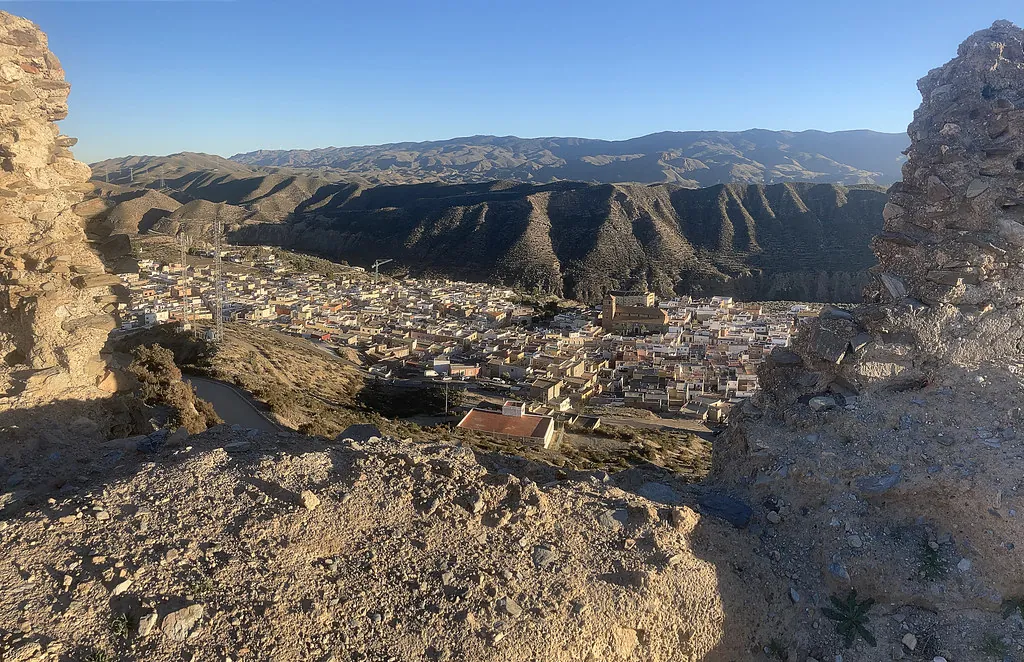
The altitude is in your lungs. The air is cleaner, noticeably cooler than in the valley below, even in July. The houses cling to the slope, and from many streets the view opens onto a stark landscape of pale hills and wide ravines where shadows pool blue in the afternoon.
A reference point in white
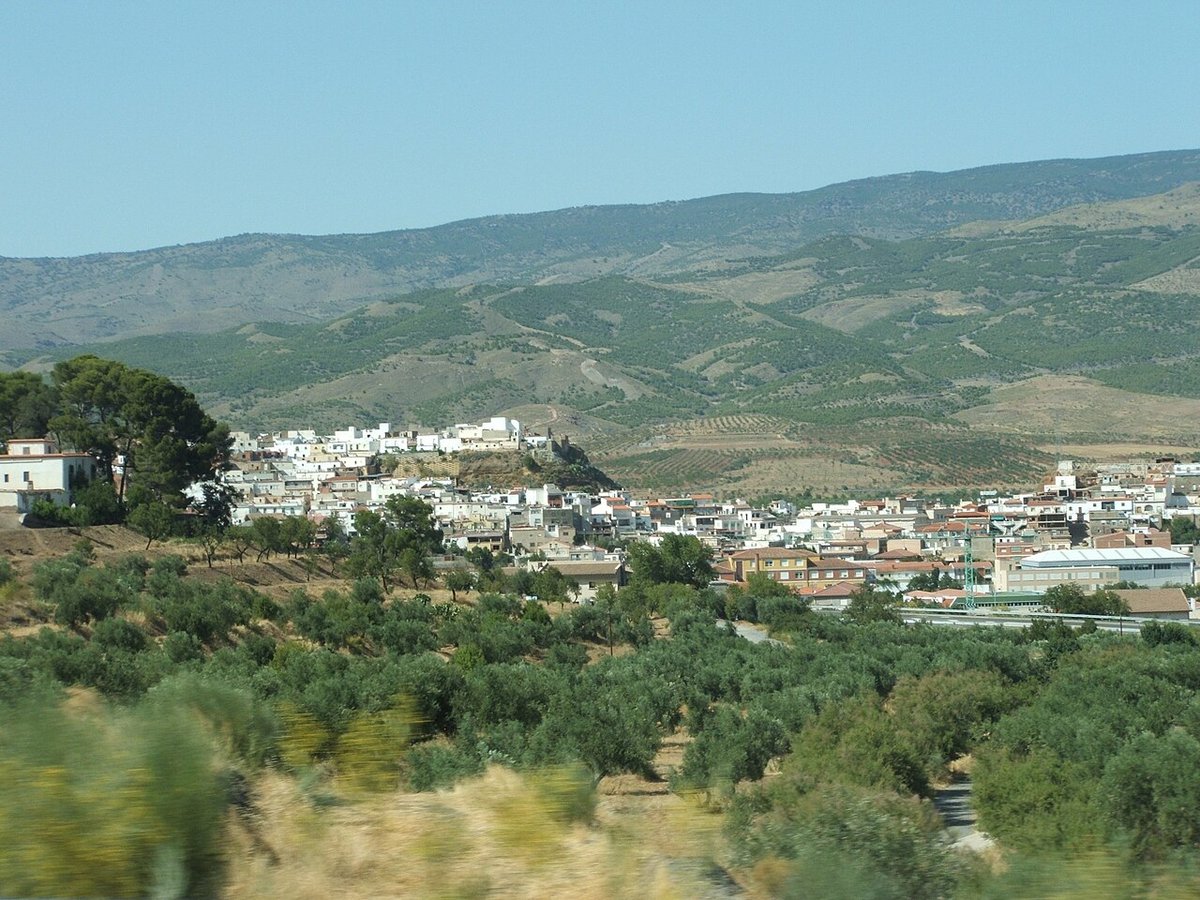
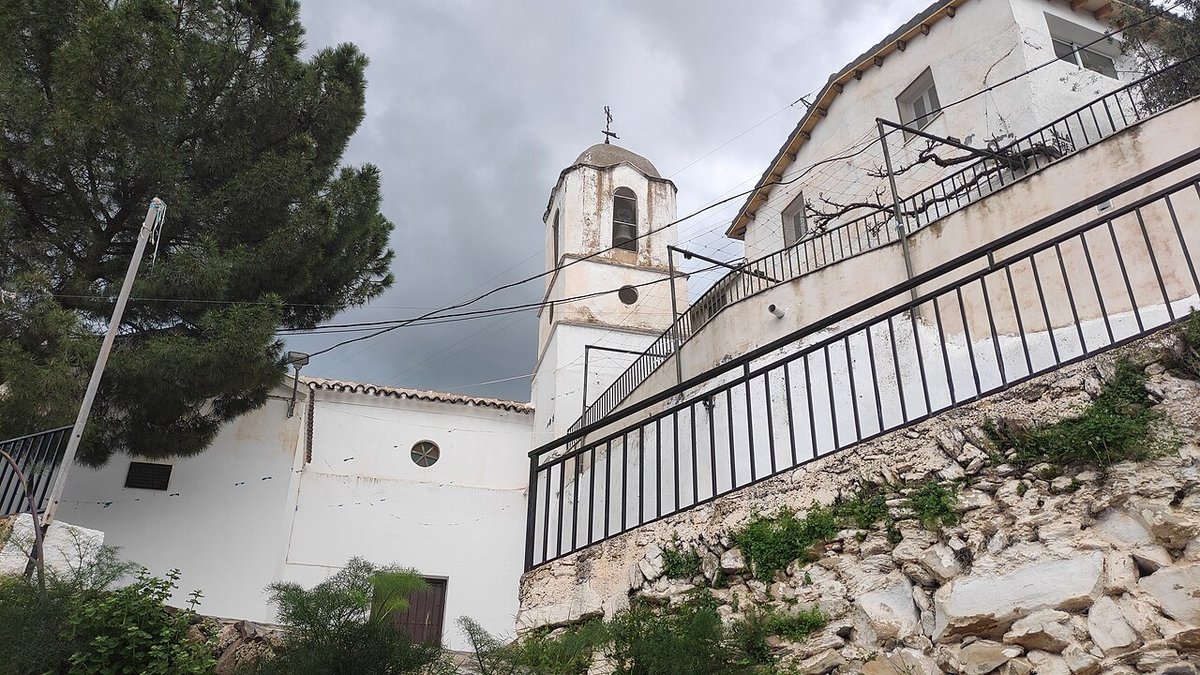
The parish church acts as a landmark from almost anywhere. Its bell tower isn’t especially tall, but it rises above the white roofs and helps with orientation when the streets begin to twist and dip without much logic. The layout follows the uneven terrain. White façades, black iron grilles, wooden doors that have bowed gently over the years.
Around the church lies a small square where village life tends to gather. The shade falls sideways at certain hours, and the stone paving keeps a trace of coolness. It’s the sort of place to sit for a while with no particular plan, watching the light shift across the walls.
The streets are narrow and sometimes end abruptly in small, improvised viewpoints over the valley. Many houses retain older details: wrought iron grilles showing careful craftsmanship, short eaves casting modest strips of shade. Exterior staircases lead up to a second floor or to a terrace from which half the sierra can be seen.
Leaving the last houses behind
The terrain changes quickly once you step out of the built-up area. Stony hills emerge, their soils tinted red and grey. Tough plants take root here: esparto grass, thyme, and the occasional almond tree standing alone against the slope. In spring, if winter has brought enough rain, the scrub turns faintly green and the scent of fresh grass drifts along the tracks.
Several rural paths leave from the edge of the village and head into the sierra. Traditionally, they were used to reach vegetable plots or old grazing areas. Two practical points are worth bearing in mind: the midday sun falls hard here for much of the year, and wind on the higher ground can rise without warning. Water, a hat, and footwear with a good sole are what you need.
In return, there is a complete tranquillity. It doesn’t take long to find a vantage point from which the whole village comes into view, hanging on the hillside with the bell tower marking its centre.
A calendar of quiet and gathering
For much of the year, Alcudia de Monteagud remains calm. On weekdays you can walk for several minutes without passing anyone. At times the only sound is the wind brushing the hillsides. From time to time the church bells mark the hour, their echo carrying across the rooftops.
In summer the population often increases as people with family ties return. Patron saint festivities bring more life to the streets; music fills the square and gatherings continue into the night once the heat of the day has eased. Holy Week is observed in a more restrained way, with brief routes through the central streets.
The cooking that endures here is straightforward. These are dishes designed to sustain long working days: migas, gachas, slow-cooked legume stews. There isn’t a wide range of places to sit down for a meal. It’s best not to arrive expecting numerous options to be open, especially outside weekends or July and August.
After dark, with little artificial lighting, the sky turns deeply black. The stars appear with a notable clarity when it’s clear. Winter brings a biting cold, yet the air is clean and visibility remains good for days on end.
Alcudia de Monteagud does not depend on spectacle. Its rhythm is set by altitude, by silence, and by the way light falls across white walls at different hours. The Sierra de los Filabres stretches around it, dry and open, shaped by wind and time.