Full Article
about Benizalón
Mountain village dominated by the Santuario de Monteagud; striking views of the sierra and the desert.
Hide article Read full article
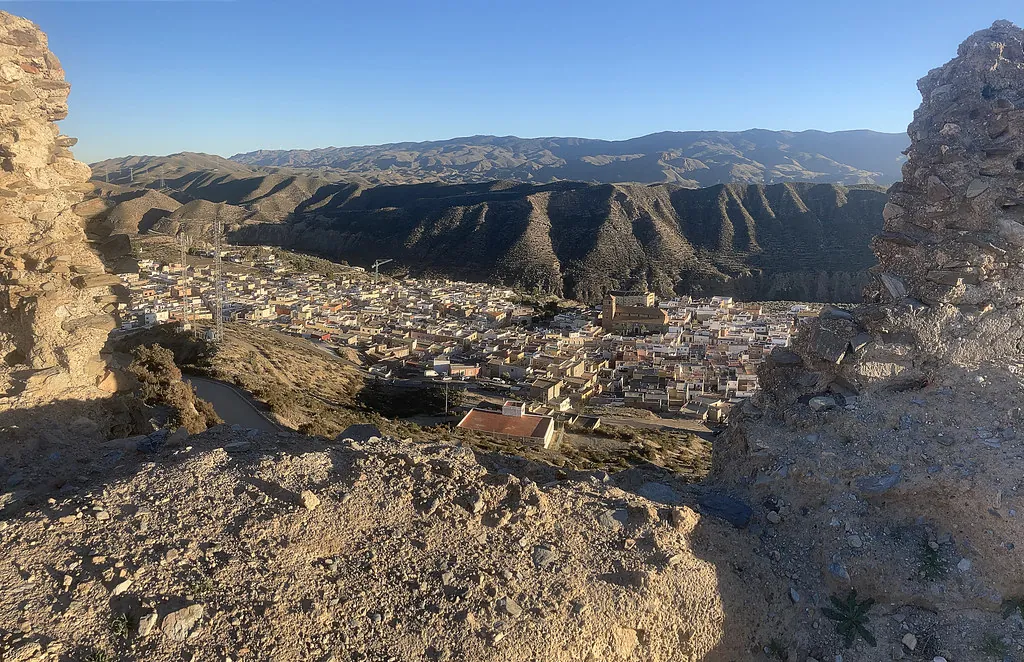
Early in the morning, when the sun begins to brush the whitewashed façades, Benizalón is still half asleep. A door opens somewhere, a car starts up as it climbs the hill, and the wind slides down the slope carrying the dry scent of the sierra: earth, thyme and the fine dust of country tracks. From the square it becomes clear how the village is shaped, houses clinging to the incline and streets zigzagging upwards between white walls and old doorways.
This is not a place that reveals itself all at once. Its rhythm is slow, tied to the light and the land around it.
A small village in the Sierra de los Filabres
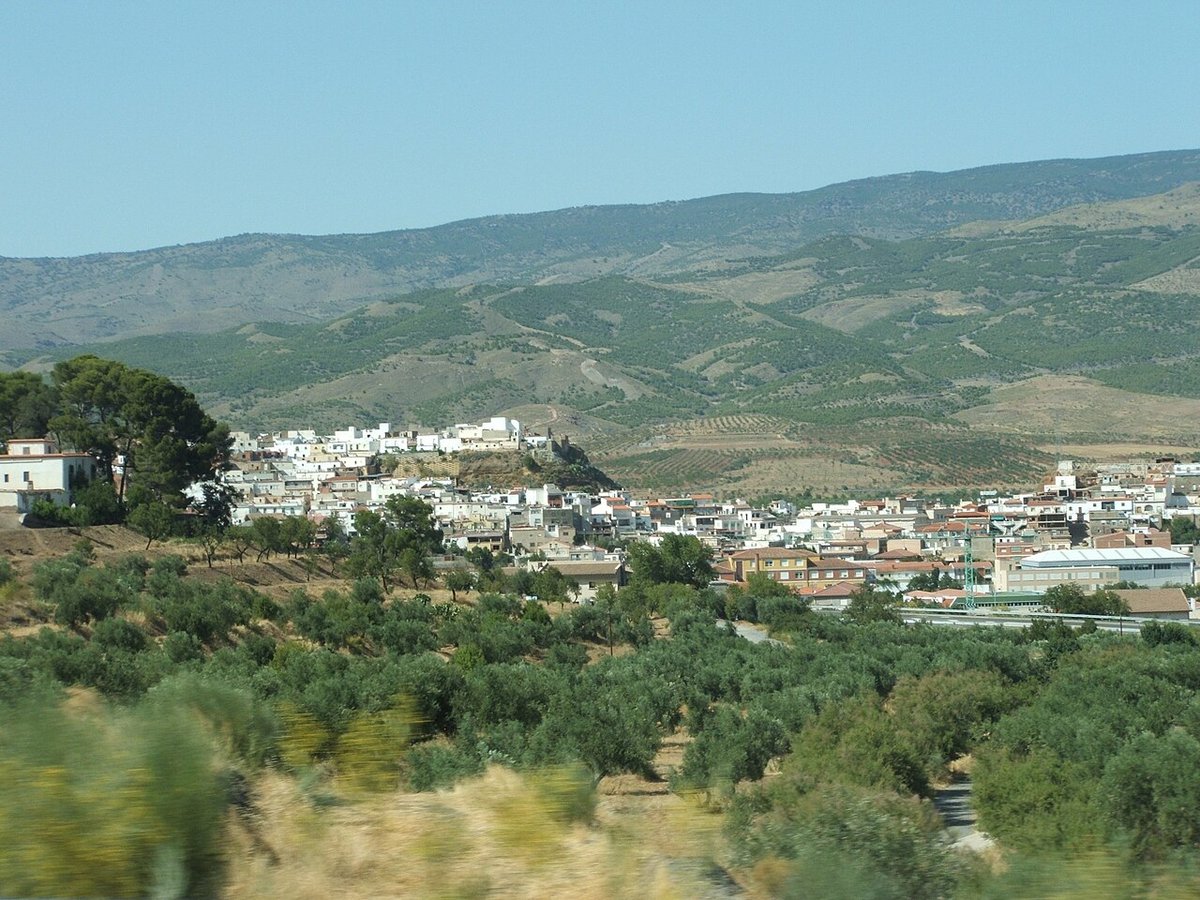
Benizalón lies in the eastern part of the Sierra de los Filabres, at a considerable height above sea level. That elevation is noticeable in the air, cooler than many expect in Almería, and in the way the landscape opens out around the village: dry hills, terraces of almond trees and olive groves that still set the agricultural pace of the area.
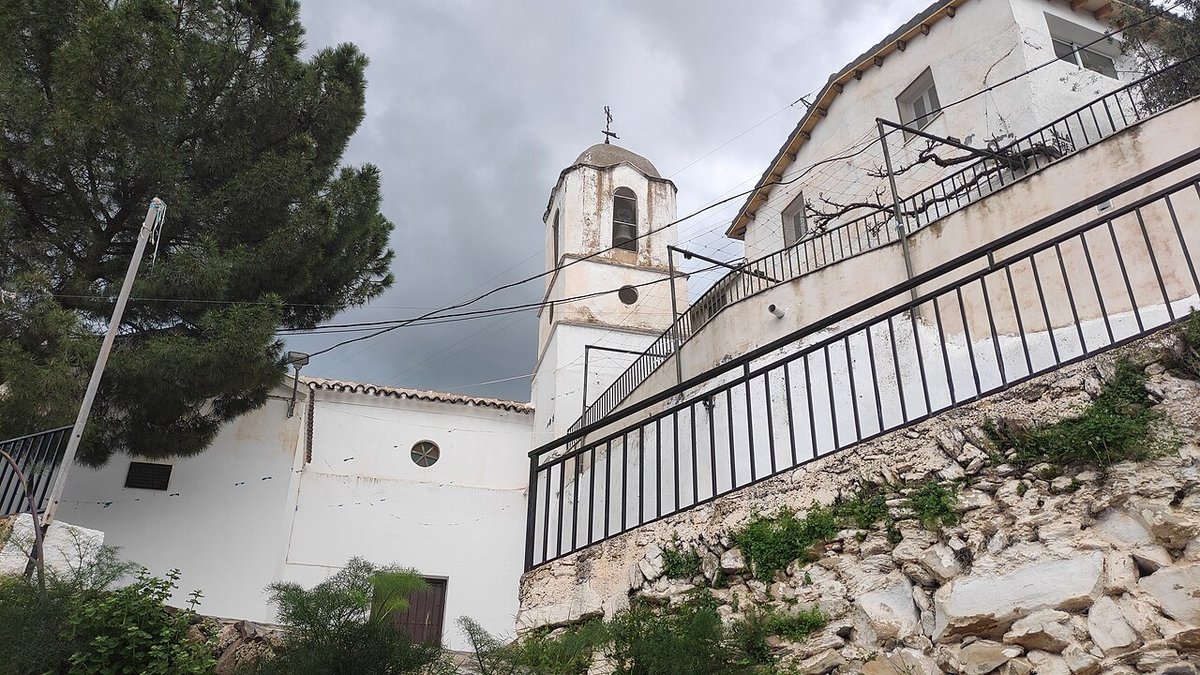
At the centre stands the parish church of Nuestra Señora de la Asunción, facing the square. It is not monumental in scale, yet it has organised village life for generations. At certain times of day, when the light hits from the side, the brilliant white façade reflects so strongly that it makes you narrow your eyes.
On a nearby hillside there is a small ermita, a rural chapel, from which much of the valley can be seen. Access is usually by track or footpath. It is not a formal viewpoint with railings and panels, more a pause along the way where scattered pinewoods and the almond fields surrounding the municipality come into view.
The setting explains much about Benizalón. The sierra shapes both daily life and the wider horizon, with long ridges and cultivated plots marking the slopes.
Walking the slopes and tracks
The landscape here is best covered slowly. Agricultural tracks and footpaths leave the village in several directions, some descending towards dry ramblas, seasonal riverbeds that remain empty for much of the year, others climbing the nearby hills. Signposting is not consistent on every stretch, so it is sensible to ask a local resident or check at the town hall before setting off on a longer route.
In certain areas the ground is scattered with flat pieces of slate and low scrub. When the wind rises, the sound is strikingly clear: dry branches brushing against one another and, further away, the movement of a flock making its way across a slope.
On very clear days the view reaches distant mountain ranges. Sometimes a faint bluish line appears to the south, hinting at the Mediterranean. It is not always sharply defined, yet the sense of proximity is there.
Walking around Benizalón does not mean ticking off landmarks. It is more about noticing small changes in the terrain and the way the light shifts across the hills. The tracks are working routes, used for farming, and that practical character remains part of their appeal.
Nights under a dark sky
One of the most striking details for anyone staying into the evening is the darkness. Outside the built-up centre there is very little lighting, and the sky fills with stars. In summer, when the heat of the day begins to fade, people often head up to a nearby hill or simply sit on a bench in the square and look upwards.
Even in August, the temperature drops noticeably at night because of the altitude. A light layer is advisable if visiting at that time of year. The cool air after a dry, bright day changes the atmosphere completely. The village grows quieter, and the outline of the sierra becomes a dark silhouette against the sky.
This lack of artificial light is not presented as an attraction with infrastructure around it. It is simply part of daily life in a small mountain settlement, and it gives the night a depth that is increasingly rare elsewhere.
Food shaped by the countryside
The cooking found in villages across this part of Almería is straightforward and filling. When the weather turns cool, there are platos de cuchara, traditional spoon dishes such as stews and broths. On cold days, migas are common, a rustic dish made from breadcrumbs fried and served as a hearty meal. Onion, dried peppers and goat meat appear frequently in local recipes.
During the almond season, the smell of freshly toasted almonds often drifts from houses and courtyards. The almond tree is central to the area’s agricultural cycle. In autumn, groups can still be seen working among the surrounding groves. At that time the landscape changes: blankets spread out beneath the trees, sharp knocks of sticks against branches and sacks piled up at the edge of the track.
Olive trees also play their part, maintaining the agricultural rhythm that defines much of the year. Even for visitors, it is easy to see that farming is not a decorative backdrop but an active presence.
Getting there and getting around
From the city of Almería, the journey usually takes a little over an hour. The route combines motorway driving with regional roads that cross the Tabernas area before climbing into the Filabres. The final kilometres involve bends and narrower carriageways.
On entering the village, it is wise to drive slowly. Some streets are steep, and there is not always room for two cars to pass comfortably. Many people leave their vehicle near the square and continue on foot, which makes sense given the layout of the streets.
The approach itself sets the tone. As the road winds upwards, the landscape becomes more open and the sense of height more pronounced.
When the landscape changes
Spring alters the surroundings noticeably. Between February and March the almond trees blossom, and the hillsides fill with white and pink patches. The contrast with the reddish soil of the sierra is strong, almost graphic in its clarity.
Summer can be dry and bright, with very still afternoons. At that time of year, walking is best done early in the day or towards evening, when the light softens and the air cools slightly.
Autumn has its own steady rhythm. The heat eases, and there is more visible activity in the fields as the almond harvest gets under way. The sound of work carries across the slopes, and the tracks become busier with agricultural movement.
Benizalón does not function as a quick roadside stop. It is a small place, better understood by spending a few unhurried hours watching how the light moves across the sierra and listening to what happens when the wind begins to descend the hills. The appeal lies less in a checklist of sights and more in the steady presence of landscape, weather and everyday routines that have shaped the village for generations.