Full Article
about Olula de Castro
Small slate village in the sierra; noted for its landscape-blended architecture and honey.
Hide article Read full article
Olula de Castro, en la alta sierra
Olula de Castro está en la vertiente norte de la Sierra de los Filabres, a poco más de mil metros de altitud. Su historia es la de un pueblo de la Almería interior, surgido de una agricultura de bancales que nunca fue sencilla en este terreno escarpado.
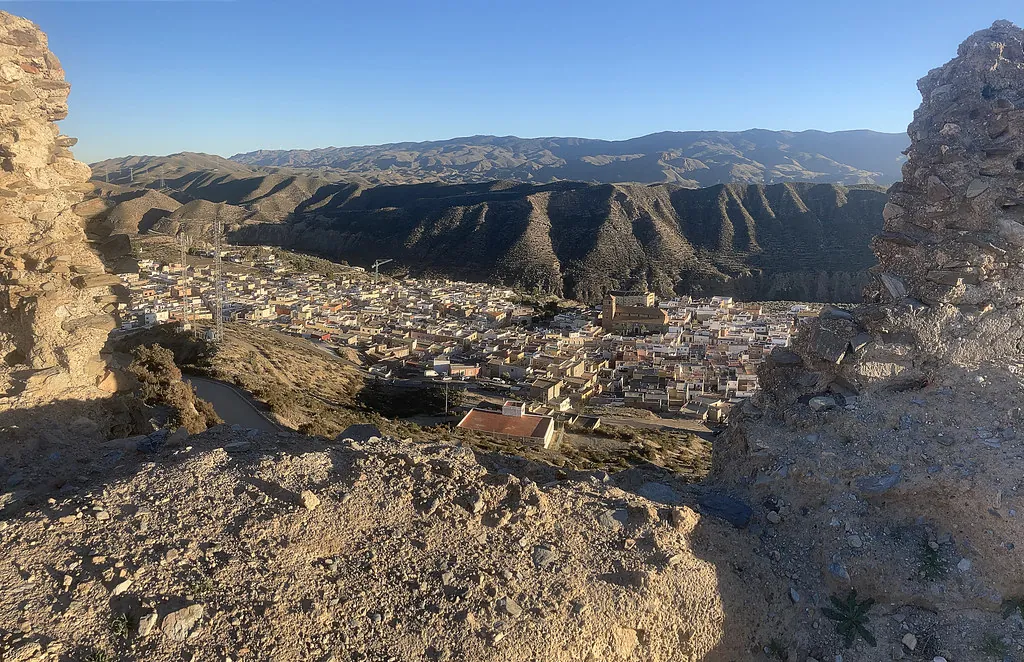
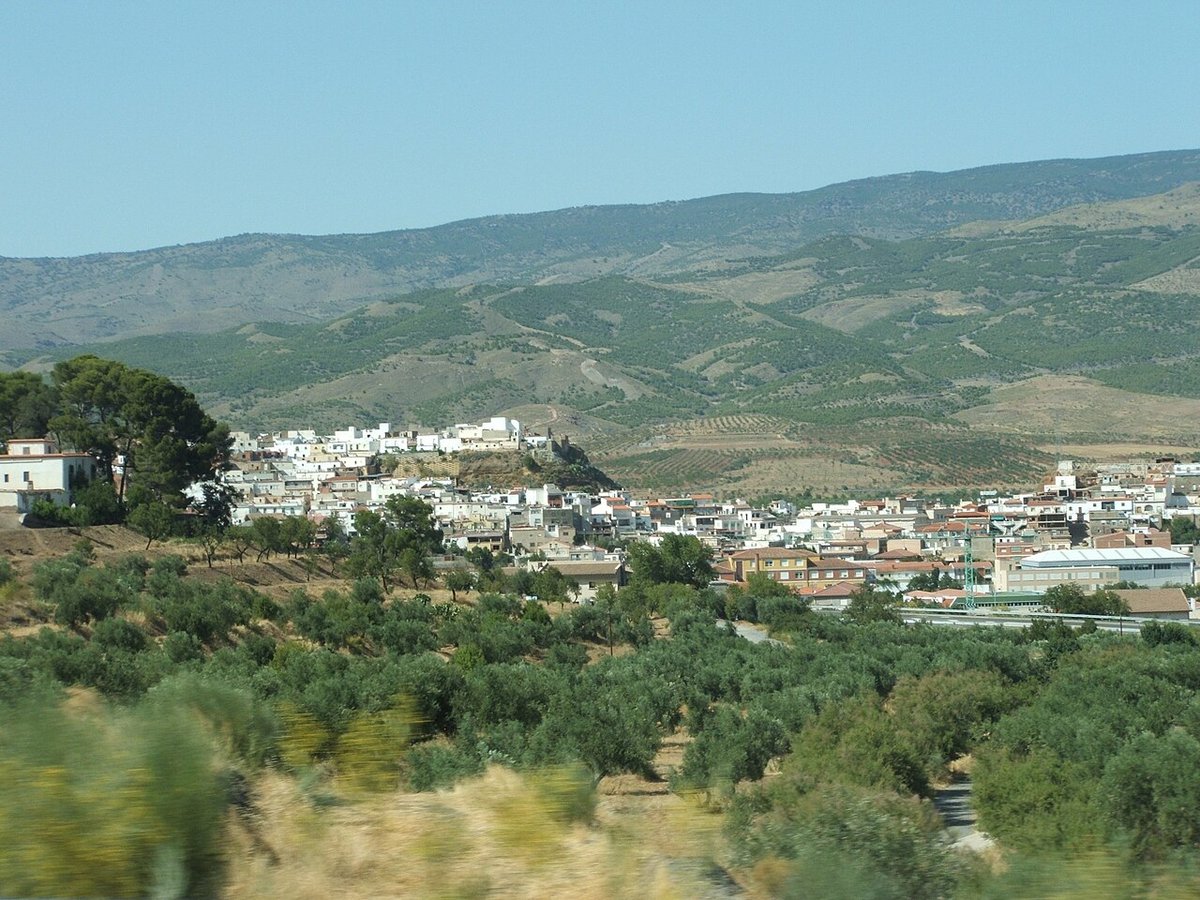
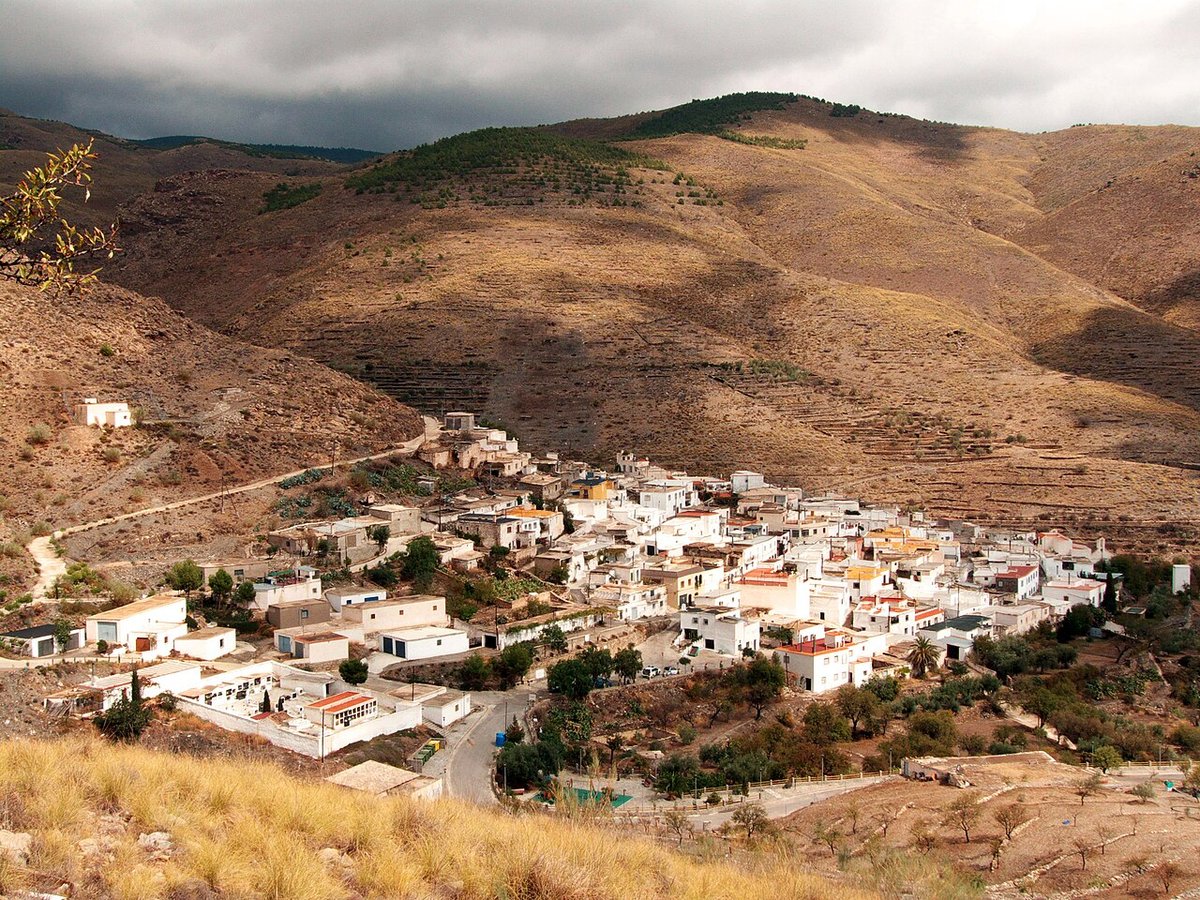
Hoy viven aquí algo más de ciento cincuenta personas. El pueblo no se extiende, sino que se recoge en una ladera con pendiente pronunciada, como es habitual en estos valles. Las casas encaladas se adaptan al desnivel, bajando la cuesta en líneas irregulares. Muchas conservan tejados de pizarra, el material común en esta zona de los Filabres. Desde las calles más altas se ven los valles cercanos y las lomas redondeadas cubiertas de matorral mediterráneo, con almendros dispersos y alguna mancha de pinar.
El clima aquí es otro. Los inviernos son fríos, los veranos secos, y en agosto las noches suelen ser frescas. La altitud condiciona la vida tanto como la geografía.
La iglesia y la traza del pueblo
El centro lo ocupa la iglesia parroquial. Su construcción parece ser de época moderna, con reformas posteriores, un proceso habitual en las iglesias de la Alpujarra almeriense y los Filabres. El edificio es sencillo, de muros gruesos, y su importancia reside menos en los detalles que en su ubicación: desde la placeta que la precede se entiende cómo el pueblo se acomodó a la ladera. Las casas buscaron resguardo del viento y aprovecharon los pequeños rellanos naturales. El trazado responde a decisiones prácticas marcadas por el clima y la topografía, no a un plan preconcebido.
Calles cortas y empinadas conectan pequeños espacios abiertos donde se concentra la vida cotidiana. La pendiente es constante y la escala, reducida. En menos de una hora se puede recorrer a pie todo el núcleo, con paradas en algunos miradores que ayudan a leer el paisaje circundante.
Bancales, matorral y horizonte
Alrededor del pueblo perduran las huellas de la agricultura de montaña. Los bancales antiguos son visibles en las laderas; algunos se mantienen en uso, otros los ha recuperado el matorral. Durante siglos sostuvieron cultivos de secano, principalmente almendros y olivos, además de algo de cereal. Trabajar estas parcelas implicaba hacerlo en fuerte pendiente y con agua escasa.
Caminos y pistas salen del pueblo hacia la sierra, conectando con cortijos y aldeas dispersas. Caminando por ellos es frecuente ver aves rapaces usando las corrientes térmicas sobre las crestas. Con suerte, puede aparecer la cabra montés en las zonas más agrestes. Son paisajes silenciosos, donde es posible andar largo rato sin cruzarse con nadie.
En días claros, la vista desde los puntos altos del término municipal alcanza otras sierras del interior oriental andaluz. La distancia y la elevación dan al horizonte un carácter abierto y amplio que cambia con la luz.
El aspecto de la sierra varía notablemente con las estaciones. En primavera, las flores silvestres se extienden por las laderas y los almendros crean manchas pálidas sobre el matorral más oscuro. Tras las lluvias, la tierra se oscurece y la vegetación gana intensidad. En pleno verano, el terreno vuelve a sus tonos ocres y la sequía domina de nuevo la escena.
Arquitectura y vida doméstica
El pueblo conserva rasgos característicos de la arquitectura rural de los Filabres. Las fachadas están encaladas, las chimeneas sobresalen por encima de los tejados y los muros se diseñaron para aislar del frío invernal y del calor estival. Cada elemento responde a las exigencias de la altitud.
Aún se ven patios interiores y corrales, vestigios de una economía doméstica que combinaba agricultura, pequeños huertos y algo de ganado. En núcleos de este tamaño, la organización del espacio revela mucho sobre las rutinas diarias. La posición de un pajero, la orientación de una casa o el ancho de una calle concreta hablan de necesidades prácticas y formas de vida compartidas.
Este entorno construido refleja un modo de vivir marcado por la autosuficiencia y el contacto directo con la tierra. Incluso donde la actividad agrícola ha disminuido respecto a décadas atrás, la estructura física del pueblo sigue contando esa historia.
Pistas por la sierra
Varias pistas rurales parten de Olula de Castro y permiten adentrarse en la sierra a pie o en bicicleta de montaña. No son rutas masificadas. Conviene llevar agua y cierta noción de orientación, ya que los servicios en la zona son limitados.
La experiencia en estos caminos depende mucho de la época del año. La primavera aporta color y contraste. Tras las lluvias, la tierra oscura y el reverdecer cambian el ambiente de las laderas. En verano, el paisaje se vuelve más seco y uniforme, modelado por el calor y la luz más que por el crecimiento.
El silencio es una de las características definitorias de estos recorridos. La ausencia de núcleos grandes cerca y la escasa población del propio pueblo contribuyen a una sensación de espacio sin interrupciones.
Festividades y calendario rural
El calendario del pueblo sigue vinculado a las celebraciones religiosas y a los trabajos agrícolas. Las fiestas patronales suelen celebrarse en verano, cuando muchos antiguos residentes regresan por unos días. Entonces la población aumenta temporalmente y las calles recuperan un ritmo más animado.
A lo largo del año hay otras celebraciones menores, de ambiente marcadamente local. Forman parte de la continuidad entre pasado y presente en una comunidad donde las tradiciones aún marcan el paso del tiempo.
En otoño continúa la recolección de almendra y aceituna en las parcelas cercanas. La actividad es hoy más limitada que en décadas anteriores, pero sigue formando parte de lo cotidiano en la zona. El ritmo de las estaciones aún se lee en los campos que rodean el pueblo.
Cómo llegar y moverse
Olula de Castro se encuentra en el interior de la provincia de Almería, dentro de la comarca de Filabres-Tabernas. El acceso habitual es por carretera desde el corredor de la A-92, tomando después carreteras comarcales que suben hacia la sierra.
Son carreteras de montaña, con curvas y desnivel. El trayecto refuerza la sensación de adentrarse en un territorio más alto y aislado. Una vez en el pueblo, todo se recorre a pie sin dificultad. Su pequeño tamaño y su trazado empinado invitan a un paseo lento, con pausas frecuentes para observar los bancales y la sierra más allá.
Olula de Castro no depende de grandes monumentos o atracciones. Su carácter viene dado por la altitud, el paisaje y la persistencia de una forma de vida serrana que se lee en sus calles, sus muros y el horizonte que lo rodea.