Full Article
about Uleila del Campo
A village between desert and mountains, known for its almonds and olive oil.
Ocultar artículo Leer artículo completo
Dawn at 640 metres
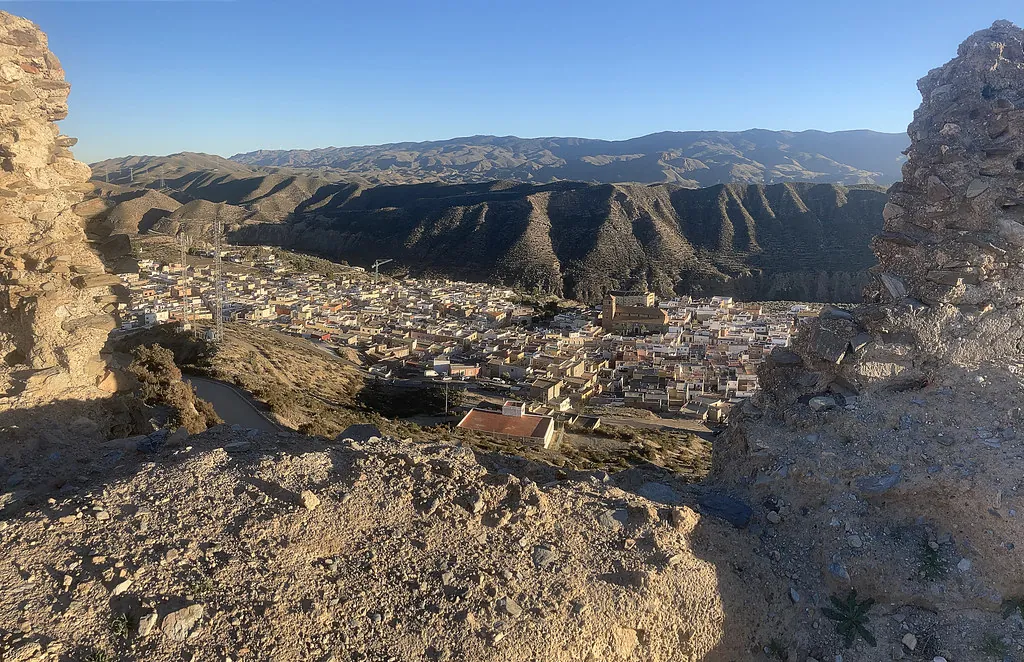
The first sound is a diesel engine. A farmer in a knitted cardigan coaxes his tractor up the incline past the church, trailer loaded with crates of just-picked almonds. By half past seven the whole of Uleila del Campo is awake: shutters clack open, a dog barks at the echo between whitewashed walls, and the aroma of fresh coffee drifts from a kitchen where the radio gives the provincial wheat price. This is not a film set; it is simply Monday, 640 m above the Tabernas desert, and the working day has started.
Altitude changes everything. While the Costa de Almería swelters under 35 °C sea-level heat, the village thermometre often reads eight degrees cooler. In July that still means 27 °C at midday, but the nights drop to a breathable 19 °C, so locals leave their front doors ajar until the small hours. Winter is sharper than most newcomers expect: frost feathers the olive groves and, on a still January morning, the Sierra de los Filabres gleams white down to the almond line. Pack a fleece even for April; the wind that rattles the irrigation hoses has come straight from the slopes of the 2,000 m Calar Alto.
A map of grooves and gradients
Uleila refuses the grid. Streets were scratched into the mountainside long before surveyors arrived, so every lane tilts or twists. Park on the small concrete plateau by the cemetery and walk; within five minutes the hamstrings announce the gradient. Turn left at the pink-washed butchers and you are on Calle de la Cruz, barely a shoulders’ width, its stone channels built to shoot rainwater into the ravine below. Keep climbing and the alley spits you onto the Plaza del Ayuntamiento, the only vaguely level scrap of pavement in town. Here the 16th-century Iglesia de la Asunción rises in modest brick and timber, its square tower more barn than baroque. Push the heavy door at 11:00 any weekday and you may catch the sacristan lighting a single candle, the nave still smelling of yesterday’s incense and floor-wax.
Beyond the church the lane narrows again, passes a house with cobalt pots of geraniums, then dissolves into a footpath signed “Camino de Monteagud”. This is where the serious ascent begins. A 45-minute haul through rosemary and prickly pear gains a saddle overlooking the whole municipality: a patchwork of hundred-year-old olive terraces stitched together by dry-stone walls. The village itself looks tiny from here—just a white comma on a page of ochre—but the silence is huge. On the return loop you meet maybe a retired English couple with walking poles and a farmer on a mule; conversation is optional, eye-contact compulsory.
Bread, cheese and the siesta shutdown
There is no high street, only a handful of enterprises that open when they are needed. The mini-market on Avenida de la Constitución keeps civilised hours—09:00-14:00, 17:00-20:30—except Sunday when the metal shutter stays down and the owner goes mushroom-hunting. Fresh fish arrives Tuesday and Friday in a van that toots outside the plaza; locals queue with plastic bowls, gossiping about rainfall. Bread is sold from a hatch in the bakery wall: ask for a “candeal” loaf if you want the crusty Andalusian version, 1.20 € and still warm.
Gastronomy is slow, heavy and exactly what you want after a 12 km hike. Choto al ajillo (young goat stewed with garlic and bay) appears on every household table at weekends; restaurants simply scale it up. The one proper sit-down place, Mesón La Sierra, serves it in clay dishes with local rosemary, plus a carafe of inky Monastrell from nearby Laujar. Vegetarians survive on “migas”—fried breadcrumbs with grapes and melon—while puddings tend to be anything involving almonds: sponge soaked in syrup, or “turrón” ice-cream that tastes of marzipan and frost.
The star purchase is cheese from Quesos Monteagud, a small dairy on the edge of the village. The cured goat wheel (around 14 € for 700 g) is firm enough to survive Ryanair hand-luggage and develops a hazelnut sweetness after three months in olive-oil brushed rind. Bring a cool bag; there is no deli counter, just a fridge in the factory shop and a lady who wraps wedges in white paper while explaining, in rapid Spanish, why her animals graze 600 m higher than the law requires.
When the blossom riots
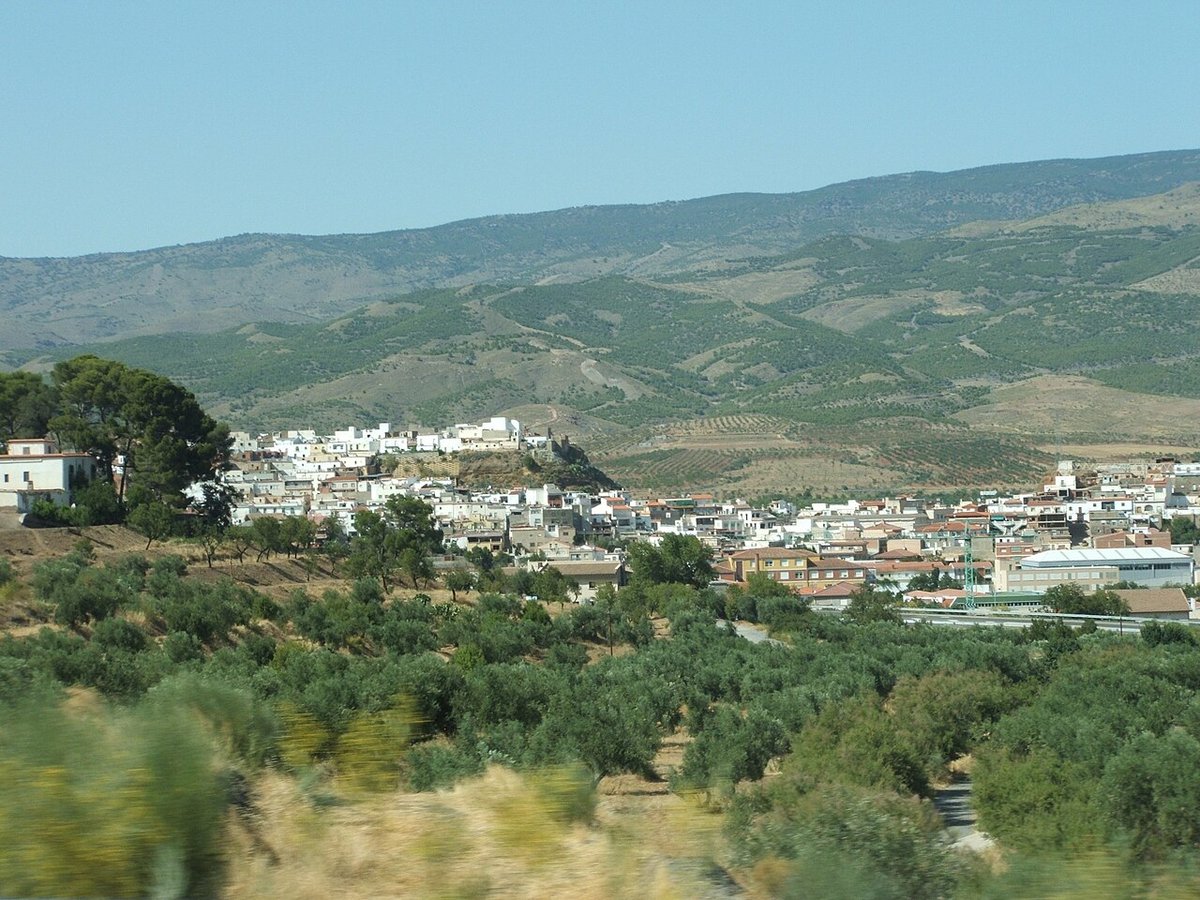
Visit between late January and mid-February and you understand why photographers risk the potholed ALP-716. One warm night the almond buds decide it is time; by morning the hillsides look dusted with snow that refuses to melt. Dawn light turns the petals shell-pink, tractors leave dark green tracks between the rows, and every local has a cousin who “knows the best angle for a photo”. Follow the signed 5 km “Ruta del Almendro” south-west of the church: the loop climbs gently through the most prolific orchards, then drops you back in time for coffee. Bloom timing can swing ten days either side of the school half-term, so track @FilabresBlossom on Twitter—run by a British retiree who posts daily petal reports and is irritatingly accurate.
Outside blossom season the landscape reverts to silver-green olive and the village returns to anonymity. That is when you get the stone benches to yourself, and the bar owner has time to explain why the January rainfall figure matters more than the football scores.
Getting there, staying sane
Almería airport is 55 minutes away on the A-92, most of it empty motorway. Hire cars collected from the terminal forecourt still smell of sun-baked tarmac; keep the tank half-full because petrol stations thin out after Benahadux. The final 12 km from Sorbas wriggle through a sandstone gorge where every bend reveals another solar farm—proof that even here the 21st century is catching up. Sat-nav will confidently send you up a livestock track; ignore anything narrower than a bus and trust the brown “Uleila del Campo” signs.
Accommodation is low-key: five self-catering cottages carved from old labourers’ houses, two rural hotels with fewer than eight rooms each. Prices hover around 70 € a night for two, including Wi-Fi that flickers when the wind moves the antenna. Book ahead for blossom weekends; the village can absorb perhaps forty overnight visitors before sofas start getting enlisted.
Cash is still sovereign. The lone Cajamar ATM beside the town hall refuses certain UK cards at random—Barclays seems acceptable, Monzo less so—and it runs out of 20 € notes on market day. Bring euros from the airport or pop back to Sorbas where Santander has a more cosmopolitan hole-in-the-wall.
Leave the car, take your time
Public transport exists on paper: a Monday-to-Friday bus from Almería that reaches Uleila at 13:45, returning at 06:10 next morning. Miss it and you are walking the 12 km to Sorbas along a road favoured by quarry lorries. Cycling is feasible if you relish gradients labelled “18 %” on Spanish maps and mean it. Most British visitors hire a car, park it, then forget it for three days.
What the village offers is rhythm rather than rack-and-stack attractions. The day starts early, pauses at siesta, resumes at dusk. Try it: rise at seven, walk the almond terraces before the sun tops the ridge, read in the plaza shade until the church bell rings twelve, then retreat behind thick walls while the afternoon burns itself out. By five the temperature is walkable again; the bar opens, someone produces a guitar, and conversation drifts between drought forecasts and the price of diesel. You may not tick off a single museum, yet somehow the days feel full.
Parting shot
Uleila del Campo will not entertain you in the conventional sense. August is too hot, winter nights are cold, and nobody apologises for closing early. Stay a little longer, though, and the place starts to calibrate your expectations: of food that takes three hours to arrive yet tastes of the valley outside, of silence loud enough to hear almonds drop, of neighbours who nod on day three and greet you by name on day four. If that sounds like hard work, book the coast. If it sounds like time well wasted, fill the tank, load up on Monteagud cheese and point the sat-nav at the Filabres.