Full Article
about Ardales
Key for active tourism thanks to its proximity to the Caminito del Rey and its prehistoric cave with rock art.
Hide article Read full article
A path that became a destination
Tourism in Ardales now revolves around the Caminito del Rey, though that narrow walkway fixed to the walls of a gorge was not created with visitors in mind. It began as a piece of service infrastructure linked to the dams of the Guadalhorce, a practical route suspended dozens of metres above the river. For years it deteriorated and hung there in a fragile state, part of the industrial landscape of the valley long before it drew attention from outside.
People in the village always knew it was there. It belonged to the everyday geography of the place rather than to any idea of leisure or sightseeing. Only later did it take on a different role, becoming a controlled route through the Desfiladero de los Gaitanes and reshaping how Ardales is seen from beyond its immediate surroundings.
When the rock was home
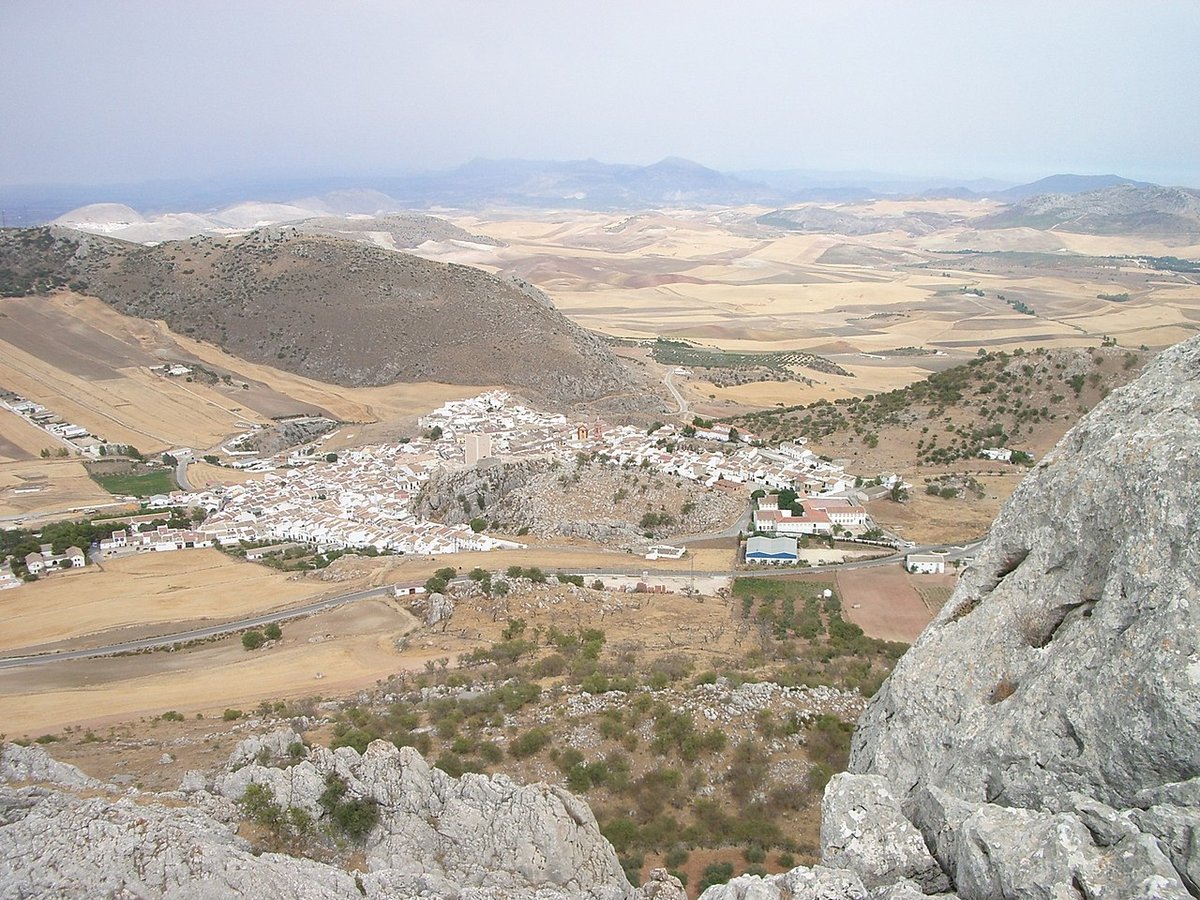
Ardales makes more sense when read through its terrain. The area is shaped by limestone sierras, sharp escarpments and natural corridors linking the interior of Málaga with the Serranía de Ronda. This landscape has influenced how people settled here from very early on.
The Cueva de Ardales, also known as the cave of Doña Trinidad, preserves prehistoric paintings and markings usually placed in the Upper Palaeolithic. It is not vast in size, yet it holds importance for understanding human presence in these hills thousands of years ago. The cave speaks quietly, through traces rather than grand scale.
There are also scattered signs from Roman times in the surrounding area. Tradition refers to a bridge over the arroyo de la Molina, thought to have formed part of a secondary route connecting different inland settlements. As in many places, structures have been reused and altered over centuries, so what can be seen today reflects several layers rather than a single period.
A clearer strategic reading of the territory came later with Omar ibn Hafsún. At the end of the 9th century he established Bobastro as the centre of his rebellion against the Emirate of Córdoba. The site, a rocky plateau encircled by ravines, allowed control over natural routes towards Ronda and Antequera. Within this setting he ordered the excavation of a rock-cut church, an unusual example of early medieval architecture in the Iberian Peninsula, with arches carved directly into the stone.
A land on the edge
Following the Christian conquest in the 14th century, Ardales became part of the defensive system protecting the inner frontier of the Kingdom of Granada. Historical sources mention agreements and capitulations with the local Muslim population, something fairly common in areas where coexistence and exchange had developed over centuries.
The Iglesia de Nuestra Señora de los Remedios belongs to this post-conquest period. The current building is the result of several later alterations, yet it retains construction features that echo the Mudéjar tradition. Brick, structural solutions inherited from Andalusi builders and the reuse of earlier elements all form part of its fabric. This pattern appears across many Andalusian towns, where new parish churches were built over or alongside former mosques, making use of what was already there.
When water reshaped the valley
A major shift came in the early 20th century with the construction of the Guadalhorce reservoirs and the associated hydroelectric system. These works transformed both the landscape and the local economy.
To connect different installations, a technical walkway was built along the walls of the Desfiladero de los Gaitanes. Over time this suspended path became known as the Caminito del Rey, a name linked to an official visit during the early years of the hydraulic complex.
For decades it served simply as a maintenance access route. As its structure declined, it was largely abandoned until its rehabilitation in the 21st century, when it reopened as a managed itinerary through the gorge.
The reservoir system also altered everyday life in the area. It brought employment during construction, introduced electricity and created new agricultural possibilities. Like many inland Andalusian villages, Ardales experienced emigration in the 1960s and 70s, leaving many houses closed for a time. Some of these have since been recovered as second homes, reflecting a gradual shift in how the village is used and inhabited.
Cooking shaped by the land
Local cooking follows a straightforward logic: make use of what is available. Gazpacho ardaleño, for instance, differs from the more liquid version commonly served today. Here it is usually thicker, made with bread, tomato and pepper crushed together until it becomes something close to a cold stew.
Goat meat appears frequently in the area’s cooking, linked to hillside livestock farming. It is prepared slowly, often with aromatic herbs that grow in these sierras.
Another familiar dish is porra, related to Córdoba’s salmorejo but denser in texture. In terms of sweets, pestiños with honey remain part of celebrations such as Semana Santa, a culinary tradition that clearly echoes Andalusi roots.
Walking between reservoirs and hills
The natural surroundings of Ardales are broad and varied. Routes around the reservoirs pass along quiet shores, through pine woods and towards viewpoints that reveal the scale of the hydraulic works.
The path leading to Bobastro climbs through dry terrain, where rosemary, kermes oak and scattered holm oak define the landscape. On reaching the plateau, there are views…