Full Article
about Campillos
Head of the comarca with a major natural reserve of lakes where flamingos and other migratory birds can be seen.
Hide article Read full article
Tourism in Campillos
Campillos is the sort of place where someone might look at you and ask, quite sincerely, what you are doing there. Not out of suspicion. More out of curiosity. Tourism in Campillos does not work like it does on the Costa del Sol. There are no coaches rolling in, no accidental stopovers. If you arrive, it is because you meant to.
The town sits in the comarca of Guadalteba, a little over an hour from Málaga by car. It has the feel of a sizeable inland town where neighbours recognise one another and daily life moves at a steady tempo. It does not overwhelm with headline monuments or packed itineraries. What it offers unfolds slowly.
Campillos can be explored in a matter of hours. A walk around the centre, a look inside the main church, a relaxed meal, then time out by the lagoons. It suits those who prefer to travel without rushing from one sight to the next.
The Lagoons on the Edge of Town
Ask about Campillos and the conversation quickly turns to its lagunas. Several lie just outside the town, scattered across a relatively small area. They look almost as though they were dropped onto the landscape and simply stayed there.
The Ruta de las Lagunas links a number of them and is usually done on foot or by bicycle. It is not a demanding hike, more an extended stroll that gives you space to stretch your legs. Local residents use it for exercise. Photographers set up tripods and wait patiently for birds to appear. Some days there are flamingos. Other days there is only water and quiet. It depends on the moment.
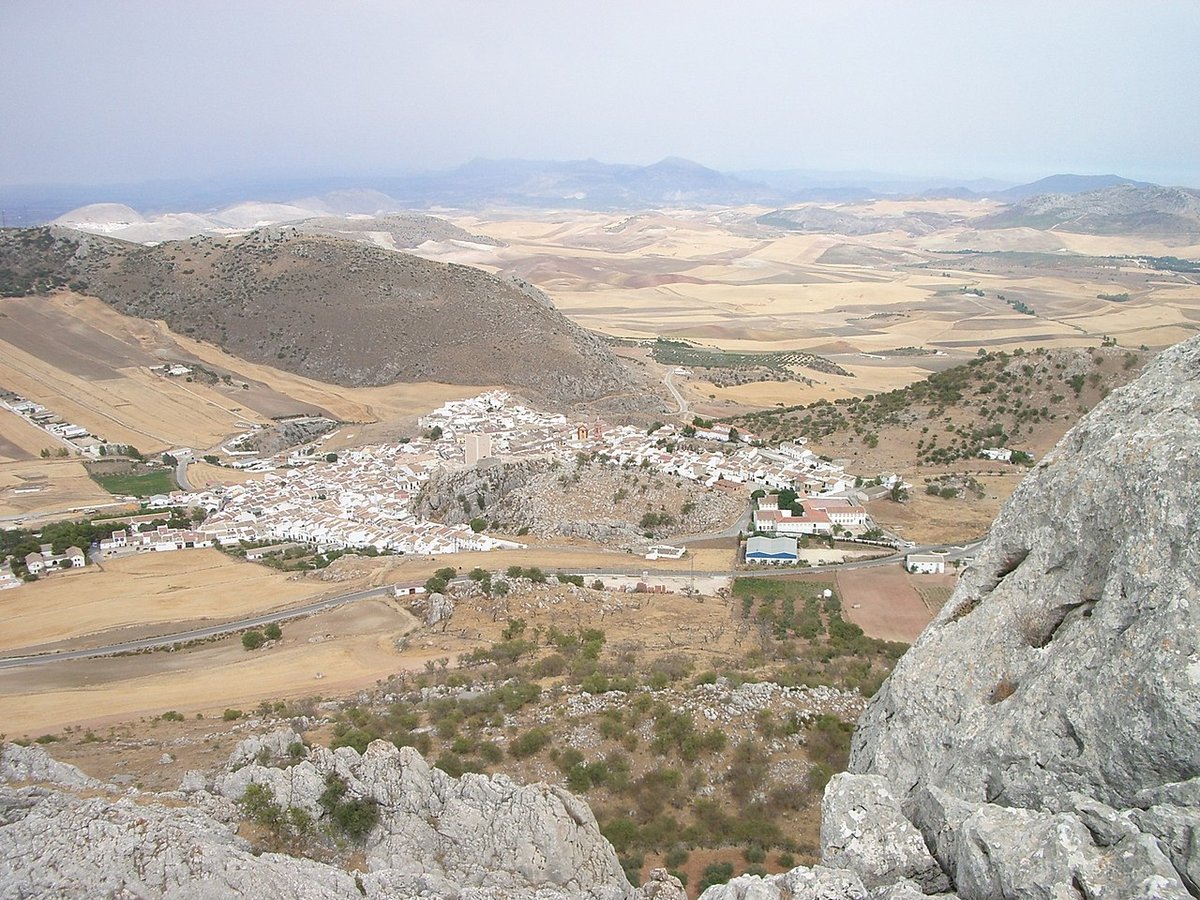
Late afternoon brings a softer light and the whole area feels calmer still. From certain lagoons you can see the town in the distance. The view is very much inland Andalucía: open terrain, wide skies, little noise. It is a landscape that encourages you to slow down rather than tick things off a list.
Santa María del Reposo and the Centre
In the middle of Campillos, the Iglesia de Santa María del Reposo presides over the main square. It is not vast in scale, yet it dominates because the surrounding streets are low and unhurried.
The church dates back to the 16th century. Inside, it gives the impression of a building that has expanded over time, layer upon layer. There is no set route to follow and no panels explaining every detail. The visit rewards a careful look at the main altarpiece, the Baroque decoration and the side chapels. The Baroque style recalls churches in larger Andalusian cities, though here it appears in a more restrained setting.
It is easy to step in for a quick look and stay longer than planned.
Around the church, the centre of Campillos invites a gentle wander. Streets are straightforward and the atmosphere is calm, especially once the day begins to wind down.
The Vía Verde Towards Teba
On the outskirts of town begins the Vía Verde that connects Campillos with Teba. It follows a former railway line linked to the area’s mining activity. Today it is a broad track of compacted earth, comfortable for walking or cycling.
The full route is around twenty kilometres, although many people choose to cover only a section. The scenery matches what you would expect from this part of inland Málaga: olive groves, open fields and the occasional short tunnel along the way.
By bike, the route feels manageable. On foot, it becomes a more substantial walk, though still perfectly feasible at a steady pace. One practical detail is worth keeping in mind. If you go all the way to Teba, you will need to make the return journey as well.
Fiestas and Holy Week
Summer in Campillos brings the feria in honour of San Benito, usually held in mid-August. The mood is local and lively. Music fills the evenings, fairground attractions appear and families stroll through the streets. The town spends more time outdoors.
Semana Santa also plays an important role. One of the most well-known moments takes place on the night of Maundy Thursday near the Iglesia de la Vera Cruz. Two processions approach from different streets and meet in the same space. Each year, many residents gather to watch that encounter between the images, a key scene in the local calendar.
For visitors unfamiliar with Semana Santa in Andalucía, these processions involve religious images carried through the streets, accompanied by music and local brotherhoods. In Campillos, as elsewhere in the region, it is both a religious and social occasion.
What Appears on the Table
Food in Campillos reflects traditional cooking from the countryside. Certain dishes turn up again and again, both in homes and on menus.
One is gazpacho campero. Despite the name, it is not the smooth, drinkable gazpacho often served in a glass. This version is thicker and made with bread, tomato and pepper, with a touch of cumin that changes its character completely.
Migas are another staple. They are usually served with whatever is available, perhaps chorizo, panceta or sometimes grapes. It is practical cooking, based on using up leftover bread, as has long been done in rural areas.
If torta de chicharrones appears, it is worth trying. The name can mislead. Rather than a savoury dish, it is a sweet treat, crisp in texture and difficult to stop eating once you begin.
A Place Without Hurry
From Málaga, the drive takes a little over an hour. Public transport is limited, so arriving by car tends to be the simplest option. Once there, distances are short and the town centre can be covered on foot.
Campillos does not run on a packed schedule. It works better as a relaxed outing, perhaps for an afternoon. At night, the streets grow quiet. Those who appreciate the calm of inland towns will notice it straight away. Anyone searching for late-night buzz will need to look elsewhere.
Campillos may not impress in an instant. Yet after a few hours among its lagoons, church squares and open countryside, it leaves a quiet pull. The appeal lies in its simplicity and in the fact that nobody seems in a rush to be anywhere else.