Full Article
about Cañete la Real
Historic town crowned by the Castillo de Hins-Canit with panoramic views and a center lined with stately homes.
Hide article Read full article
A village that keeps its own pace
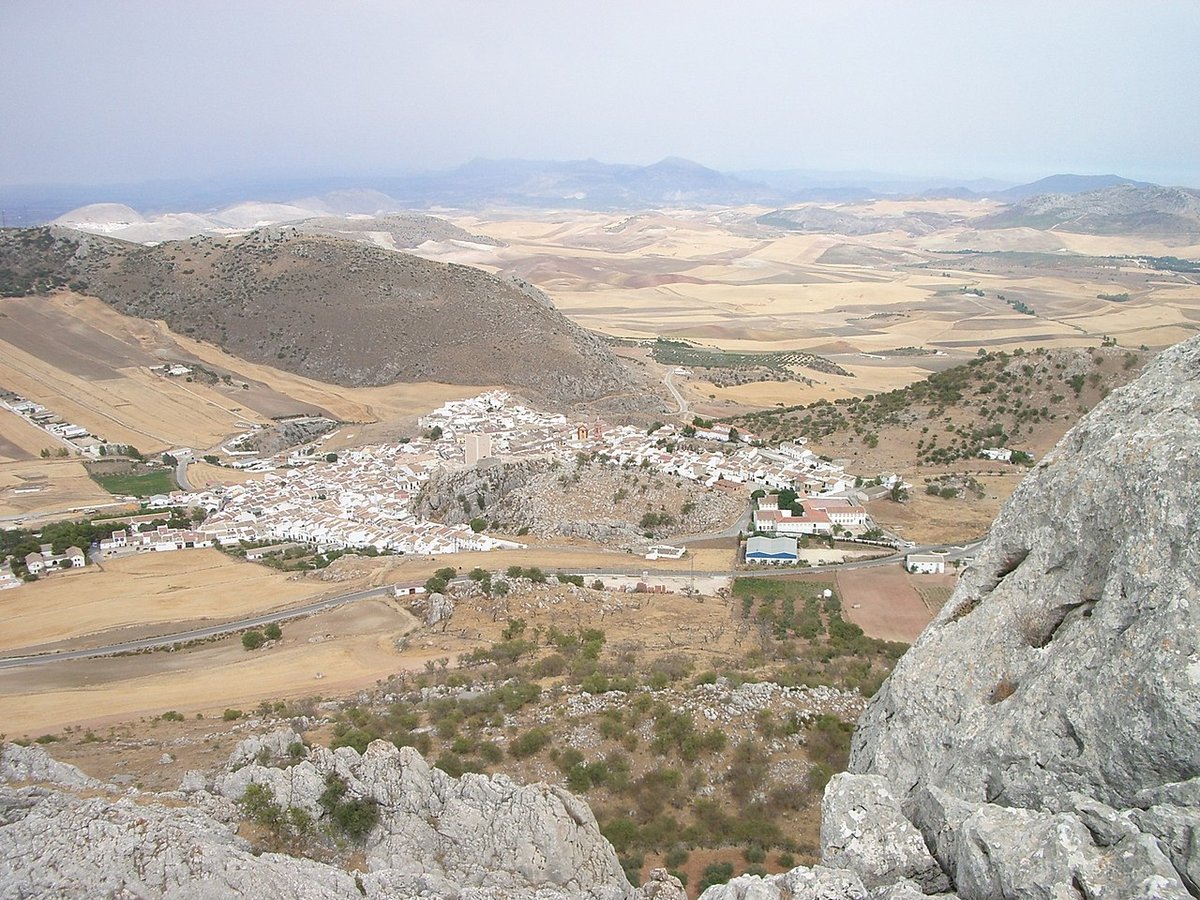
Some places feel designed for a postcard, others feel more like an ordinary Monday. Cañete la Real sits firmly in the second group. On arrival, the first thing that stands out is the quiet typical of inland towns: the occasional car rolling past, the sound of a shutter being lifted, and little else. This municipality in the comarca of Guadalteba, in the north of Málaga province, stands at around 740 metres above sea level and moves at its own steady rhythm, largely untouched by the busiest tourist routes in Andalucía.
Walking through its streets, it is not immediately obvious that this was once a place of real activity over a thousand years ago. Romans passed through, followed by Muslim rule, and the layout of the town still hints at that layered past. Narrow streets climb and dip without much apparent order. Whitewashed houses with reddish roofs line the way, with courtyards where orange trees and potted plants appear here and there. Every so often, the view opens out towards the surrounding countryside: olive groves, soft hills, and tracks that stretch away from the village without any real urgency.
Places that draw the eye
The Castillo de Cañete la Real, also known as Hins Qannit during the Andalusi period, is visible even before parking the car. It sits on a hill overlooking the town. The original fortress is thought to have been built during Muslim rule to watch over the routes crossing this area between the Serranía de Ronda and the surrounding plains.
What remains today are fragments: stretches of wall, partially collapsed towers, and plenty of loose stone. It is not a restored fortress or a curated site. It feels more like a hill with a story, reached on foot. The climb is noticeable, the sort that makes people stop “just for a moment to look at the view”. From the top, the reason for its strategic position becomes clear, especially on a clear day when the view extends far into the distance.
In the centre of the village stands the Iglesia de San Sebastián, built in the 16th century on the site of a former mosque. No specialist knowledge is needed to notice the mix of periods: a Renaissance structure with some Mudéjar details and a simple interior typical of a parish church still in use.
For those interested in going further back in time, the wider municipal area contains several prehistoric dolmens. Some are signposted along rural tracks, while others are more hidden among olive groves and scrubland. It is not a formal archaeological park, but rather a series of scattered elements within the landscape. Finding them can feel like a small search, the kind where directions are along the lines of “more or less down this track”.
The surrounding landscape itself does not aim to impress instantly. It is quieter in character: olive groves, scattered holm oaks, gentle hills and agricultural paths. For anyone who enjoys walking without noise or crowds, it does its job well.
Taking it easy in and around the village
In Cañete la Real, the most natural way to spend time is simply on foot and without much planning. The village is small, and much of it makes sense just by wandering.
The walk up to the castle is the most obvious route. It begins within the town and quickly gains height. It is neither technical nor particularly long, though the incline is noticeable, especially in summer when the heat builds.
Beyond the village, several rural paths cut through olive groves and patches of Mediterranean vegetation. Holm oaks, wild olives and aromatic shrubs appear along the way. These tracks also connect with other nearby towns in the comarca, so they are often used for longer walks or cycling routes with little traffic.
Then there is the simplest pleasure: sitting down to eat. Olive oil from the area plays a central role in local cooking. Migas, a traditional dish made from breadcrumbs, often appears on tables when the weather turns cooler, alongside other hearty meals linked to agricultural life.
At times, horse riding routes are organised around the surrounding countryside, making use of the same rural tracks that connect fields and estates. It is a slow way of moving through the landscape, which suits a place like this.
Traditions that stay local
Festivities in Cañete la Real remain closely tied to the community. In January, San Sebastián is celebrated with processions and gatherings centred around the saint’s image. It is not an event designed to attract visitors so much as a continuation of the local calendar.
In May, crosses decorated with flowers appear in some streets and squares. These are usually prepared by residents themselves, and the atmosphere is familiar rather than formal.
The liveliest celebrations arrive in summer during the feria. For several days, the village shifts its rhythm: music, activities, and long evenings once the heat fades. There are no large-scale productions or elaborate staging, just open-air festivities, casetas and people returning to the village for those days.
When to go
Spring and autumn are usually the most comfortable times to explore both the village and its surrounding paths.