Balneario de Carratraca.png
Edelmauswaldgeist · CC0
Andalucía · Passion & Soul

Carratraca

The pharmacy on Carratraca’s main street still fills brown glass bottles with the village’s sulphurous spring water. Locals carry them away like co...

801 inhabitants · INE 2025
550m Altitude

Why Visit

Carratraca Spa Thermal baths

Best Time to Visit

summer

Andalusian Spell (September) septiembre

Things to See & Do
in Carratraca

Heritage

  • Carratraca Spa
  • Bullring (carved into rock)
  • Town Hall

Activities

  • Thermal baths
  • Visit the bullring
  • Historic town walk

Festivals
& & Traditions

Fecha septiembre

Embrujo Andalusí (septiembre), Feria de la Virgen de la Salud (agosto)

Las fiestas locales son el momento perfecto para vivir la autenticidad de Carratraca.

Full Article
about Carratraca

Famous 19th-century spa that drew European royalty for its sulfur waters and neoclassical architecture.

Ocultar artículo Leer artículo completo

The pharmacy on Carratraca’s main street still fills brown glass bottles with the village’s sulphurous spring water. Locals carry them away like contraband, convinced a daily dose keeps arthritis at bay. No marketing, no label, no £4 price tag—just a nod from the chemist and a coin dropped in the tin. In a province that sells itself on beach clubs and Michelin stars, this tiny mountain settlement (population 750, give or take a visiting grandchild) refuses to upgrade the product it has been peddling since 1825.

Lord Byron may or may not have bathed here; the tourist office repeats the claim but the parish archives stay silent. What is certain is that the marble-floored Balneario de Carratraca—a neoclassical palace finished in 1855—was built to house Europe’s aching aristocracy. These days the doors are locked (a five-star hotel group owns the lease and can’t decide what to do with it), yet the building still dominates the western approach like a stranded ocean liner. Walk the perimeter and you’ll see the original wrought-iron bath taps poking through the shutters, green with age and neglect. Locals use the colonnaded terrace as a short-cut to the olive groves beyond; nobody pays the 19th-century frescoes much notice any more.

The cure that never quite left

While the grand spa gathers dust, the municipal baths round the back keep the sulphur tradition alive on a shoestring. Opening hours are printed on a laminated sheet that changes according to who has the key: usually Tuesday to Saturday, 10–14:00 and 17–19:00, but ring first (+34 952 458 002). A session costs €7 and you need to book in Spanish; if your linguistic courage fails, the woman in the bakery will telephone for you in exchange for a loaf. The water smells of struck matches and leaves a coppery rim around the tub—proof, say regulars, that it is doing something useful. Bring dark underwear; white turns ochre after five minutes.

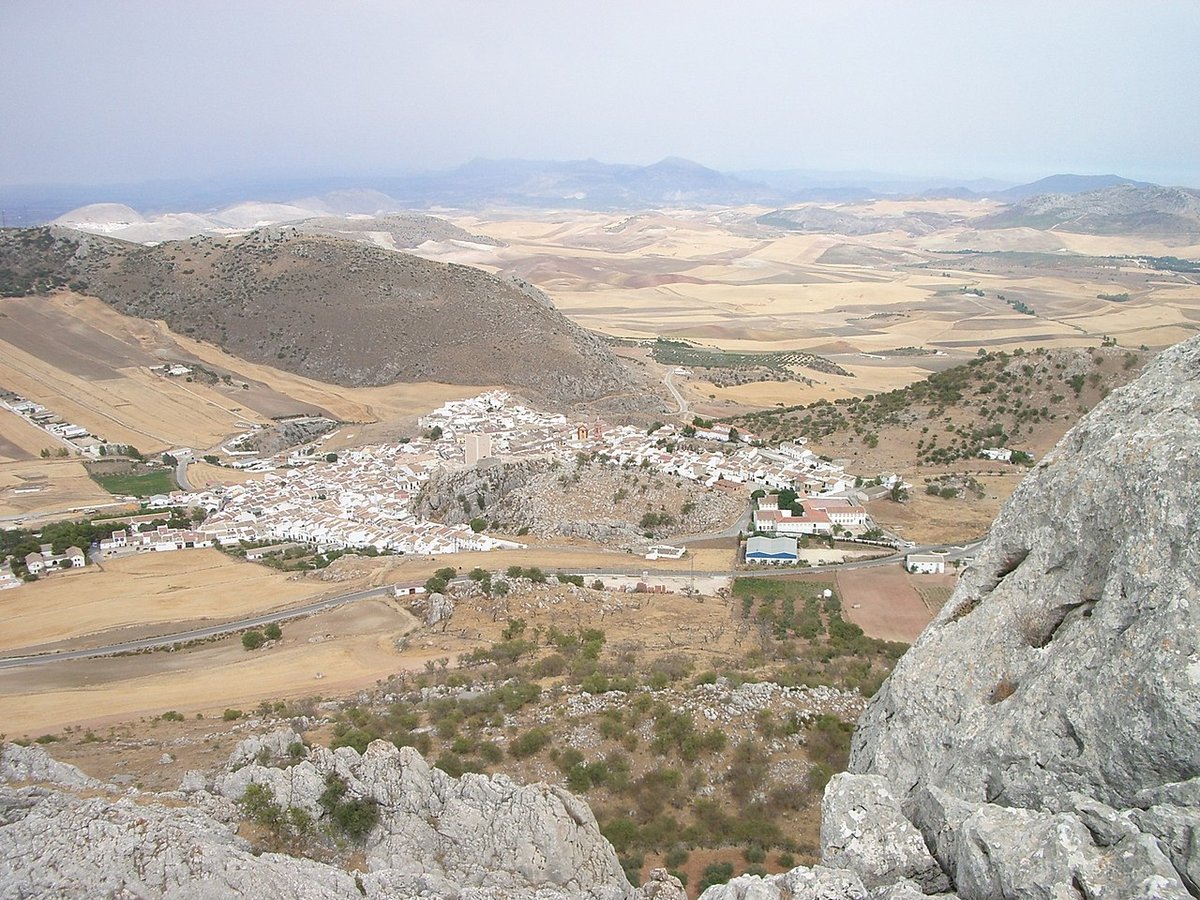
Carratraca sits at 550 m, high enough for the night air to drop ten degrees below the coast. In July and August that difference feels like salvation; in January it means frost on the geraniums and a wood-smoke haze that drifts down the single traffic street. The village faces south across the Guadalteba valley, a rippling carpet of olive and almond that fades to khaki by late June. Behind, the Sierra de Aguas provides a natural barrier, so the Mediterranean storms slide past and leave the sky clear for weeks. The result is an almost African light—hard-edged in the morning, honey-coloured by four o’clock—prized by painters who rent the old schoolhouse for €25 a night.

Streets that remember their purpose

There is no traffic lights, no cash machine, no chain store. The nearest ATM is 12 km away in Ardales; fill your wallet before you leave the airport. Park on the southern edge (Partido San José) where the tarmac widens—alleys inside the centre are single-track and unforgiving to UK-sized hire cars. From the car park it is a three-minute shuffle uphill past whitewashed houses whose bottom third is painted the colour of wet terracotta, a legal requirement dating from the 1920s so that cart wheels did not scuff the limewash.

The Plaza de España is less a square than a widening in the road. Elderly men occupy the metal benches in strict rotation; arrive before 11 a.m. and you will find the same faces discussing last night’s churros and tomorrow’s rain. The only commercial intrusion is a mobile fruit van that toots its horn at 12:30 sharp—locals emerge with cloth bags and exact change. Order a coffee from the bar tucked under the town hall arcade and it arrives with a free tapa of home-made chorizo, sliced so thick it curls like a seashell.

Walk south-east and the lanes tilt towards the Iglesia de la Encarnación, a 16th-century church whose Mudéjar tower was rebuilt after the 1884 earthquake. The door is heavy enough to bruise a shoulder, but push through and the interior smells of beeswax and damp stone. A side chapel displays a plaster arm, a leg and two infant feet—ex-votos left by bathers who claimed the waters did what the doctors in Málaga could not. The priest unlocks the building only for services, but the sacristan lives opposite; knock twice and he will let you in for a euro donation.

Rock, bull and passion

Ten minutes beyond the last house, a path threads through carob trees to the Plaza de Toros, an octagonal arena hacked out of the limestone in 1878. No bull has been fought here since 1984; instead the space hosts an annual Good-Friday passion play that begins at dusk and ends by torchlight. The production is entirely amateur—shopkeepers as Roman soldiers, the vet’s daughter as Mary—and entirely in Spanish, but even non-believers find the rock acoustics and starlit exit strangely moving. Bring a cushion; there are no seats and the stone risers numb a backside within twenty minutes.

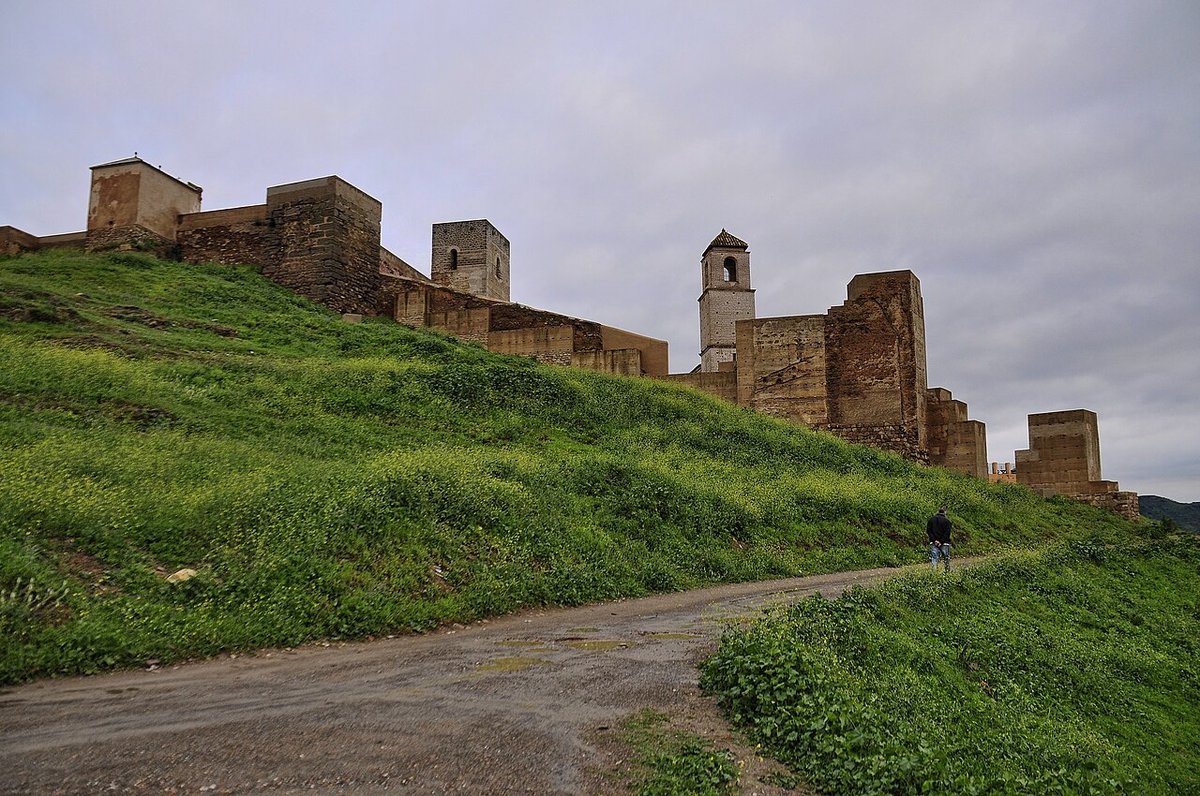
September’s Luna Mora festival is more photogenic still. For two nights the village extinguishes every electric bulb and lights 20,000 clay candles. Moorish music drifts from the fortress walls, artisans sell honey-coated almonds, and the smell of hot wax mingles with thyme from the surrounding hills. Accommodation within Carratraca sells out six months ahead; most Brits base themselves in Ardales or El Chorro and drive in. Parking attendants appear from nowhere and charge €5 to wedge your car into an olive grove—worth it, unless you fancy reversing downhill in the dark.

Food that refuses to flirt

There are only three proper restaurants, none with a website. Casa Pepa, halfway to the church, has hosted Prince Charles, Antonio Banderas and every Spanish food-show host, yet the menu is still printed on a single laminated sheet. Order the chivo pastoril—kid goat slow-roast until the edges caramelise into a salty crisp. The meat tastes like mild lamb; ask “sin grasa” if you want less of the rendered belly fat spooned over the top. A portion feeds two hungry walkers and costs €18; chips are extra and vegetables remain theoretical. House red comes in a plain glass bottle, costs €6 and performs the basic miracle of making the mountain cold feel welcome.

La Bodega de la Plaza opens only when the owner feels like it; if the metal shutter is half-lifted, duck inside for olive-oil pancakes drizzled with dark honey. Brits expecting a crêpe will find something closer to a hot cross bun without the fruit—chewy, fragrant and impossible to reproduce at sea level. Coffee is served in glasses the width of a pool ball; the correct price is whatever coin you have left in your pocket.

Walking without a hashtag

Carratraca is a launch pad for the Ruta de los Manantiales, a 7 km loop that visits the three surviving sulphur springs. The path is way-marked by green and white dashes, but mobile coverage vanishes after the first olive terrace—download the route beforehand. You will pass abandoned cortijos whose roofs have collapsed into the kitchens, and a stone lavadero where women once washed the sheets of hotel guests. The water that trickles from the rock is warm even in February; cup your hands and the smell of eggs is immediate. Locals swear it cures everything from psoriasis to heartbreak; scientists shrug and mutter “high mineral content”. Either way, it is free and tastes better than the €3 bottles sold on the coast.

For a longer day, follow the dirt track west to Bobastro, the ruined 9th-century fortress of a rebel emir. The climb adds another 300 m of altitude and delivers a view that stretches to the Atlantic on very clear days. Take two litres of water; the only bar en route opens at weekends and even that is not guaranteed.

The honest season

Spring and autumn are kindest. April brings wild orchids among the olives, while October smells of crushed grapes from the solitary vineyard outside town. Summer is hot but not suffocating—nights drop to 20 °C, so sleep is possible without air-conditioning. Winter is quiet, occasionally bleak, yet the spa water steams in the cold and restaurants will light a log fire if you ask. January and February can see snow on the higher Sierra; the road from Málaga is gritted, but carry chains if a white forecast threatens.

Leave before Sunday lunch if you are flying home; the A-357 back to the airport clogs with weekend traffic from the reservoirs. Better to rise early, buy a half-litre of unfiltered olive oil from the cooperative (€4, bring your own bottle) and join the pharmacy queue for one last dose of sulphur water. It will leak in your hold luggage and leave your socks smelling like a struck match—an honest souvenir from a place that still believes in its own cure, even when the grand doors stay locked.

Key Facts

Region
Andalucía
District
Guadalteba
INE Code
29036
Coast
No
Mountain
No
Season
summer

Livability & Services

Key data for living or remote work

2024
ConnectivityFiber + 5G
TransportTrain nearby
HealthcareHospital 20 km away
EducationElementary school
Housing~5€/m² rent · Affordable
CoastBeach 17 km away
Sources: INE, CNMC, Ministry of Health, AEMET

Official Data

Institutional records and open data (when available).

  • Balneario
    bic Monumento ~0.1 km
  • Plaza de Toros de Carratraca
    bic Monumento ~0.4 km
  • Once viviendas de VPO en Carratraca
    bic Monumento ~0.5 km

Planning Your Visit?

Discover more villages in the Guadalteba.

View full region →

More villages in Guadalteba

Traveler Reviews