Full Article
about Cuevas del Becerro
Small town that is the northern gateway to the Serranía de Ronda, with a spring that runs through the village.
Hide article Read full article
A village that keeps things simple
Some places match the picture you already have in your head before arriving. White houses, a bit of a slope, a bar on the main square where a few regulars put the world to rights. Cuevas del Becerro, in the Guadalteba area, fits that image quite closely. Yet once there, one detail stands out: everything happens on a smaller scale. The village itself, the distances, the pace of daily life. Depending on what you are looking for, that can feel like a relief.
With just over 1,600 residents and sitting more than 700 metres above sea level, Cuevas del Becerro lies between the Serranía de Ronda and the agricultural interior of Málaga province. It is not the sort of place that appears on viral travel lists, and it does not try to be. This is, above all, a working agricultural village where life remains closely tied to the land.
Streets, views and everyday life
The Iglesia de San Pedro anchors the centre. Its tower is visible from most streets, and it quickly becomes a natural reference point when wandering without much direction.
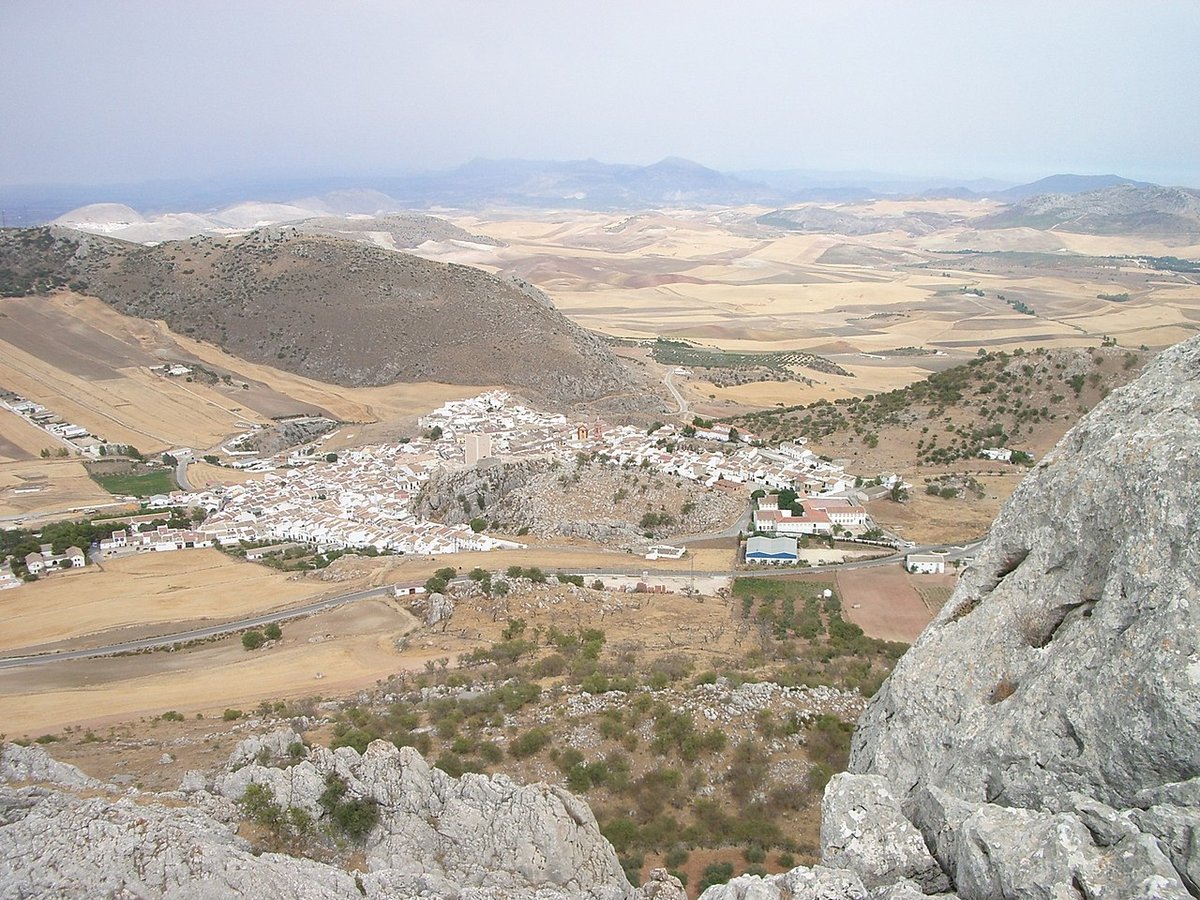
The urban area is compact. A short walk takes you across it entirely, in the same way that visiting a friend’s village often means learning the layout in under an hour: where the square is, where people gather in the evening, how the streets connect. Cuevas del Becerro has that same sense of immediacy.
Whitewashed houses line narrow streets, with plant pots set by doors and windows. There are no major monuments or museums, so the usual plan is simply to walk around for a while and watch how the village functions on an ordinary day.
The name of the village comes from the natural caves found nearby. Some have been known for a long time and form part of local history. These are not developed visitor sites like in other areas, so anyone interested should check beforehand or ask locally to avoid wandering into places that are not suitable to enter.
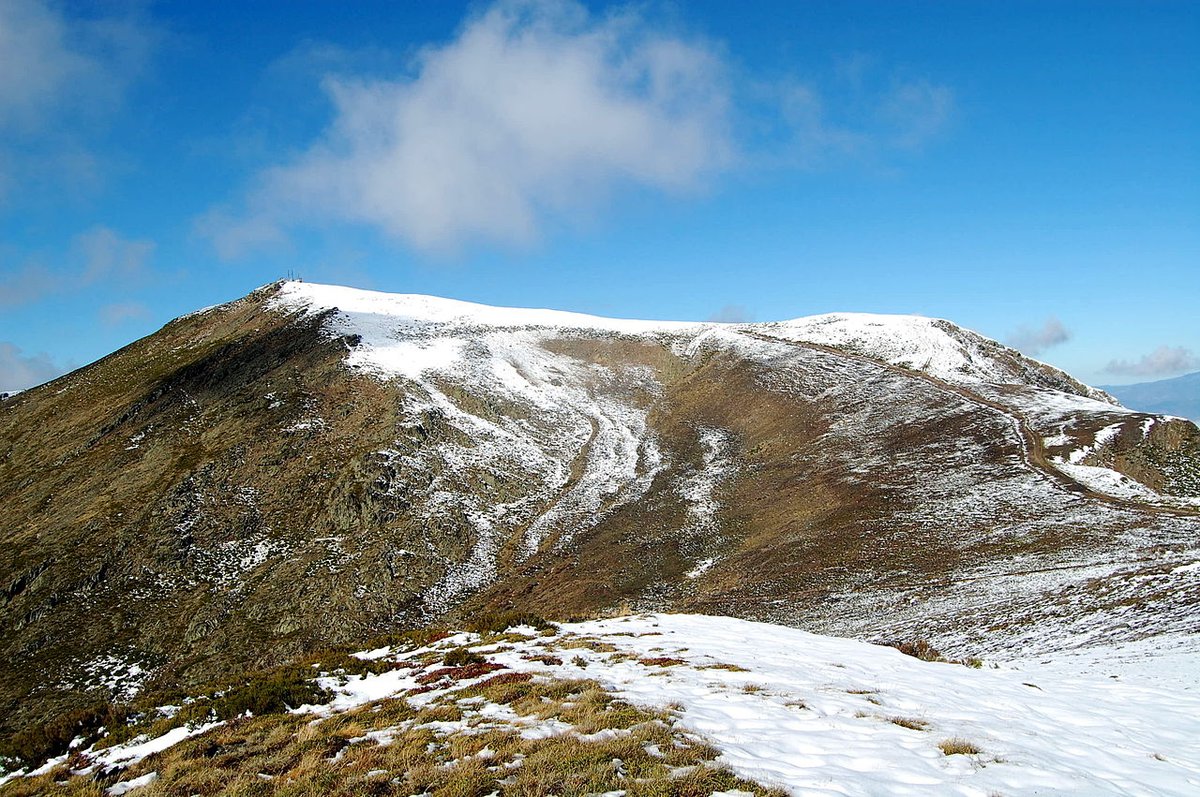
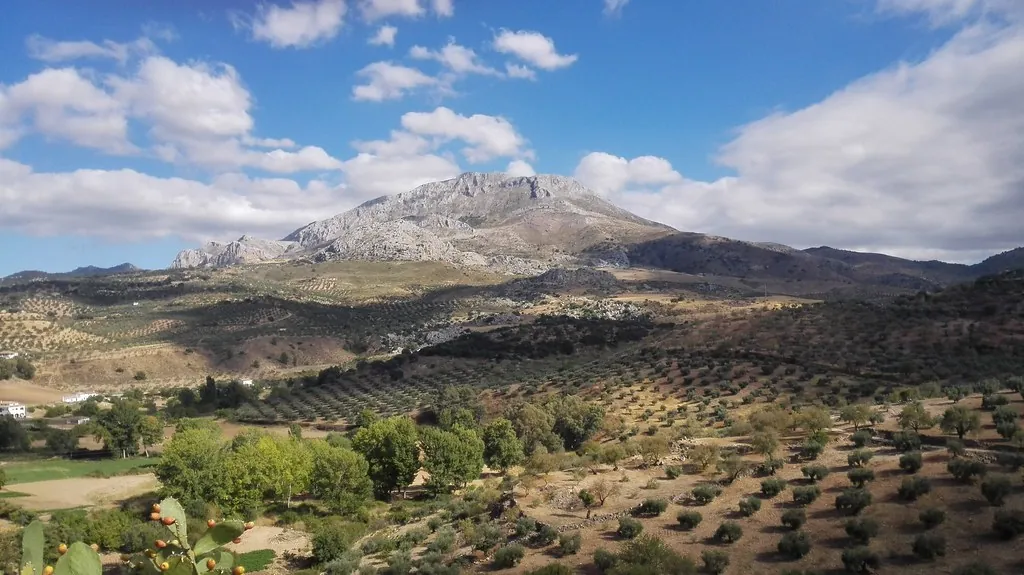
From the higher parts of the village, the landscape opens out. Olive groves stretch in all directions, alongside some other crops. On clear days, several mountain ranges across the province appear in the distance, giving a sense of how this small settlement sits within a much wider rural setting.
Walking through farmland and quiet tracks
The surroundings of Cuevas del Becerro are shaped by agriculture. Dirt tracks connect farms, and paths run between olive groves. A few routes climb towards higher ground, though this is not an area for major mountain hikes. It works well for a couple of hours on foot rather than full-day treks.
Walks here tend to follow a familiar rhythm: tractors passing by, dogs barking somewhere in the distance, and boots picking up a fine layer of dust. It is very much the feel of inland Andalucía.
Signposting can be uneven in places, so it helps to have a rough idea of your route or to ask before setting out. Many of these tracks exist for farming rather than leisure, and that shapes how they are laid out and maintained.
Local food reflects what is produced nearby. Olive oil plays a central role, and meals often follow the seasons. In colder months, dishes eaten with a spoon and migas are common. When the heat arrives, gazpacho takes over. The emphasis stays on simple cooking, the kind meant to be eaten slowly.
Between late autumn and mid-winter, the olive harvest gets underway. This changes the atmosphere noticeably. Trailers filled with olives move along the roads, tractors come and go from the fields, and there is far more activity along the tracks that might otherwise feel quiet.
Festivities rooted in the community
In a village of this size, local celebrations still matter. Festivities in honour of San Pedro usually take place in late June. During those days, the main square becomes busier than usual, with a procession, evening music and many people returning to the village for the occasion.
August brings a different kind of activity. Summer events create a livelier night-time atmosphere, with chairs set out on the street, long conversations, and children playing in the square until late.
Semana Santa here is more subdued than in larger cities. Processions are smaller, the streets are narrow, and participation comes mainly from local residents. It does not draw large crowds, but it feels closely tied to the community itself.
Reaching Cuevas del Becerro
From the city of Málaga, the usual route heads inland via the A-357. From there, smaller regional roads lead towards the area of Campillos and Cañete la Real before reaching Cuevas del Becerro.
The journey takes a little over an hour, depending on traffic and the bends along the way. It is not a difficult drive, though it marks a clear shift away from the coast and into inland terrain.
Cuevas del Becerro does not try to stand out. It is a small agricultural village that can be explored in a short time. For anyone interested in seeing how places like this actually function, without a layer of tourism built around them, it offers a straightforward and honest stop.