Full Article
about Huélago
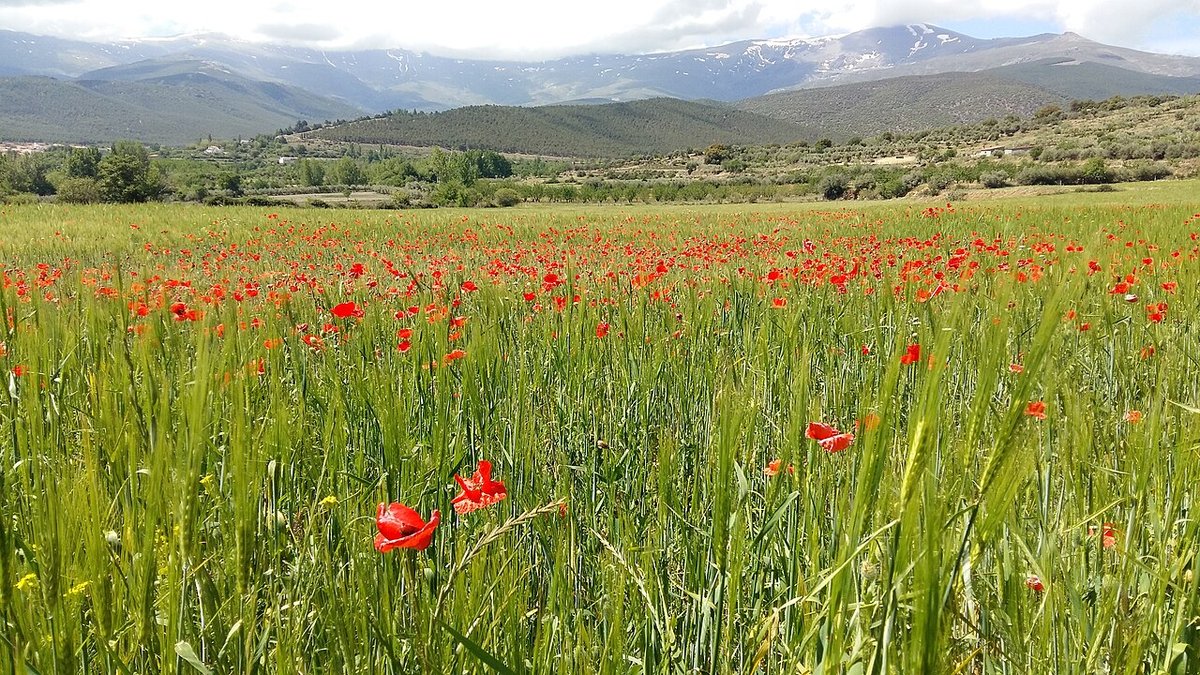
Small village in the Fardes river basin; quiet setting of cereal crops and olive groves.
Hide article Read full article
An Evening in the Plaza
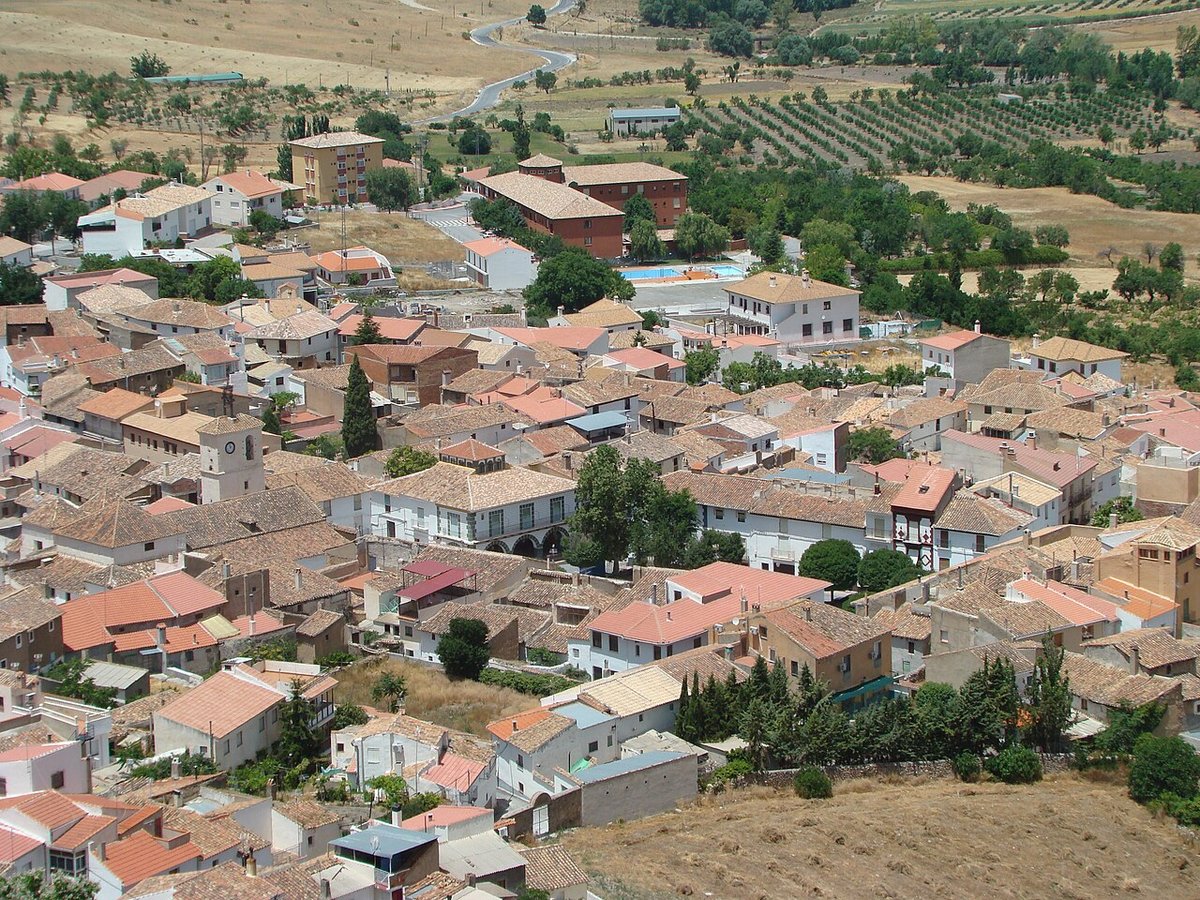
Late in the afternoon, when the sun drops behind the low hills of the Hoya de Guadix, the main square of Huélago slips half into shadow. The brick bell tower of the Iglesia de San Torcuato stands out against a clear sky, and the stone paving still holds the warmth gathered through the day. At that hour there is very little sound: a door closing somewhere nearby, footsteps echoing on the slope, wind shifting the leaves of the few trees that line the plaza.
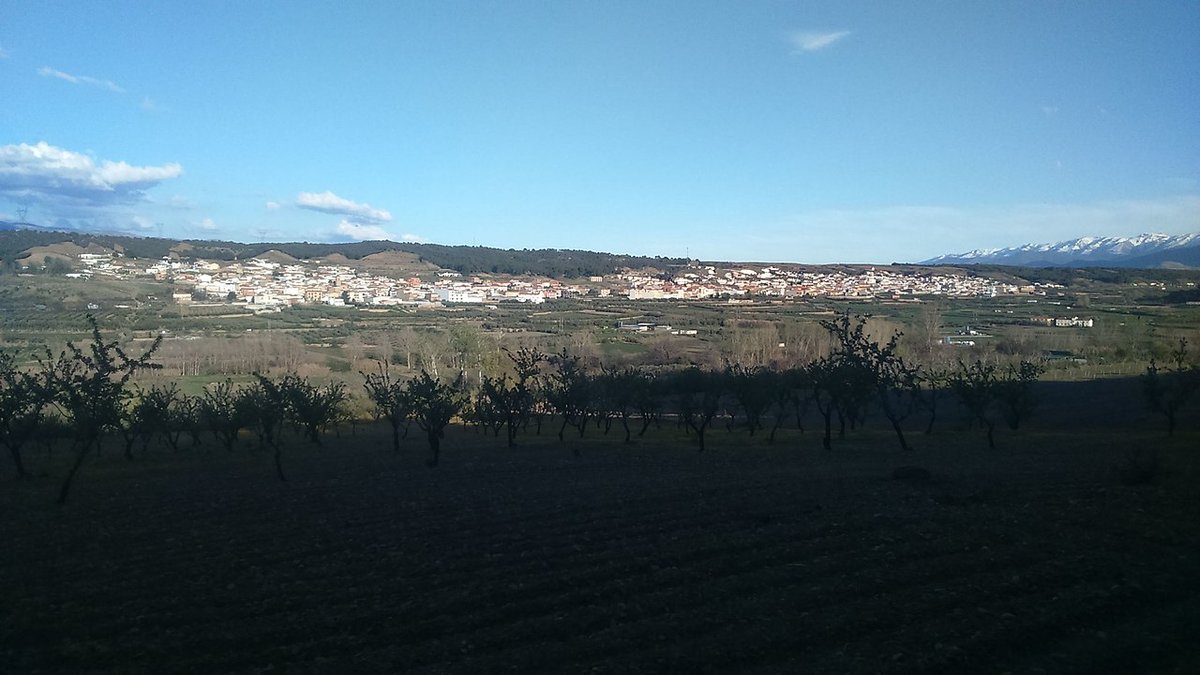
Huélago is small, barely a cluster of streets around the square, and life moves at an unhurried pace. There are no shop windows and no steady flow of traffic. What you find instead is a village that keeps going with the essentials: whitewashed houses, red-tiled roofs, and walls of hardened earth where time shows in the cracks.
It does not take long to walk from one end to the other. In fact, that is part of its character. Huélago feels contained, quiet, set slightly apart from the wider world beyond the surrounding hills.
Calle Mayor and the Iglesia de San Torcuato
From the church, Calle Mayor slopes gently down towards the entrance to the village. It curves softly, lined with dark wooden gates, some visibly worn, and stretches of older stone wall peeking out between more recent façades. It is not a long street, yet it rewards a slow walk. Details easily missed from a passing car begin to stand out: the texture of stone, the weight of old doors, the way the buildings follow the incline of the land.
The Iglesia de San Torcuato probably dates back to the 16th century, although the building has undergone alterations over time. From the outside it is plain: brick construction, restrained lines, and a bell tower visible from almost anywhere in the urban centre. Its simplicity is part of its presence in the village.
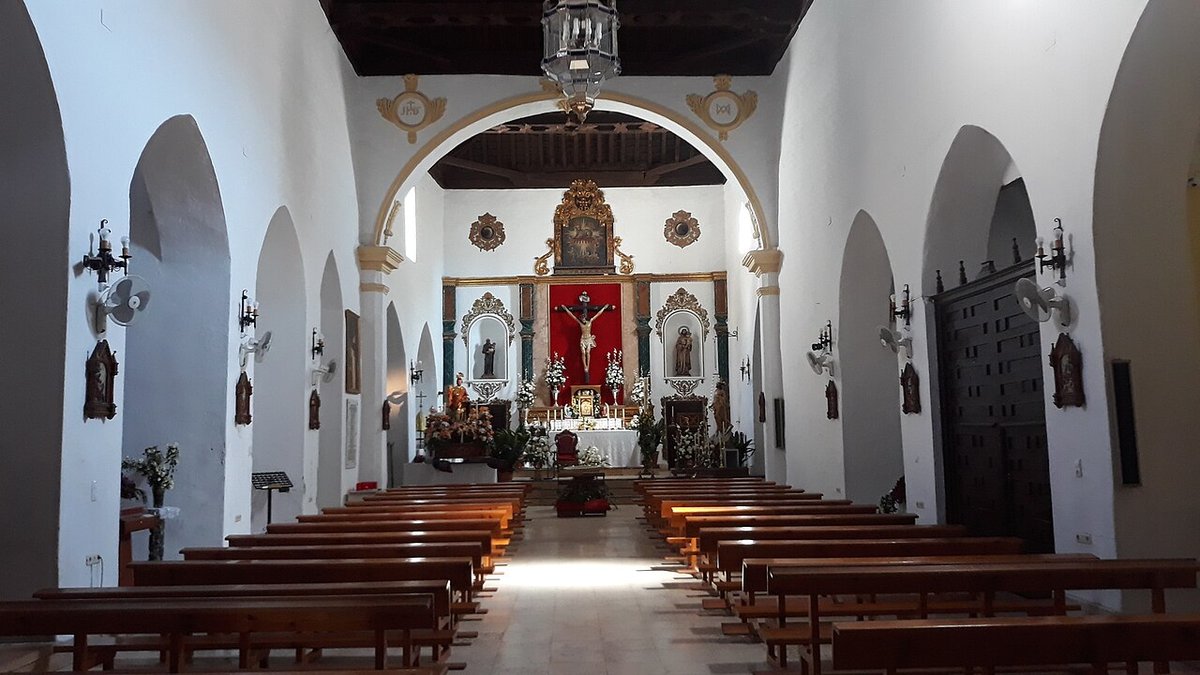
When the church is open, the interior reveals a wooden coffered ceiling and several altarpieces with traces of polychrome decoration, now faded with age. There is no regular opening schedule. In summer, or during religious celebrations, it is sometimes possible to step inside and see these features up close.
San Torcuato, to whom the church and the village’s main festivities are dedicated, is one of the early Christian figures traditionally associated with this part of Andalusia. Here, that devotion is expressed in modest, local ways rather than grand displays.
Paths into the Badlands of the Hoya de Guadix
Once outside the village, dirt tracks begin almost immediately. These are rural paths that cross farmland and plots sometimes left fallow. There is no signposting and no official route network, so it makes sense to walk with care and avoid straying too far if the area is unfamiliar.
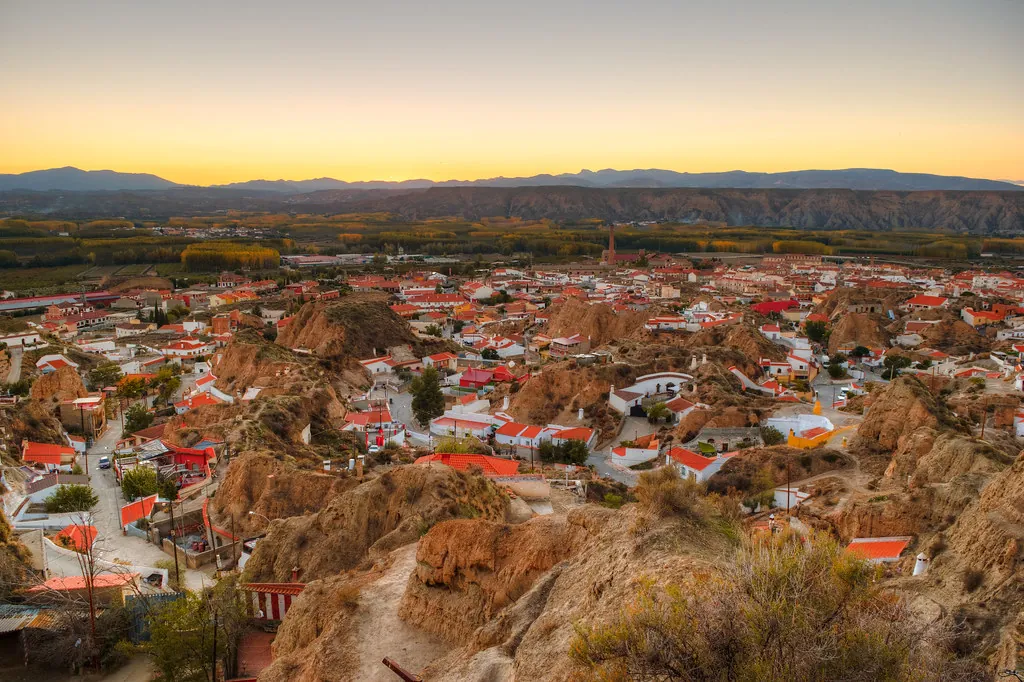
The landscape shifts quickly. The soil turns clay-rich, in reddish and ochre tones, and the eroded hills that define the comarca of Guadix come into view. These formations, often referred to as badlands, are shaped by wind and water over time, creating folds and ravines that catch the light in striking ways. From higher points, the terrain opens into ridges and gullies that are especially marked at dawn and towards evening, when long shadows accentuate every crease.
Vegetation is sparse. Esparto grass, low scrub and the occasional hardy shrub cling to the dry ground. Shade is limited. In summer, the heat can be intense, particularly around midday, and there is little shelter from the sun. Spring and autumn tend to be more comfortable for walking, with softer air and clearer light that brings out the contours of the hills.
With a little patience, it is possible to spot birds typical of steppe environments moving between the rises. No special equipment is required. Walking slowly and pausing in silence is often enough. The quiet here is not unusual or dramatic; it is simply part of the setting.
Even a short stroll beyond the last houses gives a clear sense of place. Within minutes, the compact village gives way to open land, rough earth and wide horizons.
Food and Local Festivities
The cooking that continues in Huélago follows the traditions of this part of the high plateau of Granada province. It centres on hearty stews made with lamb or rabbit, seasonal vegetables and a generous use of olive oil. These are dishes intended for long meals and steady conversation, rather than something eaten in haste.
The fiestas patronales dedicated to San Torcuato are usually held in summer. At that time, neighbours who live elsewhere during the year return, and the square fills again. Simple events are organised, and the procession moves through the streets closest to the church. It is a small-scale celebration, rooted in familiarity. Many of those watching know one another.
Semana Santa, or Holy Week, is also observed, though in a modest format. Religious floats proceed slowly along narrow streets where almost everyone recognises each other. The scale is intimate compared with the larger processions seen in Andalusian cities, yet the rhythm and symbolism remain.
At Christmas, nativity scenes are still set up in some homes, and children can be heard singing villancicos, traditional carols, as they move through the village. These customs continue without spectacle, woven into everyday life.
Getting There and the Best Time to Go
Huélago lies a short distance from Guadix. From Granada, the usual route is to take the A‑92 to Guadix, then continue north on a regional road until joining the A‑4200. The journey generally takes a little over an hour, depending on traffic and the starting point.
Spring and autumn are the most comfortable seasons for exploring the surroundings on foot. The air is milder, and the light brings out the relief of the hills. In summer, the heat intensifies from midday onwards, so early morning or late afternoon are the better times for walking. In winter, the cold can be dry and the wind strong across open ground.
If time is short, a simple plan works well: walk along Calle Mayor up to the Iglesia de San Torcuato, then head towards the edge of the village where the land begins to open into the badlands. In just a few minutes, the character of Huélago becomes clear. It is a small, quiet nucleus surrounded by rough earth and broad horizons.
Silence here is not unusual. It is part of the landscape itself.