Full Article
about Arahal
Known worldwide for its table-olive production, Arahal stands out for its Baroque architecture and flamenco tradition.
Hide article Read full article
Getting Your Bearings
If you arrive in Arahal with plans to look around, the simplest approach is to leave the car near Avenida de Andalucía and continue on foot. The centre is compact and easy to cover without transport, and many streets are either pedestrianised or awkward for driving. On an ordinary day, parking somewhere nearby is usually manageable. During the feria or major celebrations, it becomes a different story, and it makes more sense to leave the car on the outskirts and walk in.
This is not a place that demands careful planning or long itineraries. Its scale works in your favour. A short wander is enough to get a feel for how things fit together.
An Economy Built on Olives
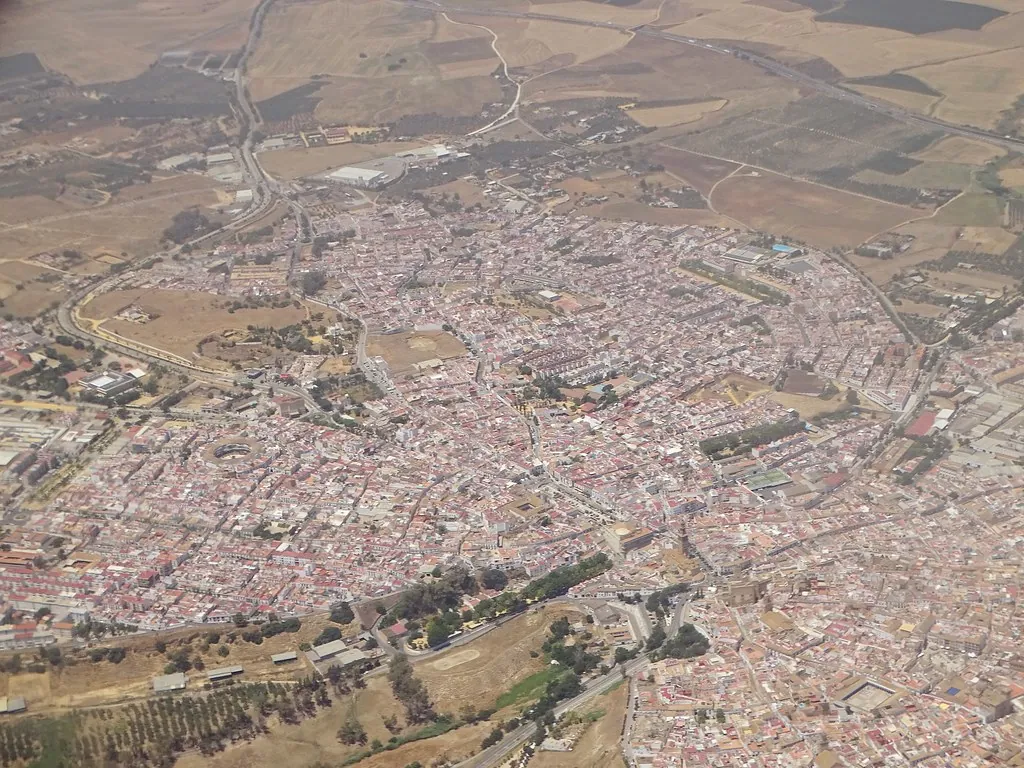
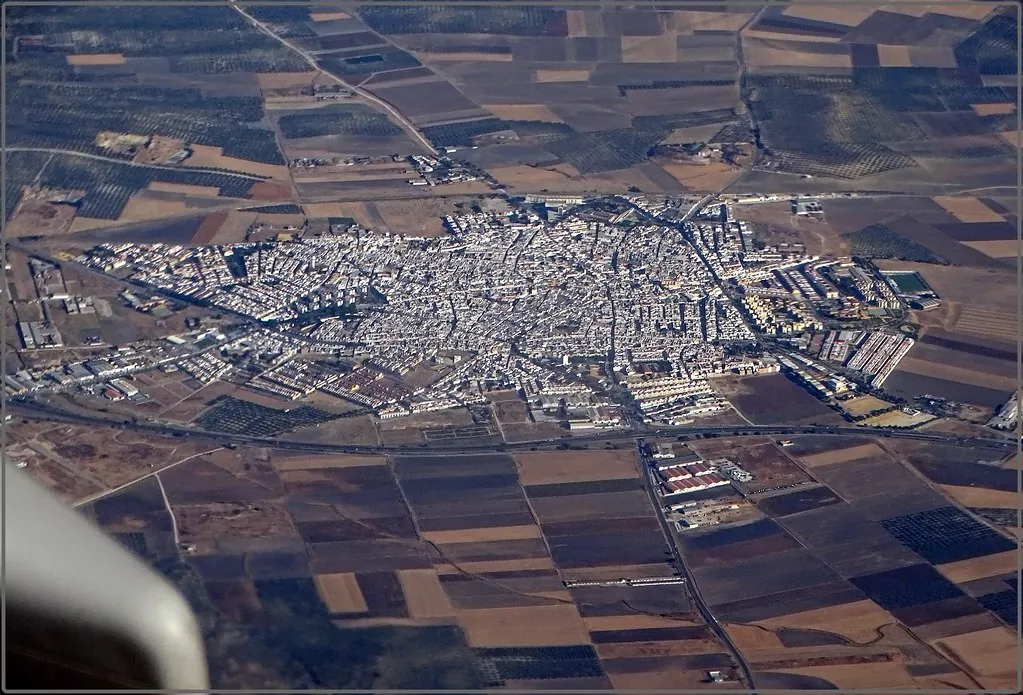
Arahal revolves around table olives. The varieties most associated with the area are manzanilla and gordal, and the surrounding countryside reflects that specialisation. The landscape is largely made up of olive groves stretching out from the town in every direction. You do not need to go looking for this connection, it is immediately apparent.
Order a beer in a local bar and it is typical for a bowl of seasoned olives to appear alongside it. Many of these come from cooperatives in the area, tying everyday habits directly to the local economy.
The annual cycle here is shaped by the verdeo, the early harvest of olives intended for the table rather than oil production. This period defines the working calendar and sets the tone for one of the town’s main celebrations. When the harvest begins, Arahal marks the moment with a fair dedicated to this agricultural work. During those days, the focus is firmly on olives and on the people whose livelihoods depend on them.
A Historic Centre Without Grand Gestures
Arahal’s old quarter is compact and straightforward. Whitewashed streets run through it, sometimes with short slopes or turns that appear suddenly. It is not an extensive monumental area, yet there are several large houses dating from past centuries, particularly along streets such as La Carrera. These buildings often feature tall entrance gates, interior courtyards and plenty of wrought iron.
At the highest point stands the Iglesia de Santa María Magdalena, the most recognisable building in the town. Its bell tower can be seen from a distance, acting as a reference point as you move through the streets. Inside, there is a wide nave and Baroque altarpieces. It is generally possible to enter if it is open for worship, although it does not function as a museum or offer a structured visitor route.
If you happen to come across a procession, you will notice it immediately. The streets here are not particularly wide, and when a religious float passes through, people move close to the walls and wait. It is a simple, direct experience rather than a staged spectacle.
Food That Stays Close to Home
Cooking in Arahal follows the traditions of the surrounding countryside. The dishes are familiar, practical and rooted in what has long been prepared in local kitchens. Sopa de tomates with mint is one example, as are chícharos con bacalao en amarillo. When in season, tagarninas esparragás also appear.
These are dishes that come from pots and pans rather than elaborate techniques. The emphasis is on straightforward flavours and ingredients that have been part of daily life for generations.
In winter, cocido de calabaza sometimes makes an appearance, though it is not something available throughout the year. For dessert, there is a range of classic sweets, often rich in egg yolk and sugar. One of the more traditional ways of buying them still survives in a local convent, where sweets are sold through a small turntable hatch, a system that has disappeared in many other places.
Celebrations Tied to the Land
The Feria del Verdeo is closely linked to the beginning of the table olive harvest. Local cooperatives and residents take part, and the atmosphere remains largely rooted in the community itself. Music and dancing are part of it, along with plenty of seasoned olives.
Throughout the year, there are also religious celebrations and processions that move through the centre. These are not events designed with visitors in mind. They belong to the town and are experienced as such, with a sense of continuity rather than performance.
Visiting Without Overthinking It
Arahal does not require much time to understand. A walk through the centre, a visit to the Iglesia de Santa María Magdalena if it happens to be open, and a pause for a drink with some olives will give a clear sense of the place.
If you have access to a car, it is worth heading briefly onto the roads that cross the surrounding countryside. From there, the wider picture becomes clear. The town’s rhythm and economy are anchored in what lies beyond its streets: olive trees extending as far as the eye can see.
That, more than anything else, explains Arahal.