Full Article
about Carmona
One of Andalusia’s oldest and most monumental towns, with striking Roman and Moorish heritage and a state-run parador.
Hide article Read full article
A city set above the countryside
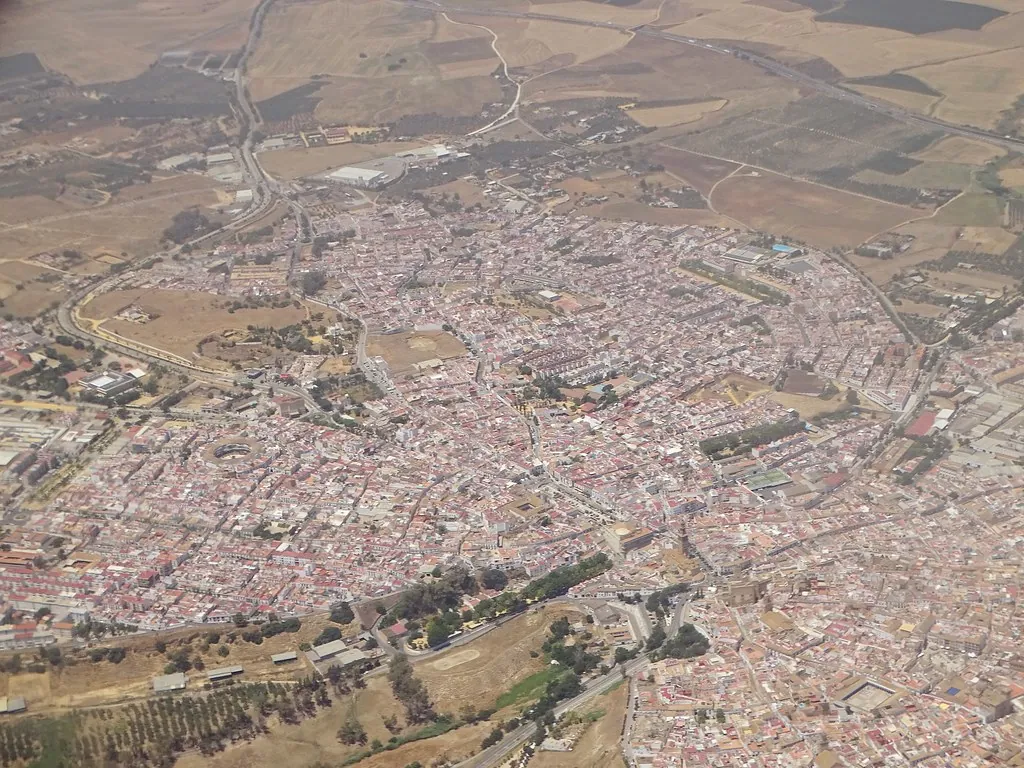
Tourism in Carmona begins with its setting. The town stretches along an elongated plateau that rises above the Sevillian countryside, overlooking natural routes that have linked the Guadalquivir valley with inland areas for centuries. It sits right on this elevated edge, almost like a permanent viewpoint. From the alcázar, the plain opens out in every direction, making it easy to understand why Romans, المسلمين and Castilian rulers all saw this as a strategic location.
Carmona has not expanded rapidly in recent centuries. Its present shape comes from much older layers that remain visible today, especially in the walls, the gateways and the layout of the historic centre.
A place that held power more than once
In ancient sources, Carmona appears as Carmo, itself built on an earlier Turdetanian settlement. Under Roman rule it became a नगरपालिका town, controlling a wide agricultural territory across the surrounding countryside. Parts of the current defensive walls date back to that period, although they were reinforced and altered in later centuries.
The Puerta de Sevilla brings together several of these historical layers in a single structure. What can be seen today combines Roman foundations with Islamic and later Christian modifications. It is more than a monumental gateway. For centuries it served as the main entrance to the town and a control point on the route towards Seville.
Carmona regained political importance in the 11th century during the taifa period, when it became the capital of a small independent kingdom before being absorbed into al‑Ándalus. The present Alcázar del Rey Don Pedro stands on earlier Islamic fortifications. King Pedro I ordered major reforms in the 14th century, and traces of that work remain visible in its courtyards and galleries, where Gothic features sit alongside elements inherited from Andalusian architectural traditions.
Roman tombs and religious life
Just outside the historic centre lies the Necrópolis romana, discovered in the 19th century. Rather than a scattering of isolated tombs, it forms a true funerary city carved into the rock. Streets, burial chambers and mausoleums give a clear sense of how funerary practices were organised between the 1st century BC and the 2nd century AD.
Some chambers still preserve niches, stone benches and traces of decoration. Inscriptions found during excavations refer to specific families and exact ages, offering a direct glimpse into everyday life in ancient Carmo.
Within the old town, convents tell another part of Carmona’s story. Many were founded between the 15th and 17th centuries, when the town held a strong economic position within the surrounding countryside. The convent of Santa Clara is among the oldest. Traditionally, enclosed religious communities have prepared sweets linked to the religious calendar, a custom that continues in several Andalusian convents today.
The church of San Pedro stands at one of the highest points in Carmona and reflects the Sevillian Baroque style of the 18th century. Its tower is visible from different parts of the surrounding countryside and acts as a clear landmark for anyone approaching the town.
Food shaped by the land
Carmona’s cuisine reflects the agricultural landscape around it: cereal fields, olive oil production, scattered market gardens and nearby livestock.
One of the most distinctive dishes is gazpacho carmonense. Compared with other Andalusian versions, it typically includes more bread, giving it a thicker consistency closer to a cold soup. It was a practical meal for people working in the fields during the summer months.
Legume stews also feature, along with dishes where olive oil plays a central role. In baking, many sweets combine honey, almonds and pine nuts, ingredients closely linked to Andalusian traditions and later convent cooking.
Festivals and local rhythm
Semana Santa, the week leading up to Easter, plays an important role in local life. Processions move through the narrow streets of the historic centre, where slopes require careful handling of the pasos, the large religious floats carried by brotherhoods. Some processions begin at churches located on higher ground, so their routes often include long descents towards the more open areas of the town.
The spring fair takes place around the prado de San Sebastián. Unlike larger fairs elsewhere in Andalucía, this one still retains a strong presence of family-run casetas and an atmosphere closely tied to local residents and nearby towns in the countryside.
Walking through the historic centre
A clear way to get oriented is to enter through the Puerta de Sevilla and head towards the plaza de San Pedro. Along this route, several stately houses appear, with stone façades and family coats of arms that point to lineages connected to agricultural trade and local administration.
The Casa de las Torres, dating from the 16th century, is one of the best-known examples of Renaissance civil architecture in Carmona. Its courtyard and tower reflect the kind of urban residence built by families who held economic and social influence at the time.
Moving through these streets, the different periods of Carmona’s past remain visible without needing much interpretation. The town’s form, its buildings and its elevated position all contribute to a sense of continuity shaped over centuries, rather than sudden change.