Full Article
about El Coronil
Town in the countryside dominated by two medieval castles and surrounded by vast farmland.
Hide article Read full article
El Coronil: Where the Solar Panels Arrived Before the Tourists
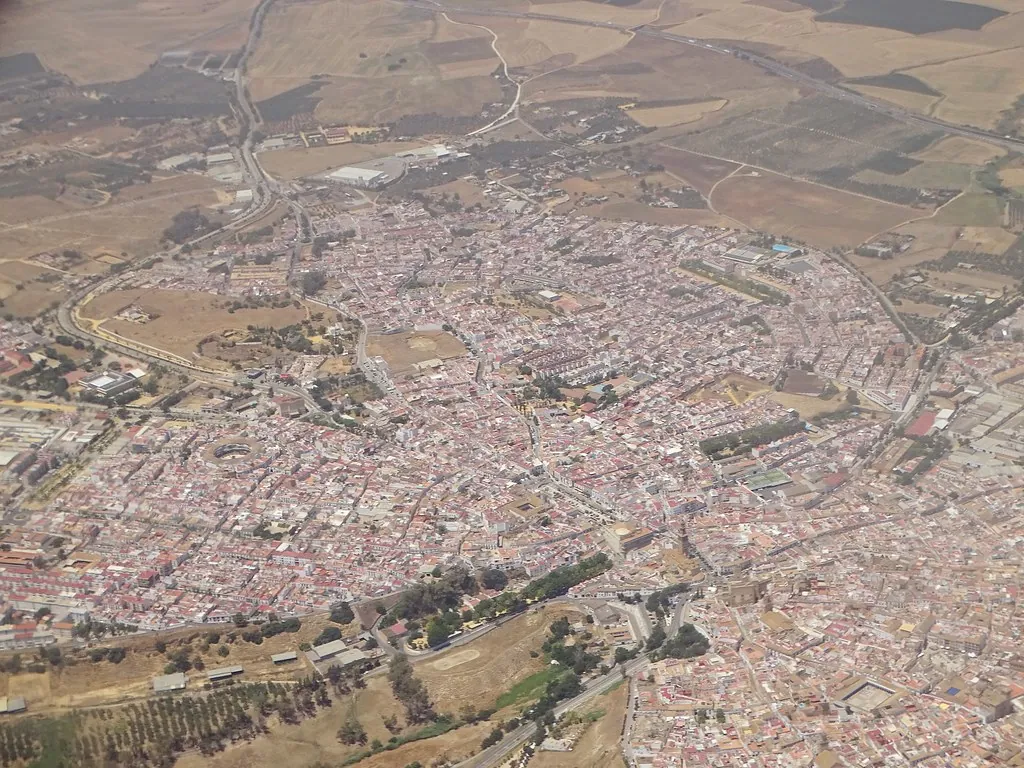
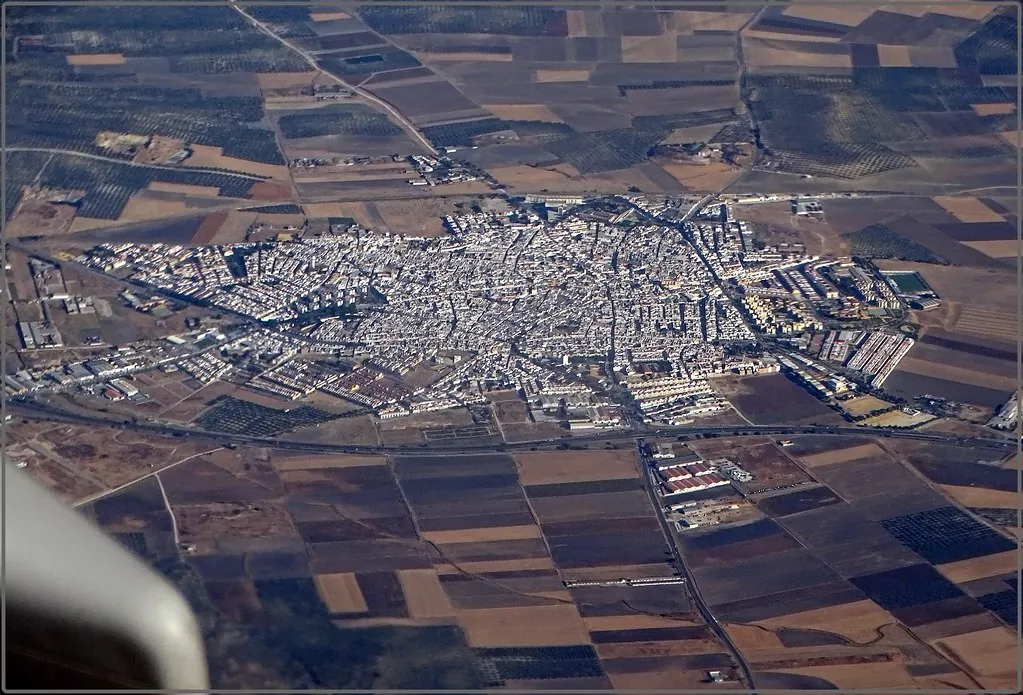
Driving into El Coronil feels like showing up to a party at the exact wrong time. You see the solar farm first, a sprawling, modern sea of blue-grey panels. Then, almost as an afterthought, the village appears. A cluster of white houses piled up a hillside, crowned by a stubby castle that seems to be watching this new industrial landscape with mild confusion.
This is the Sevillian countryside, not the postcard version. El Coronil sits in the campiña, a wide-open expanse of olive groves and farmland where the horizon is a long, flat line. It’s a working town of about five thousand people. The rhythm here is set by the seasons and the siesta, not a tour bus schedule.
The Fort in the Hollow
They call it Las Aguzaderas Castle, but you’ll hear locals refer to it as el torreón—the big tower. It’s not a palace. It’s a functional, 14th-century military build, plonked strategically at the bottom of a valley to guard a water spring. The walk to it is short and dusty, through olive trees that look like they’ve seen it all.
Climbing up to its walls is worth it for one reason: the view. From here, you get it. You see how this fortress controlled movement across a vast, empty plain. The village looks small and defiant below. The new solar panels sit off to the side, a shiny patch on an ancient landscape.
A Town That Stays Put
History here isn’t shouted from rooftops; it’s baked into the brickwork of quiet streets. The town proper took shape in the late 1300s. Some say the name comes from a round hill nearby; others will tell you it’s about the “crown” of heat that sits on your head in August.
The 15th-century Iglesia de la Consolación is Mudejar in style—simple brick and quiet dignity. The smaller Ermita del Calvario is where things get more animated during Semana Santa, when its statue of the Virgen de los Dolores is processed through streets that suddenly feel crowded. These aren’t museums. They’re places where people still get married, pray, and gather.
Eating Like Your Weekend Depends On It
The food here has no time for delicate plating. This is eat-with-bread territory. Cabrillas en salsa—small snails in a rich sauce—arrive in a bowl meant for mopping. Morcilla de bellota, a dark blood sausage packed with acorn-fed pork fat, is robust and unapologetic. What you get depends entirely on the calendar. Tagarninas (wild thistles) and espárragos trigueros (wild asparagus) appear briefly after rains, usually scrambled with eggs. Roasted red peppers taste like concentrated summer. You go to eat well, not to be surprised.
When The Calendar Gets Loud
The annual cycle has its peaks. In mid-August, the Feria de San Roque takes over. It’s modest by some standards but all-consuming here. Casetas pop up, music plays late, and everyone who ever moved away seems to come back for a few days. Earlier in summer, there's a tapas crawl through town that requires patience and elbow room. And around May, many families pack up their cars for the Romería de San Isidro. It looks less like a pilgrimage and more like everyone decided to have one massive picnic in a field at once.
Getting Out Into The Flatlands
You don’t come here for epic hikes. You come for walks where you can think without getting out of breath. A section of the Ruta de la Banda Morisca passes nearby—a short stroll connecting historical sites. A bit farther afield is the Vía Verde de la Sierra, a gentle converted railway track perfect for an easy bike ride or long walk into neighboring Cádiz province. If you need mountains, you drive north toward Grazalema and watch the flatlands slowly crumple into proper sierras.
What You Need To Know
If your visit coincides with the August fair, sort your bed first. Options are limited and they go fast.
Don't look for gift shops. You'll find a pharmacy, a supermarket, and bars where old men argue about football.
Manage your geography expectations. People ask about beaches The coast is over 100 kilometres south What you get instead is an ocean of land olive groves rolling toward that distant horizon
El Coronil won't take your breath away It's more likely to slow your pulse down It's stubbornly itself a white hilltop between ancient fields and new technology where life moves at its own long established pace