Fuentes de Andalucía - Flickr
Andalucía · Passion & Soul

Fuentes de Andalucía

Fifty minutes east of Seville, the A-4 motorway cuts straight through seas of sunflowers that stretch to every horizon. Pull off at exit 408, follo...

7,247 inhabitants · INE 2025
183m Altitude

Why Visit

Castle of la Monclova Baroque Route

Best Time to Visit

spring

August Fair (August) agosto

Things to See & Do
in Fuentes de Andalucía

Heritage

  • Castle of la Monclova
  • Church of Santa María la Blanca
  • Carrera Street

Activities

  • Baroque Route
  • Visit to Castillo de la Monclova

Festivals
& & Traditions

Fecha agosto

Feria de Agosto (agosto), Carnaval (febrero)

Las fiestas locales son el momento perfecto para vivir la autenticidad de Fuentes de Andalucía.

Full Article
about Fuentes de Andalucía

Historic-Artistic Site noted for its Baroque civil architecture and straight, stately streets

Ocultar artículo Leer artículo completo

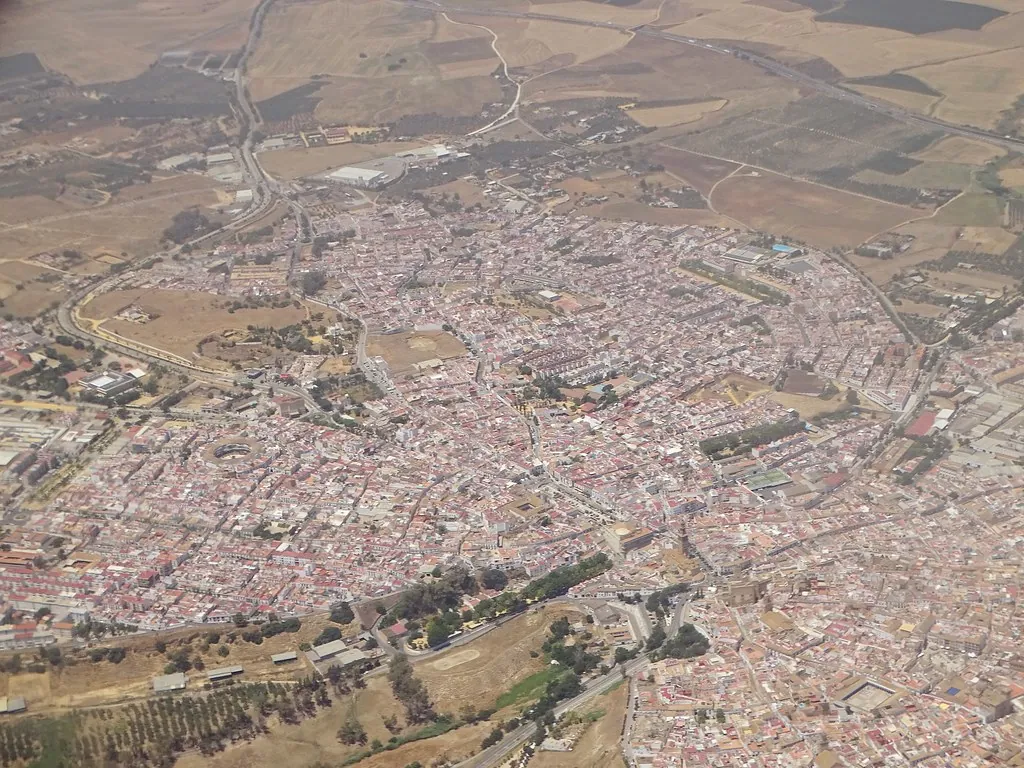
Fifty minutes east of Seville, the A-4 motorway cuts straight through seas of sunflowers that stretch to every horizon. Pull off at exit 408, follow the farm track for five kilometres, and the fields suddenly give way to Fuentes de Andalucía—a grid of whitewashed houses, orange trees and ring-road roundabouts where elderly men still ride horses to the betting shop.

This is not the Andalucía of flamenco posters or Moorish palaces. There are no coach parks, no bilingual menus, no craft stalls selling fridge magnets shaped like bulls. What you get instead is a working town of 7,000 souls whose day is ruled by the tractor horn and the church bell, and whose grandest monument is an eighteenth-century town hall with a clock that loses three minutes every afternoon.

The Town That Water Built

The name means “Springs of Andalucía”, and the place owes its existence to two natural fountains that still bubble on the southern edge of the centre. The Fuente del Moral runs under a canopy of giant eucalyptus; local women fill plastic carboys here each morning before the sun climbs high enough to burn the lemon trees. A five-minute stroll away, the Fuente del Pilar feeds a stone trough where horses from the riding school stop for a drink on their way back from the olive groves. Both spots are signposted, but you will probably find them by following the sound of running water and gossip.

Those fountains kept the Romans here long enough to press olive oil, and later persuaded the Moors to raise a small fortress on a low hill now known simply as El Castillo. Only a fragment of the keep remains, propped up with scaffolding and locked behind a farm gate. Ring the mobile number scribbled on a tile and Don Antonio, the caretaker, ambles over with a key and a torch. He asks for two euros “for the roof fund” and lets you climb the spiral staircase to a roofless platform that surveys a patchwork of cereal fields all the way to the Sierra Morena. Interpretation boards? None. Safety rail? Forget it. The view is reward enough, and chances are you will share it only with a pair of nesting storks.

Eating With the Season, Not the Clock

British stomachs should reset to Spanish time on arrival: coffee at 07:30, lunch at 15:00, dinner at 22:00—unless it is August, when many families eat at midnight after the feria winds down. Between 14:00 and 17:30 the town itself shuts; metal grilles clatter over bakery windows, even the pharmacy pulls down its blind. Plan accordingly, or you will spend the siesta hours circling the deserted streets like a lost delivery driver.

When the bars do open, portions are large and prices seem misprinted. A plate of migas—fried breadcrumbs laced with chorizo and black pudding—costs €2.80 at Bar El Kiosko on Plaza de la Constitución and is easily enough for two. Casa Gamero, three streets south, offers a “media ración” list specifically for the curious: order four half dishes and you can taste gazpacho campero (the thick, peasant version), salmorejo, wild-boar stew and aubergine with honey without exploding. Dessert is usually ignored, but ask for tortas de aceite if they have any left: anise-scented olive-oil biscuits that snap like shortbread and disappear with startling speed.

Vegetarians survive on pachocha, a bread-and-tomato salad dressed with sharp local vinegar, though you may be charged the full meat price anyway—old habits die hard. Vegans should consider self-catering; the Saturday market on Calle Real sells tomatoes that actually taste of tomato, and the bakery at number 43 will fill your own tin with still-warm bread for 80 céntimos.

What Passes for Culture When Nobody is Looking

The Ethno-Archaeological Museum occupies a former olive mill on Calle Castillo. From the outside it looks shut; push the heavy door and a sensor switches on lights to reveal a collection that ranges from Roman roof tiles to a 1950s radio wired to the town’s first mains supply. One room recreates a 1940s kitchen complete with a zinc bath and a goat-skin wine bota; another displays hand-forged ploughs painted with the original owners’ initials. British visitors tend to emerge startled: the captions are only in Spanish, yet the objects need no translation. Admission is free, but drop a coin in the box—there is no public subsidy and the curator also teaches at the primary school.

Across the square, the Iglesia de Santa María Magdalena keeps eccentric hours: Mass at 09:00, lights switched on for tourists at 11:00, locked again by 13:00 unless the sacristan is in a chatty mood. Inside, the baroque altar glitters with gilt that Seville churches lost in nineteenth-century fires; a side chapel holds the village’s pride, a sixteenth-century statue of Mary Magdalene whose real hair is still attached to her wooden scalp. Photography costs €1, payable at a side office that doubles as the priest’s stationery cupboard.

Walking Without a Compass

You do not come to Fuentes for mountain drama—the highest point is the 240-metre ridge of the old railway embankment. What you get instead is mile after mile of flat track through wheat, olives and the occasional stand of almond. The tourist office (open Tuesday and Thursday, 10:00-12:00, in the library basement) will photocopy a hand-drawn map showing three circular walks: 4 km to the abandoned cortijo of El Cerrillo, 7 km to a nineteenth-century windmill, 12 km to the ruins of a plague hospital last used in 1834. All start at the eucalyptus grove by the football ground; all are unsigned beyond the first kilometre, so download the free Wikiloc file while you still have 4G.

Summer walking is best finished by 11:00, when the thermometer is already ticking past 30 °C and the only shade belongs to a telegraph pole. Spring is safer: the fields glow green after March rains, and storks clatter overhead on their way from Africa. Autumn smells of freshly pressed olives; farmers wave if you step aside to let their tractors pass, but do not expect conversation—the harvest clock is ruthless.

Getting There, Getting Out

No railway line ever reached Fuentes, and the bus from Seville’s Plaza de Armas trundles through three larger towns before depositing you on the motorway verge. From the lay-by it is a 20-minute walk along an unsigned farm track; carry water and assume you will be sharing the path with a slouching tractor. Buses back to Seville finish at 15:30 on weekdays, and there is no service at all on Sunday—hire a car unless you fancy an unplanned overnight.

Driving gives you options. Córdoba is 75 minutes north-east via the A-4; Granada two hours south-east on the same road. Closer, the ruined Roman city of Italica sits just outside Seville, and the Vía Verde del Aceite—a 128-km greenway carved from an old olive-train line—starts 25 km south at the village of La Roda de Andalucía. Borrow one of the free bikes stacked outside the Fuentes sports centre (ask for José at the bar opposite) and you can be coasting through tunnels of poplar and pomegranate within the hour.

The Honest Verdict

Fuentes de Andalucía will never feature on a postcard rack. It is too ordinary, too quiet, too committed to the rhythms of soil and sun. That is precisely its appeal: a place where the waiter still remembers how you took your coffee yesterday, where the castle key lives in a front pocket, where the loudest noise at night is the church bell counting the hours you have forgotten to notice.

Come if you want a breather between grand cities, if you are happy to eat what is in season and speak the Spanish you last used at GCSE. Do not come if you need boutique hotels, vegan brunch or evening entertainment beyond a bottle of warm lager and a game of cards with the locals. Bring cash, patience and a sense of calendar time; leave the selfie stick in the hire car. The sunflowers will still be looking the other way when you drive back to the motorway, and Fuentes will carry on exactly as before—just with one extra story whispered around the fountain at dusk.

Key Facts

Region
Andalucía
District
La Campiña
INE Code
41042
Coast
No
Mountain
No
Season
spring

Livability & Services

Key data for living or remote work

2024
ConnectivityFiber + 5G
HealthcareHealth center
EducationHigh school & elementary
Housing~5€/m² rent · Affordable
Sources: INE, CNMC, Ministry of Health, AEMET

Official Data

Institutional records and open data (when available).

  • Hacienda El Pino
    bic Monumento ~5.5 km
  • Hacienda Armero
    bic Monumento ~6.3 km
  • Hacienda Las Monjas
    bic Monumento ~5.5 km
  • Cortijo la Algamacilla Baja
    bic Monumento ~6.1 km
  • Iglesia de Santa María la Blanca
    bic Edificio Religioso ~0.1 km
  • Hacienda El Pollo
    bic Monumento ~3.7 km
Ver más (2)
  • Cementerio de Fuentes de Andalucía
    bic Monumento
  • Castillo del Hierro
    bic Castillo/Fortaleza

Planning Your Visit?

Discover more villages in the La Campiña.

View full region →

More villages in La Campiña

Traveler Reviews