Full Article
about Marchena
Monumental walled city and birthplace of saetas, with churches housing Zurbarán treasures.
Hide article Read full article
A Slow Morning in the Campiña
The bells of San Juan Bautista mark the morning as the sun already warms the cobbles in the square. A man takes out the rubbish at an unhurried pace. The green shutters of a bar lift slowly, as if waking takes effort. In Marchena, the day begins without fuss: a brief exchange of words, the firm close of a door, the smell of coffee drifting along the street.
From the viewpoint beside the alcázar at the Puerta de Sevilla, the Campiña rolls out in gentle waves of olive groves. Their colour shifts with the light, pale grey when the sun is high, deeper green when a cloud passes. That same clear brightness is often mentioned in connection with the paintings attributed to Zurbarán kept in the church below. It is only a short walk down a street where the air often carries the scent of fresh bread and laundry soap from clothes hanging on balconies.
Stone and Layers of Time
The so called Torre del Oro watches over one of the historic entrances to the walled enclosure. There is nothing golden about it at first glance: pale stone that turns a warm, honeyed orange towards evening. The Puerta de Sevilla still retains the feeling of an old frontier, a reminder of how many towns in the Campiña once stood on shifting boundaries.
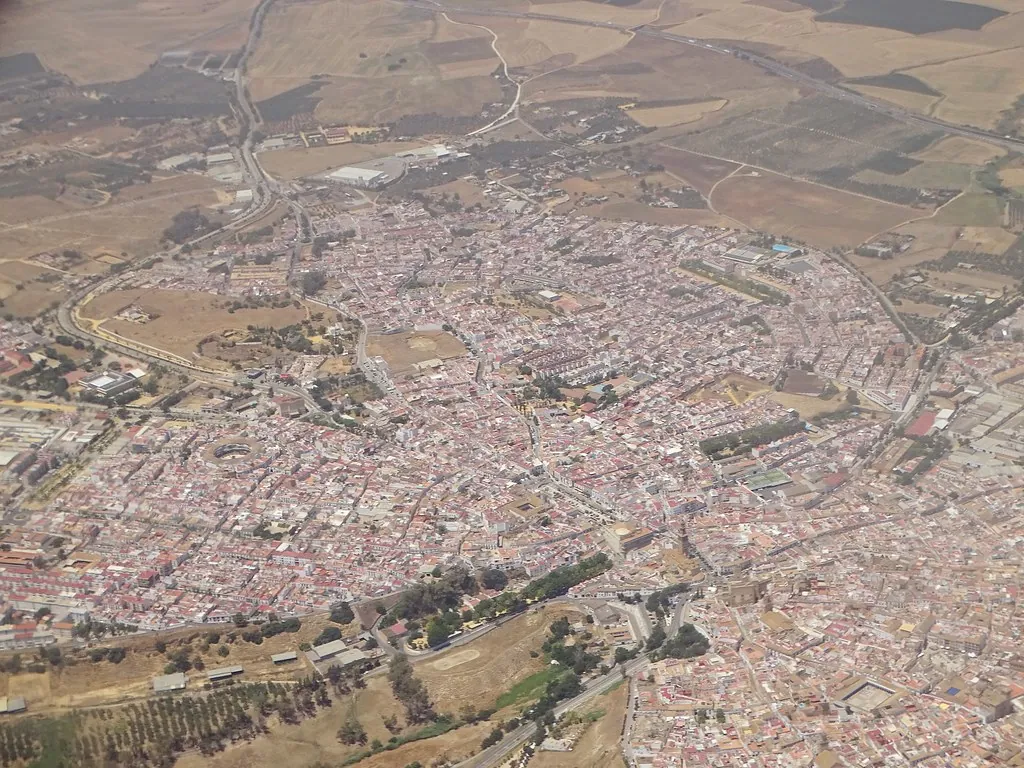
Different periods sit side by side here. There are Roman remains, later changes from the Islamic period, and further additions after the town came under Christian control. Inside the walls, streets twist and narrow until they open onto the square of San Juan.
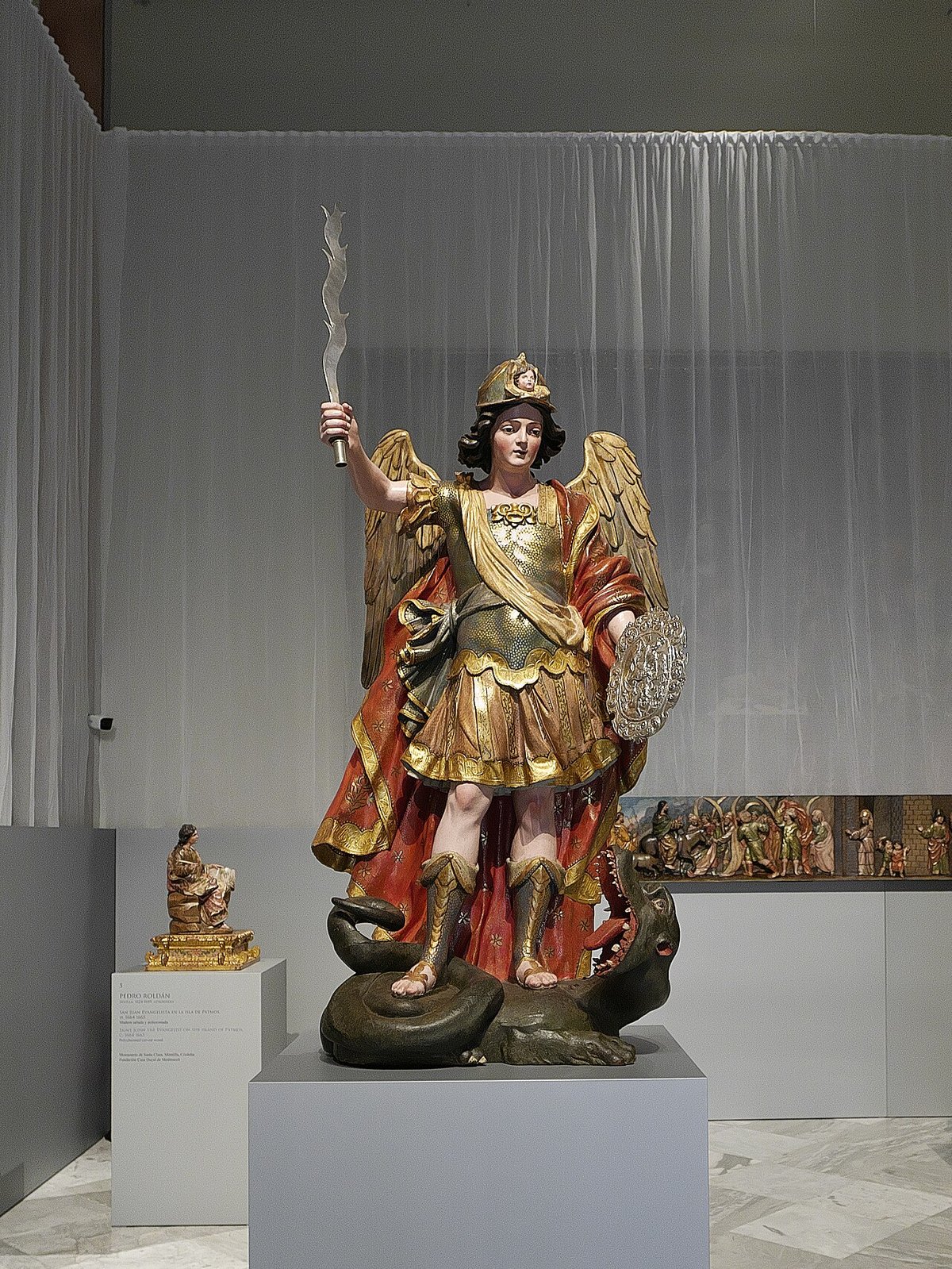
The church of San Juan Bautista blends Gothic and Mudéjar elements with a restrained style typical of the area. Stepping inside brings a sudden shift. Outside, the sun falls hard on the stone; inside, there is the scent of wax and aged wood. In the main chapel, several paintings attributed to Zurbarán and his workshop are preserved. They depict monks and saints with still expressions, set against dark backgrounds. There is also Baroque sculpture of notable quality, yet what tends to linger most is the quiet of the interior in the middle of the morning.
Up to Santa María de la Mota
Reaching Santa María de la Mota takes a steady pace. The street climbs tightly uphill between high walls, where the occasional plant pot appears or a bougainvillea spills over whitewashed surfaces. At the top stands the church, at the highest point of Marchena.
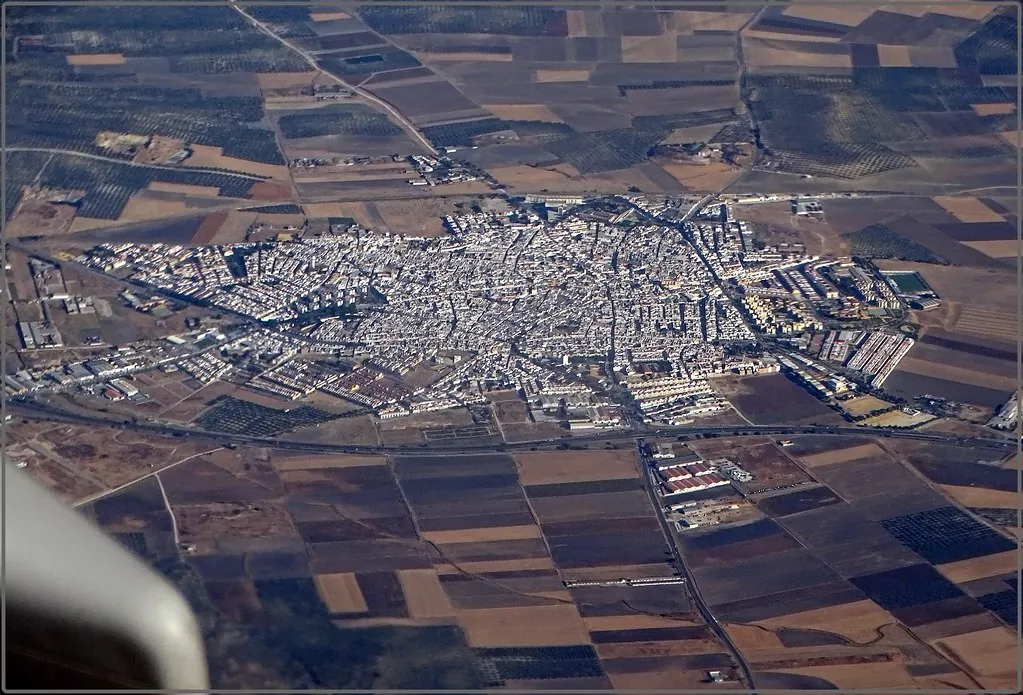
This hill has been occupied for centuries. Before the current building, other religious structures stood here, and the site still carries that sense of long use, almost like a lookout over the surrounding land. From the open space nearby, red tiled roofs spread below, along with the bell tower of San Juan. Beyond that lies the wide plain of olive trees that encircles the town. When the wind blows in from the Campiña, it brings the scent of turned earth and dry herbs.
Where the Train No Longer Runs
The old station sits some distance from the centre. The building remains, though trains stopped passing through long ago. Part of the former railway line has been reused as a path that links with the Vía Verde de la Campiña, a greenway that crosses this agricultural landscape for many kilometres.
The route is fairly flat, which explains why people use it on foot or by bicycle, especially when the heat is less intense. Olive groves stretch for long sections: thick, twisted trunks rooted in reddish soil that becomes sticky mud in winter. From time to time, a farmer passes in a vehicle or someone works between the rows. A brief greeting is exchanged and each continues on their way.
Around the Bar Counter
Marchena is not defined by a single dish. Social life is easier to understand by looking at a bar counter in the late morning or around midday. Small sandwiches, known locally as montaditos, often appear filled with pringá, a mixture of slow cooked meats. There is also tortilla cut into thick wedges or slices of cured cheese served with crusty bread. It is simple food: bread, olive oil, something warm, and conversation.
As the early afternoon arrives, the rhythm shifts. Many shutters come down and the noise fades quickly. In some squares, bees can be heard around orange trees when they are in blossom. Inside homes, the prevailing smell is that of stews that have been cooking for hours.
Light, Heat and the Passing Day
March and April are usually good months for walking through Marchena and its surroundings. The countryside is green and temperatures make it possible to explore the historic centre without constantly searching for shade.
Summer tells a different story. The heat in the Campiña can be intense, and by mid afternoon the streets are almost empty. Visits at that time of year are better shaped around the cooler parts of the day, with the central hours spent indoors.
Winter, although colder than many expect in the south, brings a very clear light over the olive groves and noticeably fewer people around.
As evening falls and the bells sound again, Marchena slows once more. Lights come on in upper windows, someone waters a plant from a balcony, and the sky turns violet above the plain. The tower by the wall stands in silence, facing the fields as it has done for centuries.