Full Article
about Paradas
A countryside town home to a Carmen de los Arrayanes inspired by the Alhambra and works by El Greco.
Ocultar artículo Leer artículo completo
The Olive Horizon
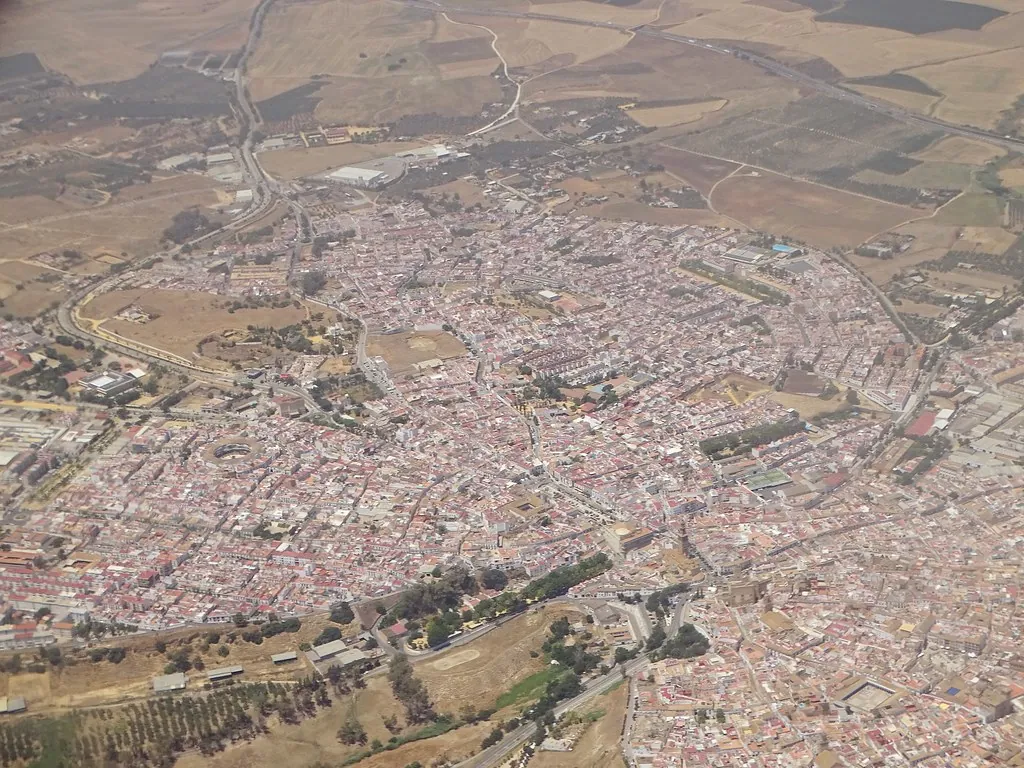
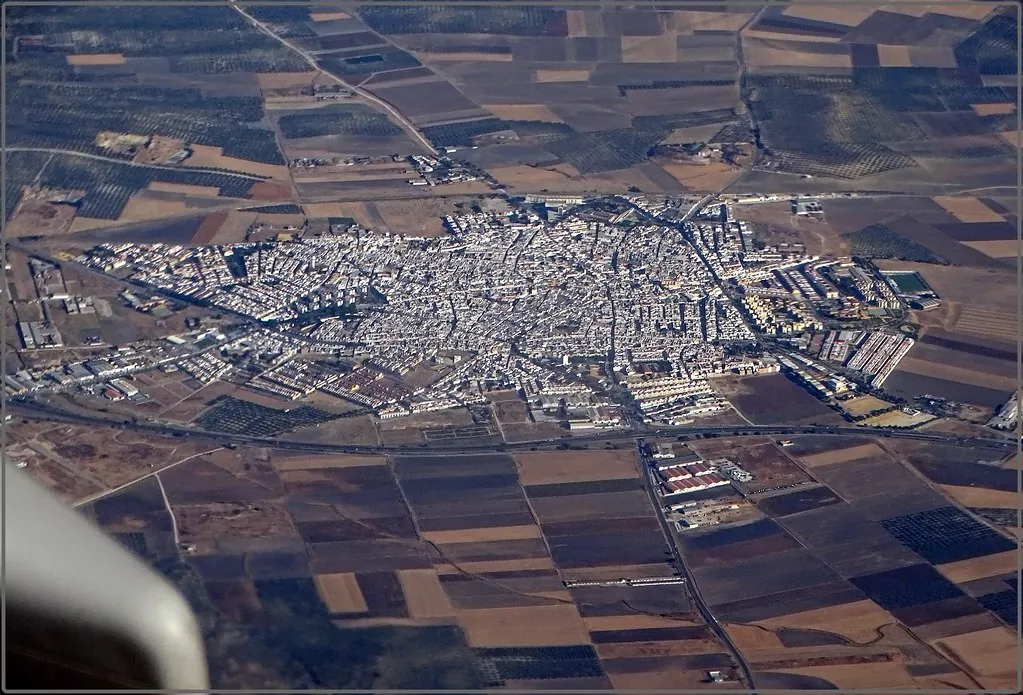
Drive east from Seville for an hour and the city’s orange trees give way to something more permanent. Olive groves stretch until they blur into the heat haze, each tree spaced with the precision of a military cemetery. At the centre of this sea of silver-green sits Paradas, a town of 5,000 whose skyline is still ruled by the tower of the Iglesia de San Eutropio and whose evenings are measured by the clang of its single bell.
This is the Campiña, the bread-basket uplands of Seville province. There is no coast, no dramatic gorge, no postcard castle. Instead there is space, soil and a way of life that has survived because no one thought to replace it with anything flash. The nearest beach is 110 km away at Matalascañas – close enough for a summer dash, far enough that the Atlantic feels like another country.
A Grid That Works
Paradas was laid out after the Reconquest on a straightforward grid: straight streets, right angles, none of the medieval tangle you find in hill towns. That makes walking absurdly simple. Start at the Plaza de Andalucía, order a café solo at Bar Central (€1.20, no-nonsense ceramic cup), then pick any side street. Within five minutes you’ll pass a 19th-century manor house with a wrought-iron balcony, a baker’s supplying mollete rolls to the entire district, and someone’s grandmother sweeping the pavement with a palm-frond broom.
The church itself is open most mornings until 13:00. Inside, the baroque retablo is gilded to within an inch of its life, but look left and you’ll spot a plainer 14th-century arch that survived every rebuild. The tower is the tallest thing for miles; climb it during the October fiestas and you can watch the procession snake below while the olive groves shimmer like a dull mirror.
What the Land Gives
Agriculture here is not scenery – it’s the payroll. Harvest starts in November when mechanical shakers clamp around trunks and vibrate the olives onto nets. For two months the cooperative mill on the road to Marchena runs 24 hours; the air smells of wet grass and pepper. You can buy oil direct from the mill gate (5-litre tin, around €32) but bring your own container – they’ve run out of bottles since Brexit complicated freight.
Breakfast in town is pan con tomate, but the local twist is a splash of the new oil before the tomato goes on. Lunch might be espinacas con garbanzos, the spinach reduced to velvet and the chickpeas cooked overnight. Portions are farm-sized; order half-raciones unless you’ve been driving a tractor all morning. Menú del día hovers at €10–€12 and almost always ends with a cinnamon-scented arroz con leche thick enough to hold the spoon upright.
The Afternoon Shift
By 15:00 the streets empty. Dogs collapse under parked cars, shutters clatter down. This is the hour to leave the town altogether. Take the dirt track signposted Cortijo de la Rueda, a 30-minute walk past wheat stubble and almond trees. The cortijo itself is private, but the approach lane is public; from the gate you can see the old stone olive press still wedged against the wall like a fossil. Beyond it, the land rolls away in kilometre-square plots, each one owned by a different cousin.
Evening returns people to the benches outside the health centre. Teenagers loop the plaza on scooters while their grandparents hold court with yesterday’s newspaper. Order a tinto de verano (€2, more ice than wine) and the barman will ask which village you’re from. Answer “ninguno, soy de Inglaterra” and he’ll want to know if you support Liverpool or Manchester – the Campiña gets Premier League on Saturday afternoons but can’t tell the north-west apart.
Calendar of Noise
Visit in spring and the soundtrack is agricultural: tractors at dawn, bees in the orange trees, the occasional shotgun blast keeping pigeons off the barley. Come August the town council hires a sound system for the Feria and the decibel count trebles. Casetas pop up on the fairground like white canvas mushrooms; each one is run by a family or a peña (social club) and each thinks it makes the best rebujito – manzanilla sherry splashed with 7-Up, served in plastic cups by the pitcher. Entry is free; drinks cost €1.50 if you stand, €2 if you grab a plastic chair.
Semana Santa is smaller but more intense. Only three pasos (floats) leave the church, carried by thirty men apiece, but because the streets are narrow you’re never more than a metre from a sweating shoulder or the swing of a incense burner. Good Friday starts at 22:00 and finishes after 02:00; bring a cushion – the cobbles are unforgiving.
Getting There, Staying Sane
Paradas has no train station. From the UK, fly to Seville, pick up a hire car at the airport and stay on the A-92 until exit 51 (Marchena/Paradas). The last 12 km are single-carriageway but decent; you’ll share it with combine harvesters in July and the occasional loose horse. Parking inside town is free and usually easy except during fiestas, when every verge becomes a space.
Accommodation is limited. There are two guesthouses: Casa Rural La Campiña (three doubles, €65 a night incl. toast-and-oil breakfast) and the slightly smarter El Olivo, built into an old olive mill with thicker walls and Wi-Fi that actually reaches the bedrooms. Book early for October; families return for San Eutropio and rooms vanish. Otherwise, base yourself in Seville and day-trip – the road is empty enough for a dawn run if jet-lag has you awake.
The Honest Verdict
Paradas will not change your life. It offers no epiphany, no bucket-list tick. What it does offer is a slice of rural Andalucía that has not been repackaged for weekenders: a town where the bakery still closes on Monday afternoons, where the same families have owned the same land since the 1850s, and where the evening paseo is still the main social network. Bring curiosity, a hat for the midday sun, and enough Spanish to order a beer without pointing. The rest – the rhythm of bells, the smell of new oil, the sight of a horizon that hasn’t moved – is already here, waiting for no one in particular.