Full Article
about Utrera
Historic cradle of flamenco and the fighting bull, with a monumental old quarter and its famous mostachones.
Hide article Read full article
By mid-afternoon, as the sun begins to drop over the pale façades of the town centre, Utrera carries a particular scent: freshly baked bread and young wine, known locally as mosto. In pastry shops around Calle Sevilla, cakes are still made in a near mechanical rhythm. Three taps on the tin, a quick turn of the wrist, and a golden sponge slips neatly onto the tray.
Outside, on the Altozano, a domino game unfolds at its unhurried pace. The players barely look up, even when passers-by pause and tilt their heads towards the tower of Santa María, where storks often build their nests.
Anyone arriving in search of tourism in Utrera soon realises that the town is not defined by a checklist of monuments. Its character lies in smaller things: church bells blending with the gentle traffic of the centre, the scent of hot oil drifting from a kitchen, the low murmur of conversation in the square as evening draws in.
The Taste of the Campiña
Utrera sits in the campiña, the open agricultural countryside of inland Andalusia, and the seasons are reflected on the plate. In winter, when the surrounding fields turn green and damp, tagarninas appear among the olive trees and along rural tracks. This wild thistle, bristling with spines, is cleaned patiently before being added to stews with chickpeas, a little meat and spices. It is food prepared at home rather than something designed for a menu.
During Semana Santa, Holy Week, many kitchens return to familiar recipes. Pestiños are fried in olive oil and coated in honey, then stored in tins or larders and brought out gradually over the days that follow. If you step inside a house while they are freshly made, the scent of aniseed and honey clings to clothes long after you leave.
Olives shape the calendar here too. In the harvest months, trailers piled high arrive from the cortijos, the rural farm estates scattered across the campiña. In December, a festival is usually held around the table olive, closely tied to the area’s agricultural life. The manzanilla variety, widely grown in this part of Andalusia, is cured in brine and appears in many homes simply accompanied by bread.
When Flamenco Slips Through the Cracks
In the Santiago neighbourhood, houses are low, with interior patios and painted gateways that sometimes allow voices to drift into the street. A formal stage is not required to hear flamenco in Utrera. Walking past an open window can be enough: a guitar testing a few chords, someone marking the rhythm with their knuckles on a table.
Respected figures of flamenco song were born here, including Fernanda and Bernarda de Utrera. The neighbourhood remains closely connected to that tradition. The square bearing their names is usually calm during the day. Neighbours sit and talk on benches while children cross it on bicycles.
Each summer, the Potaje Gitano festival gathers artists and enthusiasts once more. It is one of the oldest flamenco festivals in Andalusia and attracts large crowds. Yet what often proves most memorable happens around the main event. Small groups form after the performances, conversations stretch on about different styles of cante and guitar, and now and then an impromptu song breaks out late at night.
Towers Above the Plain
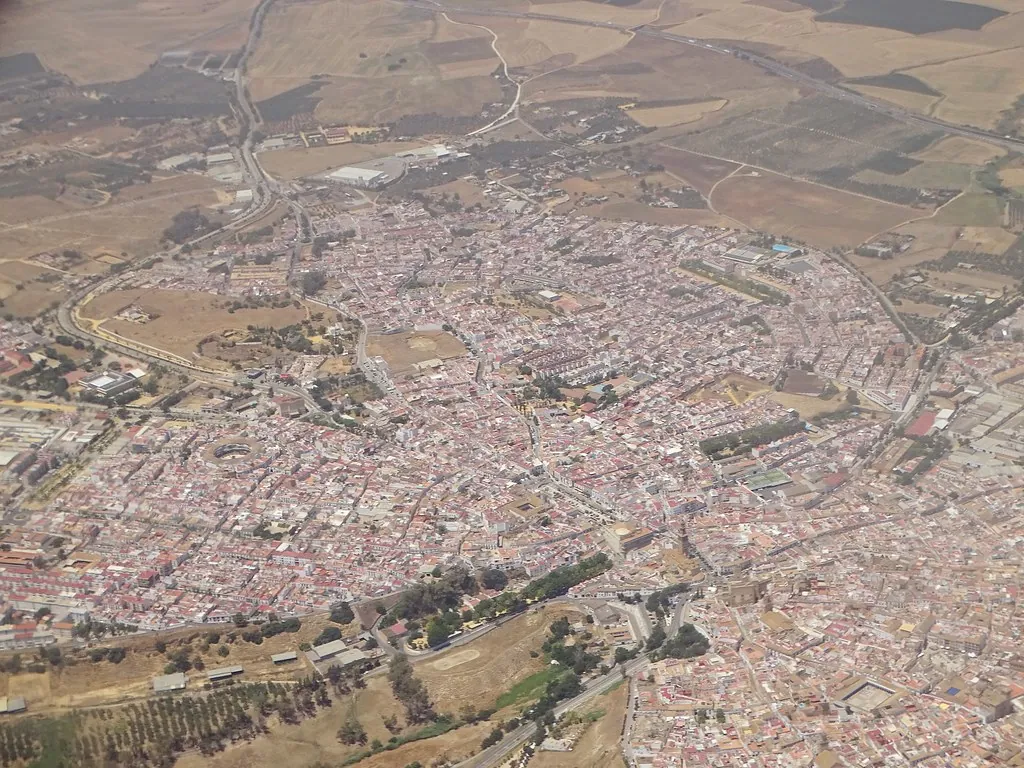
The keep of the castle rises above the town and recalls Utrera’s importance as a stronghold on the medieval frontier. When access is possible, the view from the top stretches far across the campiña. Fields of olive trees, sunflowers or cereals spread in every direction depending on the time of year. In summer, the dominant colour is a dry yellow. In spring, a green takes over, though it does not last for long.
Within the centre, sections of the old town walls remain, along with streets that still follow narrow, older layouts. Utrera was a place of passage as far back as Roman times. Near the municipality, stretches of the ancient Vía Augusta have been identified, together with bridges that, though altered in later periods, continue to mark routes over local streams.
A few kilometres beyond the town, defensive towers and isolated agricultural buildings appear in the rural landscape. They hint at how the territory was once organised between open fields and cortijos, shaping both work and settlement patterns.
Seasons of Pilgrimage and Fair
The campiña changes markedly from month to month. In spring, especially in April and May, the edges of the roads fill with red poppies and the air feels fresher. It is a good time to walk in the surrounding countryside or follow rural tracks that lead away from the centre.
September usually brings the romería of the Virgen de Consolación, closely linked to the sanctuary located on the outskirts of town. On that day, paths are filled with decorated carts and groups who spend the day in the countryside before returning to Utrera.
August coincides with the annual feria. During the daytime the centre can feel relatively quiet, as many residents gather at the fairground in the late afternoon and evening. This makes it a suitable moment to wander through the older streets at a slower pace. The heat across the campiña can be intense, so it makes sense to head out early and look for shade once midday approaches.
Utrera does not overwhelm with grand statements. It reveals itself gradually, in the rhythm of a domino game, in the hum of a guitar behind a half-open door, in the sweep of fields that change colour with the seasons. The town’s appeal lies in that steady pulse, shaped by agriculture, flamenco and daily life that continues much as it has for generations.