Full Article
about Barbate
Fishing town famous for its trap-caught bluefin tuna and unspoiled beaches; ringed by the Breña y Marismas Natural Park.
Ocultar artículo Leer artículo completo
The 07:30 radio bulletin in Barbate doesn’t lead with politics or football. It announces the previous night’s tuna price at the lonja, the covered auction hall behind the harbour wall. If the red-fish has fetched over €30 a kilo, shopkeepers smile and coffee suddenly tastes better. This is a place where one species still sets the tempo, and visitors who time their arrival to the spring almadraba season witness a working coast that has not yet been tidied up for postcards.
Sea first, siesta later
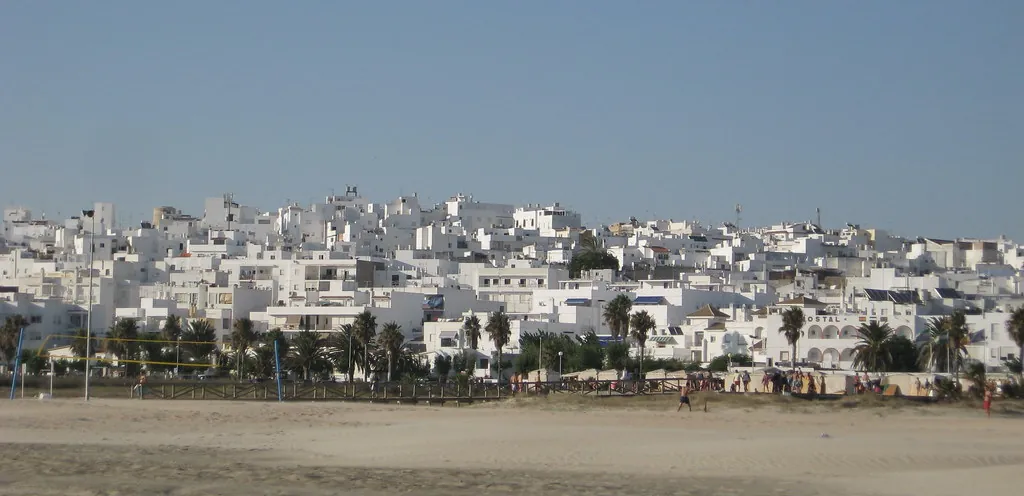
Barbate sits only fourteen metres above the Atlantic, squeezed between the cork forest of Los Alcornocales and a four-kilometre strip of sand. The layout is refreshingly logical: the fishing port at the southern end, the town grid behind it, and the beaches stretching north until the cliffs take over. You can walk from nets to paella pan in eight minutes, which is exactly what the crews do once the boats are hosed down. English is rarely heard along this stretch; German and French appear only in May and September, the two months when the weather behaves and the Spanish school calendar still keeps families away.
The harbour road, Avenida de la Mar, smells of diesel and seaweed at dawn, then gradually of coffee and toast as the bars raise their shutters. Try Casa Ricardo for a first breakfast: toasted mollete roll drizzled with local olive oil, plus a cortado strong enough to anchor a trawler. Fishermen in blue overalls queue alongside teachers and town-hall clerks; no one is in a rush, yet everyone leaves before the second hand hits nine. By then the daytime wind, the feared levante, has begun to rattle the halyards and blow fine sand across the pavement. Plan accordingly – hairdryer gusts can last three days and will rearrange both your picnic and your car-door alignment.
Tasting the migration
Red tuna here is not the tinned stuff of student cupboards. The fish arrive after a 6,000-kilometre swim from the North Atlantic, their flesh marbled like wagyu beef. Restaurants buy at dawn and serve by lunch; ask for the atún encebollado, a slow braise of ventresca belly and sweet onions that tastes more like ox cheek than seafood. El Campero, ten minutes inland in Zahara de los Atunes, runs a tasting menu that converts even fish-sceptic teenagers – the sesame-seared tataki is plated rare, almost bloodless, and disappears before the waiter can explain the migratory route. Budget £35 for the full flight, or £14 for a single tosta and a glass of chilled manzanilla.
If the wind is blowing onshore, retreat to the covered market on Calle Real. Stall 17 sells pine-nut ice-cream that began life in the forest above the town; the flavour is faintly resinous, closer to vanilla than pesto, and keeps for twenty minutes before the lack of preservatives turns it soupy. Pick up a half-kilo of salted tuna mojama, shaved into translucent sheets – it travels well in hand luggage and makes an impressive last-minute dinner-party starter back home, assuming you don’t nibble it all on the transfer bus.
Cliffs, drumming and a lighthouse with baggage
North of town the coast tips suddenly into vertical rock. A six-kilometre path threads the clifftop pine forest of La Breña, dropping every so often to pocket beaches reachable only by wooden steps. The walk to Faro de Trafalgar is straightforward until the final kilometre, where sand drifts across the track and the wind roars through the stone battlements. This is where Nelson lost an eye and Napoleon lost a fleet; the lighthouse now doubles as a sunset drum circle for travellers who missed the 1960s first time round. Arrive an hour before dusk, bring a jumper even in July, and expect a faint whiff of something herbal on the breeze.
Below the lighthouse lies Los Caños de Meca, a scatter of low houses among junipers that still attracts the tie-dye crowd. By day the surf schools rule the break; by night dreadlocked waiters serve grilled sardines to the sound of reggae remixed with flamenco. Accommodation ranges from eco-yurts to 1970s apartments with salt-stained walls. Book early for May and late September when the wind drops and the water briefly reaches 21 °C – any later and the Atlantic will remind you it’s connected to Cornwall.
Practical currents
Barbate is 52 minutes by car from Jerez airport, where the hire-car queue moves faster than at Málaga and the coffee costs half. Coming by public transport means a train to Seville Santa Justa, then a Comes coach that rattles through cork oak and sunflower fields for two hours; the last bus leaves Cádiz at 20:15, so don’t land late. Once in town, everything is walkable, though you’ll want wheels to reach the cliff walks and the quieter Playa de la Hierbabuena. Parking on the paseo is free but fills by 11 a.m.; the underground car park beside the fish market charges €1.30 an hour and keeps paintwork sand-free.
Sunday shuts most eateries, so book Saturday dinner or stock up at the Saturday morning market. ATMs are scarce – the reliable one sits on Plaza de la Inmaculada next to the chemist, but it spits out €50 notes that small bars eye with suspicion. Bring change and a light wetsuit if you plan to surf; boards can be hired for €20 a day at Playa de la Hierbabuena, including leash and wax but not the tolerance for cold water you’ll need after an hour.
When the nets come in
Visit during the spring almadraba (usually late April to early June) and you can watch the ancient trap being hauled. Tours leave from the nautical club at 08:00, cost €15 and last ninety minutes; cameras welcome, but the deck is wet and the crew terse until the final tuna is aboard. Numbers are capped at twenty – phone the tourist office on +34 956 437 011 the evening before, and turn up in shoes you don’t mind staining with fish blood. The experience is not Disneyfied: gulls squabble, diesel fumes mingle with salt, and the tuna die quickly but visibly. Some visitors leave shaken, most leave hungry; both reactions are valid.
Leaving the clock behind
By the time the church bell of San Paulino strikes midnight, the seafront is quiet except for the clink of rigging and the occasional scooter heading home. The bars have stacked their chairs, yet a light still burns in the lonja where tomorrow’s catch is already iced and catalogued. Barbate offers no karaoke, no foam parties, no English breakfast teas at €4. What it does offer is a front-row seat to an economy that still rises and falls with a single species, and a coastline wide enough to swallow every footprint by the next tide. Come for the tuna, stay for the wind-scoured honesty, and depart before the August crowds remind you why package resorts were invented.