Medina Sidonia - Flickr
www.mgaylard.co.uk and thanks for looking · Flickr 4
Andalucía · Passion & Soul

Medina Sidonia

The first thing that strikes you is the wind. Even on a mild March afternoon it whips across the 337-metre ridge, rattling the palm fronds in Plaza...

11,838 inhabitants · INE 2025
337m Altitude

Why Visit

Archaeological Site of the Castle Sweet and Alfajor Route

Best Time to Visit

year-round

May Fair (May) mayo

Things to See & Do
in Medina Sidonia

Heritage

  • Archaeological Site of the Castle
  • Arch of la Pastora
  • Roman Road

Activities

  • Sweet and Alfajor Route
  • Visit to the archaeological site
  • Walk along the walls

Festivals
& & Traditions

Fecha mayo

Feria de Mayo (mayo), Belén Viviente (diciembre)

Las fiestas locales son el momento perfecto para vivir la autenticidad de Medina Sidonia.

Full Article
about Medina Sidonia

Ducal town with three millennia of history on a strategic hill; known for its Arab pastries and monumental heritage.

Ocultar artículo Leer artículo completo

The first thing that strikes you is the wind. Even on a mild March afternoon it whips across the 337-metre ridge, rattling the palm fronds in Plaza de España and carrying the smell of orange blossom up from the irrigated lowlands three kilometres below. Medina Sidonia has spent three millennia exposed to every weather system the Atlantic can throw at southern Spain; the second thing that strikes you is how little the place seems to care.

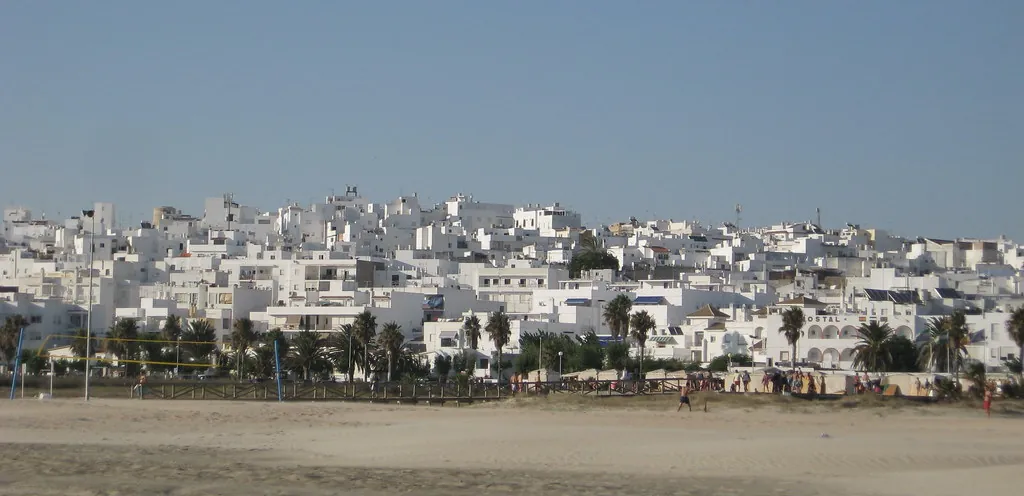
From the castle parapet you can trace the entire story in one slow turn. South-west, the chalk-white houses tumble down to the old salt pans of La Janda, still glinting pink when the sun hits them. Due south, if the haze lifts, the Rock of Gibraltar floats like a cut-out and, on the sharpest days, the Moroccan Rif shows up as a bruise-coloured stripe. North-east, the wheat fields run all the way to the foothills of the Sierra de Grazalema, 40 km away. It is the sort of panorama travel writers normally call “breathtaking”; here it feels more like a practical tool the locals once used to spot pirates, tax collectors and, latterly, property developers.

Roman drains and ducal ghosts

The tourist office keeps odd hours, but the archaeology is harder to hide. Under the Gothic-Renaissance bulk of Santa María la Coronada lie Roman sewers you can actually walk through: a kilometre of still-functioning first-century channels, tall enough to stand in, lined with opus signinum waterproofing that would shame most modern builders. Tours leave twice daily from the small museum on Calle Virgen de la Paz—turn up ten minutes early because the guide locks the gate whether you’re there or not. Admission is €4 and the commentary is Spanish-only, but the torch-lit duck through the brickwork needs little translation.

Back outside, the streets switch centuries every few metres. A horseshoe arch from the tenth-century alcazaba frames the bell-tower of the fifteenth-century church; next doorway, a nineteenth-century ducal coat of arms has been half-obscured by a 1970s electricity box. The effect is neither chocolate-box nor museum—more like a working town that happens to be built on top of itself. You will not find waiters in fake medieval costume; you will find old men in barn coats leading mules laden with broccoli plants through the morning traffic.

Food that refuses to perform

Breakfast options are refreshingly limited. Cafetería Plaza España does a proper tostada—rubbed tomato, a thread of grassy olive oil, jamón ibérico de bellota if you ask—plus coffee for €2.80. By 11 a.m. the same counter is selling churros straight from the vat to schoolchildren; if you want the local alfajor (a soft, anise-scented honey cake) arrive before the coach parties strip Pastelería Aromas bare. Lunch is simpler still: most bars offer a menú del día at €10–12, usually soup or ajo blanco (cold almond-garlic, surprisingly refreshing), then retinto beef from the fighting-blood cattle that graze the surrounding vegas. Vegetarians can survive on spinach-chickpea stews and the excellent local goat cheese, but this is not a destination for virtuoso plant-based cooking.

Dinner starts late—9 p.m. at the earliest—and almost everywhere shuts by midnight. British visitors expecting riverside terraces and flamenco tablaos will be disappointed; Medina goes quiet because people work the land at dawn. The payoff is authenticity you can taste: the oil is from cooperatives in neighbouring Trebujena, the wine a chilled moscatel from Chiclana that slips down like alcoholic elderflower cordial.

Walking the ridge

You can see the town in half an hour if you insist, but the better plan is to let the gradient dictate the pace. Start at the ring-road car park beside the castle—ignore sat-nav pleas to drive down into the centre, the medieval gates are mirror-scrapingly narrow and locals park where they like, rules optional. From the fortress ruins (free entry, minimal signage, vertiginous drops) drop south along Calle Castillo, past barred windows where swifts nest in the drainpipes, until you reach the Arco de la Pastora, the only intact gate in the old walls. Turn left into a knot of alleys barely two metres wide, emerge suddenly in Plaza de la Iglesia, then climb again to the church tower for another €2. The 360-degree reward stretches from the Atlantic salt flats to the snow-dusted Sierras on winter days.

If legs still function, continue east on the signed footpath to Cerro del Castillo, a rocky outcrop 2 km out of town. The track passes through stone-pine and wild olive; kestrels hover overhead and, in May, the air smells of thyme and oregano crushed underfoot. Allow 45 minutes up, 30 down, and carry water—there is no bar, no shade, and the wind can be fierce enough to whip hats into the next province.

When to come, when to stay away

April and late-October are the sweet spots: daytime temperatures sit in the low 20s, nights cool enough for a jacket, and the surrounding plain flickers green with young wheat. Easter is spectacular—processions squeeze up impossibly steep lanes accompanied by brass bands that echo off the walls—but accommodation within 30 km books out months ahead. Mid-August feria brings fairground rides and casetas to the bottom of the hill; it also brings 38 °C heat and traffic jams on the A-381. British second-homers tend to visit in February, when the town is empty, almond blossom froths along every track and you can get a three-bedroom village house for under €120,000—prices that have started to nudge upward as Vejer and Casares fill up.

Winter itself is underrated. Daytime highs of 14–16 °C feel warmer in the sun, hotel rates halve, and the light is knife-sharp. The downside is the levante wind that can howl for a week, rattling shutters and coating balconies with Saharan dust. When that happens even the locals retreat indoors; visitors without a car find themselves limited to one bar and whatever biscuits they remembered to buy on the drive up.

Parting shot

Medina Sidonia will not entertain you in the conventional sense. There are no beaches, no golf courses, no gin bars. Mobile signal drops out in half the streets, and if you arrive after 2 p.m. on a Sunday you will eat crisps for lunch. What the town offers instead is continuity: bread delivered to the same family doorway for forty years, a castle that started as a Phoenician lookout and still watches the same horizon, a population that nods good-morning because that is simply what you do. Come prepared for gradients, grateful for the absence of souvenir sombreros, and leave before the coach companies work out what they are missing.

Key Facts

Region
Andalucía
District
La Janda
INE Code
11023
Coast
No
Mountain
No
Season
year-round

Livability & Services

Key data for living or remote work

2024
ConnectivityFiber + 5G
HealthcareHospital
EducationHigh school & elementary
Housing~5€/m² rent · Affordable
Sources: INE, CNMC, Ministry of Health, AEMET

Official Data

Institutional records and open data (when available).

  • Arco de la Pastora
    bic Monumento ~0.3 km
  • Arco de Belén
    bic Monumento ~0.2 km
  • Ermita de los Santos Mártires
    bic Monumento ~1 km
  • Iglesia de Santa María La Coronada
    bic Edificio Religioso ~0.3 km
  • Iglesia y Convento de San Cristóbal
    bic Edificio Religioso ~0 km
  • Torre de Doña Blanca
    bic Fortificación ~0.2 km
Ver más (12)
  • Castillo de Medina Sidonia
    bic Castillo/Fortaleza
  • Puerta del Sol
    bic Monumento
  • Conducciones Hidraúlicas Romanas
    bic Monumento
  • Fábrica de Harina
    bic Monumento
  • Molino de Viento de Medina-Sidonia III
    bic Monumento
  • Matadero de Medina
    bic Monumento
  • Molino de Viento de Medina-Sidonia II
    bic Monumento
  • Panadería Paquirri
    bic Monumento
  • Lavadero de Azoren
    bic Monumento
  • Molino de Viento de Medina-Sidonia I
    bic Monumento

Planning Your Visit?

Discover more villages in the La Janda.

View full region →

More villages in La Janda

Traveler Reviews