Full Article
about Paterna de Rivera
A countryside town known as the birthplace of the peteneras flamenco style; home to fighting-bull ranching and an authentic rural atmosphere.
Hide article Read full article
A Village That Does Things Its Own Way
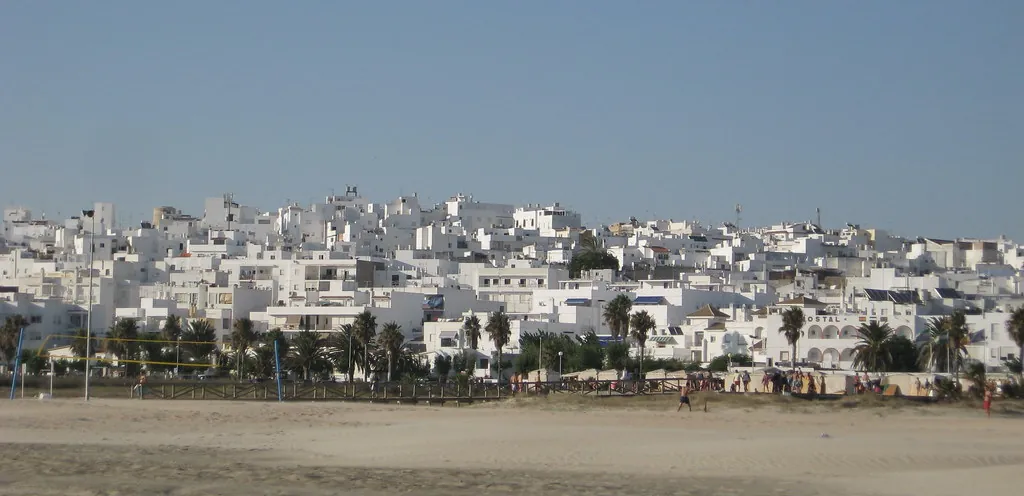
In Paterna de Rivera, the car parks where it can. Most visitors leave it at the entrance to the village, near the school, and continue on foot. Anyone arriving after midday often ends up circling around or stopping on the roadside. The centre is a funnel of narrow streets and white houses that seem to follow their own logic. There are no grand squares or scenic viewpoints. The layout has worked like this for centuries and shows little interest in changing.
Paterna de Rivera sits in the province of Cádiz, in the comarca of La Janda. It is a working rural town rather than a polished stop on a sightseeing route. Life revolves around the countryside. That rhythm shapes everything, from the streets to the annual calendar.
Two hours are enough to walk through the centre. Start at the top and head down on foot. The old town hall is worth a look. It is more sober than many expect, without decorative excess. From there, the streets lead you through a place that feels lived in rather than curated.
If the sea calls afterwards, the road towards Vejer brings you closer to the coast in a short time. There is no beach here and no attempt to imitate one. This is inland Andalucía, plain and direct.
The Song No One Heard
In the main square stands a statue of Dolores la Petenera, the singer born here who later left. She is associated with the petenera, a style within flamenco. Flamenco is the traditional music of Andalucía, built around voice, guitar and rhythm, and divided into different palos or forms. The petenera is one of them.
No one alive ever heard Dolores sing. She died in 1869 and left no recordings. What remains is her name and the link to this particular style. The statue is made of stone and stands in the middle of the square. Visitors tend to stop briefly, take a photograph and move on.
Every July the village organises a competition dedicated to peteneras. Local singers take part, though the prizes often go to performers from elsewhere, especially Cádiz or Seville. For a few days, the square fills with people drawn by the cante. Then the village returns to its usual pace.
Baths That No Longer Heal
Around four kilometres from the centre lie the former baths of Fuente Santa and Gigonza. Local tradition says that the Romans already used these sulphurous waters. Later came the Arabs, and centuries afterwards some nineteenth-century visitors who travelled here to “take the waters”, as spa treatments were once described.
Today the scene is different. There are half-collapsed walls and a small pool of greenish water. The access road is often unpaved and becomes heavy going in rainy weather. Many people walk down in flip-flops and end up with mud clinging to their feet.
In summer, people from the Jerez area sometimes come for a quick dip. There are no showers and no shade. Anyone heading out there should bring water. The setting feels more like a ruin than a functioning spa, and the reputation for healing has long since faded.
Bulls and Open Land
The countryside dominates daily life in Paterna de Rivera. With it come the ganaderías de bravo, the ranches that breed fighting bulls. Around the municipality there are estates where the animals graze quietly. From the A‑389 road they are easy to spot if you drive slowly.
There is no spectacle involved. They are simply bulls, eating or lying down in the fields. This area forms part of the Ruta del Toro, a route through La Janda that runs for many kilometres between dehesas and fenced land. The advice is straightforward: look from a distance. There is little point in approaching the fence.
At Easter, the relationship with bulls moves into the streets. On Good Friday the village holds an encierro, when bulls run through the town. Residents stand back on the pavements. Visitors from elsewhere climb up wherever they can find space. It is a brief burst of noise and movement in a place that otherwise feels measured.
Straightforward Food on Calle Real
Food in Paterna de Rivera follows the same logic as the town itself. On Calle Real there are several long-standing bars serving traditional cooking. Dishes depend on the season and on what is available.
When the time comes, tagarninas appear. These are wild thistles commonly eaten in parts of Andalucía. Artichokes with ham are also typical. After a rainy day, cabrias often feature on menus. The cooking is based on stews and simple combinations rather than elaborate presentation.
Piñonate shows up frequently in display cases. It is a dense, dry sweet. Meringues tend to be more popular. Asking for the dish of the day is the safest approach. Sometimes it will be rabbit with rice or something similar. Bread is often mollete from the day before, firm but useful for soaking up sauce.
There is no sense of performance around food here. Meals follow the agricultural calendar and the weather.
Dates That Shape the Year
In a town like this, the calendar matters. At the start of the year, the romería of San Sebastián takes place. A romería is a traditional pilgrimage or rural festival, often with religious origins. In Paterna de Rivera it frequently coincides with rain and mud.
June brings the spring fair. The centre fills with music and casetas, temporary marquees where people gather. July is marked by the peteneras singing competition, which attracts a sizeable crowd. In August there are usually exhibitions of doma vaquera, a style of traditional Andalusian horsemanship. On Good Friday, as mentioned, the encierro runs through the streets.
Anyone looking for a quieter visit might choose May or September. There are no major festivals then, and the surrounding countryside changes colour with the season.
Paterna de Rivera does not try to impress. It can be walked quickly. Park at the top, head down into the narrow streets, look at the old town hall and pause in the square with Dolores la Petenera. Eat where the locals are eating. Beyond that, the fields stretch out and the road continues towards Vejer and the coast.
This is a farming town that carries on with its routines. That explains most of what you will find here.