Full Article
about Iznatoraf
Town set on a limestone bluff with sweeping views; known as the island in the sea of olive trees
Hide article Read full article
A village poised above the valley
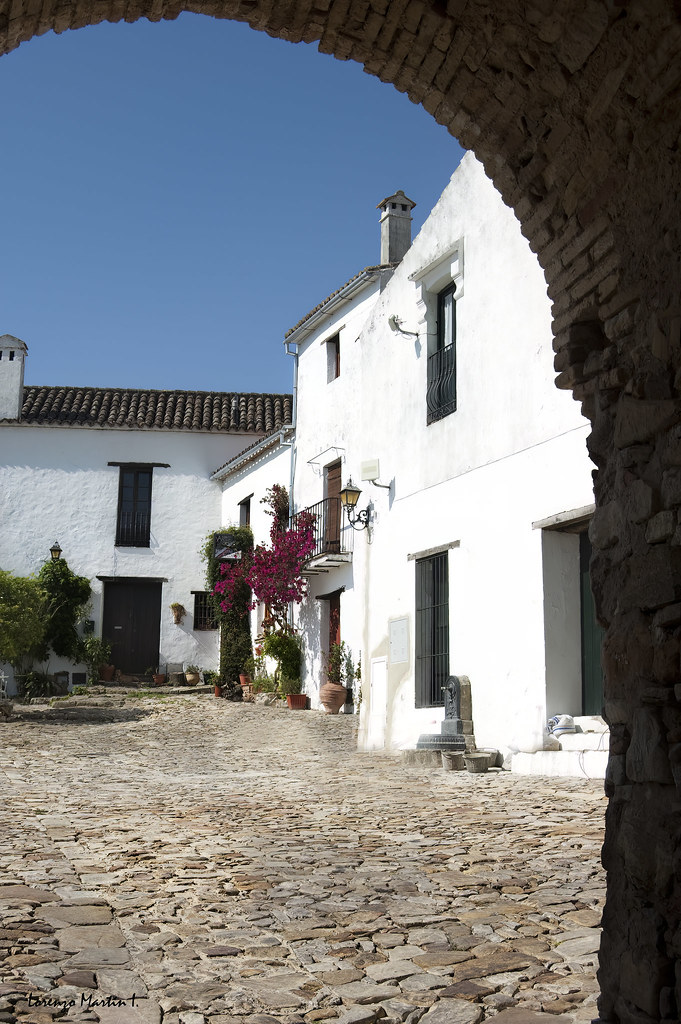
At midday, in the main square, the sun falls almost straight down onto whitewashed walls and black iron grilles that still hold a trace of shade. At that hour, tourism in Iznatoraf moves slowly. Someone crosses the square, a door opens, and above the quiet the sound of swifts circles high overhead. From the main street, a narrow slope leads down towards the arch of the Virgen del Postigo, a stone passage that suddenly frames the open valley beyond.
Iznatoraf sits high in the comarca of Las Villas, on the edge of the Sierra de Segura. The village has around a thousand inhabitants and rises more than a thousand metres above sea level. The altitude shows in the air itself. In winter it carries the scent of firewood and damp earth, while in summer the breeze tends to arrive a little cooler than in the lowlands. From several points in the town, the view opens onto an uninterrupted spread of olive groves covering the horizon. That elevated position explains the nickname often repeated by locals: the balcony of Andalucía.
Streets shaped by time
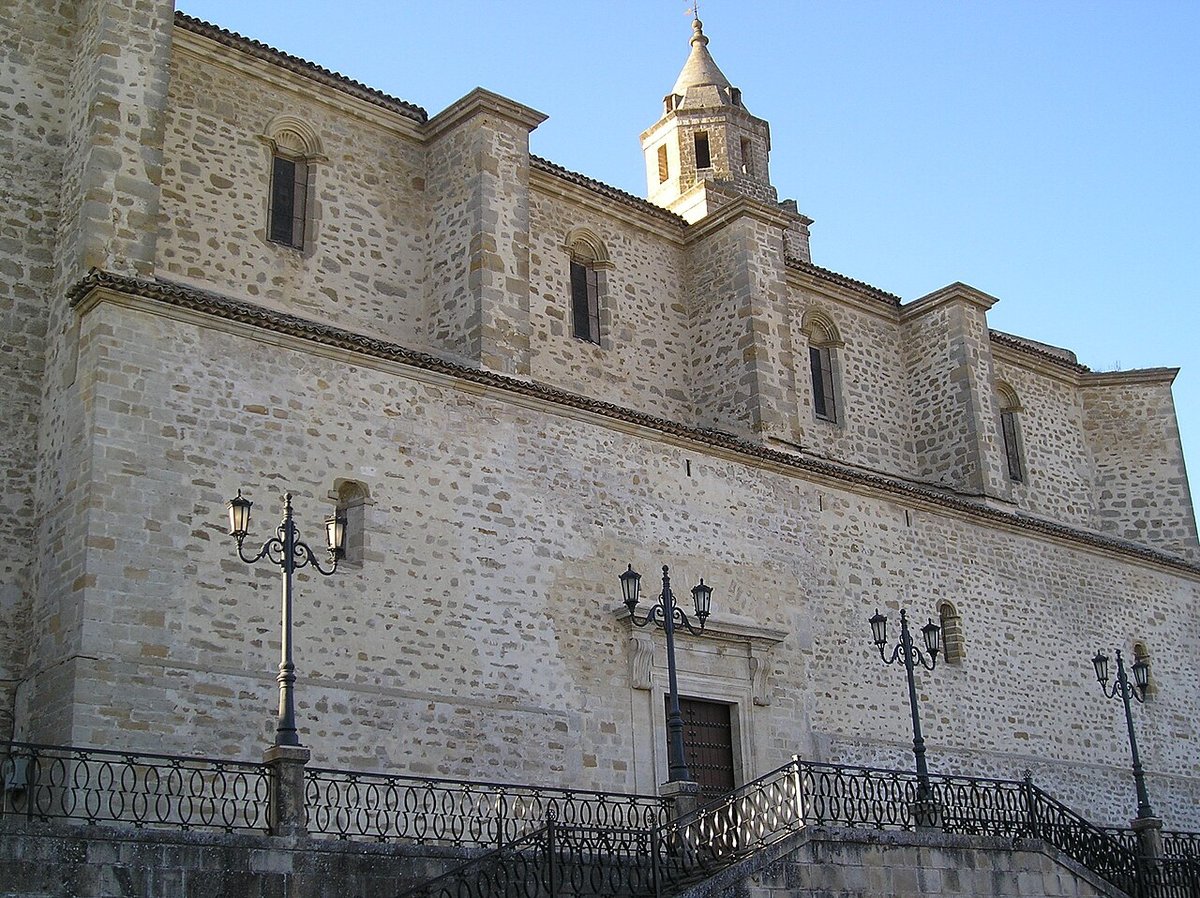
The old quarter keeps an irregular layout that encourages a slower pace. Streets narrow without warning, corners turn in on themselves, and thick walls create pockets of shade. The Iglesia de la Asunción rises above the rooftops, its tower visible from almost anywhere in the village. The current building dates from the 16th century and stands on the site of an earlier mosque, something commonly seen in this part of Andalucía after the Christian conquest. Inside, there is a Baroque altarpiece and several religious images that are still carried in procession on certain dates during the year.
On the outskirts, set on a more open slope, stands the Ermita del Santo Cristo. The walk there is short and is usually done on foot from the village. From the area around the hermitage, the view shifts. Roofs give way to rolling hills covered in olive trees, and further away the mountain ranges that mark the boundary of the natural park. At sunset, when the light softens and the heat begins to ease, it becomes a place where people linger for a while, leaning on the low wall and watching the landscape gradually lose colour.
The Plaza de la Constitución works as the centre of daily life. In the morning there is the sound of chairs being dragged, quiet conversations, and the occasional car making its way slowly up the incline. The façades, slightly rough from layers of lime and time, reflect an intense white light in summer.
Quiet landscapes beyond the village
Iznatoraf lies a short distance from the Parque Natural de las Sierras de Cazorla, Segura y Las Villas, so it takes only a few kilometres to reach more densely wooded terrain. Around the village, olive groves alternate with patches of pine, holm oak, and ravines where the land becomes more rugged.
There are several paths and tracks long used by local people to move between plots of land or climb to higher ground. Some stretches allow a fairly quick gain in elevation and open up broad views of the valley. In autumn, the landscape changes noticeably. Colours fade across the hills, and the ground becomes covered with dry leaves that crunch underfoot. It is not unusual to see people searching for mushrooms in the damper areas when the season allows.
Anyone planning to walk should avoid the central hours of the day in summer. Even at this altitude, the sun can be intense on more exposed paths.
Traditions that mark the year
The main celebrations revolve around the Santo Cristo and the Virgen de la Asunción. These festivities usually take place during the summer months, when many families who live elsewhere return to the village for a few days. Processions move through very steep streets, so progress is slow, and the sound of drums echoes against the white walls.
In May, the Cruces appear, decorated with flowers. Courtyards and corners of the old quarter are prepared over several days with pots, fabrics, and bunches of flowers arranged by the neighbours themselves.
Semana Santa, or Holy Week, is observed in a more restrained way. Religious images pass through narrow streets where there is barely space for the procession, and the silence is broken only by footsteps on the cobbled ground.
Arriving and moving around
From the city of Jaén, the journey takes a little over an hour by road, crossing stretches of olive groves and several villages in the comarca. The final section begins to climb and includes a series of bends, which is typical of this part of the province.
Once in Iznatoraf, it is usually easiest to leave the car near the access points to the old quarter and continue on foot. The streets are narrow and often steep, but walking them slowly offers the clearest sense of the place. Old doorways, half-open courtyards, and the occasional gap between houses reveal sudden, wide views of the valley below.