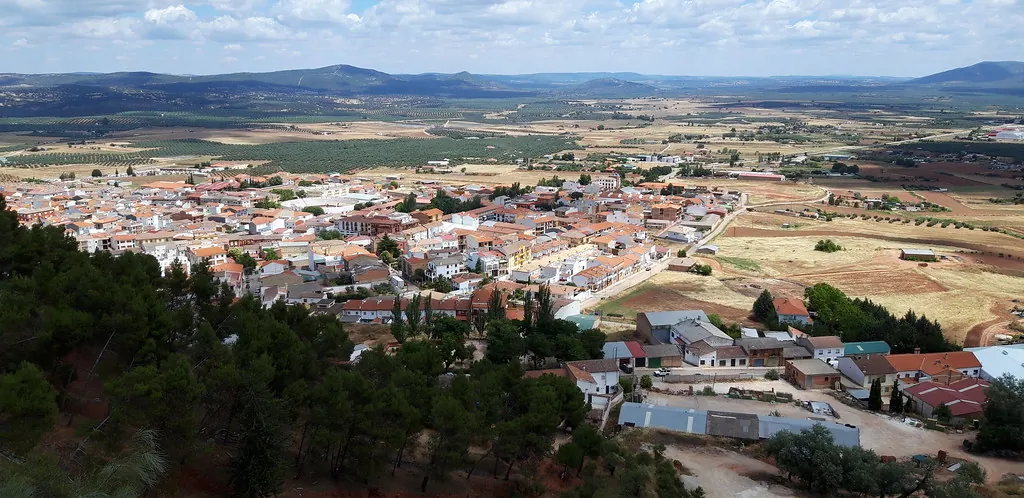
Vista aérea de Sorihuela del Guadalimar
Instituto Geográfico Nacional · CC-BY 4.0 scne.es
Andalucía · Passion & Soul

Sorihuela del Guadalimar

The church bell strikes midday and the only other sound is a tractor changing gear somewhere below the castle walls. From this height—647 metres ab...

1,000 inhabitants · INE 2025
647m Altitude

Why Visit

Arabic tower Viewpoint Trail

Best Time to Visit

spring

Santa Águeda festival (February) mayo

Things to See & Do
in Sorihuela del Guadalimar

Heritage

  • Arabic tower
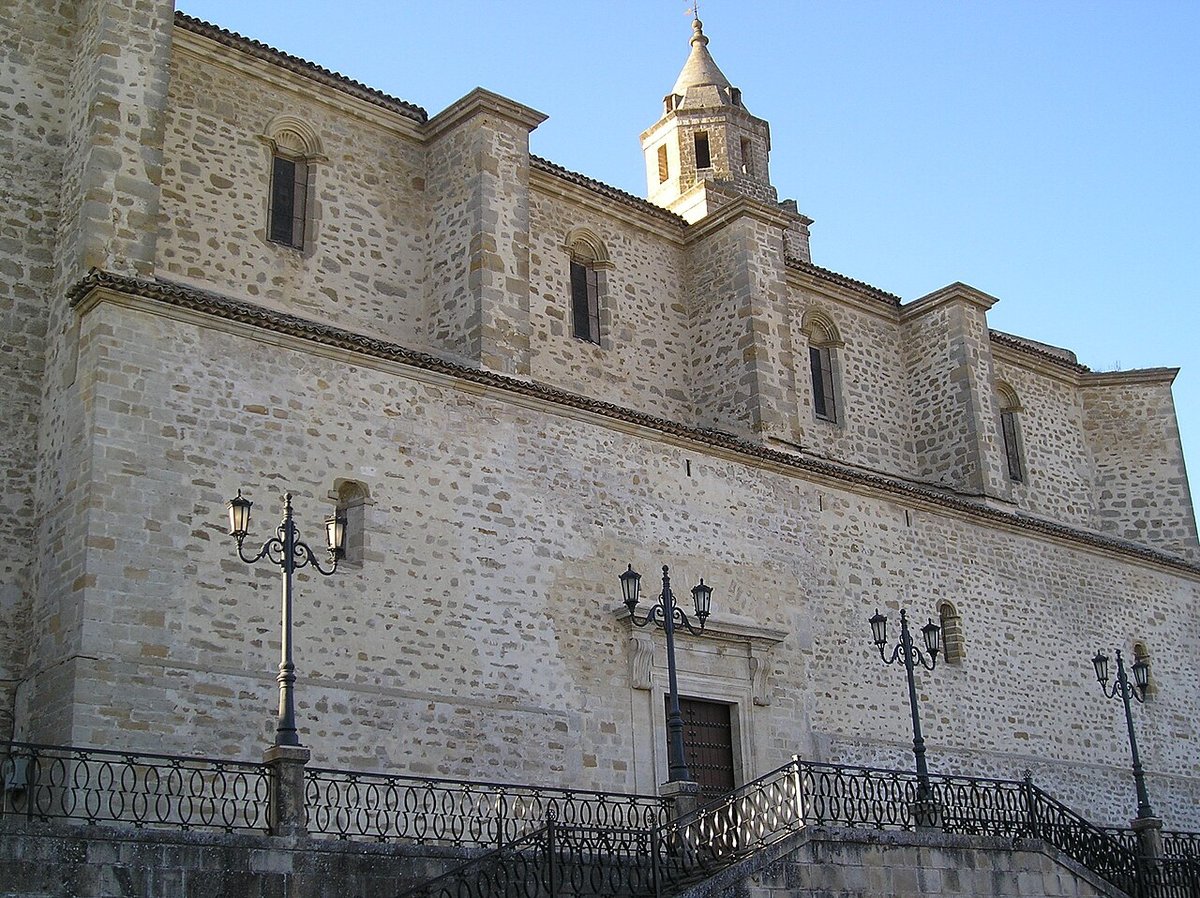
  • Church of Santa Águeda
  • Hermitage of Santa Quiteria

Activities

  • Viewpoint Trail
  • Hiking along the Guadalimar
  • Visit to the Torreón

Festivals
& & Traditions

Fecha mayo

Fiestas de Santa Águeda (febrero), Santa Quiteria (mayo)

Las fiestas locales son el momento perfecto para vivir la autenticidad de Sorihuela del Guadalimar.

Full Article
about Sorihuela del Guadalimar

Balcony over the Guadalimar with a historic tower, set among olive groves and mountains.

Ocultar artículo Leer artículo completo

The church bell strikes midday and the only other sound is a tractor changing gear somewhere below the castle walls. From this height—647 metres above sea level—the Guadalimar River looks like a loose silver thread dropped across a patchwork of green-grey olive trees that runs all the way to the hazy outline of the Cazorla range. Sorihuela del Guadalimar feels suspended between two Andalusias: the Moorish south of glaciated peaks and the Castilian plateau of sun-baked clay.

A village that still keeps shop hours

There is no gradual approach. The A-316 delivers you to a sudden fork: left for Villanueva del Arzobispo, right for Sorihuela. Twelve kilometres of switch-backs follow, the tarmac narrowing as the cork oaks close in. Fill the tank before you leave the main road; the village garage shuts at 1.30 p.m. and re-opens “tomorrow, perhaps” if tomorrow is Sunday.

At first sight the place looks half-empty. What you see is the residue of a population that once topped 5,000 but now hovers just above 1,000. Shutters are painted the traditional ox-blood red, yet Wi-Fi routers blink behind them—remote workers from Granada and Jaén have discovered the rent is a third of city prices. The effect is curious: the bakery still weighs bread on brass scales, but the chap ahead of you in the queue is ordering sourdough on an app.

Parking is uncomplicated. Leave the car on the upper ring road; everything worth reaching is within a six-minute downhill stroll. The ayuntamiento occupies a 19th-century townhouse whose marble stairs are worn into shallow scoops. Inside, a handwritten sign reads “Castillo: pedir llave” (Castle: ask for key). Hand over your driving licence, receive a skeleton key the size of a banana. No deposit, no health-and-safety form—just the unspoken agreement that you will lock up and return it before the staff leave at 3 p.m.

Up on the ridge where the Moors kept watch

The castle track starts behind the cemetery. Concrete soon gives way to packed earth and rosemary. Five minutes later you are ducking under a horseshoe arch that still carries the chisel marks of 12th-century masons. Inside, the keep is roofless but intact to battlement height; swallow nests pepper the joints. Climb the spiral—there is no handrail—and the view opens north towards the meseta of La Mancha, south towards the olive-carpeted valleys that feed the Guadalimar. The best light comes an hour before sunset when the stone turns the colour of burnt toffee; bring a wide-angle lens and something to sit on, because there are no benches.

Archaeology here is refreshingly under-labelled. A bilingual plaque mentions the 14th-century siege by Pedro I; the rest is up to your imagination and whatever you half-remember from a university module on medieval Iberia. On the way down you will pass terraces that once fed the garrison—olives, almonds, figs—still pruned by hand.

Food that understands fieldwork

Hunger creeps up quickly at altitude. Back in the square, Bar La Muralla fires up its charcoal grill at 8 p.m. sharp. The chuletón de Ávila—an aged T-bone the size of a steering wheel—arrives on a wooden board with nothing more than a wedge of lemon and a mound of sea salt. Two people can tackle it; one would require an afternoon nap and possibly medical supervision. If red meat feels excessive, order the gazpacho manchego: not the cold tomato soup tourists expect, but a game-y stew of partridge and flatbread that shepherds once carried in a goatskin.

Vegetarians do better at lunchtime. The cooperative behind the church runs an oil-tasting counter that behaves more like a wine bar. Three euros buys you a flight of three extra-virgins—picual, arbequina and the local royal varietal—served in blue glass tumblers with slices of apple to reset the palate. The style is buttery, almost almond-sweet, nothing like the peppery throat-catch of Tuscan oils. Bring an empty suitcase; they will shrink-wrap bottles in foam so Ryanair can’t object.

Trails that start at the last streetlamp

Sorihuela is technically outside the Cazorla/Segura/Las Villas Natural Park, which means you get the same limestone ridges and griffon vultures without the €20 guided walks and coach parties. Markers are discreet: a stripe of yellow paint on a dry-stone wall, a cairn where two goat tracks intersect. The most straightforward route follows the Guadalimar south for 7 km to an old flour mill now used by beekeepers. In April the riverbanks are solid with wild irises; by late June the water has retreated to emerald pools deep enough for a cautious swim. Trainers suffice, but closed soles help when the path turns to calf-deep thistles.

For something steeper, continue past the mill and climb the fire-break that zig-zags up the Cerrón. The summit cross sits at 1,250 m; allow two hours and carry more water than you think necessary—shade is theoretical once the holm oaks finish. From the top you can trace the entire olive conveyor belt: small cooperatives in every valley, their corrugated roofs glinting like mirrors scattered by a careless giant.

Winter walkers should check the forecast. At 647 m Sorihuela catches the tail-end of Sierra Morena storms; January snow is not unheard-of and the castle path becomes a toboggan run of red clay. The village responds by lighting every bonfire it can find and brewing coffee laced with anise. Accept a glass; refusal is taken as personal insult.

When the village remembers how to party

August’s fiestas patronales transform the soundscape. What was a sleepy plaza becomes an open-air disco whose bass reverberates off the church tower until 5 a.m. The procession of the Virgen de los Remedios leaves the church at midnight, carried by twenty men in gold-embroidered robes who negotiate the narrow streets to a brass band that has clearly been drinking. Visitors are expected to join the tail of the parade; if you are offered a shot of pacharán, the Basque sloe-gun, say yes—once. Accommodation triples in price for four nights; book in June or resign yourself to a 30-minute drive back to the main-road motel.

Easter is quieter but no less atmospheric. Good Friday’s Vía Crucis begins in darkness; locals carry hand-painted terracotta lamps that gutter in the wind. The procession pauses outside every house—doorways draped in black velvet—and someone inside reads a verse in a voice cracked by emotion. Even the most stubborn atheist finds the hairs rising.

Leaving without a souvenir (and why that matters)

There is no gift shop. The nearest thing is a vending machine outside the pharmacy that dispenses fridge magnets of the castle at two euros a pop—coins only. Better to walk into the cooperative just before closing and ask for a 250 ml tin of royal oil. The label is plain, the contents are not; tipped over tomato salad back home it will taste of hot stone and wild rosemary and the moment the church bell struck twelve and nobody else was around.

Drive away in the cool of early morning and the village shrinks instantly in the rear-view mirror, folded back into the folds of olive that stretch all the way to the horizon. You will not have ticked a single world-famous monument. Instead you will have borrowed a key, climbed a wall, eaten beef that still smells of charcoal and heard silence so complete it rings in the ears. That is Sorihuela’s transaction: no spectacle, just the brief illusion that rural Andalucía still belongs to the people who work it.

Key Facts

Region
Andalucía
District
Las Villas
INE Code
23084
Coast
No
Mountain
No
Season
spring

Livability & Services

Key data for living or remote work

2024
ConnectivityFiber + 5G
HealthcareHospital 9 km away
EducationElementary school
Housing~5€/m² rent · Affordable
Sources: INE, CNMC, Ministry of Health, AEMET

Official Data

Institutional records and open data (when available).

  • Torre de la Ermita de Consolación
    bic Fortificación ~3.5 km
  • Torreón con espadaña
    bic Fortificación ~0.9 km
  • Iglesia Parroquial de Santa Agueda
    bic Edificio Religioso ~0.8 km
  • Ermita de Santa Quiteria
    bic Monumento ~2.1 km

Planning Your Visit?

Discover more villages in the Las Villas.

View full region →

More villages in Las Villas

Traveler Reviews